

You can tell the difference by watching what actually changes. Physical changes—like butter melting at 92°F or water evaporating—don’t create new substances. Chemical changes do. When your cookies brown above 310°F, that’s the Maillard reaction creating entirely new compounds you can’t reverse. The sweet aromas and darker color prove new substances formed. Raw dough tastes nothing like baked cookies because chemical transformations fundamentally altered the ingredients’ composition. Understanding these temperature milestones reveals exactly how your oven works its magic.
From 92°F to 356°F: Temperature Milestones in Cookie Chemistry
What happens inside your oven during those pivotal minutes of baking? Your cookies transform through precise temperature stages, each triggering distinct changes.
At 92°F, butter melting initiates dough spreading, creating the foundation for your cookie’s shape. As heat climbs toward 144°F, egg proteins denature and coagulate, strengthening the developing structure. This protein denaturation stabilizes your dough, preventing excessive spreading.
Around 310°F, the Maillard reaction begins, producing browning, aromas, and complex flavors you recognize as “baked.” Water vapor escapes during this stage, affecting texture development. Near 356°F, caramelization breaks down sugars, deepening color and intensifying taste.
These temperature milestones represent interconnected physical and chemical transformations. Butter melting is physical; protein denaturation and the Maillard reaction are chemical. Understanding this baking temperature progression helps you recognize when cookies reach their ideal state.
Physical Changes: Melting Butter and Escaping Water
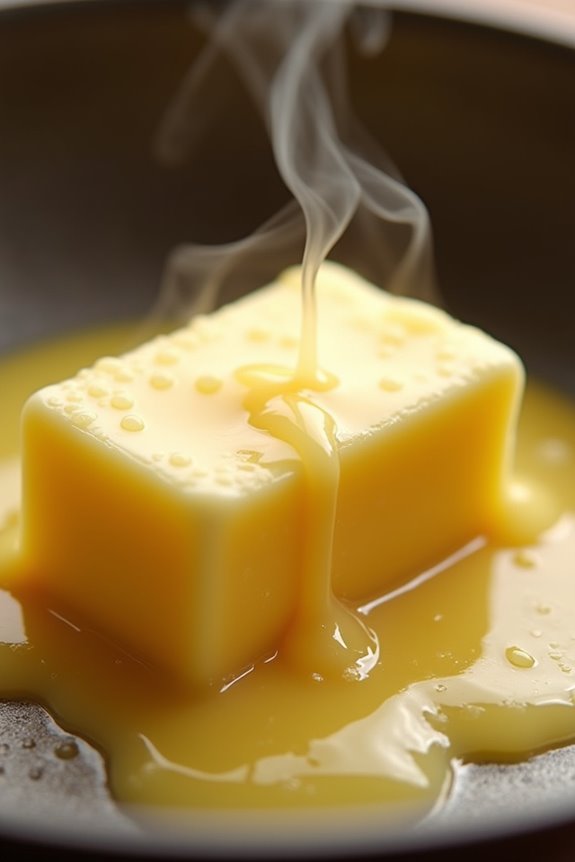
Now that you’ve seen how temperature triggers different reactions in your oven, it’s time to focus on the earliest and simplest transformations—the ones that happen before any real chemistry kicks in.
When your oven reaches 92°F, butter liquefaction begins. The solid fat melts into liquid, spreading throughout your cookie dough and making it more fluid. Here’s what’s crucial: this butter melting is a physical change. The fat’s chemical composition stays identical; only its phase changes from solid to liquid through heat transfer.
| Stage | Temperature | What Happens | Change Type | Reversible? |
|---|---|---|---|---|
| Butter melts | 92°F | Fat becomes liquid | Physical | Yes |
| Water evaporates | 140-180°F | Moisture escapes | Physical | Yes |
| Dough spreads | 92-150°F | Gas bubbles distribute | Physical | Yes |
| Texture changes | 100-180°F | Dough becomes fluid | Physical | Yes |
| Heat transfers | Continuous | Energy moves through dough | Physical | Yes |
Simultaneously, water in your cookie dough begins escaping as steam. This water evaporation reduces moisture content and alters dough texture, yet it’s entirely reversible and creates no new substances. Your dough becomes puffier and more spreadable without any chemical transformation occurring.
Chemical Changes: When Proteins and Sugars Transform
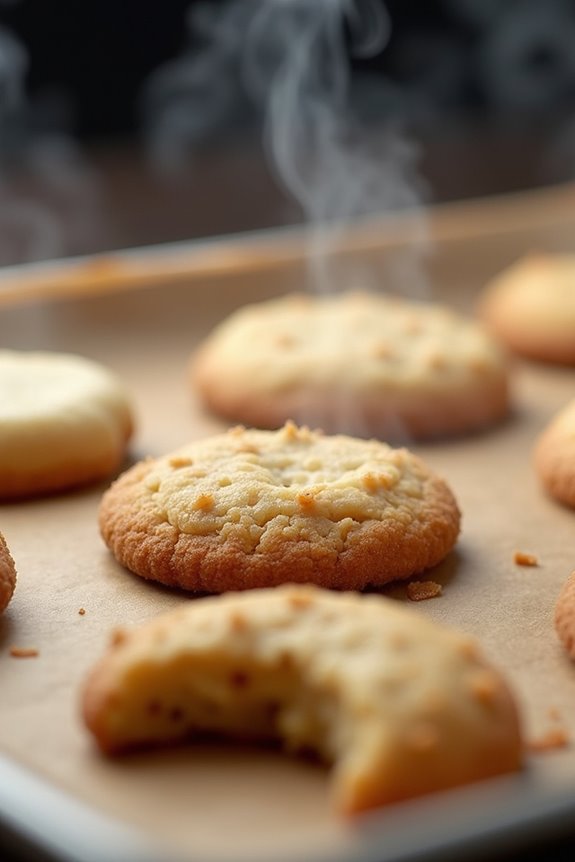
Beyond 310°F, your cookies undergo a fundamental shift that can’t be undone. The Maillard reaction kicks in, where amino acids and reducing sugars bond together, creating brown compounds that deepen flavor and aroma. Simultaneously, egg proteins denature and coagulate, strengthening your dough’s structure for that firmer texture you’re after.
Beyond 310°F, the Maillard reaction creates irreversible changes in your cookies, deepening flavor while egg proteins strengthen structure.
Here’s what’s transforming your dough:
- Maillard reaction produces new brown-colored compounds
- Caramelization breaks down sugar molecules into darker substances
- Protein denaturation reinforces the cookie’s structural network
- Gluten network forms between flour proteins and water
- Sugar breakdown creates entirely new flavor molecules
These changes are irreversible—you can’t return your cookies to raw dough. The baking temperature triggers cookie chemistry that permanently alters proteins and sugars, marking the difference between physical and chemical change.
Brown Edges and Sweet Aromas: The Evidence
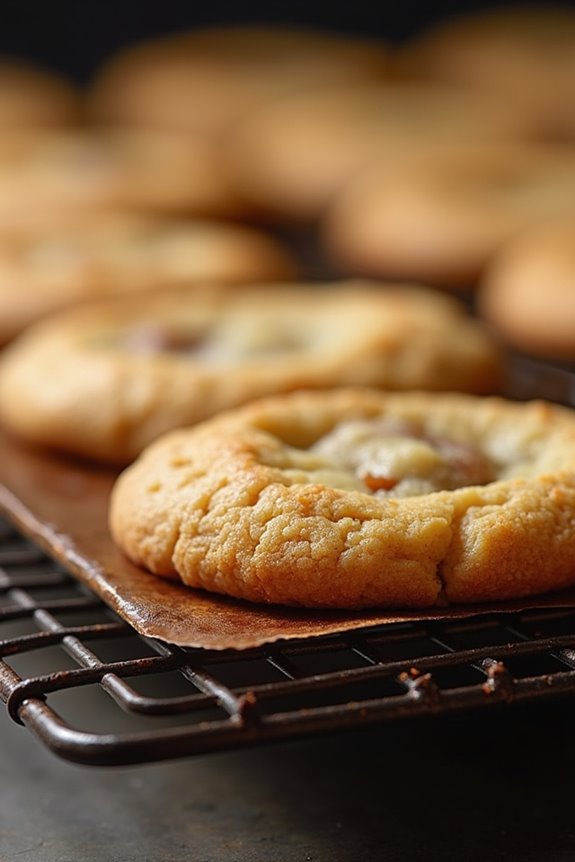
You’ve already learned that chemical changes transform your cookie’s proteins and sugars beyond 310°F. Now you’ll recognize these transformations through observable evidence: brown edges and sweet aromas.
Brown edges result from the Maillard reaction, where proteins and sugars rearrange into entirely new compounds. These compounds reflect light differently, creating that characteristic golden-brown color. At higher temperatures, caramelization deepens the browning through sugar decomposition, intensifying flavors.
The sweet aroma you smell signals volatile aroma compounds forming during baking temperature increases. These compounds didn’t exist before heating—they’re created through protein-sugar interactions unique to baking. Unlike physical changes, these transformations prove irreversible. You can’t unbake cookies or separate the browned edges back to white dough.
These sensory clues—browning and aroma development—serve as your definitive evidence that baking fundamentally alters your cookies’ chemical structure.
Why Cookies Taste Different Than Raw Dough
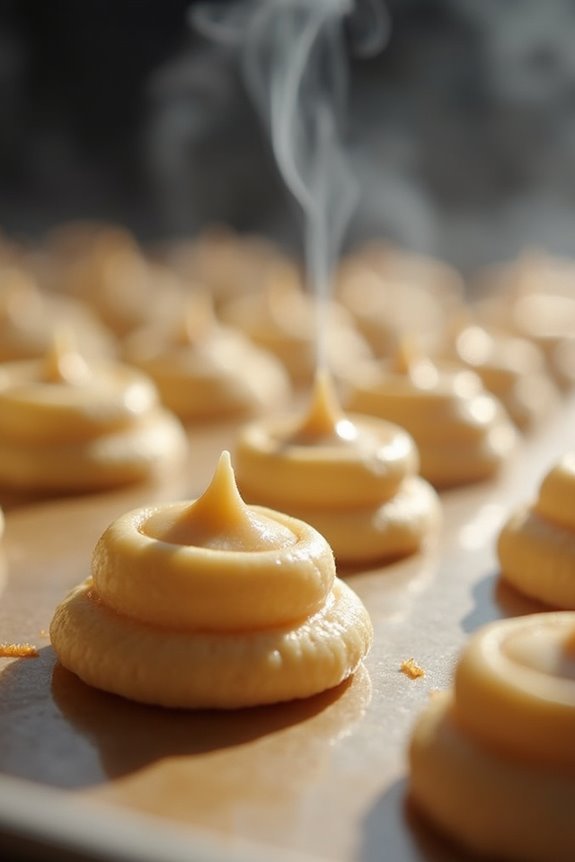
Why does a bite of warm cookie taste nothing like the raw dough? The answer lies in chemical transformations that oven heat triggers inside your mixture.
When you bake, several things happen simultaneously:
- Maillard reactions between amino acids and sugars create browning flavors absent in raw dough
- Caramelization at higher temperatures deepens sweetness and adds roasted notes
- Starch gelatinization and protein denaturation build firmer texture and concentrated flavors
- Water loss during baking concentrates sugars and flavor compounds, intensifying taste
- Aroma compounds released by browning reach your palate only after baking completes
Raw dough contains these same ingredients, but they haven’t undergone transformation. Oven heat fundamentally reorganizes their molecular structure, producing entirely new flavors and aromas you simply can’t experience before baking. That’s why cookies taste dramatically different from the dough you started with.