


You can swap Himalayan salt for table salt using equal amounts, but granule size matters—fine grind dissolves evenly while coarse crystals create uneven saltiness. Himalayan salt’s trace minerals add subtle flavor depth to rich desserts like chocolate cookies and caramel brownies, though the effect’s less noticeable in delicate cakes. The trade-off: you’ll lose iodine that table salt provides. Fine-grind Himalayan salt works best for smooth batters; start with slightly less and taste to adjust. Understanding when each salt truly shines takes specific knowledge about your recipe type.
What Makes Himalayan Salt Different From Table Salt
Why’s Himalayan salt pink, and does that actually matter when you’re baking? The color comes from minerals like iron oxide trapped in the rock salt during formation. Unlike table salt, which undergoes heavy processing and refinement, Himalayan salt retains those trace minerals in its crystals.
This difference creates a key contrast in your baking: Himalayan salt vs table salt affects both texture and taste. The mineral content gives Himalayan salt a subtle flavor depth and slight sweetness that table salt doesn’t offer. You’ll notice this flavor subtlety most in delicate baked goods where salt plays a supporting role rather than a dominant one.
Table salt’s extensive processing removes most minerals, making it chemically simpler. Himalayan salt’s less-refined nature means you’re working with a more complex ingredient when you bake.
Can You Substitute Himalayan Salt in Baking Recipes?
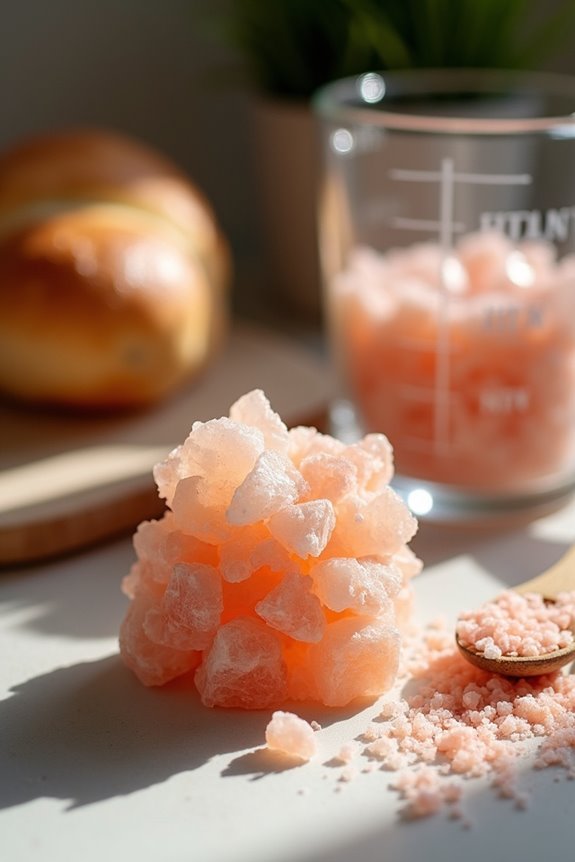
You can substitute Himalayan salt for table salt in equal amounts, but you’ll need to account for how granule size affects your results. Fine Himalayan salt dissolves like table salt and blends smoothly, while coarse crystals may not fully dissolve and create uneven saltiness throughout your baked goods. Start with smaller amounts than the recipe calls for, then taste your batter or dough to adjust the saltiness to your preference.
Granule Size and Dissolution
How finely your Himalayan salt’s ground makes a real difference in baking. Grind size directly affects how quickly salt dissolves into your batter or dough, which determines whether flavor distributes evenly throughout your finished product.
Fine Himalayan salt dissolves rapidly, blending seamlessly like table salt. Coarse salt crystals, however, may not fully dissolve during baking, creating pockets of intense saltiness while leaving other areas underseasoned. This uneven distribution compromises your recipe’s balance.
If you’re using coarse salt, crush it to a finer consistency first. Alternatively, start with slightly less than your recipe calls for, then taste your batter or dough and adjust as needed. This approach prevents over-salting while you discover your preferred intensity level.
Saltiness Adjustment Guidelines
Swapping Himalayan salt for table salt in your baking recipes is absolutely possible, but it’s not quite a one-to-one swap in all cases. The key lies in understanding how coarse vs. fine grains affect your final bake.
Start with slightly less Himalayan salt than your recipe calls for. This conservative approach prevents over-salting, since mineral content and grain size can shift how salty your baked goods taste. After mixing your batter or dough, taste it and adjust accordingly.
Fine-ground Himalayan salt dissolves readily, matching table salt’s behavior closely. Coarse grains, however, dissolve slowly and may create uneven saltiness distribution. If you’re working with coarse crystals, grind them finely first.
For recipes requiring rapid dissolution—like frostings or syrups—fine Himalayan salt ensures a smooth texture without grittiness. This saltiness adjustment strategy keeps your bakes consistent and delicious.
The Iodine Trade-Off: When to Use Table Salt Instead
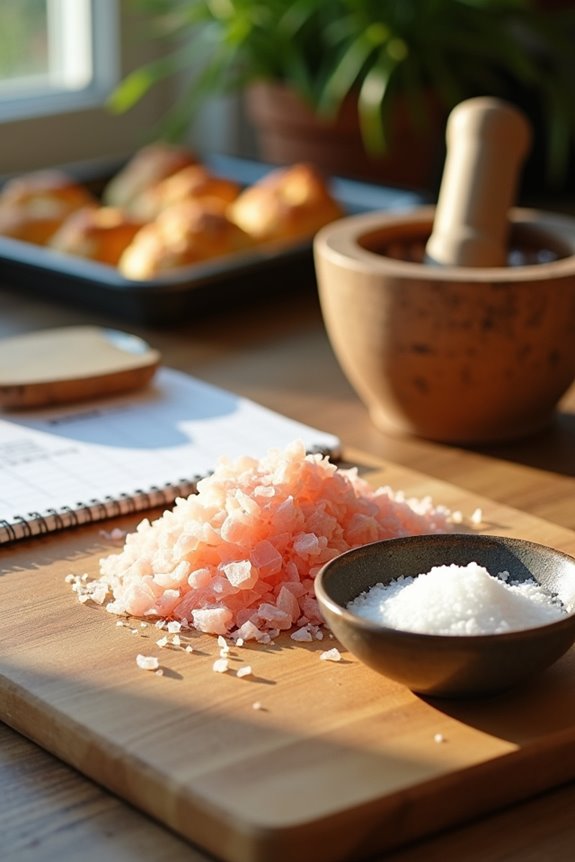
Why does table salt stand apart from Himalayan and sea salt? Table salt contains added iodine, an essential nutrient your thyroid needs to function properly. Himalayan and sea salt typically lack this vital mineral. When you switch to these alternatives for baking, you’re gaining unique flavors and textures, but potentially losing important iodine intake over time. Relying solely on non-iodized salts can increase your risk of iodine deficiency. Here’s the practical solution: use iodized salt when baking recipes where health considerations matter most. Alternatively, confirm you’re getting iodine from other dietary sources like seafood, dairy, or eggs. This substitution strategy lets you enjoy Himalayan salt’s benefits while protecting your nutritional needs. You’re simply being intentional about when and how you make the swap.
Size Matters: Fine Grind vs. Coarse Crystals
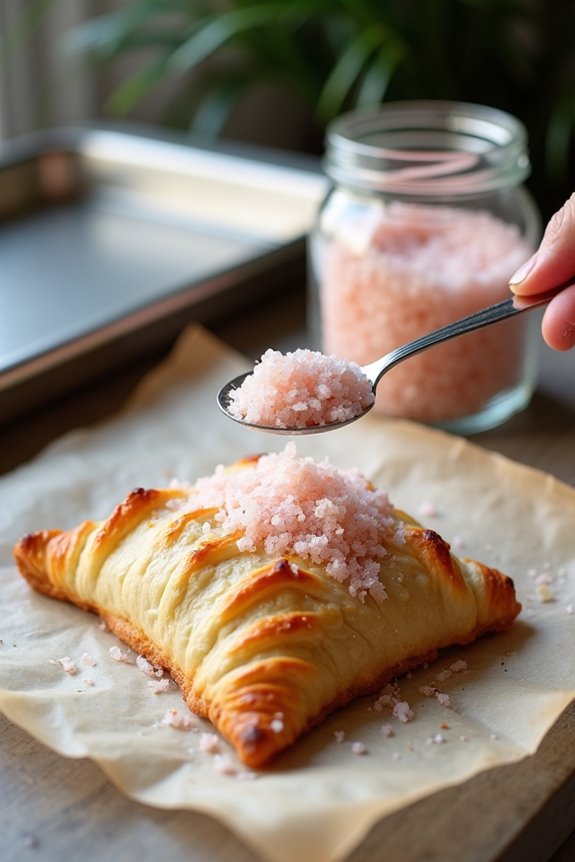
Now that you’ve decided which type of salt fits your nutritional needs, the next step is getting the crystal size right. Your choice between fine grind and coarse crystals directly affects how evenly your baked goods taste.
Here’s what you need to know:
- Fine grind Himalayan salt dissolves completely in batters, creating uniform flavor throughout
- Coarse crystals may leave undissolved bits, producing salty spots or unwanted crunch
- Crushing coarse salt to finer granules ensures even distribution before measuring
- Fine grind works best for smooth batters, while coarse salt suits finishing touches
For most baking recipes, fine Himalayan salt performs like table salt on a 1:1 basis. Start with slightly less than you’d normally use, then adjust to taste. This approach gives you control while you’re building confidence with this ingredient.
Why Himalayan Salt Shines in Savory Baked Goods
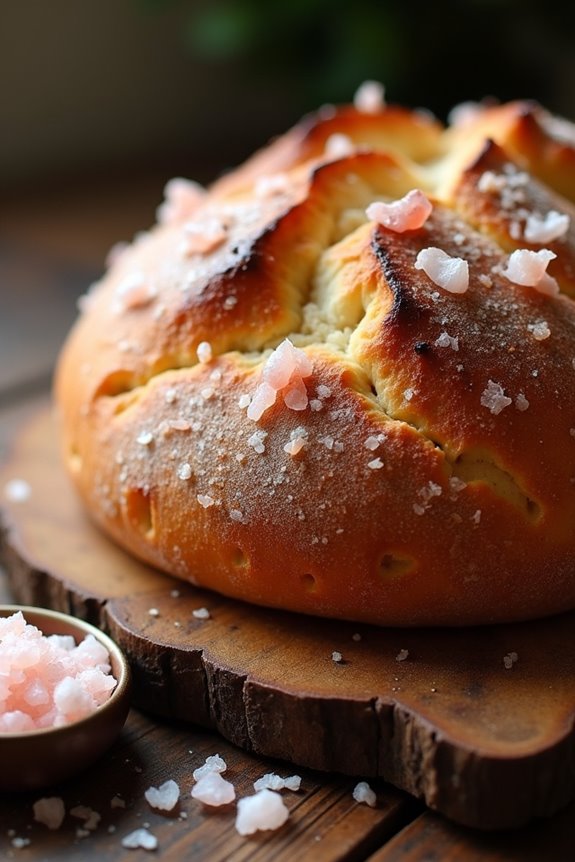
What makes Himalayan salt particularly effective in savory breads, crackers, and cheese-based baked goods? You’ll find that Himalayan salt enhances these recipes through its mineral composition. The trace minerals add subtle depth, creating complexity that complements savory flavors rather than competing with them. When dissolution occurs properly, these minerals distribute evenly throughout your dough or batter, strengthening the savory profile you’re seeking.
Unlike table salt’s one-dimensional saltiness, Himalayan salt brings character. Your cheese crackers gain richness. Your herb breads develop fuller taste. This mineral-driven approach works because fine grind ensures complete dissolution during mixing and baking. Coarse crystals risk remaining undissolved, creating uneven flavor pockets. By using properly ground Himalayan salt, you’re building cohesive savory experiences where every bite tastes intentionally crafted rather than simply salty.
Does Himalayan Salt Work in Cookies and Cakes?
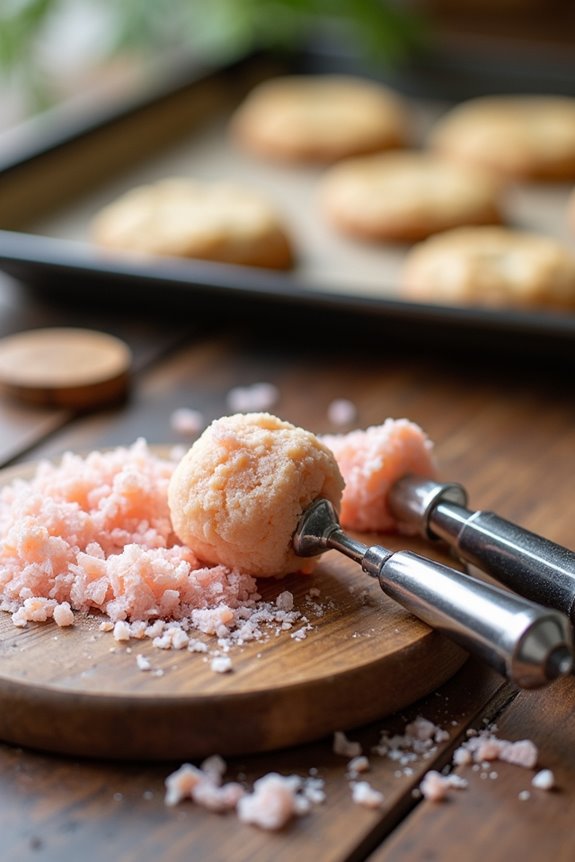
While Himalayan salt excels in savory applications, it’ll work just as well in your sweet baked goods. You can substitute it for regular table salt in cookies and cakes using equal measures, especially with fine-ground varieties.
Here’s what you need to know:
- Use fine-ground Himalayan salt for smooth, even distribution in batters and doughs
- Coarse crystals won’t fully dissolve and may create texture problems in your finished treats
- The mineral content enhances sweetness naturally without adding a salty taste
- Start with less salt than recipes call for, then adjust after tasting your batter
When substituting, remember that Himalayan salt’s milder flavor and mineral profile add subtle depth to sweet baked goods. Pre-crush coarse varieties if necessary. This baking substitution works because the salt dissolves properly and complements vanilla, chocolate, and fruit flavors beautifully.
How to Taste-Test Your Dough and Prevent Over-Salting
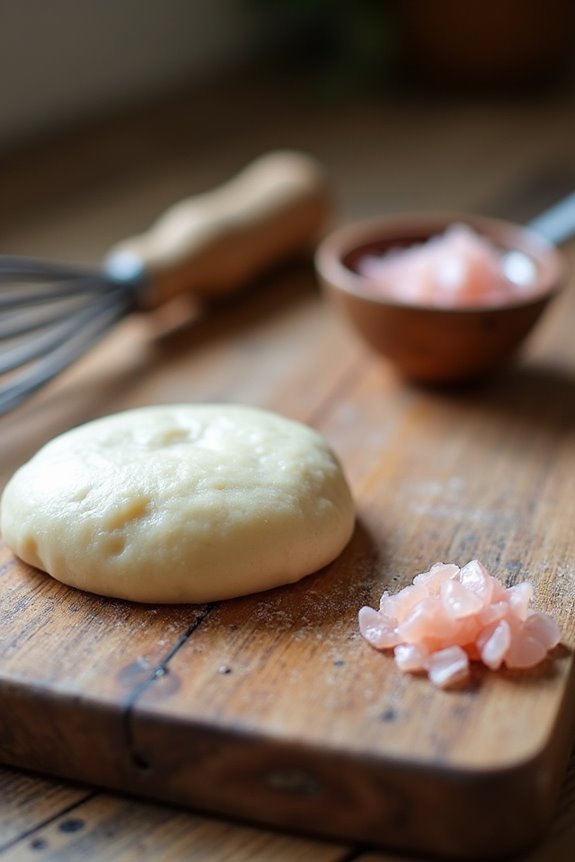
Because Himalayan salt’s mineral content can affect perceived saltiness differently than table salt, you’ll want to taste-test before committing to a full batch. Start by dissolving a pinch of your salt in a small amount of dough or batter. This quick test reveals how the salt actually tastes in your specific recipe, accounting for dissolution rates and how minerals influence flavor perception.
If the sample seems too salty, reduce your salt amount by one-quarter to one-half teaspoon before scaling up. This prevents over-salting your entire batch. For thorough mixing in doughs, crush coarse crystals first to ensure even dissolution and eliminate salty hotspots. Fine-ground salt distributes more uniformly throughout your mixture.
Testing takes minutes but saves your finished product.
Himalayan Pink Salt Chocolate Chip Cookies
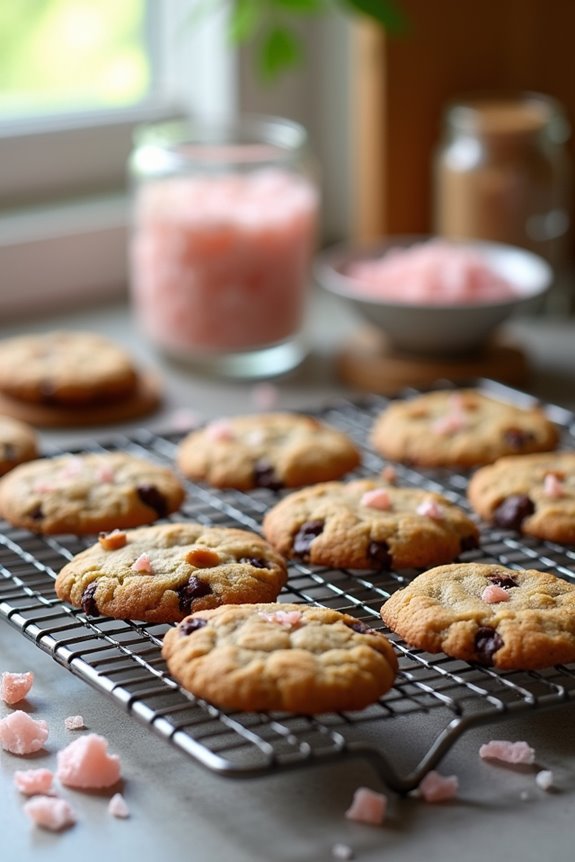
You can swap table salt for finely ground Himalayan pink salt in chocolate chip cookies at a one-to-one ratio, though you’ll want to crush any coarse crystals first to ensure even distribution throughout your dough. This substitution works because the salt’s mineral content subtly deepens your cookies’ overall flavor without adding noticeable saltiness, creating a more complex taste that complements chocolate. Start with slightly less Himalayan salt than you’d normally use if you’re uncertain, then taste your batter to find the right balance between sweetness and savory depth.
Salt Substitution Techniques
How do you know when swapping Himalayan salt for table salt will work in your cookie recipe? You’ll succeed by understanding texture dissolution and salt substitution basics.
- Use fine-ground Himalayan salt for seamless 1:1 replacement with table salt
- Grind coarse salt to powder consistency before mixing into dough
- Start with slightly less salt, then taste-test your batter before baking
- Accept that mineral content adds subtle depth and slight sweetness perception
Coarse Himalayan salt particles won’t dissolve fully during mixing, creating uneven texture and crunchy spots in your finished cookies. This disrupts the smooth, consistent crumb you’re after. By grinding coarse salt beforehand, you ensure even distribution throughout your dough. When you’re uncertain about saltiness levels, reduce the amount initially. This cautious approach lets you adjust gradually without oversalting your batch, keeping your cookies perfectly balanced.
Flavor Enhancement Considerations
When you swap Himalayan salt into chocolate chip cookie dough, you’re not just replacing a seasoning—you’re introducing minerals that subtly shift how your cookies taste. Fine Himalayan salt dissolves smoothly, distributing evenly throughout your batter. This even dissolution matters because it prevents grainy textures that coarse crystals create.
The mineral content in Himalayan salt enhances flavor complexity. You’ll notice your cookies develop deeper, more nuanced sweetness alongside the chocolate. This flavor enhancement works because minerals interact with sugar and cocoa, amplifying their natural notes.
Start with equal amounts when substituting. If saltiness feels stronger than expected, reduce slightly. Crushing coarse Himalayan salt before mixing ensures uniform distribution and consistent taste. This approach transforms your cookies into something richer without overwhelming the palate.
Himalayan Pink Salt Caramel Brownies
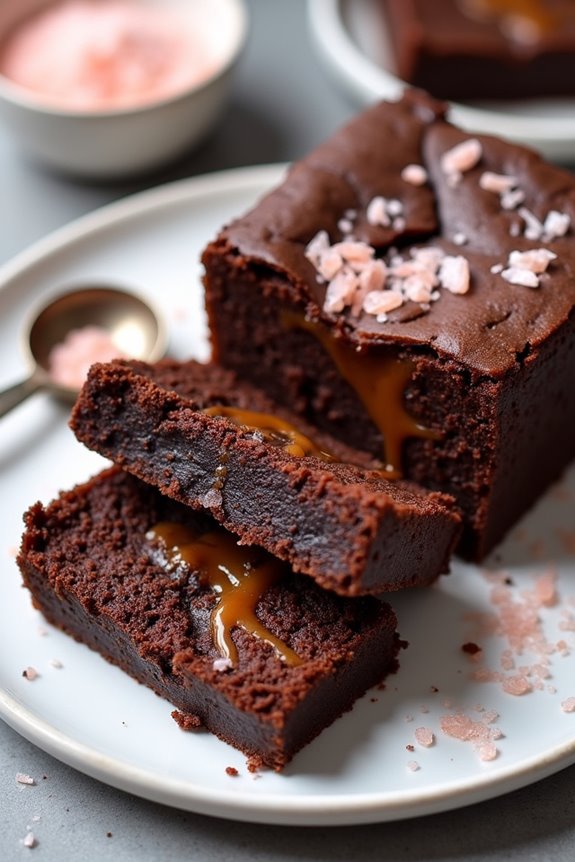
Why does Himalayan pink salt work so well in caramel brownies? The mineral content and milder flavor profile enhance caramel notes without overpowering chocolate. You’ll achieve the best results by using finer ground salt, which blends smoothly into your batter.
When baking caramel brownies with Himalayan pink salt, follow these guidelines:
- Use finer ground salt instead of coarse crystals for even distribution
- Start with a smaller salt amount and adjust after tasting the batter
- Balance sweetness and saltiness carefully to complement caramel flavors
- Crush coarse grains first if that’s what you have available
Substitute Himalayan pink salt for table salt in equal measure. The subtle mineral notes enhance your caramel brownies while maintaining chocolate flavor integrity. This approach helps you join bakers who’ve discovered this superior baking alternative.
Best Uses for Himalayan Salt: Where It Makes the Most Difference
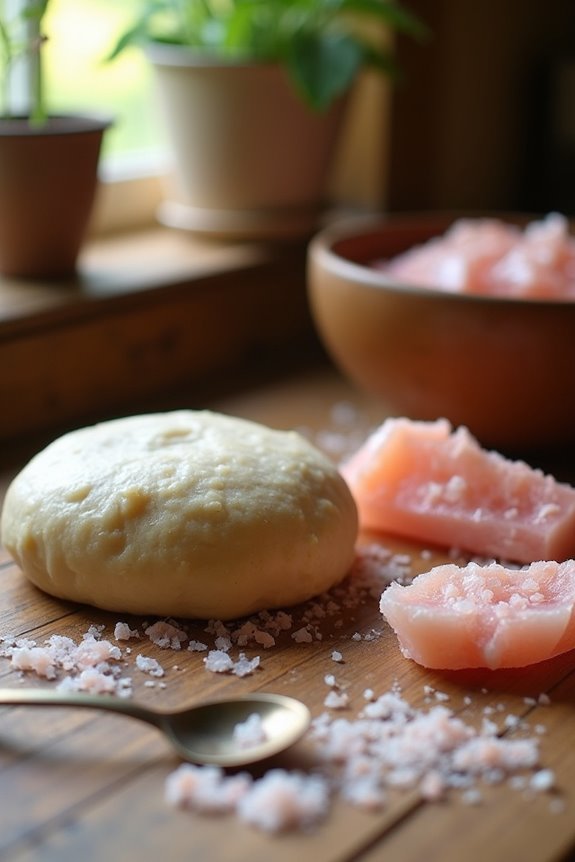
You’ll notice Himalayan salt truly shines in recipes where its subtle mineral flavor can stand out—think rich chocolate desserts, caramel sauces, and salted cookies where the complexity deepens the overall taste. The trace minerals in Himalayan salt, including magnesium and potassium, create a flavor profile that’s slightly different from table salt, giving you a more nuanced sweetness that works especially well in dark, bold desserts. In delicate recipes like vanilla cakes or light frostings where salt plays a supporting role, these mineral notes are less noticeable, so you’ll get more pronounced results when you use Himalayan salt in recipes where flavor layering matters most.
Flavor Enhancement in Desserts
Have you considered how Himalayan salt can transform your desserts? Fine grind salt dissolves evenly into batters and doughs, delivering Himalayan salt flavor enhancement that table salt can’t match. The mineral nuances create depth, making sweetness more pronounced without tasting salty.
- Enhanced sweetness perception – mineral content amplifies dessert flavors naturally
- Uniform distribution – fine grind prevents grainy textures in delicate treats
- Balanced mineral notes – adds complexity to cookies, cakes, and brownies
- Improved ice cream quality – creates a refined salt finish
Use equal or slightly less fine grind salt than table salt, adjusting by taste since mineral nuances affect saltiness perception differently. Avoid coarse crystals in delicate desserts; crush them first or select fine grind varieties. This approach joins you with bakers who’ve discovered superior flavor results.
Mineral Content Impact
The minerals that make Himalayan salt pink—particularly iron oxide and trace elements like magnesium and potassium—do more than color your baked goods. They influence how you perceive saltiness in your finished products. These minerals create subtle flavor depth that regular table salt can’t match, enhancing complexity in cakes, cookies, and pastries.
However, you shouldn’t expect dramatic health benefits from this mineral content. The amounts present won’t replace iodine or provide substantial nutritional advantages. What they do offer is baking flavor nuance that discerning palates appreciate.
When substituting Himalayan salt for table salt, start with slightly less. The mineral content alters saltiness perception, making equal measurements potentially too salty. Adjust gradually by taste until you achieve your desired result. Fine grinding distributes these minerals evenly throughout your batter or dough.
When to Stick With Iodized Salt: A Health Consideration
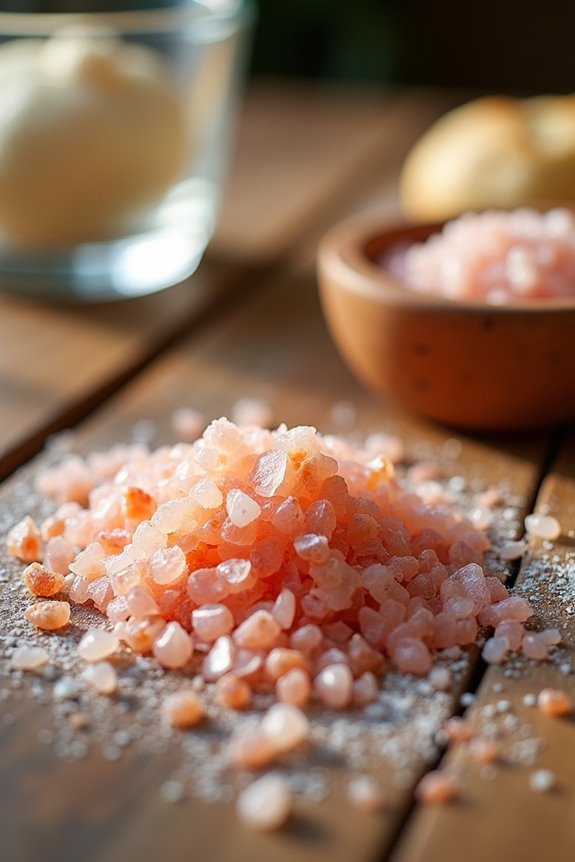
While Himalayan salt and sea salt offer interesting flavors and minerals, iodized table salt remains your most reliable dietary source of iodine—a nutrient your thyroid depends on to function properly.
Here’s what you should know about maintaining adequate iodine intake:
- Sea salt and Himalayan salt naturally lack iodine, so swapping them completely removes this essential nutrient from your diet
- Your thyroid regulates metabolism and energy, requiring consistent iodine to work effectively
- Iodine deficiency develops gradually, potentially causing fatigue and other health concerns
- You can use non-iodized salt for baking while preserving thyroid health through intentional choices elsewhere
The solution? Use iodized salt in everyday cooking and condiments. Reserve your baking substitution for specialty recipes. Alternatively, add an iodine supplement to your routine if you prefer non-iodized options throughout your kitchen. Check product labels carefully—manufacturers don’t always highlight iodine content clearly.