

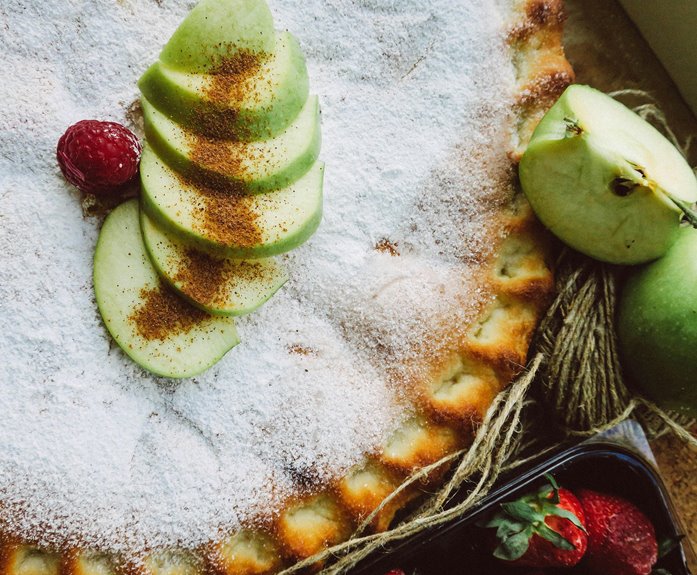
McIntosh apples can work for baking, but they break down quickly into a sauce-like texture when baked alone. You’ll get better results by mixing them with firmer varieties like Granny Smith or Cortland, using a one-to-two ratio. McIntosh excels in fillings, crumbles, and applesauce-style desserts where soft texture is desirable. Store them in your fridge’s crisper drawer and use within one to two weeks for peak flavor and structure. The timing and pairing strategies make a real difference in your final results.
Store McIntosh Apples Properly Before Baking
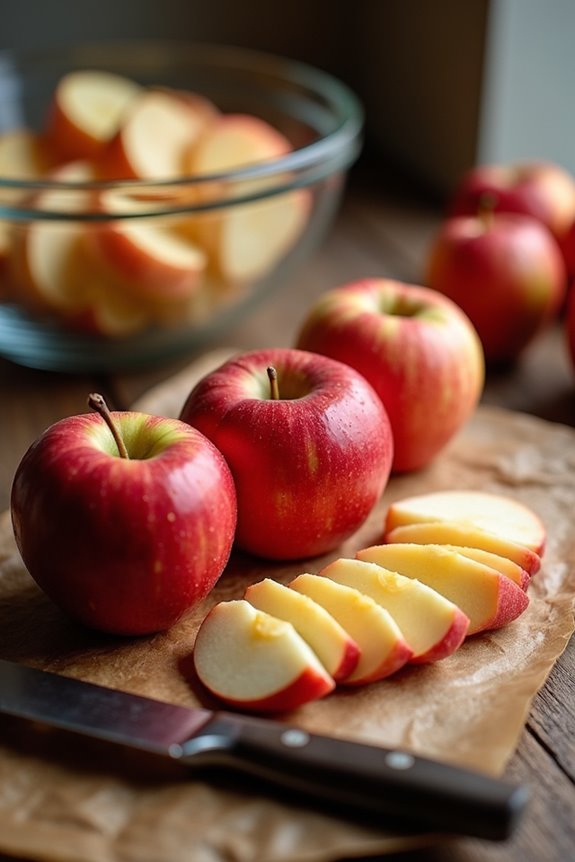
How you store your McIntosh apples before baking directly affects their texture and performance in your recipe. McIntosh apples have naturally high moisture content, which makes proper storage essential for baking success.
Keep your apples in the refrigerator’s crisper drawer, where cooler temperatures slow down the softening process. This step matters because McIntosh apples lose their firmness quickly at room temperature, especially early in the season when they’re at peak moisture. Cold storage extends their usable window for baking projects.
Check your apples regularly and use them within a week or two of purchase. Apples stored longer than this develop even softer texture, which compromises your baked goods. By maintaining proper storage conditions, you’ll preserve the structural integrity that McIntosh apples need to hold up during baking.
What Makes McIntosh Special for Baking
McIntosh apples bring something different to your baking projects than other varieties. You’ll notice their McIntosh texture breaks down quickly, creating a sauce-like flesh that transforms during baking. This baking performance makes them ideal for fillings and crumbles, where you want that soft, spreadable consistency.
| Quality | Benefit | Challenge |
|---|---|---|
| Bold flavor | Adds spice and sweetness | Overpowers delicate recipes |
| Soft flesh | Creates smooth sauces | Loses structure when whole |
| Early season | Cost-effective option | Limited availability later |
When you pair with firmer varieties, you balance texture and maintain apple slice integrity in pies. McIntosh alone won’t give you those satisfying chunks in finished desserts. Instead, use them to enhance sauces or as your primary choice for applesauce-style applications. Understanding this distinction helps you choose confidently for each recipe.
McIntosh Turns Into Sauce: Here’s Why
Why do McIntosh apples soften so dramatically in the oven? You’re dealing with a variety that breaks down quickly under heat due to its cellular structure. McIntosh has lower pectin levels and thinner cell walls compared to firmer baking apples, making them collapse during baking.
Here’s what happens when you bake them:
- Heat penetrates the flesh rapidly, causing cells to rupture
- Low pectin content prevents the apple from holding its shape
- Moisture releases quickly, creating a sauce-like consistency
- Flesh separates from skin as structure deteriorates
This texture transformation means you can’t rely on McIntosh alone for desserts requiring firm apple chunks. Instead, you’ll get applesauce texture. That’s why experienced bakers pair McIntosh with resilient varieties like Granny Smith, combining their strong flavor while maintaining desirable texture in your final bake.
Best Uses for McIntosh in Pies and Baked Desserts
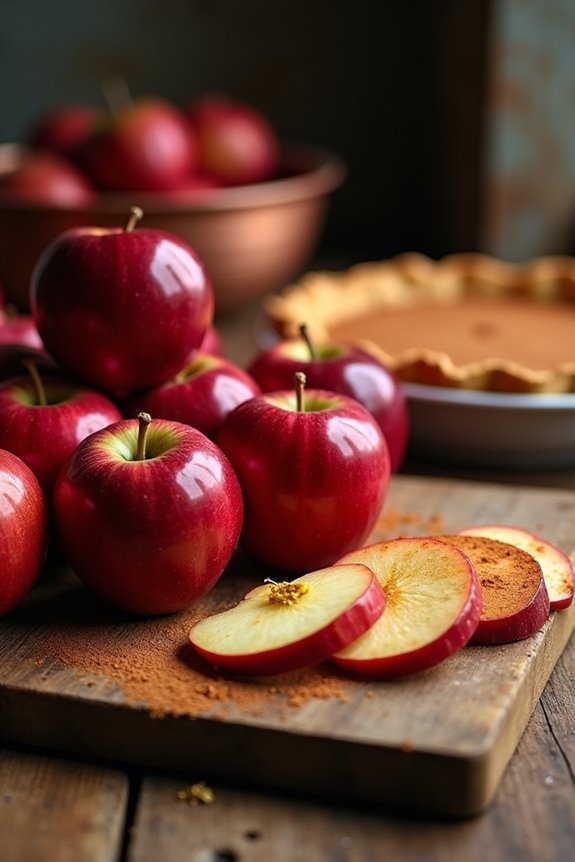
While you might assume McIntosh apples work solo in baking, their tendency to break down into sauce actually makes them ideal for pies and crisps when you pair them with firmer varieties like Granny Smith. You’ll get the best results by using this combination—the McIntosh contributes bold, spicy flavor and natural thickening, while the firmer apple maintains structure and prevents mushiness. Timing matters too: early-season McIntosh offers the strongest apple-spice notes, so you’ll want to use them when that pronounced flavor peaks rather than waiting until later in the season when the taste fades.
McIntosh’s Saucy Breakdown
When you bite into a baked McIntosh apple, you’ll notice it’s transformed into something quite different from its fresh, crisp self. The McIntosh breakdown happens quickly during baking. The flesh softens and collapses into a sauce-like consistency, which is why bakers call it an applesauce apple.
This baking texture occurs because McIntosh apples have thinner cell walls than firmer varieties. Heat breaks them down rapidly, creating that characteristic mushiness. You can work with this tendency by understanding how to use it effectively:
- Blend McIntosh with Granny Smith or other firm apples
- Use them in small amounts within mixed-apple fillings
- Pre-cook them separately before combining with firmer varieties
- Reserve them specifically for applesauce or sauce-based desserts
This approach lets you harness their strong flavor while avoiding unwanted mushiness in your pies.
Blending With Firmer Varieties
The best way to use McIntosh apples in pies is to blend them with firmer varieties rather than baking them alone. When you combine McIntosh with Granny Smith or Cortland apples, you create a balanced filling that works beautifully. The firmer varieties maintain their structure during baking, while McIntosh contributes its distinctive spicy flavor and natural sweetness.
This blending strategy solves the texture problem entirely. You’ll achieve a layered consistency—some soft, sauce-like portions mixed with firmer chunks that hold their shape. The result feels intentional rather than mushy. Start with a ratio of one part McIntosh to two parts firmer apples, adjusting based on your preference for sauce versus distinct pieces.
This approach lets you enjoy McIntosh’s flavor without compromising your dessert’s final texture.
When To Use McIntosh
So where do McIntosh apples actually belong in your baking?
You’ll find McIntosh baking works best in early-season pies, where their spicy flavor and aroma shine brightest. Since they mush when baked, you shouldn’t use them alone. Instead, pair them with firmer varieties like Granny Smith or Cortland to maintain structure and balance your filling.
Consider McIntosh for these applications:
- Early fall pies – their seasonal spiciness complements cooler weather desserts
- Blended fillings – mix with firmer apples to prevent mushiness
- Sauce-based desserts – embrace their soft texture in crisps or cobblers
- Flavor-forward recipes – let their strong apple taste drive the dessert
The key is timing. McIntosh flesh softens quickly, so monitor your bake carefully. By pairing with firmer apples and using them strategically, you’ll get pleasant flavor without sacrificing texture.
Mix McIntosh With Firmer Apples to Balance Texture
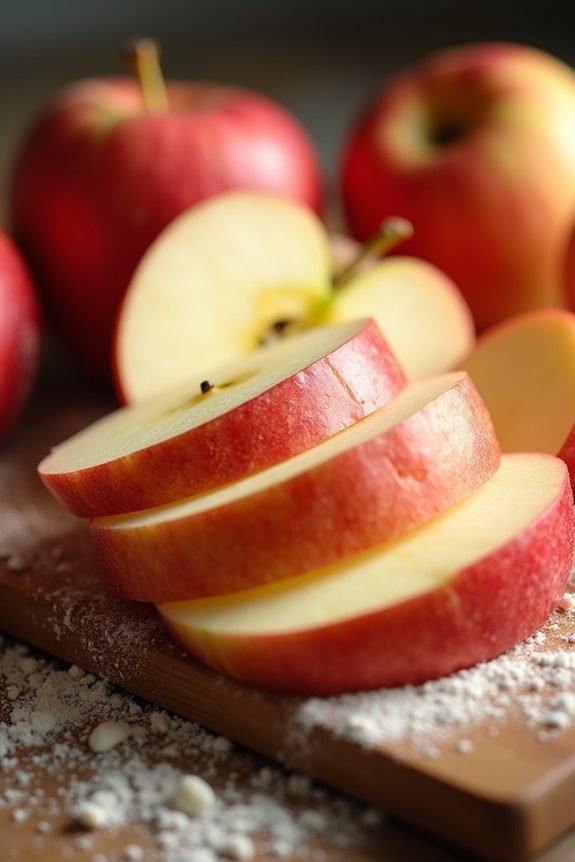
How can you keep your apple pie filling from turning into sauce? Mix McIntosh with firmer apples. McIntosh apples break down quickly during baking, but their strong, spicy flavor enhances any pie. Pairing them with sturdier varieties prevents mushiness while preserving that distinctive taste.
Firmer apples like Granny Smith, Braeburn, Honeycrisp, and Rome maintain their shape throughout baking. They provide structural support that McIntosh alone cannot. This texture balance creates a filling that holds together, not collapses into applesauce.
Use a ratio of one part McIntosh to two parts firmer apples. This proportion gives you the best of both worlds: layered flavor complexity and satisfying texture. Your baking achieves professional results when you understand how each variety contributes to the final product.
McIntosh vs. Cortland: Which Breaks Down Faster?
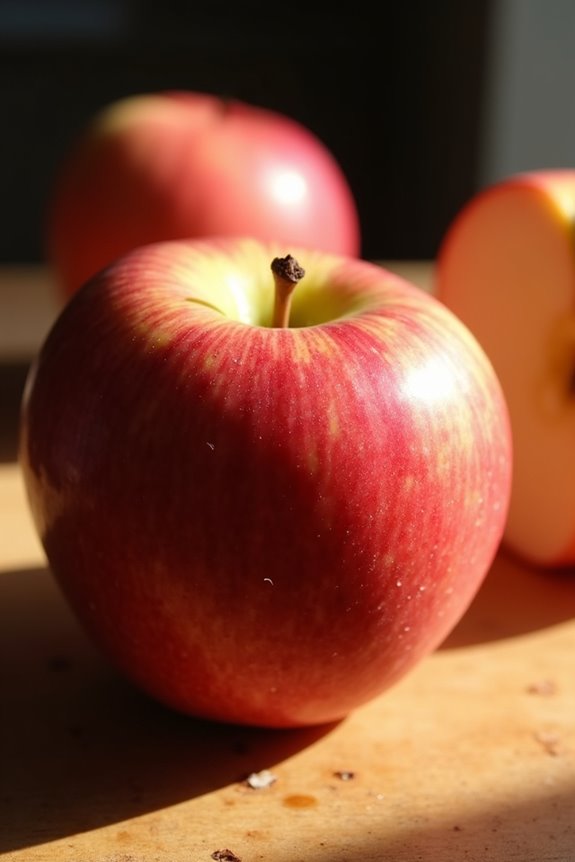
When you’re choosing between McIntosh and Cortland apples for baking, breakdown speed matters more than you might think. McIntosh apples collapse significantly during baking, transforming into an applesauce-like consistency. Cortland apples hold their shape better, maintaining a firmer texture throughout the baking process.
Here’s what you should know:
- McIntosh breaks down quickly, losing structure within minutes of heat exposure
- Cortland resists breakdown longer, keeping flesh intact and white throughout baking
- McIntosh’s flesh softens rapidly, making it unsuitable for recipes requiring defined apple pieces
- Cortland provides moderate firmness, balancing flavor with acceptable texture retention
When you bake McIntosh alone, you’ll get mushiness. Choose Cortland if you want apples that maintain their integrity. For best results, combine both varieties to achieve the texture and flavor profile you’re after.
Pair McIntosh With Granny Smith for Texture Balance
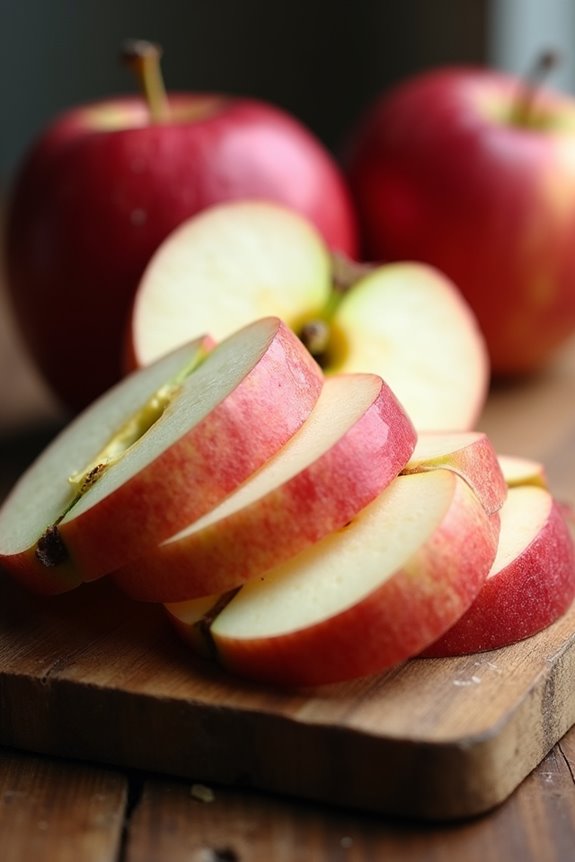
Why does combining McIntosh with Granny Smith work so well for baking? You get the best of both worlds. McIntosh apples break down quickly during baking, creating a saucy texture that fills gaps between firmer pieces. Granny Smith apples hold their shape, providing structure your filling needs. Together, they balance sweetness perfectly. The McIntosh contributes its strong, spicy flavor that mellows with heat, while Granny Smith adds complementary tartness. This pairing prevents your baking from becoming mushy or one-dimensional. You’ll achieve a multi-texture filling where some pieces soften into sauce while others maintain their integrity. This combination works especially well in pies and crisps, where you want both creamy and distinct apple pieces in every bite.
Timing Matters: When to Bake With McIntosh
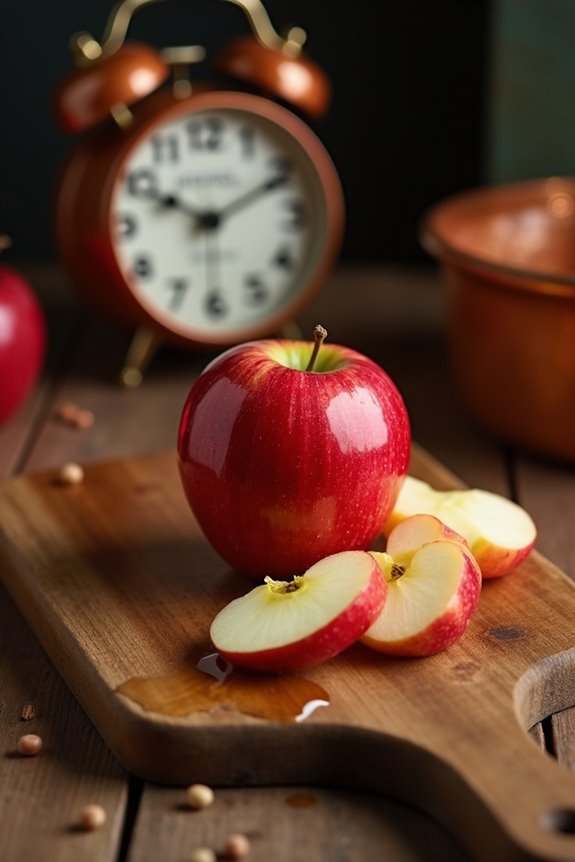
You’ll get the best results baking with McIntosh when you pick them early in the season, before their flesh becomes too soft and prone to collapsing. As harvest progresses into mid-season, you can still use McIntosh effectively by blending them with firmer varieties, which helps them contribute flavor while the sturdier apples maintain structure. Later in storage, McIntosh apples lose their crisp texture even faster, so if you’re baking with older fruit, plan on them breaking down completely—a trade-off that works best for sauces rather than pies.
Early Season Sauce-Making
Timing your McIntosh apple baking makes all the difference between a successful pie and a mushy disappointment. Early-season McIntosh deliver the strongest McIntosh flavor, offering that distinctive spicy, complex taste you’re seeking in pie baking. However, these same apples break down faster during baking, so you’ll want to adjust your approach accordingly.
Rather than using McIntosh alone, you’re better served combining them with firmer varieties like Granny Smith. This strategy gives you the best of both worlds: robust flavor from early-season apples with improved baking texture from sturdier fruit.
Consider these timing strategies:
- Harvest McIntosh in early fall for peak flavor intensity
- Reduce baking time when using early-season varieties
- Mix McIntosh with firmer apples to maintain structure
- Monitor your pie closely during the final minutes
This approach ensures you capture McIntosh’s signature taste without sacrificing texture.
Mid-Harvest Blending Strategies
When you pick McIntosh apples mid-season, you’re working with fruit that’s reached a sweet spot between flavor and stability. This timing matters because you’ll experience ideal McIntosh texture for blending strategies. Instead of baking McIntosh alone, pair them with Granny Smith varieties. This combination balances your baking performance by adding robust apple flavor while maintaining structural integrity throughout baking. The firmer Granny Smiths prevent your filling from becoming overly sauce-like, while McIntosh contributions deliver that sought-after taste depth. You’re essentially using each variety’s strengths to cover its weaknesses. Mid-harvest McIntosh apples work best in this supporting role, amplifying flavor profiles without dominating texture. This blending approach gives you consistent, reliable results across different pie batches and baking projects.
Late Storage Considerations
How long can McIntosh apples sit in your pantry or fridge before they’re no longer suitable for baking?
McIntosh apples deteriorate quickly compared to other varieties. Their naturally soft flesh breaks down rapidly during storage, which further compromises their already limited firmness retention. You’ll want to use them within one to two weeks of purchase for best baking results.
Consider these storage factors:
- Refrigerator storage slows deterioration but doesn’t stop it, especially for McIntosh varieties
- Room temperature storage accelerates softening, making apples unsuitable for baking within days
- Applesauce apples lose structural integrity faster as they age, so don’t delay baking
- McIntosh texture continues breaking down, even when refrigerated
Plan your baking projects around your purchase date. Using fresh apples ensures you’ll achieve the blended results you’re aiming for with firmer companion varieties.
Get the Most Flavor From Your McIntosh Apples
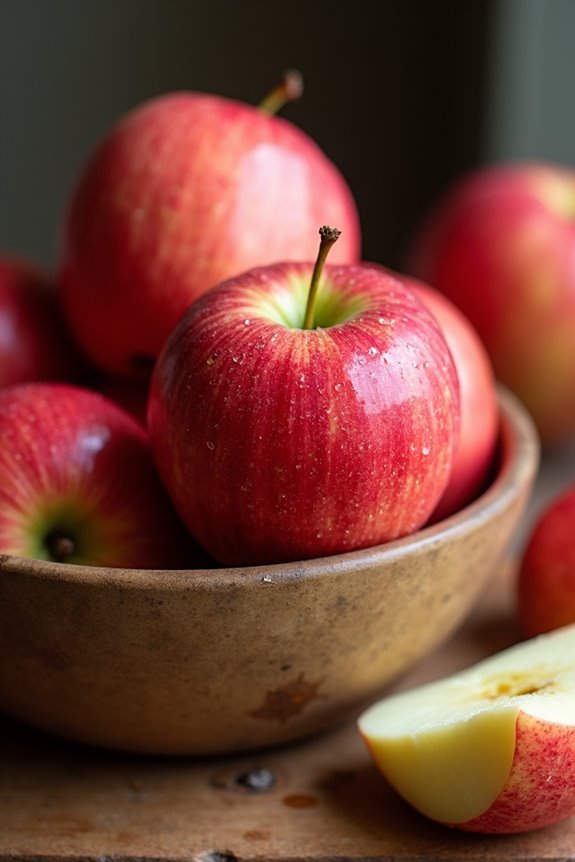
To release the best flavor from McIntosh apples, you’ll want to start by choosing fruit harvested early in the season. Early-season McIntosh deliver the strongest, spiciest apple notes that make baking worthwhile. You’ll notice their pronounced sweetness-tartness balance shines through in pie fillings and mixed-variety bakes.
The key to maximizing flavor lies in pairing McIntosh with firmer apple varieties like Granny Smith. This combination preserves texture balance while letting McIntosh contribute their distinctive taste. Since McIntosh break down easily during baking, mixing them prevents mushiness and ensures you capture their flavor without sacrificing the overall texture of your baked dish. This approach lets you enjoy McIntosh’s best qualities while maintaining the structural integrity your baking deserves.
Using McIntosh as One Apple in a Mixed-Variety Pie
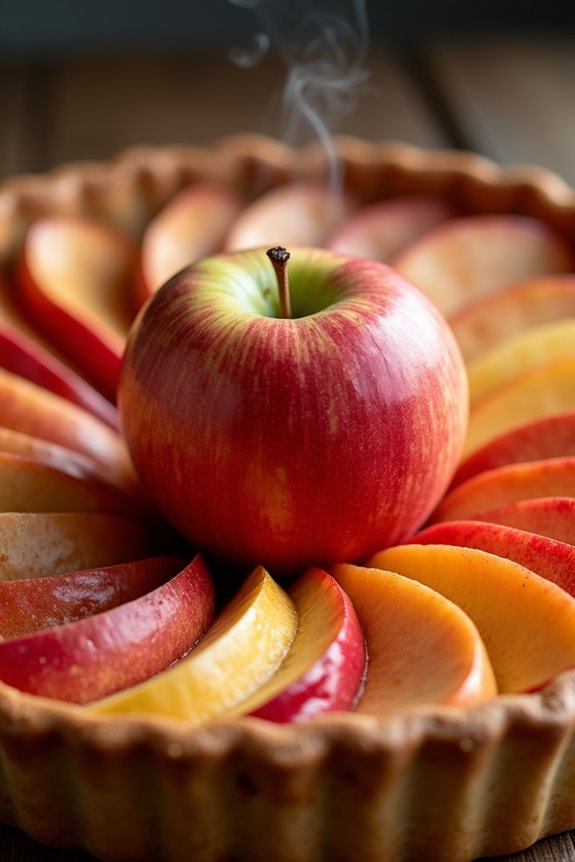
Why does mixing McIntosh with other apple varieties work so well for pie? When you bake McIntosh apples alone, they soften into a sauce-like consistency. Pairing them with firmer varieties like Granny Smith creates balance. You’ll get the distinctive spicy flavor McIntosh brings while maintaining the structural integrity your pie needs.
McIntosh apples break down into sauce when baked alone, but pairing them with firmer varieties like Granny Smith creates the perfect textural balance for pie.
The texture combination is what makes this approach effective:
- McIntosh breaks down into a smooth, flavorful sauce that binds your filling
- Firmer apples retain their shape, providing satisfying chunks throughout
- The contrast between soft and firm pieces creates appealing layers
- McIntosh’s pronounced aroma intensifies when cooked down, enhancing overall taste
This mixed-variety pie strategy lets you exploit McIntosh’s strengths without sacrificing baking results. You’ll deliver depth of flavor while keeping your pie structurally sound.
When to Skip McIntosh and Choose a Better Alternative
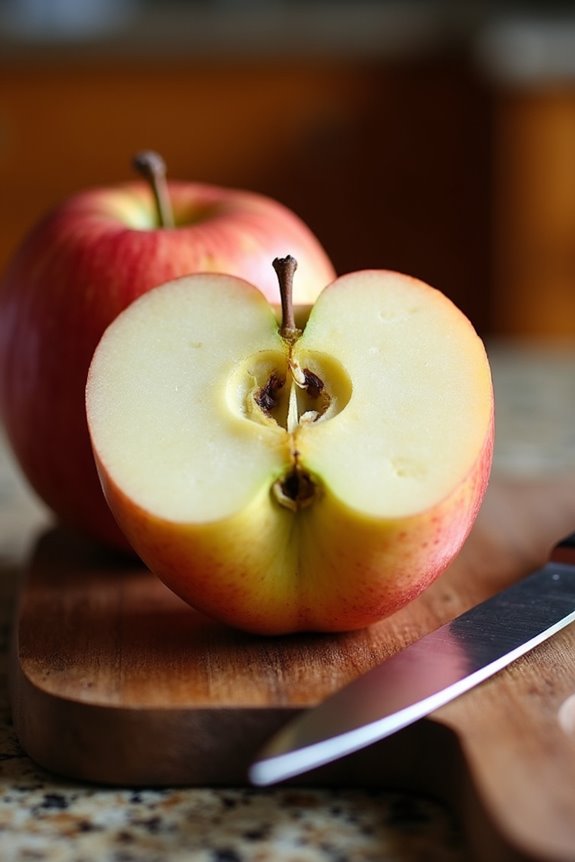
Sometimes you’ll want to skip McIntosh entirely, especially when your recipe demands apples that hold their shape during baking. If you’re making a pie or crisp where pie stability matters, firmer alternatives serve you better. Honeycrisp, Russet, Northern Spy, Braeburn, and Cortland won’t collapse into mush as your dessert bakes.
McIntosh apples break down too quickly because their flesh is naturally soft and watery. This causes them to lose structure, resulting in a soupy filling rather than distinct apple pieces. When baking texture is your priority, you need varieties with denser flesh that withstand heat without disintegrating.
Choose firmer alternatives if you want recognizable apple chunks in your finished dish. Your baked goods will maintain better texture and visual appeal when you select apples engineered for structural integrity during cooking.