


A clarified cocktail removes bitter compounds and cloudiness through milk-washing, creating a silky, crystal-clear drink you can prepare days ahead. You’ll mix your cocktail base with whole milk, which curdles on contact with citrus acid and traps tannins and impurities. After straining through cheesecloth, you’re left with a refined spirit that tastes smoother and stays fresh for weeks refrigerated. The process requires minimal equipment—just milk, a filter, and patience—making batch preparation practical for entertaining.
What Is a Clarified Cocktail?

Ever wondered why some cocktails look crystal-clear while others appear cloudy? You’re looking at clarified cocktails—drinks that’ve had their cloudiness and particulates removed through specialized techniques. These drinks deliver a silky texture and heightened flavor that standard cocktails can’t match.
The most popular method is milk-washing. Here’s how it works: acidic ingredients curdle the milk, and solids get trapped while whey stays suspended. The result? Crystal-clear perfection. Beyond appearance, clarified cocktails improve your drinking experience significantly. They remove tannins and impurities that cause bitterness or astringency, creating better flavor balance. You’ll notice the difference immediately—smoother mouthfeel, cleaner taste. Plus, properly clarified drinks stay stable and clear for weeks when refrigerated, making them ideal for batch preparation.
Why Clarify Your Cocktails?

Clarifying your cocktails transforms their appearance from cloudy and murky to bright and visually striking, giving you a drink that looks as carefully crafted as it tastes. Beyond looks, clarification removes harsh tannins and sediment that dull flavor, leaving you with a silkier mouthfeel and a more balanced taste where the drink’s core notes shine through plainly. You’ll also gain practical benefits like extended shelf life—your clarified cocktails can sit in the fridge for weeks or months without degrading, since the removal of impurities reduces oxidation.
Visual Elegance And Clarity
Why does clarity matter so much in modern mixology? When you clarify your cocktails, you’re creating drinks that look as impressive as they taste. Clarity transforms your glass into a visual statement.
Here’s what you gain through clarification:
- Gemstone-like appearance that catches light and elevates perceived quality
- Smooth, silky mouthfeel from removing cloudiness and sediment
- Enhanced aroma and taste perception because clarity makes flavors more recognizable
- Instagram-worthy presentation that encourages sharing and social engagement
- Extended shelf life with properly stored clarified drinks lasting weeks or months
You’re joining a growing community of bartenders who understand that visual elegance isn’t superficial—it’s fundamental to the drinking experience. Clear cocktails signal craftsmanship and intentionality. When you serve clarity, you’re serving sophistication.
Enhanced Flavor And Texture
Most clarified cocktails taste noticeably better than their cloudy counterparts, and there’s a straightforward reason why. Clarification removes sediment and cloudiness that mute your drink’s true flavors. When you use milk-washing during clarification, the milk curdles and traps tannins and impurities. This process eliminates bitterness that typically overshadows subtler notes.
With these harsh elements filtered out, you’ll notice citrus brightness, herbal complexity, and your base spirit’s character emerge clearly. The texture transforms too. You experience a silky mouthfeel instead of a rough one, making each sip more enjoyable and refined.
This enhanced clarity isn’t just about taste—it’s about experiencing what your ingredients actually offer. You’re removing barriers between you and the cocktail’s intended flavor profile.
A Brief History of Milk-Washing
You’d be surprised to learn that milk-washing isn’t a modern bartending innovation—it’s actually traced back to the 1700s, when bartenders discovered that adding acid to milk creates curds that trap unwanted particles, leaving behind a crystal-clear whey-rich liquid. From Mary Rockett’s famous clarified milk punch in the early 18th century to today’s craft bars, this technique evolved because it solved a real problem: removing the bitter, astringent compounds that made early cocktails harsh while extending their shelf life up to a year. What started as a practical preservation method has become a signature approach in modern mixology, proving that sometimes the oldest solutions are the most effective ones.
Origins and Early Practitioners
When you’re tracing clarified cocktails back to their roots, you’ll find milk-washing standing as the oldest and most popular clarification method—a technique that’s been around since the 1700s.
You’ll discover that early practitioners shaped this craft through experimentation:
- Mary Rockett pioneered milk-punch techniques in the 1700s, establishing foundational clarification practices
- Benjamin Franklin explored milk-washing in the 1760s, advancing the method’s refinement
- Bartenders combined acidified cocktails with milk to trigger curdling
- Curds trapped unwanted solids while whey separated cleanly
- Cheesecloth filtering removed particles, creating crystal-clear drinks
These innovators recognized that milk-washing offered more than visual clarity. The technique actually slowed oxidation, extending shelf life significantly. You could store milk-washed cocktails for up to a year, making the method both practical and revolutionary for its time.
Evolution Into Modern Mixology
Mary Rockett’s milk punch recipes didn’t disappear after the 1700s—they simply went dormant. You’ll find them reappearing on modern bar menus, where bartenders embrace milk-washing as a clarification technique that delivers both visual clarity and refined taste. This resurgence happened because contemporary mixologists recognized what made the method valuable: it creates silky textures, reduces harsh flavors, and extends shelf life up to a year when executed properly.
Modern bartenders haven’t abandoned tradition—they’ve enhanced it. While classic milk-washing remains popular, you now encounter alternatives like agar clarification and centrifugation, offering vegan options and precision that earlier practitioners couldn’t achieve. These innovations reflect how bartenders blend historical knowledge with current technology, producing batch-friendly cocktails that maintain the elegance and balance that defined Rockett’s original vision.
Why Milk-Washing Works Better Than the Alternatives
Milk-washing excels because:
- Targets specific compounds — Casein protein binds directly to bitter polyphenols and tannins, removing them while preserving flavor
- Creates silky texture — The curdling process produces a naturally luxurious mouthfeel that alternatives struggle to achieve
- Extends shelf life — Clarified cocktails remain fresh for weeks or months when refrigerated, outlasting untreated drinks
- Requires minimal equipment — You need only milk, a filter, and patience, making it accessible to home bartenders
- Produces crystal clarity — Multiple filtration passes yield brilliantly transparent drinks that look professionally refined
Unlike other clarification methods that may strip flavor or create undesirable textures, milk-washing preserves your cocktail’s character while removing unwanted bitterness. You’re joining a tradition dating back to 1711 while achieving restaurant-quality results at home.
Gather Your Supplies (What You Actually Need)
Now that you understand why milk-washing outperforms other clarification methods, it’s time to gather what you’ll actually use. You’ll need whole milk as your primary ingredient, since its fat and protein content creates the curds that trap impurities. A filtration setup matters equally—grab a coffee pour-over or funnel lined with coffee filters or cheesecloth. These tools let you separate the clarified liquid from solids slowly and effectively.
Stock mixing bowls for combining your cocktail and milk at the proper 4:1 ratio. You’ll also need a storage bottle for your finished product. Keep everything clean and ready before you begin. Having supplies organized prevents interruptions during the resting and filtration stages, ensuring you capture the best results from your milk-washing process.
Pick Your Cocktail (And Why Spirit Choice Matters)

You’ll want to choose your spirit base first, since different spirits interact differently with milk’s curdling acids and affect how cleanly the mixture separates. Spirits with higher acidity—like citrus-forward cocktails or those built on acidic ingredients—work best because they help the milk curdle effectively, while neutral or lower-acid bases may require added acid to trigger proper curdling. Your flavor profile matters too, since milk-washing softens harsh tannins and bitter notes, making it ideal for spirit-forward drinks but potentially unnecessary for already-smooth, delicate cocktails.
Spirit Base Selection Matters
Once you’ve decided on your clarified cocktail concept, the spirit you choose becomes your foundation—it’ll shape everything from how the drink tastes to how well the clarification process actually works.
Your spirit base directly influences the final flavor balance and how milk clarification affects acidity, sweetness, and tannins. Consider these options:
- Gin pairs beautifully with fruit-forward profiles, offering citrus notes that brighten strawberry, pineapple, and other bright flavors
- Light or aged rum complements tropical juices, creating smoother, sweeter results with rounded spice notes
- Brandy and Batavia Arrack deliver deeper warmth and caramel tones that hold up through clarification
- Acidity level matters—higher acidity aids coagulation and affects how well milk binds impurities
- Final richness depends on whether you want brighter citrus brightness or dessert-like silkiness
Match your spirit choice to your desired outcome.
Acidity Compatibility With Spirits
Your spirit choice sets the stage, but acidity is what actually makes milk coagulation work. When you add lemon juice or lime to your base spirit, you’re triggering the chemical reaction that transforms liquid into separated curds and whey. This process traps unwanted bitterness and creates that signature smooth texture you’re after.
Not all spirits play nicely with acidification, though. Higher-acidity spirits like certain gins and lighter rums cooperate beautifully with the clarification process. Darker, aged spirits require careful adjustments to dilution and resting time to prevent flavor imbalance.
| Spirit Type | Acidity Level | Clarification Speed | Best For |
|---|---|---|---|
| Gin | High | Fast | Citrus-forward drinks |
| Light rum | Moderate | Medium | Balanced profiles |
| Aged rum | Low | Slow | Rich, complex cocktails |
| Cognac | Low | Slow | Smooth finishes |
| Vodka | Neutral | Medium | Versatile applications |
Your careful pairing ensures the milk curdling process works efficiently.
Flavor Profile Considerations First
How does clarification actually reshape what you taste? When you choose your base spirit, you’re setting the foundation for how clarification will enhance your drink’s flavor profile. The clarified milk washing process removes tannins and impurities, leaving you with a smoother, silkier mouthfeel and stronger acidity that cuts through cleanly.
Consider these spirit and ingredient pairings:
- Gin pairs beautifully with bright citrus juices that preserve aromatic compounds after filtration
- Tequila complements citrus-forward flavors while maintaining clarity and vibrant taste
- Lemon and lime provide essential acidity to trigger curdling effectively
- Citrus notes remain prominent after the clarification process completes
- Aromatic spirits benefit most from the cleaner, brighter finish clarification delivers
Your spirit choice directly influences which flavors survive and shine through the clarified milk washing technique.
Build Your Base: Ingredient Prep

The foundation of any clarified cocktail starts with thoughtful ingredient selection and preparation. You’ll want to choose citrus-forward elements that anchor your drink’s flavor profile. Select your spirit carefully—gin, brandy, or rum work beautifully—then add acidic components like fresh lemon or lime juice. These ingredients matter because they interact with milk during the milk-washing and clarification process.
Fresh juices are non-negotiable here. Avoid canned options, which contain additives that interfere with clarification. Whole milk will trap unwanted tannins and solids, so your base mixture needs quality ingredients to begin with.
Prepare your base cocktail in advance without ice. This prevents dilution and gives the milk time to work effectively. You can scale batches up for larger gatherings, making clarified cocktails surprisingly practical for entertaining.
Curdle the Milk: Bringing It All Together
Now comes the magic: combining your cocktail with cold milk to trigger the clarification process. You’re about to witness how acid-induced curdling transforms your drink. Here’s what happens:
- Pour cold cow milk into a clean container first
- Slowly add your cocktail to the milk, not the reverse
- Watch as proteins immediately begin trapping solids and tannins
- The mixture curdles gradually, forming visible white particles
- Aggressive combining ruins the process, so patience matters here
The curdling happens because the cocktail’s acidity causes milk proteins to coagulate. They bind with unwanted elements, pulling them from your liquid. This separation is essential—it’s what makes your final drink silky and clear.
Let the mixture rest undisturbed for one to six hours, or overnight. The curds need time to fully coagulate and settle. You’ll notice distinct layers forming: curds sink while clearer whey rises above them.
Filter Out the Curds: Achieving Clarity
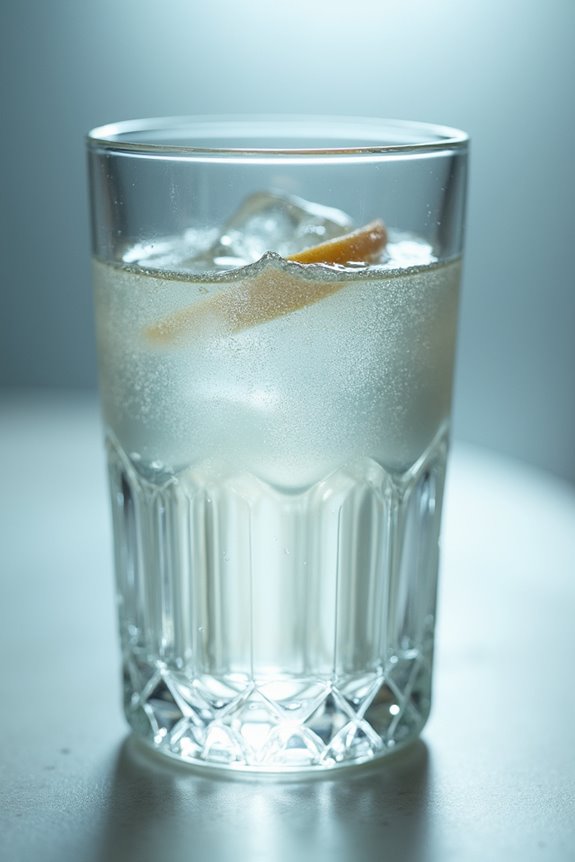
After your mixture has rested and the curds have settled to the bottom, you’re ready for the filtration stage—the step that transforms your cloudy liquid into something crystal clear. You’ll pour your milk-based cocktail through fine filters slowly and deliberately. Use coffee filters, cheesecloth, or fine mesh to separate the curds from the clear whey beneath. Patience matters here. Rush the process, and you’ll trap impurities in your final drink. One pass often isn’t enough. Multiple straining rounds ensure complete clarity, especially with thicker batches. The filtration process works by letting gravity do the work while your filter catches solids. What emerges is a visually stunning cocktail with a silky mouthfeel that’ll impress anyone who tastes it.
Chill, Serve, and Enjoy

Your clarified cocktail’s journey isn’t finished once you’ve achieved that crystal clarity—proper chilling and serving are what unleash its full potential. You’ve invested time in milk clarification and filtering, so maximize those results through smart presentation and storage.
- Chill thoroughly before serving. Cold temperatures enhance the silky mouthfeel you’ve created and improve flavor balance across your palate.
- Store in airtight containers. Refrigeration preserves your clarified drink for weeks, slowing oxidation that would degrade quality.
- Serve in appropriate glassware. Use chilled coupes or rocks glasses to showcase your crystal-clear appearance.
- Pour carefully to maintain clarity. Gentle pouring prevents disturbing sediment if any settles during storage.
- Enjoy within the recommended timeframe. Even clarified cocktails peak at their best when consumed fresh, typically within one to two months.
Storage, Shelf Life, and Make-Ahead Tips
You can store your clarified cocktail in the refrigerator for extended periods, with milk-based clarifications remaining stable for up to a year because the clarification process removes the particulates that typically cause spoilage. Preparing clarified cocktails ahead of time offers practical benefits: you can batch-process multiple servings, reduce last-minute preparation stress, and guarantee consistent results by allowing the flavors to meld in a controlled environment. To preserve clarity during storage, keep the cocktail in a sealed bottle or carafe, undisturbed in the fridge, and avoid shaking or agitating it before serving.
Refrigerated Storage Duration
How long does a clarified cocktail actually last in your fridge? You’ll find that proper refrigeration extends the life of your batches considerably, often lasting weeks to months depending on your clarification method.
Here’s what you need to know about storage duration:
- Milk-washed cocktails last longer because the dairy removes particles that speed up spoilage
- Airtight bottles are essential—they prevent oxidation and keep your drink fresh
- Temperature matters—consistent chilling slows degradation of flavors and quality
- Clear, filtered drinks maintain their integrity longer than unclarified versions
- Storage timeframes typically range from two weeks to several months with proper technique
Store your clarified cocktails in clean, sealed containers on your refrigerator shelf. This setup keeps oxygen exposure minimal while maintaining the clarity and taste you worked to achieve.
Make-Ahead Preparation Benefits
Because clarified cocktails remove the particles that typically cause degradation, they’re remarkably stable when stored properly—often lasting weeks or even months in your refrigerator. You’ll appreciate the convenience of preparing clarified milk punch in advance, especially for entertaining larger groups. The milk-washing process traps impurities into curds, leaving you with a clear liquid that resists spoilage far longer than traditional cocktails.
| Storage Method | Duration | Container Type |
|---|---|---|
| Refrigerated, sealed | 4-8 weeks | Glass bottles |
| Refrigerated, sealed | 2-3 months | Airtight carafes |
| Room temperature | Not recommended | N/A |
You’ll want clean, airtight containers to maximize shelf life. Batch preparation lets you scale recipes confidently, knowing your make-ahead cocktails maintain quality. This approach eliminates last-minute mixing stress while delivering consistent flavors to your guests.
Fruity Pebbles Milk Punch Recipe

When you’re ready to craft a clarified cocktail with genuine cereal-milk flavor, a Fruity Pebbles Milk Punch delivers both visual appeal and silky texture in one glass.
This recipe combines citrus-forward gin, muddled strawberries, pineapple juice, lemon, and lime with a custom cereal milk that handles clarification. Here’s what you’ll need:
- Soak 12 oz milk with 2/3 cup Fruity Pebbles for 1–2 hours, then fine-strain
- Store your cereal milk up to 4 days for flexibility
- Mix gin, fruit juices, and cereal milk base together
- Let citrus acids curdle the milk, creating a silky clarified texture
- Serve over a large clear ice ball with Fruity Pebbles, salt, orange peel, and honey
The milk-curdling process produces a shelf-stable cocktail with enhanced mouthfeel. The cereal milk doesn’t just flavor—it aids clarification by establishing a cohesive base that balances the drink’s acidity perfectly.
Classic English Milk Punch Recipe
While the Fruity Pebbles variation shows how modern bartenders adapt milk punch techniques, the classic English version—perfected over 300 years ago—represents the original clarification method that started it all. You combine brandy or gin with citrus juice, sugar, and spices to create your base. Then you add warm or room-temperature milk, which curdles on contact with the acid. This curdling is essential. The curds trap impurities and soften harsh tannins, transforming your drink. You strain the mixture through fine cheesecloth to remove solids, yielding a crystal-clear liquid. The milk punch clarification process creates that signature silky mouthfeel you’re seeking. Your clarified cocktail can be chilled and stored for months, making it perfect for batch preparation.
What Can Go Wrong (And How to Fix It)

Even with careful technique, your milk punch can fail at several stages—but most problems have straightforward solutions.
- Incomplete curdling: You’ve poured the milk too quickly or used cold milk. Slow your pour, use room-temperature whole milk, and wait the full hour for curds to form properly.
- Cloudy final product: Filtration wasn’t thorough enough. Repeat the process with fresh filters, pouring slowly through your funnel setup.
- Over-curdling: Aggressive mixing breaks down curds excessively. Stir gently and avoid shaking or vigorous blending.
- Non-dairy milk failure: Regular alternatives won’t curdle effectively. Switch to coconut cream, which produces better results than other options.
- Separation after storage: Your clarified cocktail separated in the refrigerator. This is normal; simply re-filter before serving.