
The De La Louisiane is a spirit-forward New Orleans cocktail that blends equal parts rye whiskey, sweet vermouth, and Benedictine with minimal absinthe and Peychaud’s bitters. You stir it with ice, then strain it into a coupe glass and garnish with Luxardo cherries. It sits between the Sazerac and Vieux Carré in New Orleans’ cocktail heritage, offering herbal complexity without citrus dominance. The equal-part construction creates remarkable balance among its ingredients, making it a refined choice for those seeking aromatic depth.
De La Louisiane: The Vermouth-Forward New Orleans Classic
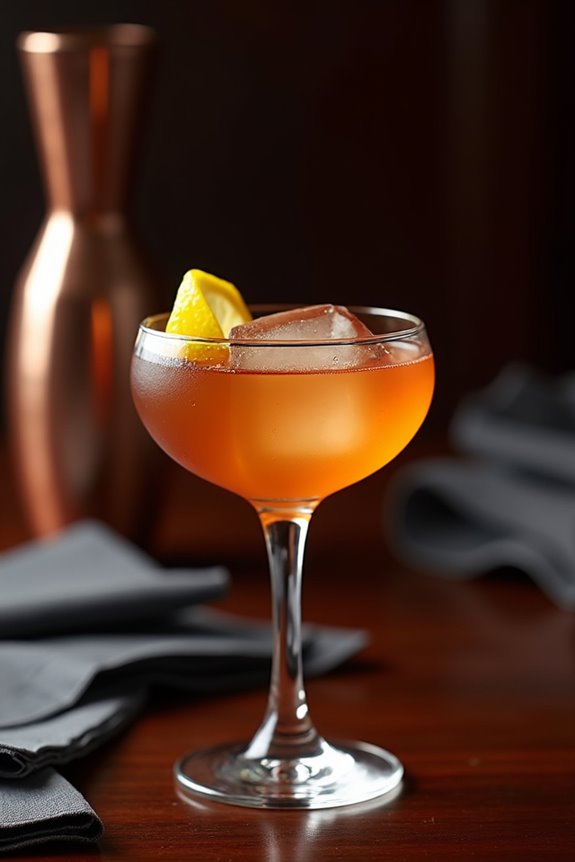
The De La Louisiane is a vermouth-forward cocktail that balances rye whiskey, sweet vermouth, Benedictine, absinthe, and Peychaud’s bitters in careful equal measure. You’ll find this New Orleans classic represents a distinct style within the Sazerac family of drinks. The recipe calls for equal parts—1/2 oz each of rye, sweet vermouth, and Benedictine—paired with just 2 dashes of absinthe and 2 dashes of Peychaud’s bitters. This composition creates a sophisticated spirit-forward drink where vermouth plays a leading role rather than supporting one. The preparation method matters too. You stir everything with ice in a mixing glass, then strain into a coupe or Nick and Nora glass. A garnish of two Luxardo cherries finishes the drink, adding visual appeal and subtle flavor notes that complement the herbal complexity.
De La Louisiane in New Orleans Cocktail History
You’ll find the De La Louisiane occupies a unique position in New Orleans’ cocktail evolution, sitting between the foundational Sazerac and its cousin the Vieux Carré within the city’s classic drink lineage. The cocktail emerged from the same era and philosophical approach that defined New Orleans mixology—balancing spirit-forward profiles with aromatic depth through carefully chosen modifiers like Benedictine, absinthe, and Peychaud’s bitters. Understanding how bartenders like Anders Erickson adapted the drink’s formulation helps you see how New Orleans cocktails developed through variation rather than rigid standardization, allowing each generation to refine these time-honored recipes while maintaining their essential character.
Origins And Historical Context
Where does a cocktail fit into a city’s drinking legacy? You’ll find the De La Louisiane nestled within New Orleans cocktail history as a distinguished member of the city’s classic family. This drink claims its place through clear connections:
- Its Vieux Carré lineage positions it between the Sazerac and Vieux Carré in the evolutionary timeline
- The Benedictine-based vermouth cocktail formula creates its distinctive herbal character
- Its alternate name, Cocktail à la Louisiane, anchors it firmly in local tradition
The De La Louisiane emerged from New Orleans’ golden age of cocktail innovation, when bartenders experimented boldly with local spirits and imported liqueurs. You’re drinking a cocktail that reflects the city’s cosmopolitan tastes and creative spirit, shaped by generations of skilled mixologists refining recipes that defined an era.
The New Orleans Cocktail Lineage
Understanding how the De La Louisiane connects to New Orleans’ broader cocktail tradition reveals why it’s more than just another drink—it’s part of a living heritage. You’ll find this cocktail positioned between two iconic drinks: the Vieux Carré and the Sazerac. Rather than standing alone, the De La Louisiane shares a cousin relationship with these classics, anchoring you within New Orleans’ celebrated bar culture.
The drink’s construction tells this story clearly. Its equal-parts formula featuring rye whiskey, sweet vermouth, and Benedictine mirrors the sophisticated balance you’ll encounter throughout this cocktail family. When you order a De La Louisiane, you’re connecting to a lineage that shaped American mixology itself. These aren’t separate creations—they’re evolved expressions of the same foundational principles that define New Orleans’ cocktail identity and continue influencing bartenders today.
Signature Ingredients And Technique
The De La Louisiane’s power lies in its ingredient balance and deliberate construction. You’re building a cocktail where each component serves a distinct purpose, creating harmony rather than competition on your palate.
Your core ingredients work together strategically:
- Rye whiskey provides the sturdy foundation, delivering warmth and spice that anchors the entire drink
- Benedictine contributes herbal sweetness and complexity, softening the whiskey’s edges while adding depth
- Absinthe arrives as a whisper—just one teaspoon—introducing aromatic, anise-forward nuance without overpowering
You’ll stir this combination with ice for 20–30 seconds, chilling and diluting it precisely. The technique matters: proper stirring integrates flavors smoothly rather than creating harsh edges. You’ll strain into a coupe glass, then garnish with cherries, completing a balanced, sophisticated New Orleans classic.
How to Make De La Louisiane at Home
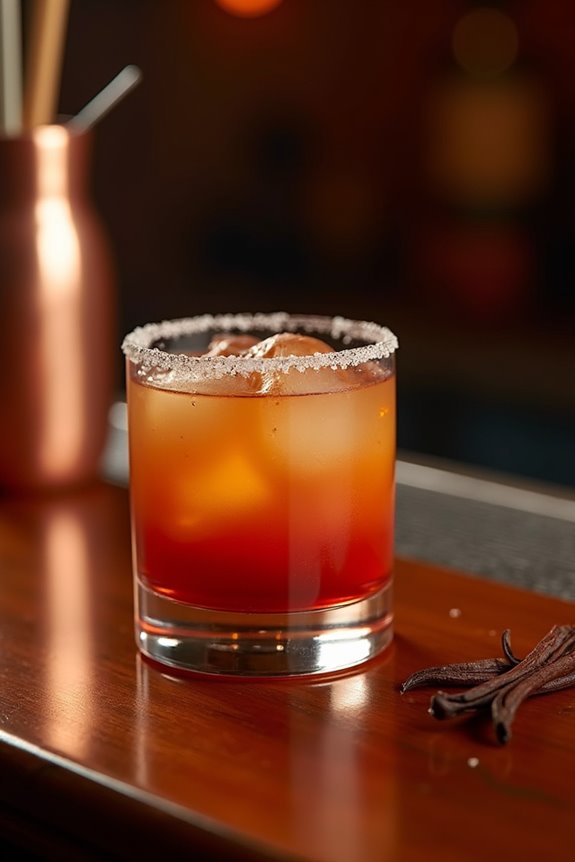
Why’s this New Orleans classic so balanced and approachable? You’ll combine equal parts—1/2 oz rye whiskey, 1/2 oz sweet vermouth, and 1/2 oz Benedictine—in your mixing glass. Add 2 dashes of absinthe and 2 dashes of Peychaud’s bitters. This combination creates the drink’s signature herbal complexity. Fill your mixing glass with ice, then stir thoroughly for about 30 seconds. The stirring method chills and dilutes the De La Louisiane properly, unlike shaking, which would overaerate it. Strain the mixture into a coupe or Nick and Nora glass. Finish with Luxardo cherries as garnish, which enhance both flavor and presentation. You’ve now created a sophisticated cocktail that belongs in any home bar collection.
Why Does Rye Whiskey Work Here?
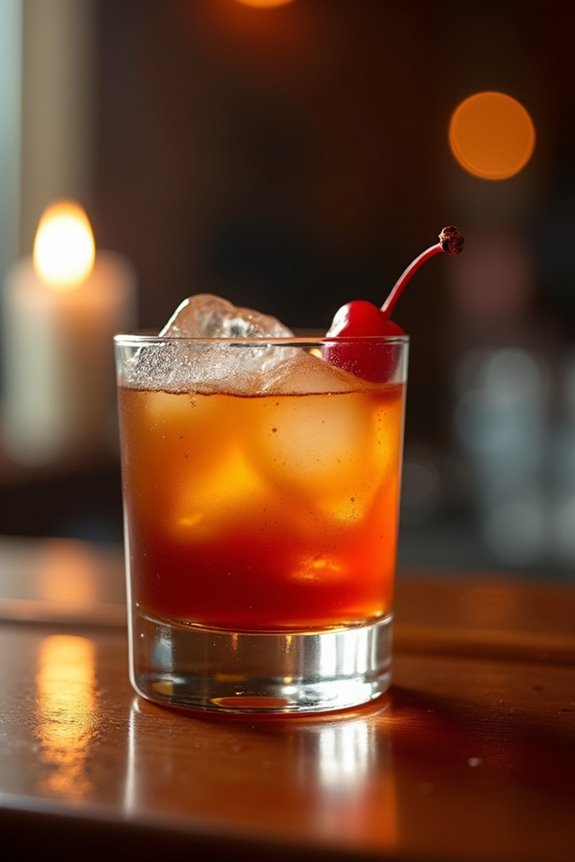
Rye whiskey’s spicy, assertive grain profile makes it the ideal foundation for the De La Louisiane. You’re building a drink with competing flavors, and rye provides the structural support to balance everything smoothly.
Here’s why rye whiskey excels here:
- Cuts through sweetness – The grain’s natural spiciness counteracts the sweet vermouth and herbal liqueur, preventing the drink from becoming cloying. You achieve a drier finish that feels refined.
- Anchors complex layers – Rye’s sturdy backbone supports the absinthe and bitters without getting overpowered. These assertive ingredients need a spirit strong enough to hold them together.
- Enhances aromatic complexity – Compared to bourbon, rye’s spicy notes amplify the bitters’ subtle nuances. You experience a more vibrant, herb-forward character throughout.
This spirit choice isn’t accidental—it’s tradition meeting chemistry.
Sweet Vermouth: The Drink’s Backbone
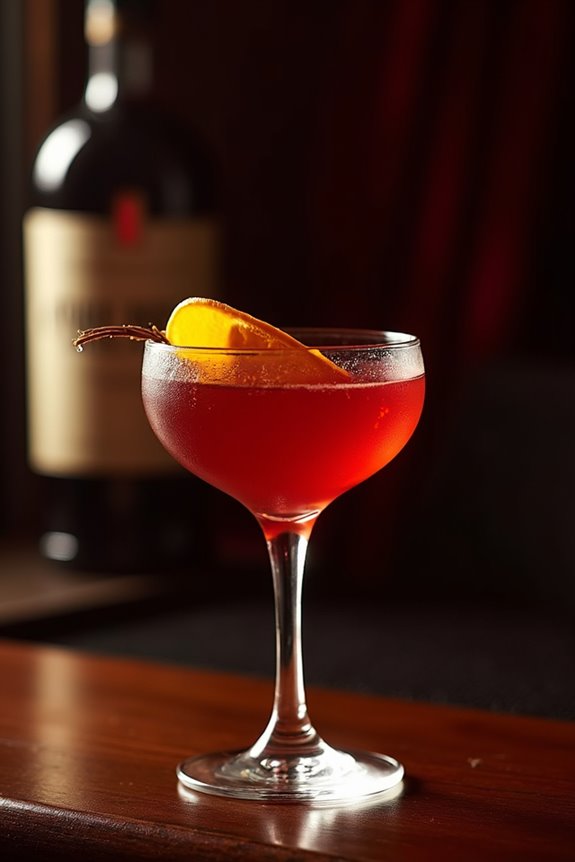
Sweet vermouth forms the structural core of the De La Louisiane, serving as an equal-part component that unites the drink’s competing flavors into a cohesive whole. You’ll find it measured equally alongside rye whiskey and Benedictine, creating a foundation that prevents the cocktail from becoming overly spirit-forward.
The vermouth’s non-citrus profile brings boozy depth while harmonizing the herbal Benedictine with the rye’s spice. It softens sharp edges and supports overall smoothness, making balance achievable. This essential role places the De La Louisiane within New Orleans’ classic cocktail family, alongside drinks like the Vieux Carré and Sazerac.
When you craft this drink, you’re relying on sweet vermouth as the backbone that holds everything together. That equal-part measurement isn’t arbitrary—it’s fundamental to the De La Louisiane’s defining character.
Bénédictine: Where the Herbal Character Lives
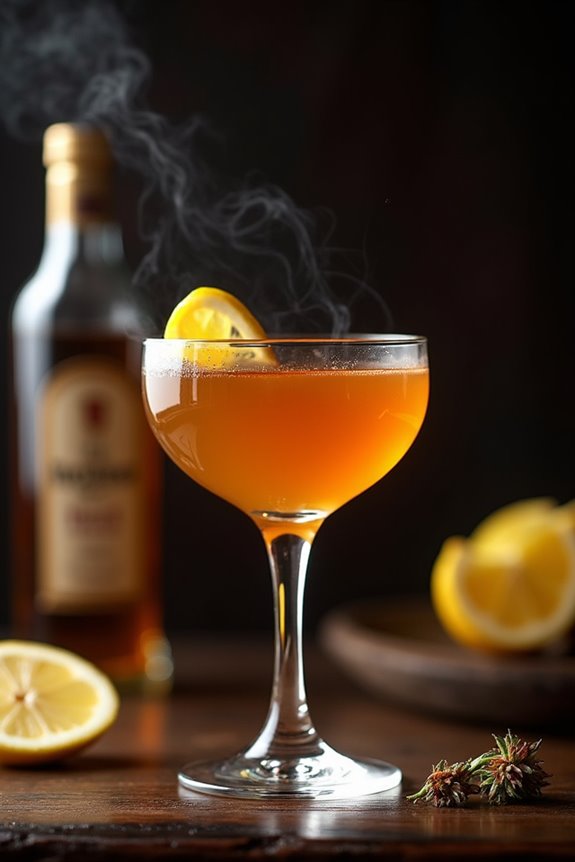
You’ll find Bénédictine doing the heavy lifting in De La Louisiane, where its complex herbal profile gives the drink its distinctive aromatic spine—it’s the ingredient that transforms a simple whiskey-and-vermouth combination into something truly distinctive. Unlike Chartreuse, which demands respect through intensity and cost, Bénédictine offers you that herbal depth without dominating the citrus notes or your budget, making it the practical choice for classic cocktails where you want sophistication without sacrifice. As an equal-part player alongside rye whiskey and sweet vermouth, it weaves together with absinthe and Peychaud’s bitters to create the nuanced finish that defines this New Orleans-style drink.
Herbal Complexity And Depth
Where does the De La Louisiane get its sophisticated herbal backbone? Bénédictine delivers it. This world-renowned liqueur brings herbal complexity that transforms your cocktail experience.
The Cocktail Recipe balances 1/2 ounce of Bénédictine with equal parts rye whiskey and sweet vermouth. Here’s what you’re getting:
- Botanical depth that costs less than Chartreuse alternatives yet offers comparable versatility
- Sweet, nuanced flavors that shift focus away from citrus-forward profiles toward aromatic richness
- Enhanced herbal notes that complement Peychaud’s bitters and absinthe for layered complexity
Bénédictine anchors your drink within New Orleans’ cocktail lineage alongside classics like Vieux Carré and Sazerac. You’re not just mixing ingredients—you’re crafting a spirit that belongs to a storied tradition. The herbal character doesn’t overpower; it weaves through, creating balance that makes this cocktail distinctly memorable.
Versatility In Classic Cocktails
Why does Bénédictine work so well across different cocktails when other herbal liqueurs seem locked into specific recipes? The liqueur’s balanced sweetness and moderate herbal intensity create flexibility that other options don’t match. In the De La Louisiane, you’re using it in equal parts with rye and sweet vermouth, where it contributes depth without drowning citrus notes. This restraint matters. Unlike Chartreuse—which demands careful handling and costs more—Bénédictine plays well with others. Its herbal profile complements Peychaud’s bitters and absinthe without fighting them for attention. The sweetness simultaneously balances rye’s booziness while maintaining smoothness in spirit-forward drinks. This combination of versatility and value positions Bénédictine as a core ingredient across classic cocktail recipes, especially those building New Orleans’ signature layered herbal character.
Cost-Effective Alternative To Chartreuse
Bénédictine delivers the herbal complexity you’d expect from premium liqueurs, but at a fraction of the price—making it the practical choice for home bartenders building a De La Louisiane.
You’ll find Bénédictine works effortlessly in this classic cocktail through:
- Equal-part formulation – Its strength allows you to use near-equal measures with rye and vermouth, creating balanced herbal depth without requiring expensive alternatives
- Aromatic harmony – The liqueur combines with absinthe and Peychaud’s bitters to build the drink’s signature finish, amplifying each ingredient’s contribution
- Accessibility factor – You’re not compromising flavor; you’re simply choosing efficiency over prestige pricing
This approach lets you craft authentic New Orleans cocktails without premium costs. Bénédictine proves that exceptional herbal character doesn’t demand exceptional spending—you’re making smart choices while joining experienced bartenders who prioritize results over labels.
Peychaud’s Bitters: The New Orleans Signature
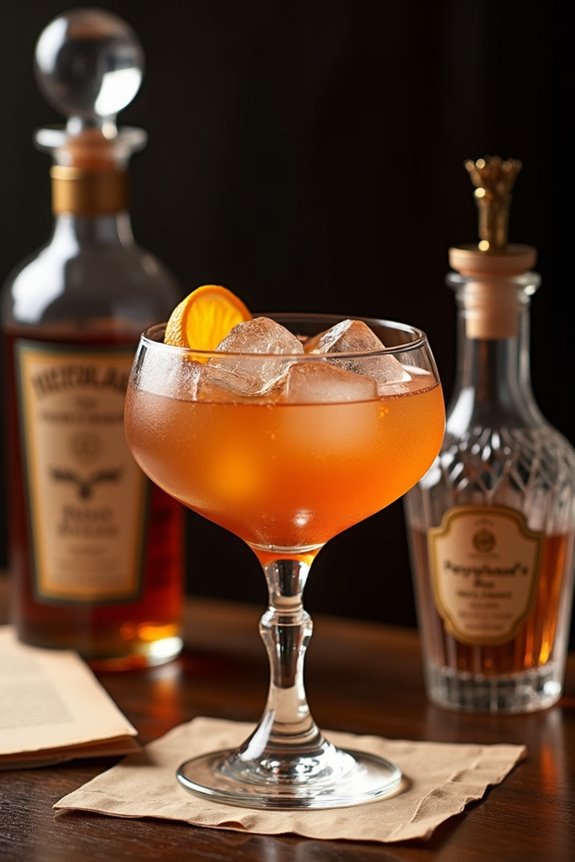
What makes Peychaud’s bitters so essential to the De La Louisiane? You’re looking at the signature element that defines New Orleans cocktails. These bitters provide the aromatic finish that sets this drink apart from other classic cocktails. You’ll use just a dash or two—measured restraint matters here. This small amount contributes distinctive flavor without overwhelming the spirit base.
Peychaud’s works in balance with the other ingredients in your De La Louisiane. It pairs specifically with absinthe or Herbsaint to create a nuanced profile. Together, they shift the flavor away from citrus-forward notes. The bitters become the standard choice alongside rye, sweet vermouth, and Benedictine. You’re joining a lineage when you reach for Peychaud’s—it’s the expected choice among those who know New Orleans cocktails.
Absinthe: Why Three Dashes, Not More
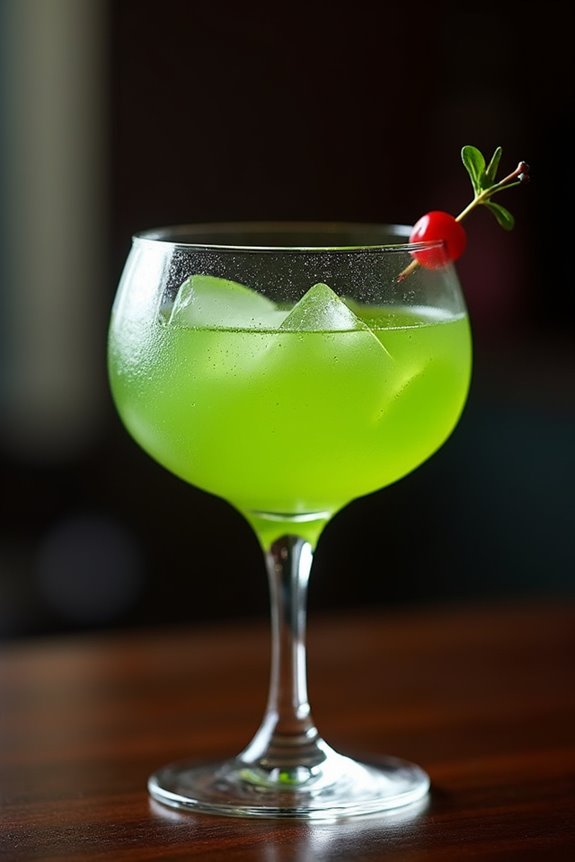
When you add absinthe to your De La Louisiane, you’re walking a careful line between aromatic complexity and overwhelming the drink’s core flavors. Two to three dashes is the sweet spot—enough to deliver that subtle anise note and herbal depth without letting absinthe’s bold character drown out the rye, sweet vermouth, and Benedictine that define the cocktail. Go beyond this threshold, and you’ll push the balance from sophisticated to one-note, losing the layered quality that makes this New Orleans classic work.
Balance In Herbal Notes
Why does the De La Louisiane call for just two or three dashes of absinthe instead of a full measure like the other ingredients? The answer lies in achieving balance among competing herbal notes.
Absinthe brings intense anise flavor that’d easily overshadow your drink if you used equal parts. Instead, you’re restraining it strategically:
- Preventing dominance – Three dashes let absinthe contribute without drowning out rye, vermouth, and Benedictine
- Creating complexity – Peychaud’s bitters enhance the absinthe’s herbal profile rather than masking it, layering aromatic depth
- Maintaining drinkability – The restrained measure avoids citrus-like brightness, keeping the cocktail smooth and approachable
This measured approach establishes the New Orleans aromatic foundation you’re after. The Benedictine and sweet vermouth temper absinthe’s intensity, while Peychaud’s bitters tie everything together harmoniously. You’re building a drink where each ingredient supports the others.
Absinthe’s Aromatic Ceiling
How you measure absinthe in the De La Louisiane determines whether you’ve got a balanced New Orleans cocktail or an anise-dominated drink that’s lost its way. Three dashes represents your aromatic ceiling—the sweet spot where absinthe contributes herbal depth without overpowering rye, Benedictine, and sweet vermouth. When you exceed this amount, the anise character takes over, drowning out the drink’s carefully constructed complexity.
You’ll add those dashes directly to your mixing glass before stirring with ice. This method distributes the absinthe evenly throughout, creating a unified aromatic profile rather than isolated pockets of intensity. The three-dash standard protects the drink’s identity within New Orleans cocktail tradition while honoring what makes it distinctly itself—a balanced conversation between spirits and botanicals, not a solo performance.
Stir, Don’t Shake: And Why It Matters
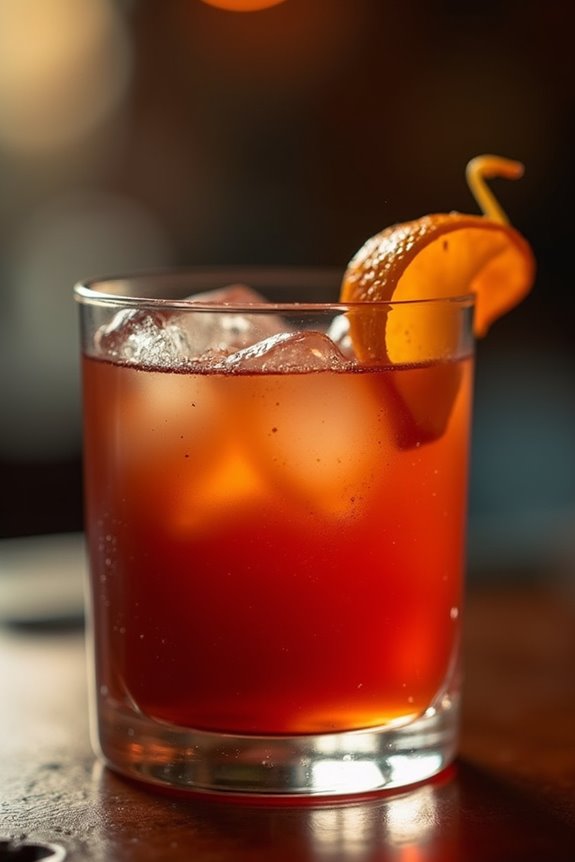
The De La Louisiane’s preparation method is just as important as its ingredients, and that method is stirring, not shaking. You’ll preserve the cocktail’s nuanced character by choosing this technique deliberately.
Here’s why stirring matters for this drink:
- Maintains spirit-forward balance – Stirring chills and dilutes the equal-part base without introducing excess air that shaking creates, keeping rye whiskey, sweet vermouth, Benedictine, absinthe, and Peychaud’s bitters in perfect harmony.
- Protects herbal complexity – The gentle mixing preserves the anise-forward profile and aromatic layers you’re seeking, avoiding citrus-forward notes that aggressive shaking introduces.
- Delivers smooth texture – A few seconds of rapid stirring, adjusted for your ice size, creates the polished mouthfeel this coupe-served cocktail demands.
You’re choosing technique that honors tradition and flavor.
Coupe or Nick and Nora: Choosing Your Glass
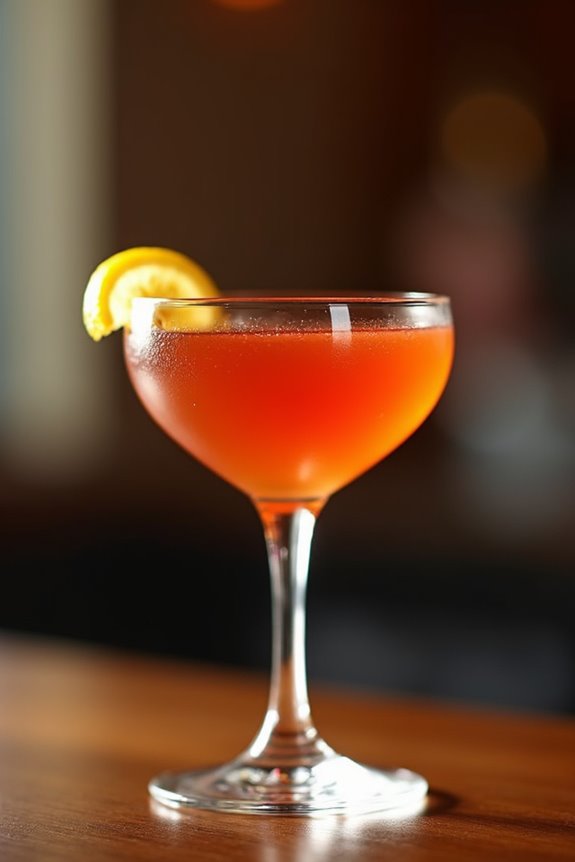
When you choose between a coupe and a Nick and Nora glass for your De La Louisiane, you’re really deciding how you want to experience the drink’s aromas and flavors. The classic coupe offers a wider bowl that lets aromas spread more freely, while the Nick and Nora’s narrower design concentrates those scents and keeps your drink colder longer, which can actually make the drink taste less sweet. Your choice depends on whether you want that traditional, open presentation or prefer a more modern approach that emphasizes the cocktail’s aromatic complexity.
Classic Coupe Glass Appeal
Selecting between a coupe and Nick and Nora glass fundamentally shapes how you’ll experience the De La Louisiane. The classic coupe glass elevates this cocktail into refined territory, offering distinct advantages:
- Aroma concentration – The bowl shape directs aromatic compounds upward, intensifying the drink’s complex scent before your first sip
- Visual presentation – A coupe showcases the cocktail’s balanced composition and garnished finish, creating an inviting appearance
- Temperature control – The wider bowl maintains optimal chill while preserving the precise dilution that defines this drink’s smooth character
A coupe glass transforms your experience from ordinary to intentional. You’ll notice how the glassware itself communicates that you’re enjoying something special. The boozy, spirit-forward profile emerges cleanly without excessive citric notes, while Luxardo cherry garnishes complement both flavor and aesthetics perfectly within this timeless vessel.
Nick and Nora Advantages
While a coupe glass certainly delivers, Nick and Nora glasses offer their own compelling set of benefits that actually reshape how you’ll perceive and enjoy the De La Louisiane. The narrower bowl concentrates your drink’s aromas more effectively, allowing you to experience the herbal and cherry notes with greater intensity. This design also keeps your cocktail cooler longer, thanks to the stemmed construction that isolates your hand from the liquid. The result? You’ll notice the drink’s balance more subtly as temperature remains stable throughout your sipping experience. The concentrated aroma profile particularly highlights the absinthe and rye whiskey interplay. For those seeking precision in their tasting experience, Nick and Nora glasses deliver sophisticated presentation while functionally enhancing how you perceive this classic cocktail’s nuanced flavors.
Glassware Selection Considerations
How much does your glass choice actually matter for the De La Louisiane? More than you’d think. Your selection shapes how you experience this classic drink’s herbal and bitter character.
Consider these key factors:
- Aroma concentration — A Nick and Nora glass narrows at the top, directing aromatic compounds toward your nose, intensifying each sip’s complexity.
- Drinking experience — The Nick and Nora encourages smaller, more concentrated tastes, while a coupe’s wider bowl creates a lighter, airier feel that slightly dilutes the aroma.
- Visual presentation — Coupes offer traditional elegance with their broad, shallow design, whereas Nick and Noras provide a modern, refined look.
When serving multiple drinks, pre-chill your chosen glassware. This simple step ensures your De La Louisiane stays properly chilled throughout the evening, maintaining its balanced flavor profile and overall quality.
Why Luxardo Cherries Matter (And When They Don’t)
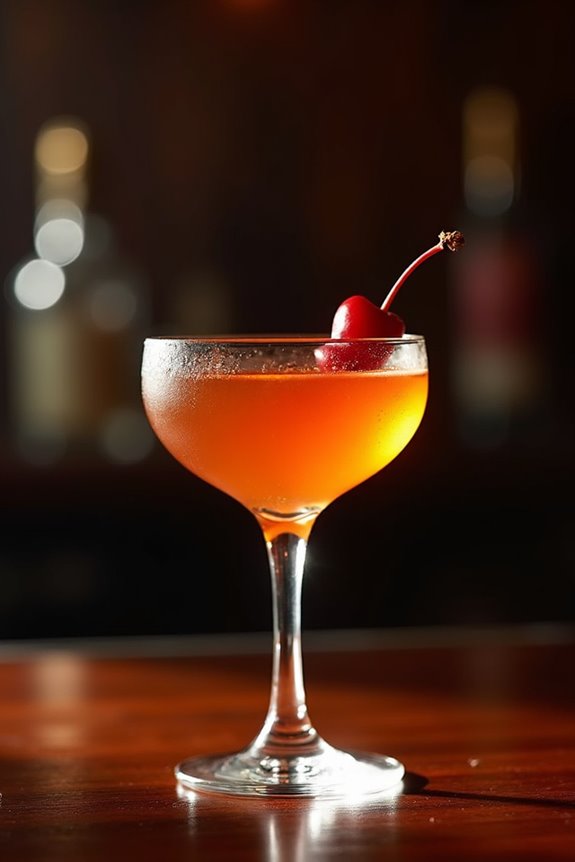
Does your choice of cherry garnish really change the drink? Yes, though perhaps not in the way you’d think. Luxardo cherries enhance both the presentation and your perception of the De La Louisiane. Their deeper color and complex flavor profile complement the drink’s equal-part blend of rye, vermouth, Benedictine, absinthe, and bitters without competing with those core ingredients.
Standard maraschino cherries, by contrast, introduce artificial sweetness that can skew how you experience the cocktail’s balance. You’ll notice Luxardo cherries add subtle aromatic notes instead.
That said, cherry garnishes remain optional. You can absolutely enjoy a properly made De La Louisiane without them. The garnish functions as an exclamation point rather than a necessity. However, when you choose Luxardo, you’re selecting the option that respects the drink’s sophisticated profile.
Making It for a Party: The Big-Batch Approach
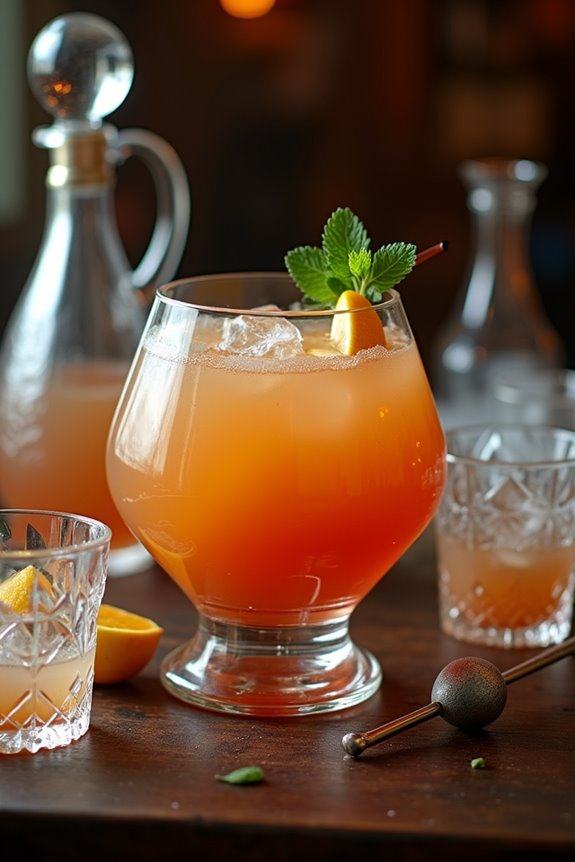
Once you’ve settled on your garnish strategy, you’re ready to scale up. The big-batch approach lets you prepare cocktails ahead, which frees you from mixing drinks while entertaining.
Big-batch cocktails let you prepare ahead and stay present with guests instead of working behind the bar.
You’ll combine ingredients in a 6:6:4:6:1:1 ratio of rye whiskey, sweet vermouth, Benedictine, water, absinthe, and Peychaud’s bitters. Here’s your process:
- Stir all liquids together in a pitcher
- Cover and refrigerate for at least 2 hours, or overnight
- Pour the chilled mixture into pre-chilled coupe glasses, then add one Luxardo cherry per drink
This method delivers consistent flavor across every glass while eliminating individual preparation. Your guests receive properly balanced cocktails served at ideal temperature, and you stay present during the gathering instead of working behind the bar.
De La Louisiane vs. Vieux Carré: Which Is Which?
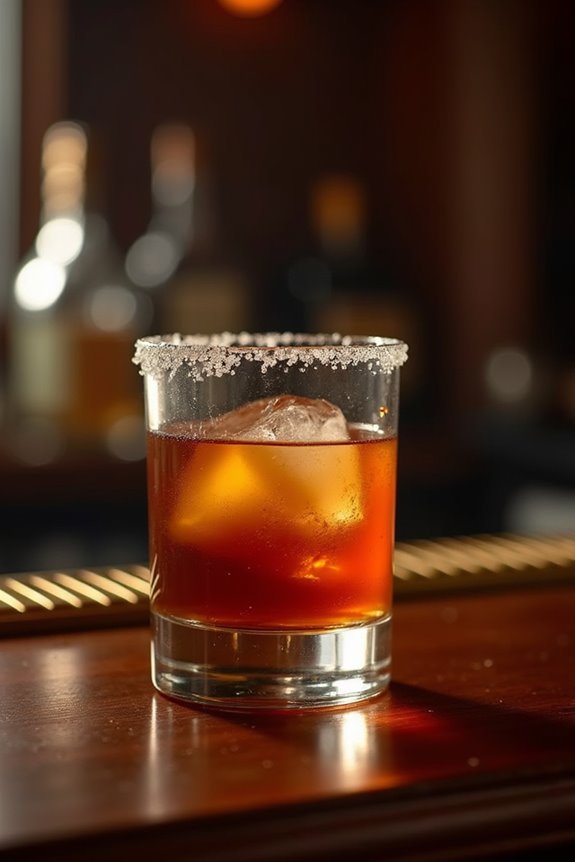
When you’re exploring New Orleans cocktails, you’ll quickly encounter the De La Louisiane and Vieux Carré—two drinks that share a family tree but aren’t identical twins.
The key difference lies in their proportions and components. Both cocktails feature rye, sweet vermouth, Bénédictine, absinthe, and Peychaud’s bitters, but they balance these ingredients differently. The De La Louisiane uses equal parts of its primary spirits, creating a harmonious blend. The Vieux Carré adjusts these ratios and sometimes adds extra elements that shift its character.
Think of them as cousins rather than the same drink. You’ll recognize their shared DNA from the New Orleans cocktail tradition—the lineage that traces back to the Sazerac. Understanding these distinctions helps you appreciate what makes each one unique while recognizing their common heritage.
Where to Order This Classic When You’re Out
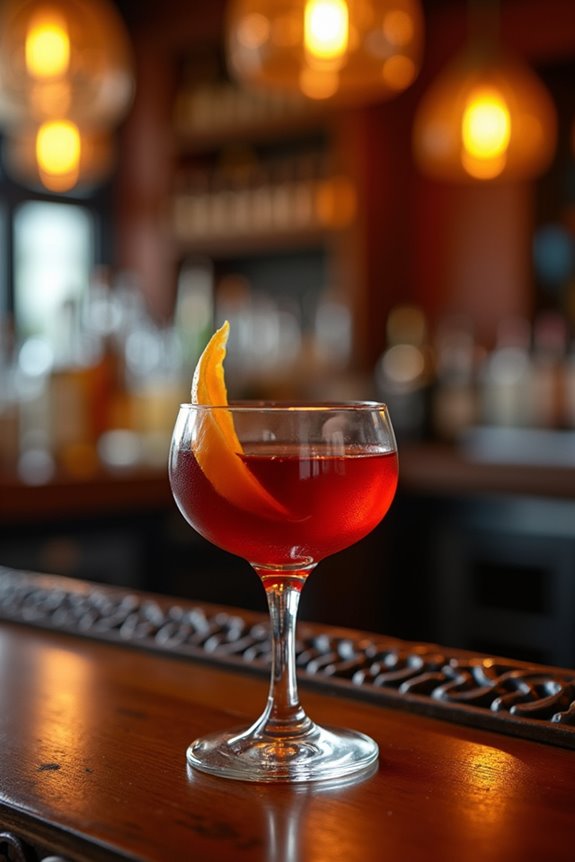
Now that you understand how the De La Louisiane fits into New Orleans’s cocktail heritage, finding a well-made version when you’re out requires knowing where to look.
You’ll want to seek bartenders who respect classic cocktail traditions. They’ll understand the drink’s careful balance and won’t improvise on the core ingredients.
- Visit established cocktail bars in New Orleans’s French Quarter or Marigny, where bartenders specialize in historic drinks and source quality spirits like rye, Benedictine, and Peychaud’s bitters.
- Look for venues featuring Sazerac-family cocktails on their menus, signaling they’ve studied this lineage and take preparation seriously.
- Ask bartenders about their stirring technique before ordering, ensuring they’ll chill the glass properly and strain smoothly.
This approach connects you with bartenders who value craft and authenticity.