

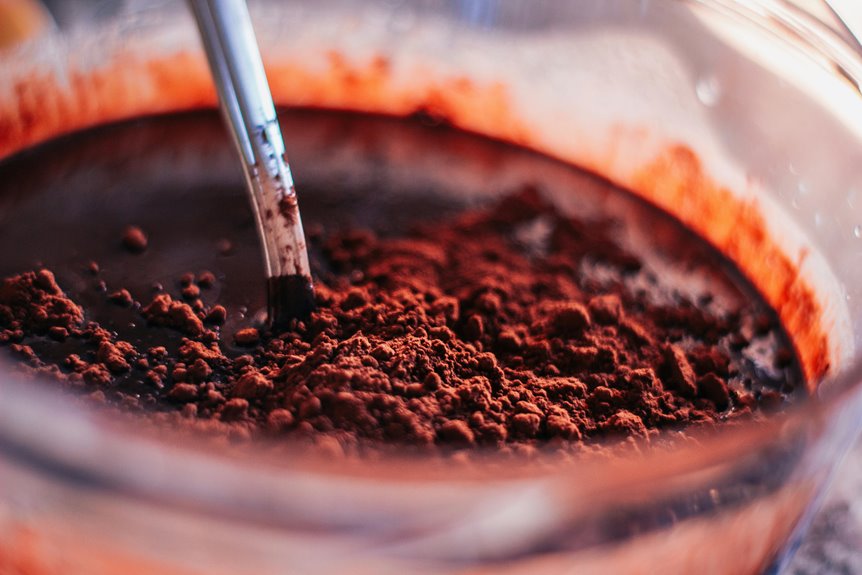
Baking cocoa and cocoa powder refer to the same ingredient, but the type matters considerably. You’ll encounter two main varieties: natural cocoa, which is acidic and reacts with baking soda for lift, and Dutch-processed cocoa, which is alkalized for a smoother flavor and darker color. The cocoa type you choose affects how your baked goods rise, taste, and look. Selecting the right one depends on your recipe’s leavening system.
Baking Cocoa vs. Cocoa Powder: Why the Difference Matters
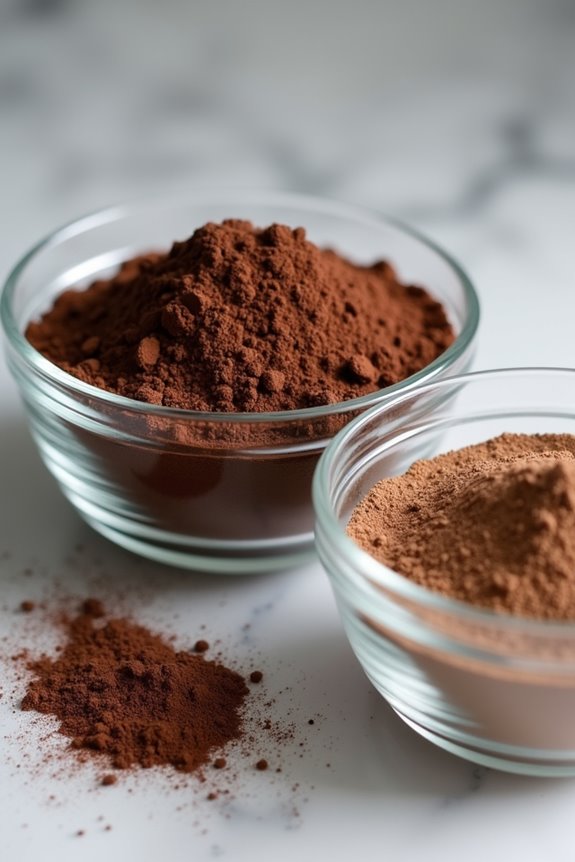
Why does your recipe specify one type of cocoa over another? The answer lies in how natural cocoa and Dutch-processed cocoa behave differently in your baking.
Natural cocoa is acidic and robust, while Dutch-processed cocoa is alkalized, smoother, and darker. This distinction matters because natural cocoa’s acidity reacts with baking soda to create leavening—the rise in your baked goods. Dutch-processed cocoa won’t trigger this chemical reaction.
When you substitute one for the other without adjustments, you risk problems. Your cake might not rise properly, the flavor could shift, and the color won’t match what you expected. Each type also brings different characteristics: natural cocoa delivers bold flavor, while Dutch-processed creates deeper color and mellower taste.
Understanding these differences helps you choose correctly and achieve consistent results.
Natural Cocoa: Acidic, Tangy, and Reactive
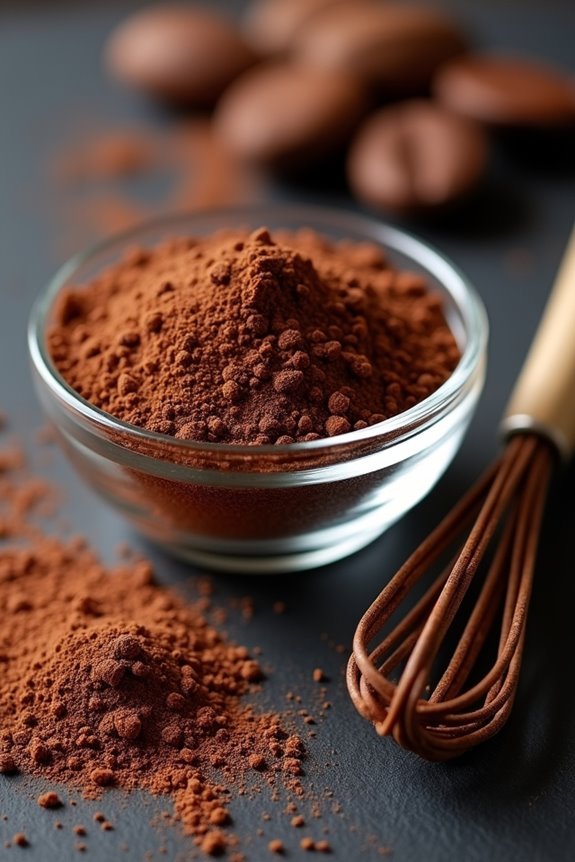
When you use natural cocoa powder in your baking, you’re working with an ingredient that’s inherently acidic, and that acidity plays a crucial role in how your baked goods turn out. This acidity reacts with baking soda to create carbon dioxide bubbles, which helps your cakes and brownies rise properly and develop the right texture. Understanding this chemical reaction is key because it means you can’t simply swap natural cocoa for Dutch-processed cocoa without adjusting your leavening agents.
Acidity’s Role In Baking
How does natural cocoa powder actually work in your batter? The unneutralized cocoa solids in natural cocoa create acidity that directly impacts your baking results. This acidic environment reacts with baking soda, producing carbon dioxide gas that leavens your baked goods. You’ll notice the difference immediately—recipes using natural cocoa rise higher and develop lighter crumbs than those with Dutch-process cocoa.
Here’s what happens when you use natural cocoa:
- Acidity triggers baking soda activation, creating lift and structure
- pH balance improves texture and prevents dense, heavy results
- Tart notes emerge from unneutralized cocoa solids without Dutch-process treatment
- Leavening becomes predictable when acidity levels remain consistent
Understanding this relationship helps you choose the right cocoa powder for your specific baking goals and achieve the texture you want.
Baking Soda Reaction Chemistry
The acidity you’ve just learned about isn’t just a flavor characteristic—it’s the engine that powers your baking chemistry. When you combine natural cocoa with baking soda, a chemical reaction occurs that produces carbon dioxide gas. This gas creates those light, airy pockets throughout your baked goods, giving them that desirable risen crumb.
Dutch-processed cocoa won’t trigger this reaction because alkaline treatment neutralizes its acidity. You’re left without that leavening boost unless you add another acid source. Natural cocoa powder, by contrast, activates baking soda automatically. The strength of this reaction varies by brand, so cocoa acidity levels directly impact how much baking soda you’ll need. Understanding cocoa vs cacao processing helps you choose the right ingredient for your recipe’s success.
Dutch-Processed Cocoa: Smooth, Dark, and Alkalized
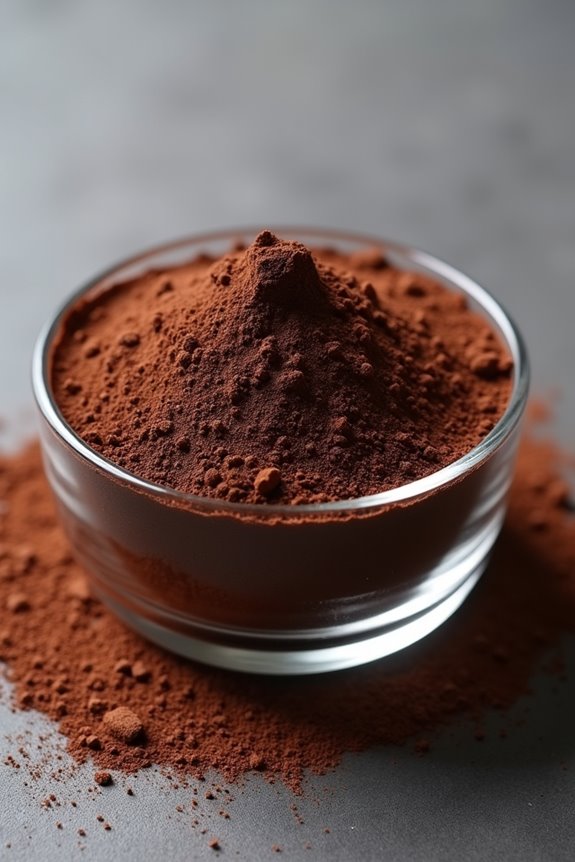
Dutch-processed cocoa undergoes a special treatment that sets it apart from natural cocoa powder. You’ll find this baking cocoa treated with an alkaline solution that neutralizes its natural acidity through pH neutralization. This alkalized cocoa powder delivers what you’re looking for in premium chocolate baking.
Here’s what makes Dutch-processed cocoa worth choosing:
- Darker color – The alkalization process deepens cocoa’s rich brown hue
- Smooth flavor – You get a mellow, refined chocolate taste without sharp notes
- Better dissolution – It blends effortlessly into liquids and batters
- Baking soda reaction prevention – Since acidity is neutralized, it won’t react with baking soda, so you’ll pair it with baking powder instead
This processing reduces some antioxidants compared to natural cocoa, but you gain superior texture and taste in cookies and cakes.
How Processing Changes Flavor, Color, and Rise
Why does cocoa powder look and taste so different depending on how it’s processed? The answer lies in alkalizing. When manufacturers treat natural cocoa with an alkaline solution, they neutralize its acidity and transform its character entirely. You’ll notice Dutch-processed cocoa appears darker, almost black-brown, while natural cocoa stays lighter brown. The flavor shifts too—natural cocoa delivers robust, tangy notes, whereas Dutch-processed cocoa tastes milder and smoother. This matters for baking. Natural cocoa’s acidity reacts with baking soda to create leavening, helping your baked goods rise properly. Dutch-processed cocoa, stripped of acidity, pairs better with baking powder instead. Understanding these differences helps you choose the right cocoa for each recipe and achieve the results you’re after.
Why Cocoa Acidity Matters for Leavening
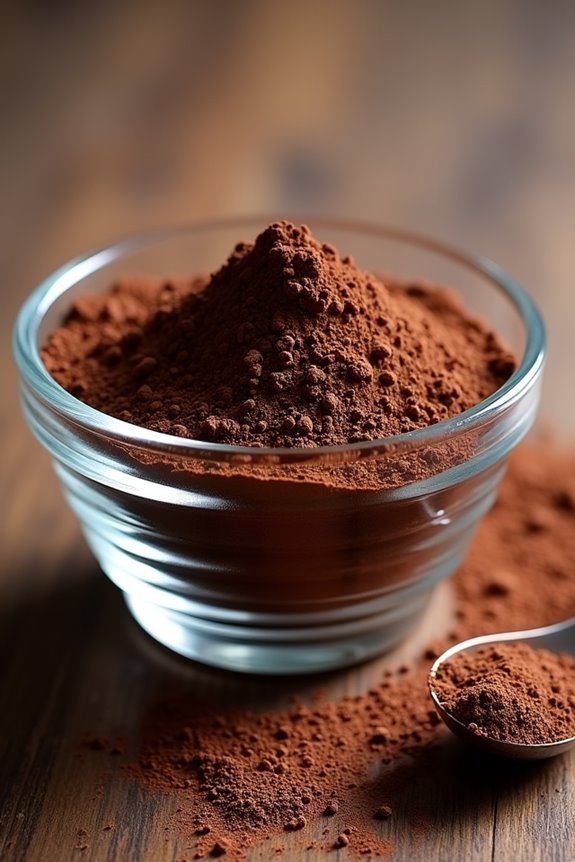
Since natural cocoa powder contains acids, it’ll react chemically with baking soda to produce carbon dioxide gas—the bubbles that make your baked goods rise. Dutch-processed cocoa, however, is alkaline and won’t trigger this reaction. Understanding this difference helps you choose the right leavening agent for your recipe.
Here’s what you need to know:
- Natural cocoa’s acidity activates baking soda immediately, creating lift during mixing
- Dutch-processed cocoa requires baking powder, which contains its own acid to activate leavening
- Swapping one for the other without adjusting leavening causes sunken or over-risen cakes
- Acidity also influences browning, texture, and the tangy flavor profile of your baked goods
When you match your cocoa type to the right leavening agent, you’ll consistently achieve properly risen, textured results.
Can You Substitute One for the Other?
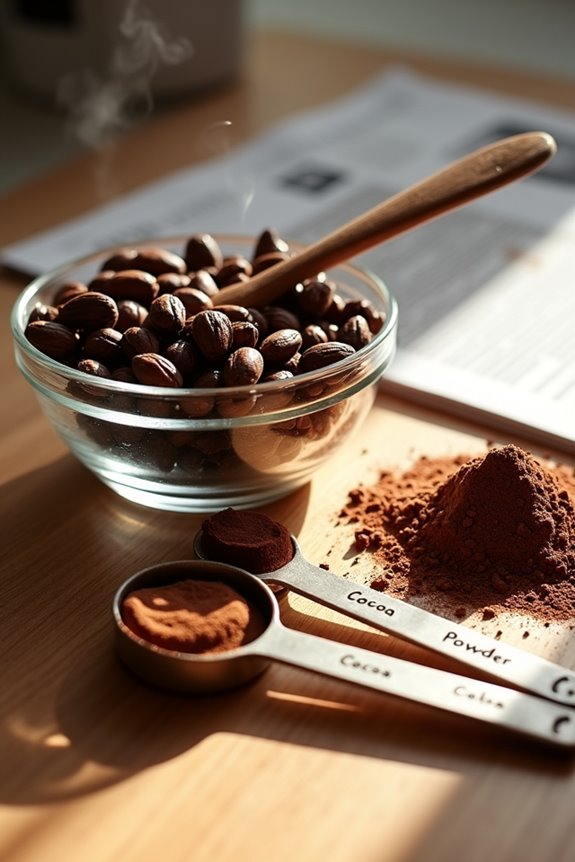
Now that you understand how cocoa’s acidity affects your leavening, you might wonder if you can just swap one type for another when you’re out of what the recipe calls for. You can substitute, but you’ll need to make adjustments. Swapping natural cocoa for Dutch-processed means you’re removing acidity that reacts with baking soda, so you’ll need to add an acid like buttermilk or vinegar. Going the opposite direction—using Dutch-processed when your recipe calls for natural cocoa—requires adding baking soda or reducing baking powder. These substitutions affect how your baked goods rise, their color, and their flavor. For best results, stick with what the recipe specifies. In a pinch, understand the pH differences between natural cocoa and Dutch-processed varieties, then adjust your leavening agents accordingly.
When to Use Natural vs. Dutch-Processed Cocoa
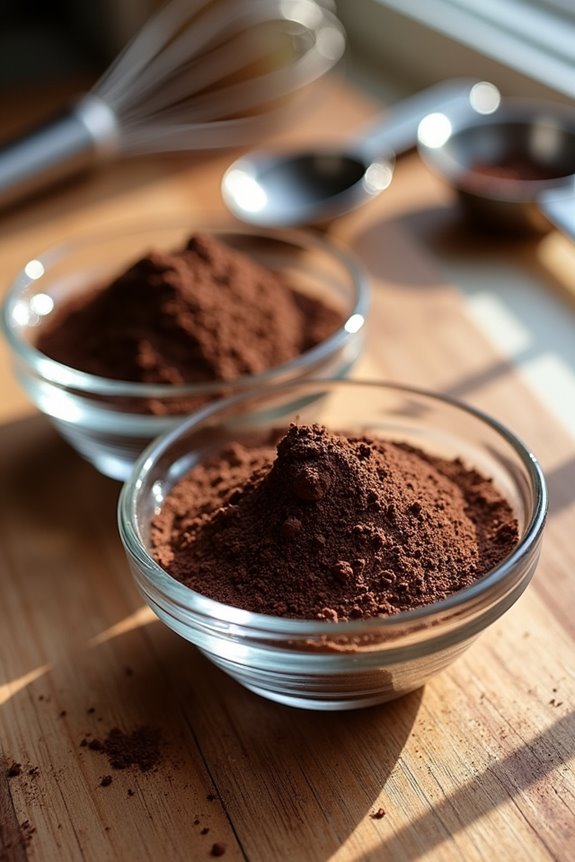
Choosing the right cocoa powder comes down to understanding what your recipe needs. Natural cocoa and Dutch-processed cocoa powder serve different purposes, and matching them to your leavening agent makes all the difference.
- Use natural cocoa with baking soda — its acidity reacts with soda to create lift and brighten your batter
- Choose Dutch-processed for baking powder recipes — it’s already neutralized, so it won’t interfere with powder’s leavening action
- Consider your flavor profile — natural cocoa delivers robust, tangy chocolate notes, while Dutch-processed offers milder, smoother chocolate
- Account for color preferences — Dutch-processed produces darker baked goods, while natural cocoa creates lighter shades
Check your recipe’s leavening requirement first. This single step prevents texture problems and ensures your chocolate treats rise properly and taste exactly as intended.
Making the Right Choice for Your Recipe
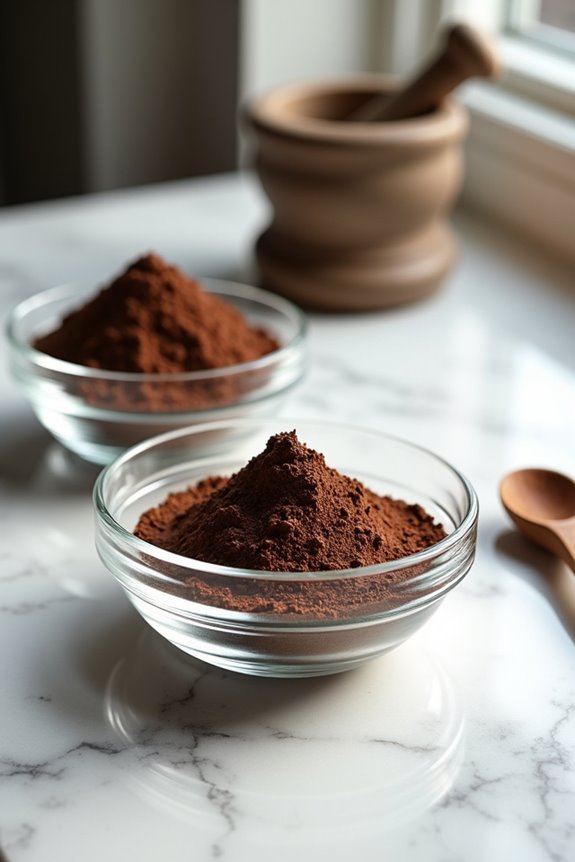
You’ll want to check your recipe first, because it’ll tell you which type works best for that specific baked good. If your recipe calls for baking soda as the leavening agent, you’ll need natural cocoa powder since its acidity reacts with the soda to help your cake or brownies rise properly—using Dutch-processed cocoa instead would leave you with a flat, dense result. For flavor and color preferences, Dutch-processed cocoa gives you a smoother, darker taste, while natural cocoa delivers a more sturdy, slightly bitter chocolate note that some recipes specifically depend on.
Recipe Requirements Matter Most
Why does one recipe call for cocoa powder while another specifies baking cocoa? The answer lies in how your recipe’s leavening agents work. You’ll encounter different requirements based on whether you’re using natural cocoa or Dutch-processed varieties.
Here’s what matters most:
- Match cocoa type to leavening — natural cocoa pairs with baking soda, while Dutch-processed works with baking powder
- Understand acidity levels — natural cocoa is acidic and activates baking soda’s rise; Dutch-processed is alkalized
- Make acid adjustments when needed — if you substitute types, add cream of tartar or buttermilk to maintain proper leavening
- Test your substitutions — recipe requirements dictate success, so making two versions helps you avoid flat or dense results
Your unsweetened cocoa choice directly impacts how your baked goods rise and taste. Following recipe requirements ensures consistent, successful outcomes.
Flavor And Leavening Considerations
The flavor and leavening power of your cocoa choice aren’t separate concerns—they’re directly connected. Natural cocoa’s acidity activates baking soda, creating lift in your baked goods while delivering bold, tangier notes. Dutch-processed cocoa, neutralized through alkalization, pairs with baking powder instead. It won’t react with soda alone, but it offers darker color and smoother, milder flavor.
Substituting one type for another disrupts this balance. Swapping natural cocoa for Dutch-processed in a baking soda recipe compromises rise and changes taste. You’ll lose the chemical reaction that helps your cake or brownies rise properly.
For beverages or frostings without leavening, either works—though flavor and color still differ. Natural delivers boldness; Dutch-processed provides mellowness. Match your cocoa type to your recipe’s leavening system for consistent, predictable results.
How to Store Cocoa Powder (And How Long It Lasts)
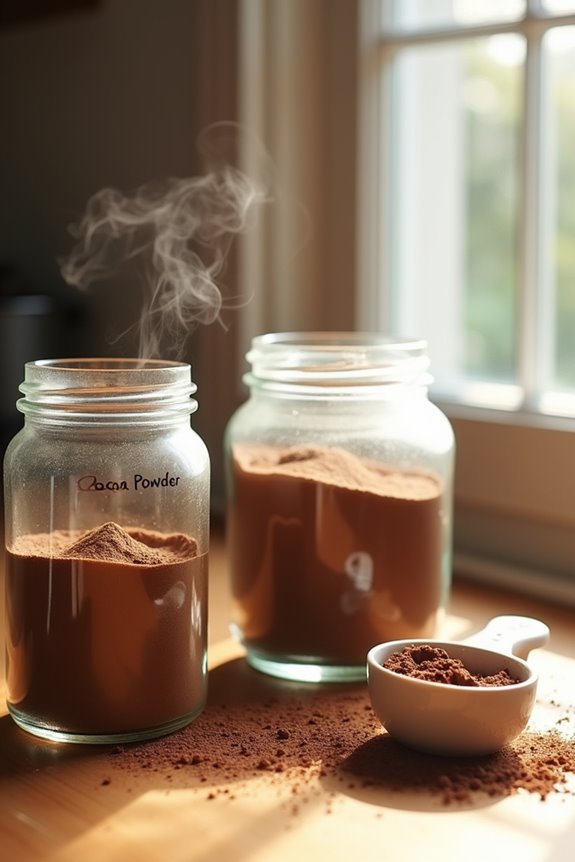
Proper storage makes all the difference in keeping your cocoa powder fresh and flavorful for years. You’ll want to protect your investment by following these essential storage practices:
- Store cocoa powder in a cool, dry place away from heat and light, like a pantry shelf, to preserve its rich flavor and prevent fat separation.
- Keep it tightly sealed in its original container or an airtight jar to block moisture absorption and prevent clumping.
- Expect unopened cocoa powder to last 2 to 3 years, while opened containers stay fresh for 1 to 2 years when properly sealed.
- Watch for signs of staleness: faded color, off smells, or lumps, which signal your cocoa powder has passed its prime.
Keep your cocoa away from strong odors too, since it absorbs surrounding aromas over time.
Why Your Cocoa Bakes Differently: Common Issues and Fixes
Ever noticed that your chocolate cake turns out differently depending on which cocoa powder you grab?
The issue often comes down to chemistry. Natural cocoa is acidic and reacts with baking soda to create lift, while Dutch-processed cocoa is neutralized and works better with baking powder. When you swap one for the other without adjusting your leavening, you’ll get flat or improperly risen results.
Beyond leavening, cocoa types absorb water differently. Natural cocoa may leave your bake dense and dry, while Dutch-processed can trap moisture unevenly. These variations affect texture and structure.
Fix these problems by matching your cocoa to your leavening agent. Use natural cocoa with baking soda recipes, Dutch-processed with baking powder. If you must make substitutions, adjust your liquid, fat, or sugar slightly to restore proper moisture and rise. Small tweaks prevent disappointing results.