
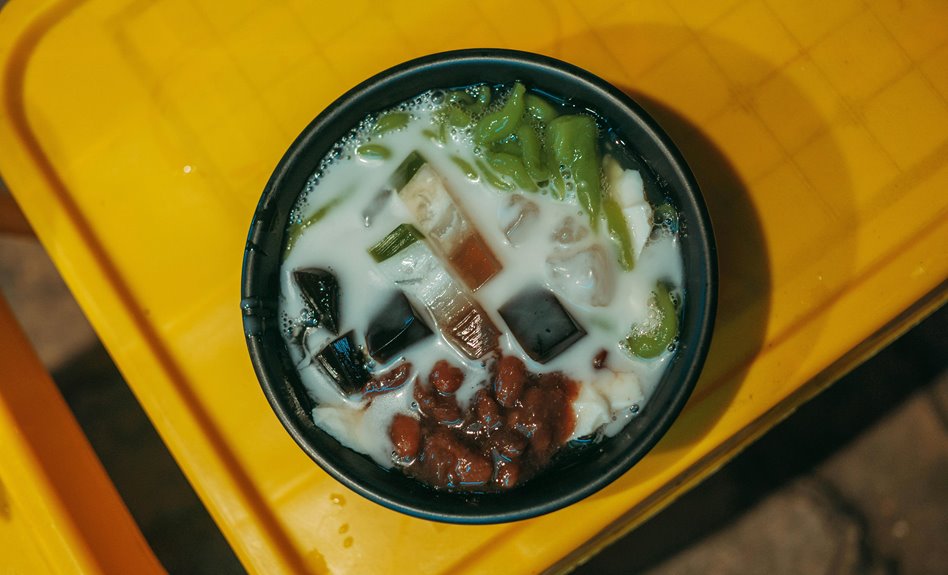
Most boba tea toppings don’t contain gelatin, but jelly ones might. Traditional tapioca pearls are made from tapioca starch, brown sugar, and water—completely gelatin-free. Popping boba uses a seaweed-based membrane instead. However, jelly toppings can contain animal-derived gelatin unless labeled vegan. Before you order, ask your shop directly about ingredients and request vegan certifications. Check container labels for gelatin listings. Different locations vary, so verification at each shop matters. Understanding which toppings hide gelatin helps you make informed choices every time you visit.
Do Tapioca Pearls Contain Gelatin? (The Short Answer)
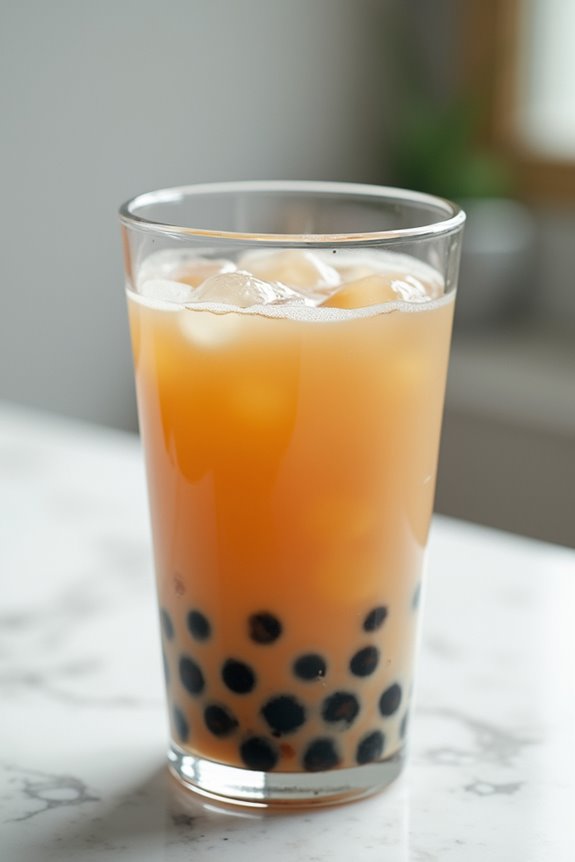
The short answer is no—traditional tapioca pearls don’t contain gelatin. These pearls are made from tapioca starch, brown sugar, and water. That’s it. You’re looking at a gelatin-free ingredient list that makes bubble tea toppings accessible to vegans and those avoiding gelatin for dietary reasons.
However, you’ll want to know that popping boba operates differently. This alternative topping uses a seaweed extract calcium bath for spherification instead of gelatin, creating a liquid-filled center. Different shops use different processes, though, so gelatin presence varies by store and topping type.
Your best move? Check ingredient labels directly or ask staff about their specific bubble tea toppings. This simple step confirms what’s actually in your drink and ensures you’re choosing truly gelatin-free options.
Which Boba Toppings Actually Contain Gelatin
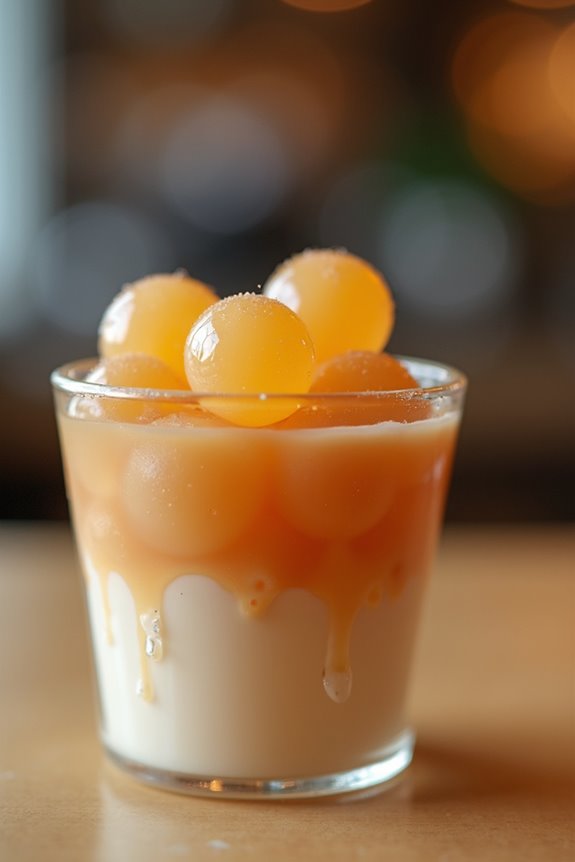
While tapioca pearls and popping boba don’t use gelatin—tapioca relies on cassava starch and popping boba uses a seaweed-based membrane that sets in a calcium lactate bath—you’ll find gelatin in jelly toppings unless they’re specifically labeled vegan. The difference matters because gelatin comes from animal collagen, making non-vegan jellies unsuitable for plant-based diets, while gelatin-free alternatives like the ones Sharetea promotes give you genuinely vegan options across their topping lineup. To know what you’re actually getting, you’ll need to read ingredient labels carefully and ask staff directly, since gelatin content varies widely by product and location.
Traditional Tapioca Pearl Composition
Since most boba shops rely on traditional tapioca pearls, you’ll be glad to know that these classic toppings don’t contain gelatin at all. Traditional pearls use simple, straightforward ingredients:
- Tapioca starch forms the base ingredient
- Brown sugar adds sweetness and texture
- Water brings everything together
- No gelatin appears in the mixture
You’re getting a gelatin-free dessert topping that works perfectly as a vegan option. The tapioca starch creates those chewy pearls through cooking and processing alone—no animal-derived binders needed. This makes traditional pearls an excellent choice if you avoid gelatin for dietary or ethical reasons.
Always check ingredient lists on your specific cup, though. Brands vary in their formulations and preparation methods. Reading those details ensures you’re making informed choices about what you’re actually consuming.
Popping Boba Spherification Process
If you’ve noticed those tiny, juice-filled spheres bursting in your mouth at boba shops, you’re experiencing popping boba—and it’s made through a completely different process than traditional tapioca pearls. This creation method, called spherification, involves dropping fruit juice into a calcium lactate bath. The liquid coating immediately forms a gel-like outer skin, creating that satisfying burst when you bite down. The secret ingredient here is alginate membrane, derived from seaweed. This natural gelling agent replaces gelatin entirely, making popping boba inherently gelatin-free. Most popping boba products are vegan by design. However, you’ll want to check specific brand labels, as some manufacturers add animal-derived additives during production. This simple check ensures you’re choosing truly vegan-friendly options aligned with your values.
Gelatin-Free Topping Alternatives
What toppings can you actually trust at your favorite boba shop?
You’ve got solid options when you’re hunting for gelatin-free, vegan-friendly choices. Sharetea stands out here—they’ve made all their products and toppings gelatin-free and vegan-friendly, so you can order confidently. But at other shops, you’ll need to investigate.
Consider these trustworthy alternatives:
- Popping boba made from seaweed extract and fruit juice
- Fruit-based jelly toppings without gelatin additives
- Seaweed jelly options clearly labeled vegan-friendly
- Tapioca pearls that don’t contain animal products
The catch? Popping boba and jelly toppings *can* be vegan, but preparation varies. Always request the full ingredient list before ordering. Ask staff directly about gelatin content. This verification step ensures you’re getting genuinely gelatin-free toppings that match your dietary needs.
Ask Your Shop: The Right Questions About Ingredients
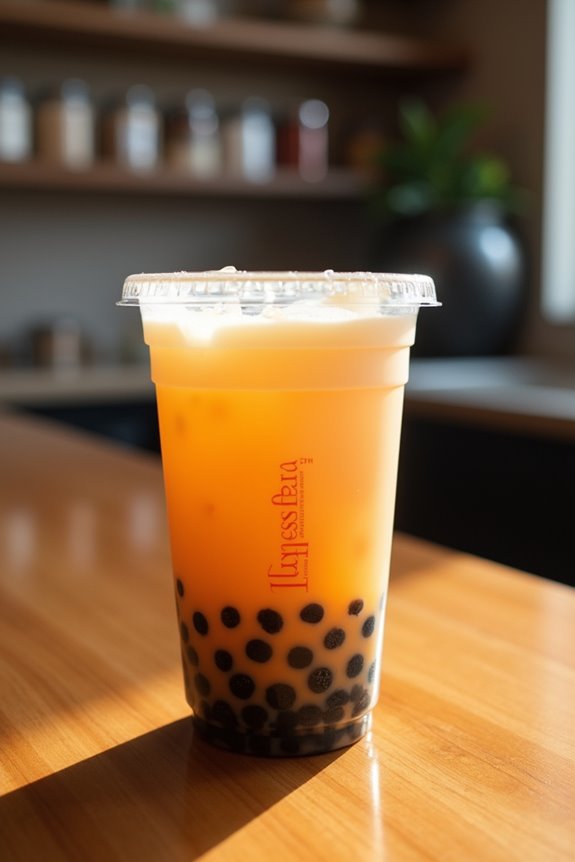
When you’re at your boba shop, ask staff directly for ingredient lists of any toppings you’re unsure about, especially jellies and popping boba, since gelatin use varies by location. Request information about vegan certifications or plant-based alternatives, which many shops now offer and clearly label to help customers make informed choices. If a shop can’t provide ingredient details, that’s a red flag—you’ll want to know exactly what’s in your drink before ordering.
Request Ingredient Lists
The most reliable way to know what’s actually in your boba tea is to ask. Don’t hesitate to request an ingredient list from your shop’s staff. Many places keep this information available, and asking shows you’re a thoughtful customer who cares about what you consume.
Here’s what you should do:
- Request the full ingredient list for any toppings you’re considering
- Ask specifically about gelatin content in their boba pearls and other add-ons
- Inquire whether they offer gelatin-free or vegan-friendly alternatives
- Request staff verification of ingredient sourcing if you have allergies or dietary restrictions
Staff members can clarify sourcing details and confirm whether their products are truly gelatin-free. This direct approach eliminates guesswork and ensures you’re making informed choices about your drink.
Verify Vegan Certifications
How do you know if a boba shop’s vegan claims actually hold up? Look for vegan certifications displayed at the shop or on their website. These certifications indicate third-party verification of their dairy-free and gelatin-free practices.
Ask specifically about toppings ingredients. Some shops like Sharetea advertise gelatin-free options, but you should confirm this at your location. Traditional tapioca pearls don’t contain gelatin, making them vegan-friendly. However, jelly gelatin often appears in other toppings, so verify before ordering.
Popping boba typically uses seaweed-based membranes instead of gelatin, making it a reliable vegan choice. Request ingredient lists for any topping you’re unsure about. Don’t assume one location follows the same standards as another—certification varies by franchise. Direct questions about specific products ensure you’re getting genuinely vegan boba tea.
How to Spot Gelatin on Container Labels
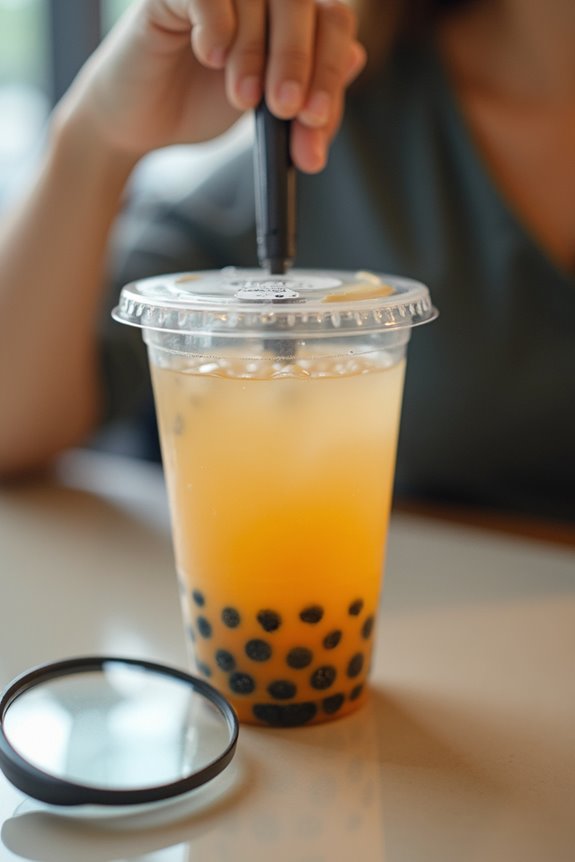
Where’s gelatin hiding on your boba tea label? You’ll find it tucked among ingredient lists, sometimes disguised under different names. Here’s what you need to know:
Where’s gelatin hiding on your boba tea label? You’ll find it tucked among ingredient lists, sometimes disguised under different names.
- Look for explicit mentions of gelatin, hydrolyzed collagen, or animal-derived gelling agents
- Scan for “vegan” or “gelatin-free” certifications on container labeling—these labels signal safe choices
- Check boba pearls specifically, since traditional tapioca pearls don’t contain gelatin, but flavored varieties might
- Read the full ingredient panel, not just marketing claims, since exact compositions vary by brand and location
You’re building awareness by understanding container labeling. Favor products with clear vegan certifications or explicit gelatin-free statements. This approach ensures you’ll know exactly what you’re sipping before the drink reaches your lips.
Find Gelatin-Free Boba Chains Near You
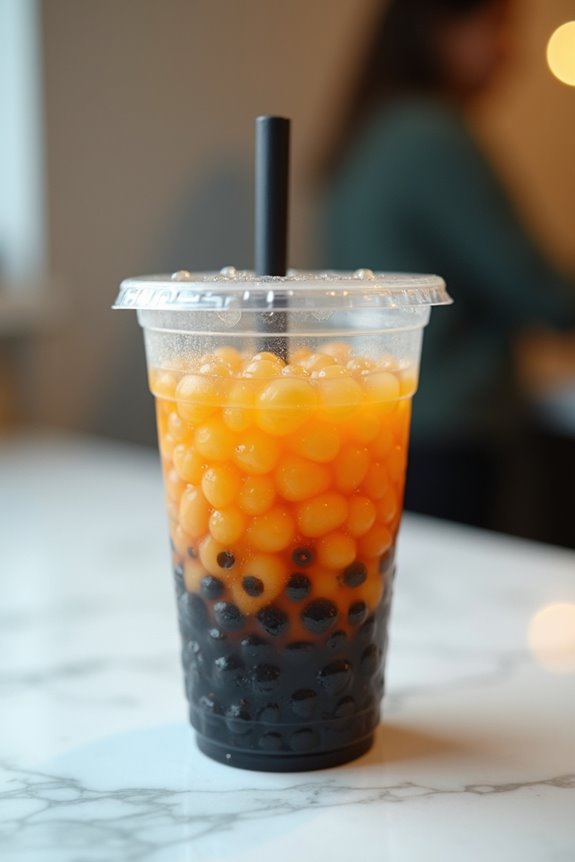
Once you’ve learned what to look for on labels, the next step is locating boba shops that actually stock gelatin-free options. You’ll find that some chains prioritize ingredient transparency more than others. Sharetea stands out by offering gelatin-free toppings across all locations, including vegan-friendly choices. When exploring other shops, verify their popping boba and traditional boba toppings through direct ingredient verification.
| Chain | Gelatin Status | Vegan Options | Verification Needed |
|---|---|---|---|
| Sharetea | Gelatin-Free | Yes | No |
| Local Shops | Varies | Often | Yes |
| Major Chains | Mixed | Some | Yes |
| Specialty Cafés | Variable | Possible | Yes |
Always ask staff about their specific boba toppings before ordering. Most shops’ll verify ingredients quickly. Don’t assume all popping boba or traditional pearls are gelatin-free—ingredient verification protects your dietary choices.
Make Gelatin-Free Boba at Home
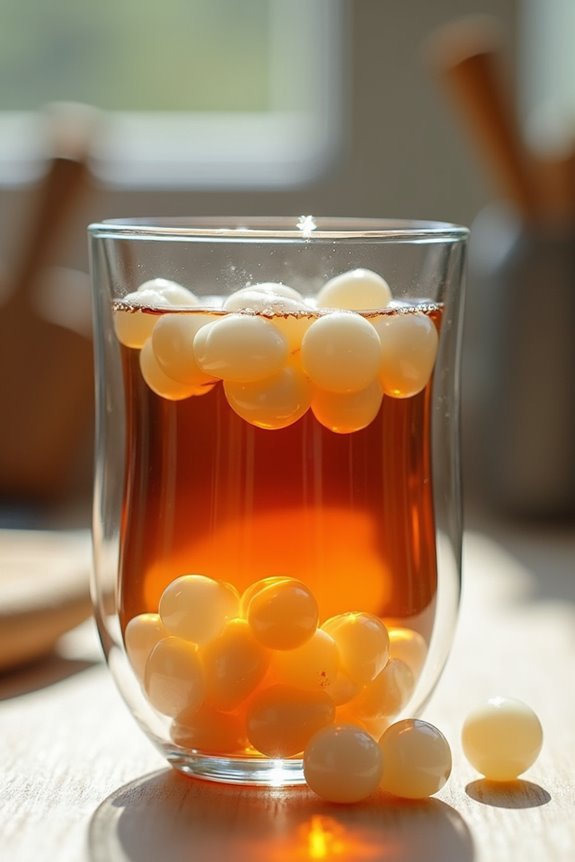
Making gelatin-free boba at home is straightforward once you understand the basic ingredients. You’ll control every component, ensuring your drink stays truly dairy-free and vegan-friendly.
Your gelatin-free boba toolkit:
- Use tapioca pearls made from tapioca starch, water, and brown sugar as your base
- Choose plant-based milks like oat, almond, or coconut instead of dairy options
- Select popping boba made with seaweed extract and calcium lactate for texture variety
- Verify all toppings and syrups carry vegan labeling or explicit gelatin-free confirmation
Start by boiling your tapioca pearls according to package directions. While they cook, prepare your chosen milk with flavoring. Once pearls reach the right texture, combine them with your plant-based milk base. This home-made boba approach eliminates guesswork about hidden gelatin or animal-derived ingredients, giving you complete confidence in every sip.