


You’ll need food-grade dry ice from reputable suppliers, never solid pieces directly in guests’ mouths. Use tongs and insulated gloves to transfer small chunks into juice-based beverages—avoid carbonated and dairy drinks. Watch for complete sublimation before serving, and inspect each glass to ensure no solids remain. Maintain proper ventilation throughout your space to prevent CO2 buildup. Understanding the specific preparation steps and safety protocols will help you execute this technique without incident.
What Is Dry Ice and How Does It Work in Drinks?

Since dry ice is simply solid carbon dioxide, it behaves quite differently from regular ice. At -78.3°C (-109.2°F), it doesn’t melt into liquid. Instead, it undergoes sublimation, transforming directly from solid to gas and skipping the liquid phase entirely.
When you add dry ice to your drink, you’ll immediately see fog. This visible effect happens because the CO2 gas produced is denser than air, so it sinks and creates that dramatic cloudy appearance. The fog persists only while dry ice remains present in your beverage.
However, safety matters. You must never consume solid dry ice pieces. Always remove any remaining chunks before drinking. Handling requires protection too—wear gloves or use tongs. This prevents frostbite and burns from direct contact with this extremely cold substance.
Never Hand Dry Ice Directly to Guests

You’re responsible for controlling how dry ice enters your guests’ drinks—never place it directly into their hands or let them handle solid chunks themselves. Instead, you should transfer the dry ice using protective gloves or tongs into a separate container, then add it to the drink while maintaining full oversight of the process. This approach keeps you in command of the situation and prevents guests from accidentally touching, biting, or swallowing dangerous solid pieces.
Server Responsibility and Control
Why does server control matter so much when dry ice is involved? You’re the barrier between your guests and potential hazards. When you maintain complete control over dry ice handling, serving precautions become straightforward and effective.
You’ll never hand dry ice directly to guests—this is non-negotiable for dry ice safety. Instead, use tongs and insulated gloves to transfer solid pieces into serving vessels separate from the actual drink. This separation prevents guests from accidentally ingesting solid fragments.
Before serving, you inspect each glass carefully. You confirm that all dry ice has fully sublimated or that you’ve transferred it elsewhere. If any solid remains, you discard that drink immediately.
Your responsibility extends to storage too. You keep dry ice in ventilated containers away from guest areas, eliminating accidental exposure risks and inhalation hazards before they happen.
Proper Guest Presentation Methods
How you present the dry ice effect matters just as much as how you handle it behind the bar. You’ll never hand dry ice directly to guests—this is fundamental to dry ice safety. Instead, use tongs or insulated gloves when transferring the solid into a separate serving vessel before presentation. This approach protects your guests while maintaining the dramatic fog effect they’re anticipating.
You can display the smoky atmosphere in an emptied glass or dedicated fog cup, then pour the prepared drink into the guest’s actual glass. This separation ensures guest safety by keeping solid chunks away from consumption. Always verify that any dry ice has fully sublimated before serving. By controlling the presentation method, you’re demonstrating professionalism while prioritizing serving presentation that keeps everyone safe and impressed.
Food-Grade Dry Ice: The Only Safe Option for Beverages

When it comes to creating that dramatic fog effect in your cocktail, there’s only one choice that matters: food-grade dry ice.
Standard dry ice contains contaminants unsuitable for consumption, making food-grade dry ice essential for beverage preparation. You’re protecting yourself and your guests by choosing the right product. Food-grade dry ice undergoes rigorous processing to remove impurities that could harm you.
Understanding sublimation precautions matters equally. Dry ice sublimates directly from solid to gas at -109.2°F without becoming liquid. This process means you must ensure complete sublimation before anyone drinks. Never allow solid pieces to remain in glasses.
Dry ice safety requires sourcing from reputable suppliers who specifically label their products as food-grade. Check packaging carefully before purchasing. This single decision eliminates contamination risks entirely, making your presentation both impressive and genuinely safe.
How to Buy and Store Dry Ice Without Losing It to Sublimation

You’ll want to buy dry ice as close to your event as possible, since it sublimes completely within 24 hours and works best just a few hours before you serve drinks. Store your unused dry ice in an empty ice chest with the lid off, keeping the sealed bag inside until you’re ready to use it, and never place it in a fridge, freezer, or airtight container where pressure can build. Timing your purchase and choosing the right storage method are the key moves that’ll help you avoid losing all your dry ice to sublimation before your event even starts.
Timing Your Purchase Strategy
The clock’s ticking the moment dry ice leaves the supplier’s freezer. You’ll want to purchase as close to your event as possible—ideally just a few hours before serving. This timing strategy directly combats dry ice sublimation, the process where solid transforms into gas without becoming liquid first.
Why does this matter? Every hour your dry ice sits, you’re losing product to the air. If you buy a day early, you’ll notice significant loss by event time.
For safe handling, store your purchase in an empty ice chest with the lid off and keep the bag sealed until serving. This minimizes sublimation while preventing dangerous gas buildup that could occur in airtight containers. Plan your purchase timing strategically, and you’ll have plenty remaining for your guests.
Proper Storage Container Methods
Now that you’ve timed your purchase right, your next challenge is choosing the right container—because where you store dry ice matters just as much as when you buy it.
You’ll want an empty ice chest with the lid left off for ventilation. This setup prevents pressure buildup that could cause dangerous explosions. Keep your dry ice bag sealed until you’re ready to serve, which minimizes sublimation and extends its usability.
Never store dry ice in a refrigerator, freezer, or airtight container. These enclosed spaces trap carbon dioxide gas, creating explosive pressure. Your dry ice storage safety precautions directly impact your event’s success. An open ice chest provides the ventilation your dry ice needs to sublimate safely without accumulating dangerous pressure inside the container.
Protective Gear and Tools You Need

What’s standing between you and a safe dry ice experience? Proper protective gear and handling tools. You’ll need latex gloves to shield your skin from the extreme cold, which causes frostbite on contact. Tongs, a hammer, and towels form your essential toolkit for breaking dry ice into manageable 2–3 inch chunks safely.
| Item | Purpose | Why It Matters |
|---|---|---|
| Latex Gloves | Skin protection | Prevents frostbite from direct contact |
| Tongs | Safe handling | Creates distance between hands and ice |
| Hammer | Breaking chunks | Enables controlled size reduction |
| Towels | Grip and absorption | Reduces slipping and moisture buildup |
| Styrofoam Chest | Storage containment | Maintains proper sublimation conditions |
These safety tips and protective gear work together. Your gloves prevent burns while tongs maintain distance, and your hammer ensures proper chunk sizes for drinks.
How Long the Smoking Effect Lasts

How long you’ll actually see that dramatic fog depends on several factors working together. You’ll notice the most intense smoking effect during the first three to five minutes after you add dry ice to your drink. The visual show can continue for up to ten minutes total, though it gradually fades as dry ice sublimation progresses.
Temperature, the amount of dry ice you use, and your liquid’s volume all affect smoking duration. Warmer liquids speed up the process, while larger quantities of dry ice extend it. Once the smoking duration ends, the dry ice has typically evaporated completely, leaving you with a safely chilled beverage.
Always check your drink before sipping. If solid dry ice remains, practice proper safety disposal by discarding the drink and starting fresh.
The Right Way to Add Dry Ice to Cocktails and Mocktails

Proper handling starts before the dry ice ever touches your drink. You’ll need handling gloves and tongs to safely manage the dry ice, protecting your skin from burns. Cut pieces to about 2–3 inches in diameter, making them manageable and appropriately sized for your glass.
Add the dry ice directly to your beverage, watching it sink to the bottom. The sublimation process begins immediately, creating that dramatic smoking effect you’re after. Never drop a large chunk into your drink—this creates unsafe conditions and unpredictable behavior.
Choose non-dairy, juice-based beverages for optimal dry ice safety. Avoid carbonated or dairy drinks, which react poorly with dry ice and produce unwanted effects.
Wait until sublimation finishes completely before consuming. No solid pieces should remain in your glass.
Which Drinks Work Best With Dry Ice?

Not all beverages are created equal regarding dry ice compatibility. You’ll want to choose drinks that work safely with this theatrical addition while prioritizing your safety.
When adding dry ice to beverages, safety and compatibility matter most—choose drinks thoughtfully for the best theatrical effect.
Ideal options for dry ice cocktails include:
- Juice-based drinks like orange juice, which create visible smoky effects as the ice sublimates
- White or rosé wines that chill effectively without flavor interference
- Non-dairy beverages that allow the ice to sink and cool gradually
- Simple mocktails made with fruit juices and spirits
Avoid carbonated drinks and dairy-containing beverages entirely. These create rapid gas buildup and unwanted chemical reactions. Skip cocktails requiring long contact times too—the dry ice sublimates quickly, making extended chilling impossible.
Always remember: if solid dry ice remains in your drink, discard it immediately. This safety measure prevents accidental ingestion and ensures you’re enjoying your beverage responsibly.
Mistakes People Make When Adding Dry Ice to Drinks
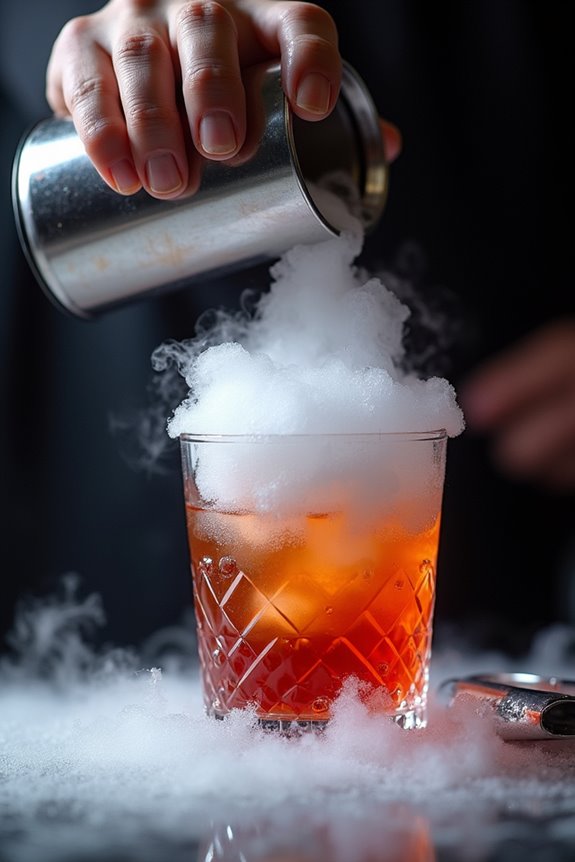
Even when you’ve picked the right drink, plenty of things can go wrong during the actual process of adding dry ice. You’ll want to avoid common pitfalls that compromise both safety and presentation.
| Mistake | Why It’s Dangerous | What to Do Instead |
|---|---|---|
| Serving drinks with solid CO2 debris | Guests risk mouth burns and internal injuries | Wait for complete sublimation before serving |
| Skipping proper dry ice handling with bare hands | Direct contact causes frostbite instantly | Always use latex gloves or towels |
| Using pieces larger than 2–3 inches | Uncontrolled sublimation creates pressure hazards | Break chunks to proper size beforehand |
You’ll also want to avoid storing dry ice in sealed containers, which traps escaping gas. Never mix dry ice with dairy or carbonated beverages—these reactions intensify dangerously. Always inspect each drink visually before service, confirming no solid pieces remain. Proper ventilation matters too; CO2 buildup in enclosed spaces displaces oxygen.
Why Proper Ventilation Is Critical

When you’re working with dry ice, the fog you see is just the visible part of what’s happening—beneath that dramatic effect, the dry ice is constantly releasing carbon dioxide gas into the air around you. Without proper ventilation, this invisible gas accumulates and can displace oxygen, creating serious safety risks for you and your guests.
Dry ice fog is dramatic, but the invisible CO2 it releases can displace oxygen and create serious safety hazards without proper ventilation.
You’ll need to maintain airflow in these key ways:
- Open windows and doors to create continuous air circulation
- Avoid sealed containers, closed vehicles, or walk-in coolers
- Keep the serving area well-ventilated during transport and service
- Position fans to disperse fog and prevent gas pockets
Dry ice safety depends entirely on your commitment to ventilation. The carbon dioxide your dry ice releases won’t disappear on its own—you must actively manage it. Prioritize airflow, and you’ll create an environment where everyone enjoys the effect without risk.
Disposing of Leftover Dry Ice Safely

Your dry ice won’t last forever, and how you get rid of it matters just as much as how you use it. Never pour leftovers down drains or seal them in airtight containers—pressure from sublimation can rupture containers or cause explosions. Instead, place remaining dry ice in an open, insulated ice chest or bag within a ventilated garage or outdoor space. Allow the sublimation process to complete naturally as the solid transforms into CO2 gas. Ventilation during disposal prevents dangerous CO2 buildup that can cause asphyxiation. Wait until all pieces have fully sublimated before discarding the container to avoid skin contact with remaining cold material. This careful approach to disposal keeps you and your space safe while honoring the responsibility that comes with handling this powerful substance.