
Milk oolong’s creamy, buttery taste comes entirely from Jin Xuan, a high-elevation cultivar—not added milk. You’ll brew it perfectly by using water around 185–195°F, steeping loose leaves for 2–3 minutes on the first infusion, then re-steeping 2–4 times to reveal evolving flavors. Skip dairy; the tea’s natural creaminess shines brightest alone. Avoid water that’s too hot or steeping too long, both of which diminish the signature milkiness. Understanding why elevation matters unlocks deeper appreciation for this tea’s complexity.
Why Elevation Creates Milk Oolong’s Creamy Flavor
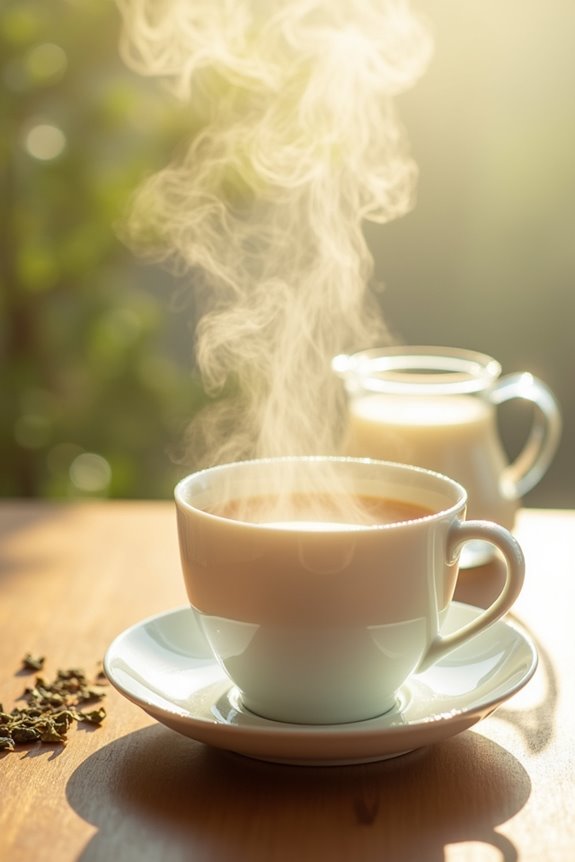
What makes milk oolong taste innately creamy without any added milk? High altitude is the secret. When you grow Jin Xuan tea in elevated regions like Alishan and Zhushan in Nantou, cooler temperatures slow down leaf maturation. This slower growth process concentrates the tea’s natural compounds, creating that signature creamy flavor and rich aroma you’re seeking.
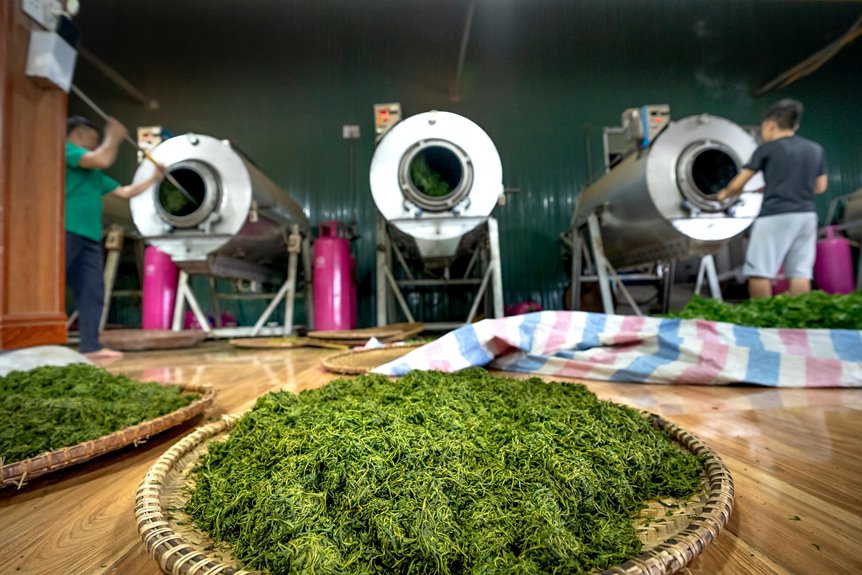
The elevation affects how the plant develops. Higher altitudes mean less oxygen and cooler air, forcing the leaves to work harder and develop more complex flavors. Combined with careful withering and bruising during processing, this creates the buttery characteristics that define quality milk oolong.
You’ll notice a smoother, fuller mouthfeel and a soothing cool sensation in your throat. The aroma lingers longer too, giving you a lasting aftertaste that reveals the tea’s true quality and depth.
The Perfect Brew: Temperature, Timing, and Multiple Steepings
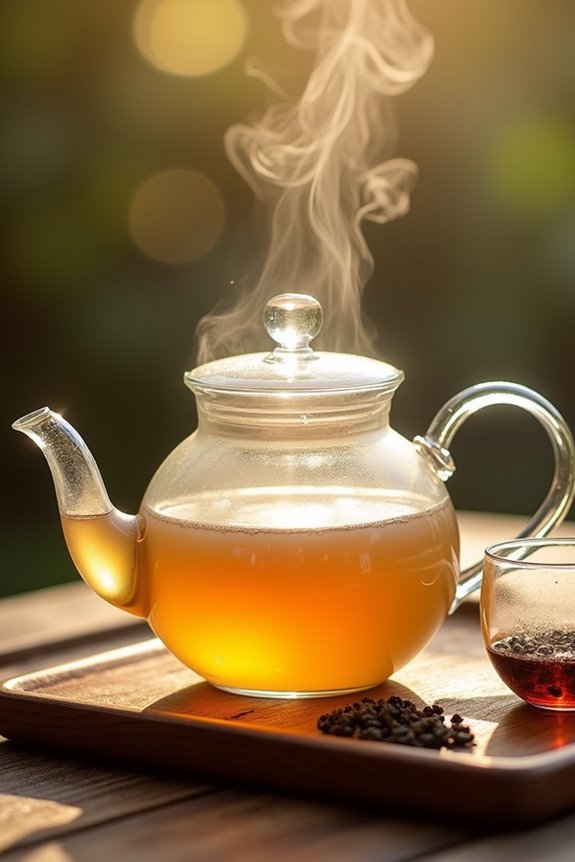
To brew milk oolong perfectly, you’ll want to heat your water to about 195°F (90°C), which is hot enough to extract the tea’s creamy compounds without scorching the delicate leaves. Steep your first infusion for just 1–3 minutes, then re-steep the same leaves 2–4 times, since each infusion reveals new flavor layers that make the effort worthwhile. This multiple-steeping approach lets you experience how the tea evolves, transforming from lighter, floral notes in early brews to richer, more complex flavors as the leaves continue to open.
Water Temperature Guidelines
How you heat your water makes all the difference when brewing milk oolong. The optimal water temperature for Jin Xuan milk oolong ranges from 190–200°F (88–93°C). This specific range balances the tea’s delicate floral notes with its signature creamy, buttery flavors without damaging them.
You don’t need fancy equipment to nail this infusion time. If you lack a thermometer, let freshly boiled water rest about 5 minutes before steeping. This simple pause brings the temperature down to roughly 185°F (85°C), creating a gentler brew that preserves the tea’s complexity.
Preheating your cup or gaiwan with hot water beforehand matters too. This step prevents the steeping temperature from dropping too quickly, maintaining consistent flavor extraction throughout your steeping guidelines and multiple infusions.
Steeping Time Recommendations
Getting your steeping time right is what separates a good cup from a great one. You’re balancing creaminess with delicate floral notes when you brew milk oolong. Jin Xuan requires careful timing because over-steeping scorches its subtle aromas, while under-steeping leaves flavors locked inside the leaves.
| Steeping | Time | Result |
|---|---|---|
| 1st | 3–5 minutes | Balanced creaminess and florals |
| 2nd | 3–4 minutes | Deeper complexity emerges |
| 3rd | 4–5 minutes | Bolder, richer flavors |
| 4th | 5 minutes | Final extraction sweetness |
Start at three minutes with your brewing temperature between 190–200°F. You’ll find longer steeping times yield bolder flavors, so adjust based on your preference. Multiple infusions unlock different facets, letting you experience how milk oolong evolves with each steep.
Multiple Infusion Techniques
Now that you’ve mastered the timing for each steep, you’re ready to unlock milk oolong’s full potential through multiple infusion techniques. Premium Jin Xuan from high elevations reveals different flavor layers with each infusion, transforming your experience across multiple steepings.
Here’s how to maximize your milk oolong:
- First infusion (30–45 seconds): Captures fresh, sweet creaminess and initial floral notes
- Second infusion (45–60 seconds): Develops deeper buttery complexity and smooth mouthfeel
- Third infusion (60–90 seconds): Brings forward subtle sweetness with pronounced throat sensation
- Fourth infusion (90+ seconds): Extracts final mineral notes and sustained aftertaste
Each steeping extracts different compounds from the leaves. Temperature stays consistent, but longer timing compensates for diminishing flavors. Most quality milk oolong delivers four to five excellent infusions before declining noticeably.
Loose Leaf vs. Tea Bags: Why Quality Matters
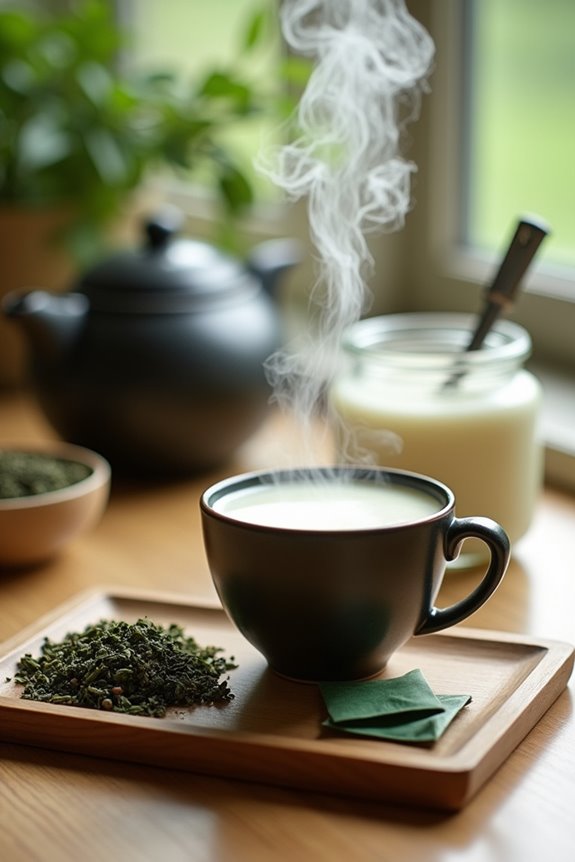
When you choose loose leaf milk oolong over tea bags, you’re protecting the whole leaves that deliver the creamy, buttery flavor you’re after, while bags often contain broken pieces that steep too quickly and lose their nuance. Leaf size matters because larger pieces in pyramid-shaped bags infuse more gradually and evenly than the dust found in standard bags, giving you a smoother, more aromatic cup. Though loose leaf costs more upfront, you’ll steep multiple infusions from the same leaves—making it more economical and rewarding than bags that fade after one or two uses.
Flavor Quality Differences
Because loose leaf milk oolong uses whole leaves rather than broken fragments, you’ll notice a significant difference in both taste and aroma the moment you brew it. High elevation varieties, particularly those from Nantou in Taiwan, deliver distinctly richer and creamier profiles that tea bags simply can’t match.
When you choose loose leaf, you’re experiencing the tea’s natural creamy, buttery character. Broken leaves in tea bags over-extract quickly, producing bitter, flat flavors that mask the milk oolong’s authentic sweetness and mouthfeel.
Quality differences you’ll taste:
- Fuller, more nuanced buttery-milk notes
- Pronounced natural aroma without artificial additives
- Smoother, creamier texture on your palate
- Superior sweetness that develops gradually
Authentic milk oolong contains no added milk or flavors—everything comes from the tea itself. This purity matters because it lets you experience the complete flavor complexity that makes high elevation milk oolong special.
Leaf Size And Integrity
The leaf itself is where milk oolong’s quality begins. You’ll notice that loose leaf milk oolong delivers superior flavor and aroma compared to tea bags. Whole leaves and gently rolled ones preserve the delicate creamy and buttery notes that make this tea special. When you choose loose leaf options, you’re getting larger leaf particles without excess dust.
Tea bags, particularly small or non-spacious ones, contain broken leaves and fragmented material. These fragments reduce steep quality and diminish the nuanced profiles you’re seeking. If you must use tea bags, select large pyramid-shaped versions that allow leaves adequate expansion and water access.
The difference matters because leaf integrity directly affects extraction. Whole leaves release their oils gradually, creating balanced flavor. Broken pieces over-extract quickly, resulting in bitterness and astringency instead of the smooth, creamy character authentic milk oolong offers.
Cost-Benefit Analysis
How much are you willing to pay for a cup that tastes genuinely creamy and buttery?
Loose leaf milk oolong costs more upfront, but you’re investing in authentic flavor. Authentic Jin Xuan from high elevation origins contains no added milk or flavors—the creaminess develops naturally during processing. Tea bags offer convenience, yet they typically contain broken leaves that brew weaker infusions.
Consider these factors:
- Loose leaf expands fully, extracting rich, buttery notes from high-elevation Jin Xuan
- Quality milk oolong requires proper oxygen exposure during withering and oxidation
- Your brewing method affects extraction, making leaf integrity essential
- Premium loose leaf delivers multiple infusions, extending value over time
You’ll notice the difference immediately. One cup of authentic milk oolong provides the creamy character that broken-leaf bags simply can’t match.
Brewing Mistakes That Diminish Creaminess
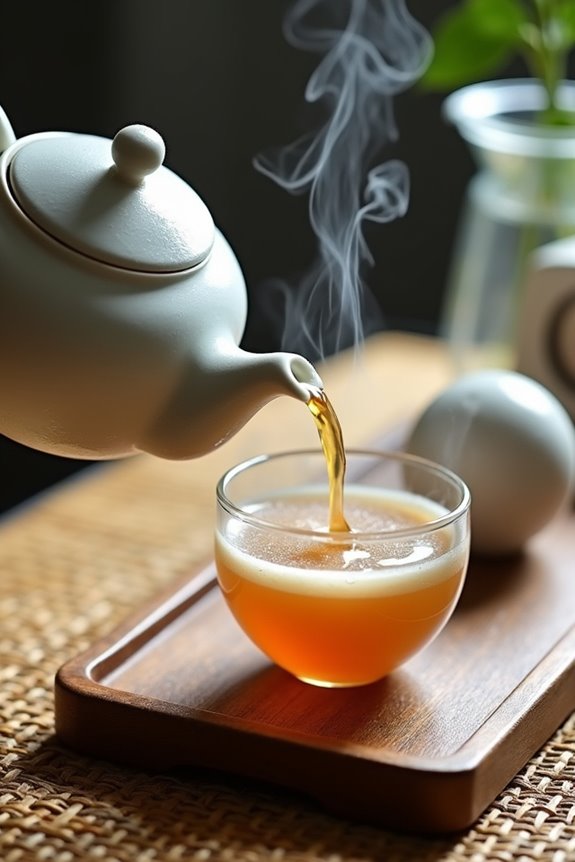
Even when you’ve sourced quality milk oolong, common brewing errors can strip away the creamy texture that makes this tea special. Oversteeping beyond five minutes dulls the delicate milkiness you’re after. Loose-leaf tea delivers superior flavor and aroma compared to tea bags, which restrict leaf expansion and reduce overall quality. Water temperature matters significantly—too-hot water or skipping cup preheating diminishes the rich, buttery aftertaste. Brewing directly in milk instead of water sounds appealing but risks masking nuanced notes if you’re not careful with timing. Finally, adding salt or aggressive sweeteners during brewing clashes with milk oolong’s natural sweetness, flattening both floral and creamy profiles. Master these fundamentals, and you’ll unlock creaminess that defines exceptional milk oolong.
Customize Your Cup: Milk, Sweeteners, and Flavors
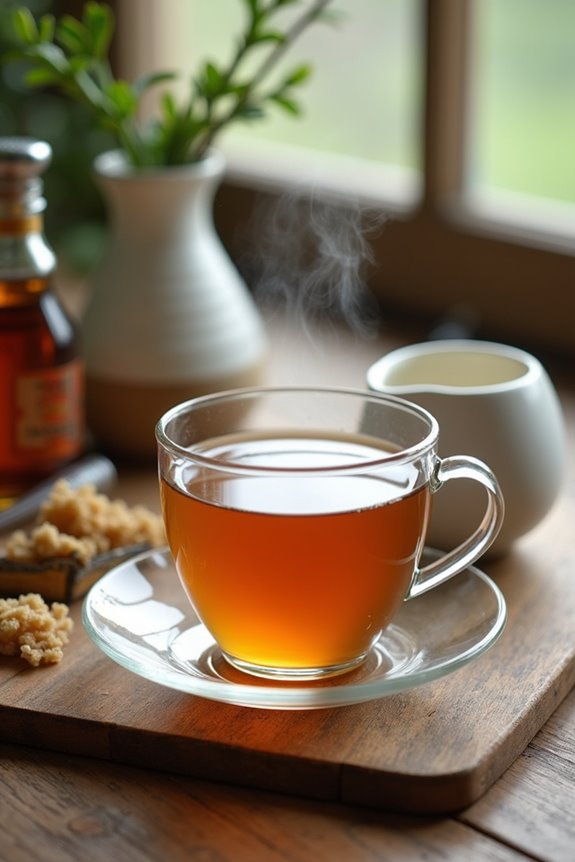
Once you’ve nailed the brewing fundamentals, you can shape milk oolong to match your preferences without compromising what makes it special. Your high-elevation Jin Xuan already delivers authentic milk flavor from its creamy character, so you’re starting with excellence.
High-elevation Jin Xuan delivers authentic milk flavor from its creamy character—you’re already starting with excellence.
Consider these customization options:
- Skip dairy milk—the genuine milk flavor comes from the tea itself, not additives
- Add honey or sugar sparingly—these enhance sweetness without masking the natural buttery notes
- Try a splash of plant-based milk—oat or almond complement the creamy texture if you prefer
- Enjoy it straight—most enthusiasts savor Jin Xuan plain to appreciate its complete flavor profile
The key is restraint. Your high-elevation tea’s complexity shines brightest when you resist over-customization, letting the cultivar’s inherent creaminess remain the star of your cup.
Master Milk Oolong: Common Mistakes to Avoid
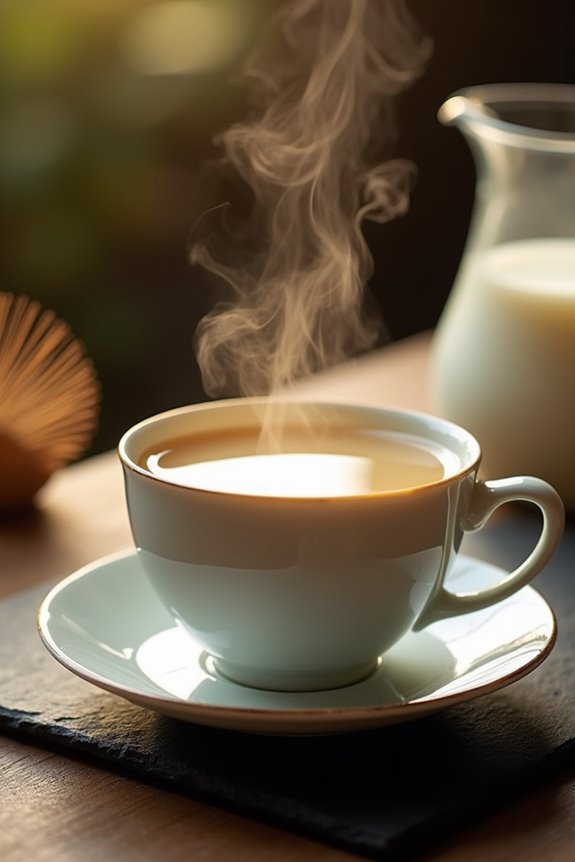
Why does your carefully sourced Jin Xuan sometimes taste flat or bitter instead of creamy and smooth? You’re likely making one of these common mistakes that undermine milk oolong’s inherently qualities.
| Mistake | Problem | Solution |
|---|---|---|
| Water too hot | Destroys delicate flavors, creates bitterness | Use 185–195°F (85–90°C) |
| Steeping too long | Extracts unwanted tannins | Stick to 2–3 minutes first steep |
| Over-oxidized leaves | Loss of creamy notes | Source high-elevation Jin Xuan |
You’ll notice brewing temperature matters most. Water above 195°F scorches the leaves, especially high-elevation varieties that develop their signature buttery notes through careful processing. Multiple infusions reveal evolving flavors, so don’t rush. Authentic milk oolong needs nothing added—the Jin Xuan cultivar delivers creaminess intrinsically.