

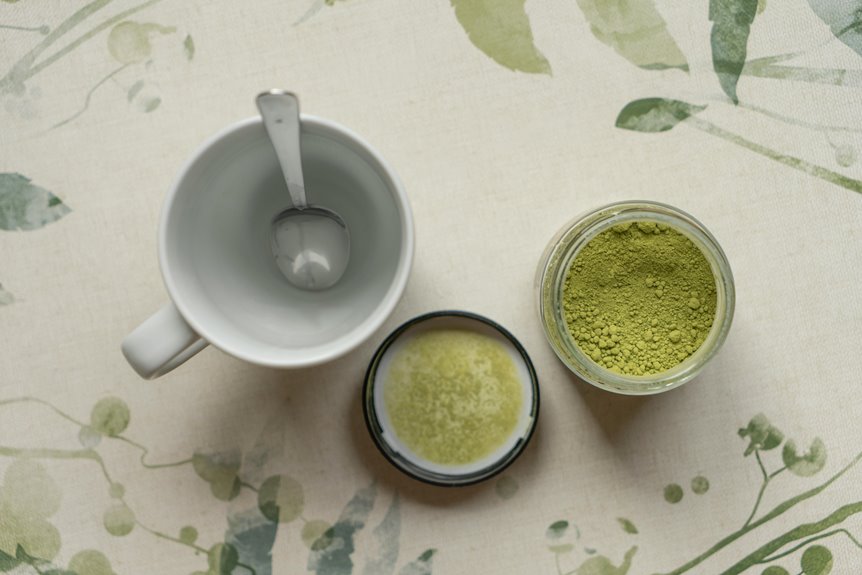
You’ll want between half a teaspoon and one teaspoon of matcha powder per cup, with half a teaspoon being your ideal starting point for balanced flavor and health benefits. A full teaspoon creates a bolder, stronger taste. For an 8-ounce cup, that’s roughly 2 to 6 grams of powder. Your matcha grade matters too—ceremonial grade needs less powder than culinary grade to achieve smooth texture and rich flavor. The right amount depends on whether you’re making thin or thick tea.
Start With the 1/2–1 Teaspoon Standard
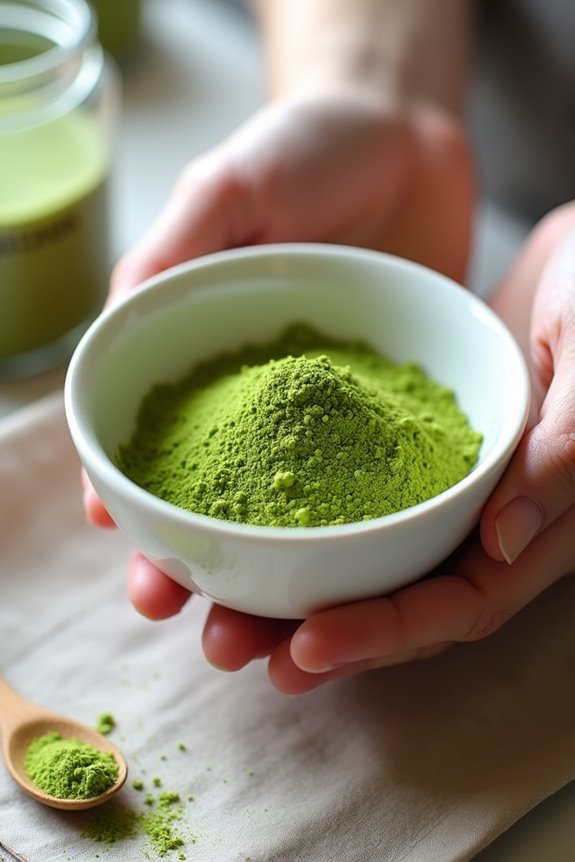
How much matcha do you actually need in your cup? The answer depends on your cup size and preference, but you’ll find the half teaspoon to one teaspoon range works for most people. A half teaspoon of matcha powder per cup gives you balanced flavor and general health benefits without excessive caffeine or bitterness. If you prefer something stronger, use a full teaspoon instead.
For smaller cups around 80 ml, stick with a half teaspoon, which delivers roughly 1–2 grams. In a full 8-ounce cup, you might use 6 grams for a bolder usucha or koicha experience. This range helps you control foam and texture when whisking with hot water. Finding your sweet spot within this standard lets you enjoy matcha exactly as you like it.
How Matcha Grade Changes Your Serving Size
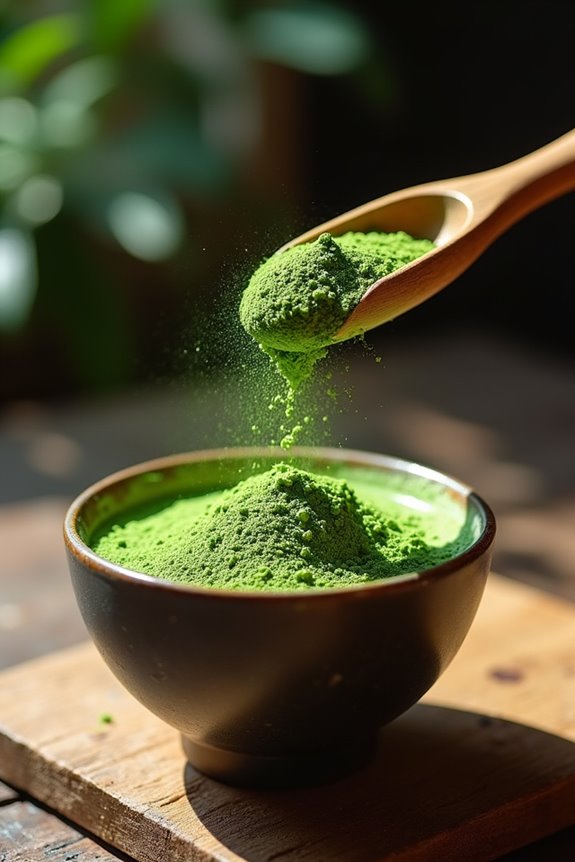
Did you realize that the grade of matcha you choose actually changes how much powder you should use? Ceremonial grade matcha requires less powder per cup because of its delicate, premium quality. You’ll typically use 2 grams for a smaller serving, whereas culinary grade demands more—around 4 to 6 grams—to achieve balanced strength and density.
The powder-to-water ratio shifts based on grade. Premium ceremonial matcha creates a smoother, creamier texture at lower dosages. Culinary grade can tolerate stronger ratios without becoming overwhelmingly bitter.
Your preparation method matters too. For usucha (thin tea), follow grade-specific amounts. For koicha (thick tea), you’ll double the powder regardless of grade, using about 4 grams per 35 milliliters. Understanding your matcha’s grade ensures you’re using the right serving size for your cup.
Adjust Your Amount by Preparation Method
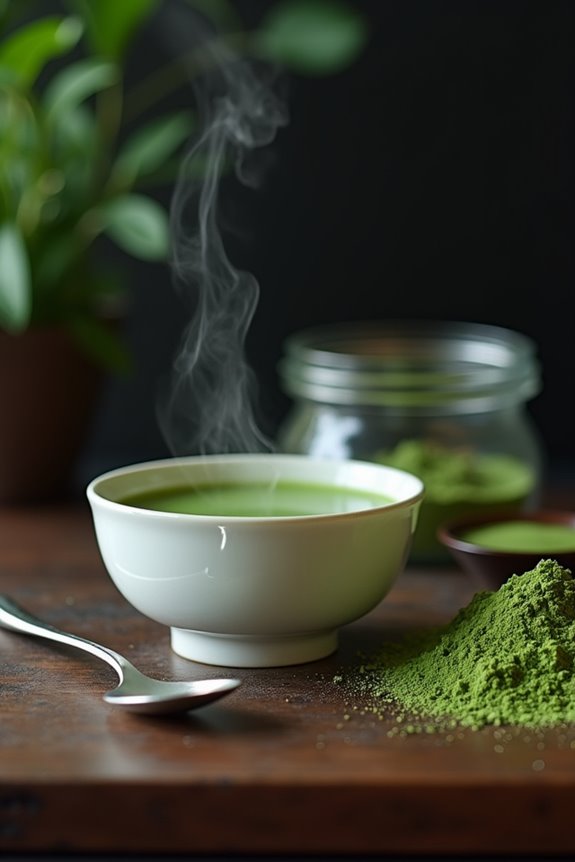
Beyond grade selection, your brewing method is what ultimately determines how much powder you should use. Different preparation methods demand different powder-to-water ratios, and adjusting your amount changes the taste balance, foam, and caffeine content considerably.
Your brewing method is what ultimately determines how much matcha powder you should use for your perfect cup.
Consider these four common approaches:
- Usucha – Whisk 2 grams of matcha powder with 60 ml water for a lighter, creamy cup with balanced bitterness
- Koicha – Use 4 grams powder with 35 ml water, creating a thick, dense preparation favored by traditionalists
- Standard cup – Aim for 6 grams powder per 8-ounce cup for straightforward daily drinking
- Matcha latte – Blend 2 grams powder with 60 ml hot water, then add 140 ml warmed milk for creaminess
Increasing your powder-to-water ratio thickens the tea and enhances foam, but risks greater bitterness and higher caffeine. Find your method that matches your preference.
Troubleshoot Bitter, Thin, or Weak Matcha
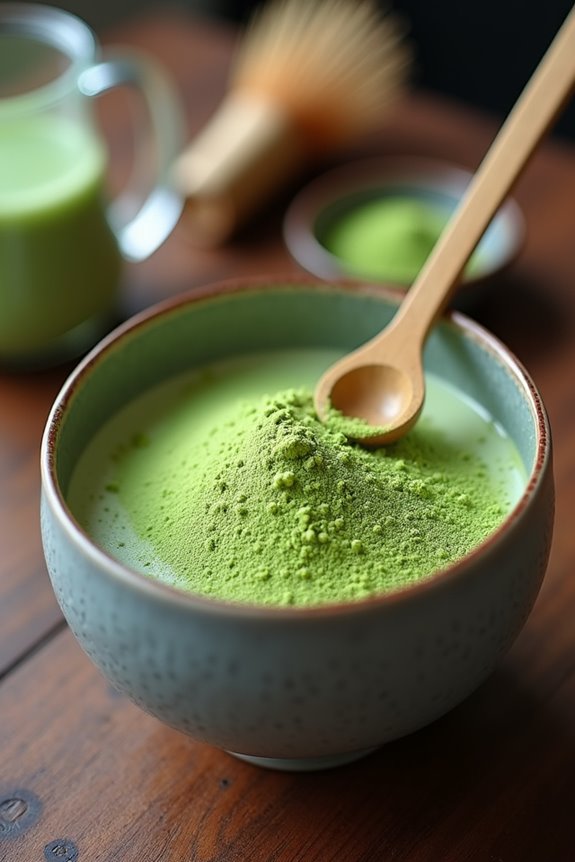
When your matcha doesn’t taste right, the problem usually comes down to one of three things: you’re using too little powder, you’re not preparing it correctly, or your water temperature is off.
If your tea tastes thin or weak, increase your powder amount toward 4 g per cup. Insufficient matcha reduces foam formation, which weakens mouthfeel and intensifies bitterness. Sifting your matcha powder beforehand prevents clumps that create chalky, bitter aftertastes. For deeper flavor, try koicha, a thicker preparation using about 4 g in 35 ml water.
When raising your powder amount, use slightly cooler water instead of boiling. This mellows harsh flavors and creates a smooth, velvety texture. Adjusting water temperature alongside your powder amount helps you achieve balanced bitterness in both Usucha and koicha preparations.
Safe Daily Matcha Limits and Caffeine Concerns
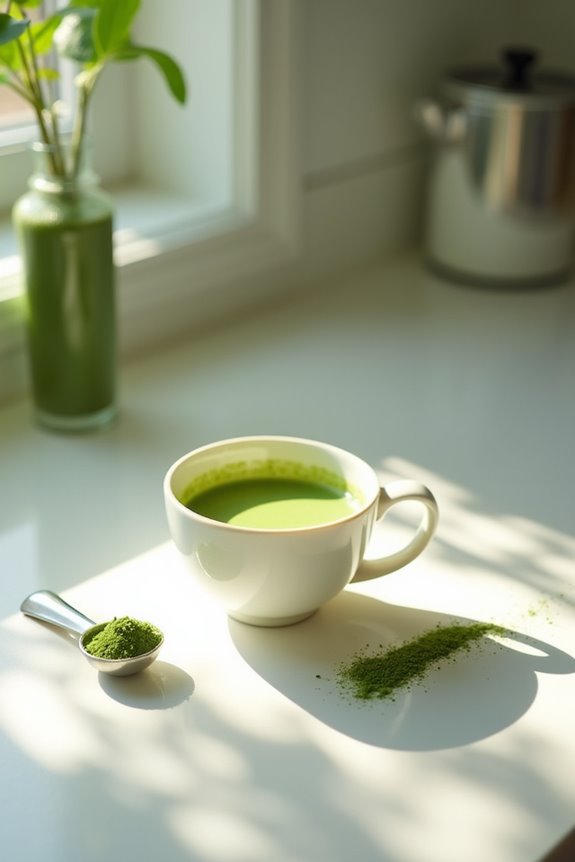
Now that you’ve dialed in your matcha preparation, it’s worth considering how much you’re actually consuming each day. A standard 2 g serving contains about 64 mg of caffeine, while the daily caffeine limit for healthy adults sits at 400 mg. Your caffeine intake depends on several factors:
- Powder-to-water ratio (usucha vs koicha determines strength)
- Serving size you prepare each cup
- Number of cups you drink daily
- Quality and source of your matcha powder
Switching to koicha or using more matcha powder increases both caffeine per cup and bitter intensity. EFSA guidance suggests moderate, regular consumption beats excessive daily use. Poor-quality matcha introduces contamination risks, making high-quality matcha from trusted sources essential. Staying within safe daily limits protects your health while letting you enjoy matcha’s benefits consistently.