

Your cake likely didn’t rise because you skipped essential steps. Stale leavening agents won’t create lift, so check expiration dates. Inaccurate measurements throw off the chemistry, and overmixing deflates air bubbles you’ve worked to create. You might’ve started with a cool oven or opened the door too early, collapsing the structure mid-bake. Each factor compounds the problem. Understanding what went wrong—and how these elements interact—reveals exactly what to fix next time.
Check Your Raising Agents Are Fresh and Correct
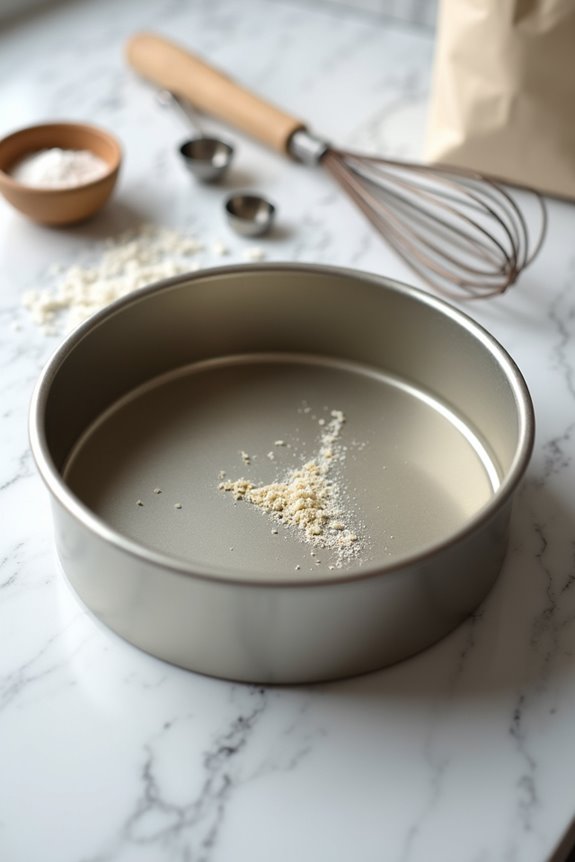
One of the most common reasons your cake won’t rise is that your baking powder or baking soda has lost its potency. These leavening agents have expiration dates, and using expired products guarantees disappointing results.
Check your pantry. If your baking powder or baking soda sits unused for months, it won’t create the gas bubbles your cake needs to rise properly. Replace them with fresh containers.
You’ll also want to verify you’re using the right flour. If your recipe calls for self-raising flour but you grab plain flour instead, you won’t get adequate rise unless you add the correct amount of baking powder separately. Double-check your ingredient labels before mixing. This simple verification step prevents most rising failures and sets you up for success.
Measure Ingredients Accurately for Proper Balance
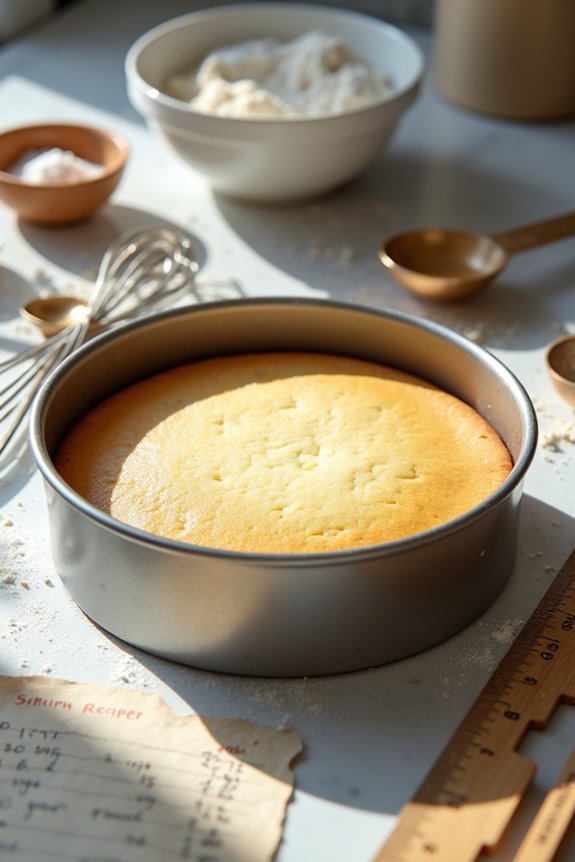
Beyond selecting fresh leavening agents, you’ve got to nail your measurements—because even the best baking powder won’t help if your batter’s out of balance.
Inaccurate measurements create a domino effect that sabotages your rise. Too much liquid weighs the batter down, preventing proper expansion. Too little flour thins the structure needed to trap air bubbles. Your baking powder can’t work effectively when proportions are off.
Here’s what matters:
- Weigh ingredients using a kitchen scale for precision (volume measurements vary)
- Follow recipes exactly, especially flour and baking powder ratios
- Spoon flour into measuring cups, then level off—don’t pack it down
Room temperature ingredients mix more evenly, helping baking powder distribute uniformly throughout. When everything’s balanced correctly, your cake rises predictably. Precision transforms baking from guesswork into reliable results.
Mix Your Batter Gently: Don’t Overwork It
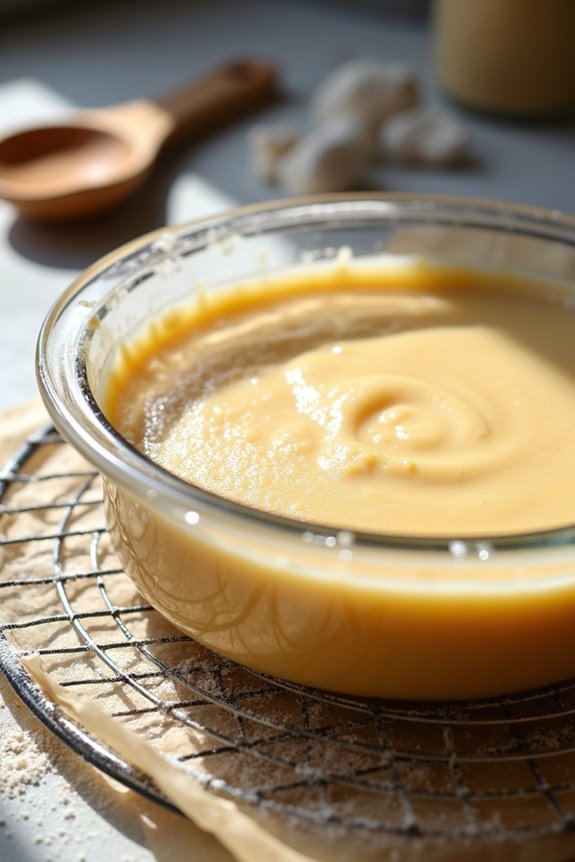
While accurate measurements set up your cake for success, how you mix matters just as much. Overmixing develops gluten in your batter, which creates a tough, dense cake that won’t rise properly. You need those air bubbles trapped in your batter to give your cake lift and a tender crumb.
| Mixing Mistake | What Happens | Your Result |
|---|---|---|
| Vigorous stirring | Gluten develops, air bubbles collapse | Dense, flat cake |
| Gentle folding | Air bubbles stay intact, even texture | Light, fluffy cake |
| Room temperature ingredients | Smooth mixing without overworking | Proper rise and crumb |
Mix your dry ingredients in gently with a light hand. Stop folding once you can’t see streaks of flour. Your restraint during mixing directly determines whether your cake rises beautifully or falls flat.
Cream Butter and Sugar to Incorporate Air
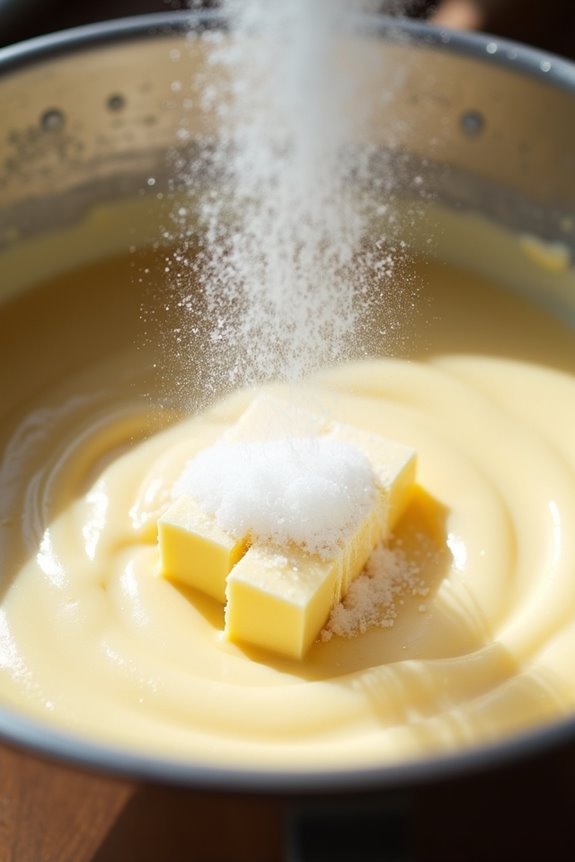
When you cream room-temperature butter and sugar together, you’re creating tiny air pockets that’ll expand in the oven and help your cake rise. You’ll know you’ve creamed them properly when the mixture turns pale and fluffy, dropping slowly from your beaters in ribbons—this lightness is what gives your cake its structure. If you skip this step or rush through it, you’ll end up with a denser cake that doesn’t rise as much, but if you overbeat the mixture, those air bubbles can collapse during baking and leave you with the same disappointing result.
Beating Butter and Sugar
Creaming butter and sugar together does more than just blend two ingredients—it traps tiny air bubbles throughout the mixture that’ll help your cake rise in the oven. This process requires attention to detail and proper technique.
Here’s what you need to know:
- Use room-temperature ingredients. Cold butter resists creaming and won’t incorporate air effectively, resulting in a denser batter.
- Beat until pale and fluffy. The mixture should double in volume and form ribbons when lifted, indicating sufficient aeration for rising structure.
- Avoid overcreaming or undercreaming. Both hinder air incorporation and lead to less lift during baking.
Once you’ve achieved the right texture, work quickly. If your batter sits too long before you fold in dry ingredients, trapped air escapes and your cake won’t rise properly.
Air Incorporation Techniques
How do you get air into cake batter in the first place? The creaming method is your foundation. When you beat butter and sugar together, you’re forcing tiny air bubbles throughout the mixture. This process takes time—usually three to five minutes—so don’t rush it.
You’ll know you’ve creamed enough when the mixture turns pale and fluffy, not dense and yellow. Those air pockets expand during baking, helping your cake rise properly.
Air incorporation doesn’t stop there. After creaming, whisk sugar and eggs until pale and foamy, creating additional pockets. Add eggs slowly to avoid deflating what you’ve built. Room-temperature ingredients blend more smoothly, preserving those bubbles. Finally, mix dry ingredients gently—overmixing breaks air pockets and collapses your rise.
Preheat Your Oven and Verify the Temperature
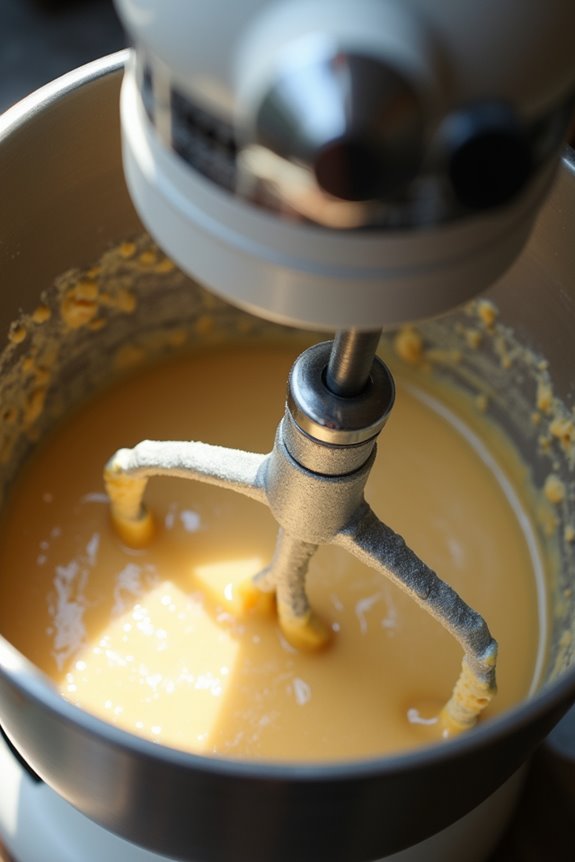
You need to preheat your oven and verify it’s actually reached the right temperature, since many ovens run cooler or hotter than their displays indicate. Use an oven thermometer to check the actual temperature matches your set point, ensuring your batter begins baking at the proper heat from the start. Timing matters too—you’ll want to bake your batter promptly after mixing so the leavening agents don’t lose their lifting power while sitting in the bowl.
Temperature Verification Methods
One of the most overlooked culprits behind a flat cake is an oven that isn’t actually at the temperature your recipe calls for. Many home ovens run 25–50°F off the dial, which throws off your baking entirely. Temperature verification methods help you catch this problem before it ruins your cake.
Here’s what you should do:
- Use an oven thermometer to check the actual temperature inside your oven
- Preheat fully and let the oven stabilize for 15 minutes before baking
- Compare the dial reading to your thermometer’s reading to identify the gap
If you’re seeing slow rise or uneven baking, calculate a corrected target temperature. For example, bake at 350°F if your recipe calls for 325–350°F but your thermometer shows consistent underheating. This simple step transforms your results.
Preheating Timing Matters
When’s the last time you actually waited for your oven to fully preheat before sliding in your batter?
Preheating matters more than you’d think. Your oven needs time to reach the target temperature so rapid heat expansion happens immediately when batter enters. Without this initial high heat, air and steam won’t expand quickly enough, and you’ll get a flat, dense cake instead of a risen one.
Here’s what happens at different timing points:
| Timing | Oven Status | Result |
|---|---|---|
| Batter in cold oven | Not preheated | Slow rise, dense crumb |
| Wait 15 minutes | Partially preheated | Uneven rise, sunken center |
| Full preheat + immediate bake | Ready | Proper expansion, good rise |
Always verify your oven temperature with a thermometer. Many home ovens run 25–50°F off, affecting how your cake bakes. Match your timing to actual temperature, not just the dial setting.
Choose the Right Tin Size for Your Batter
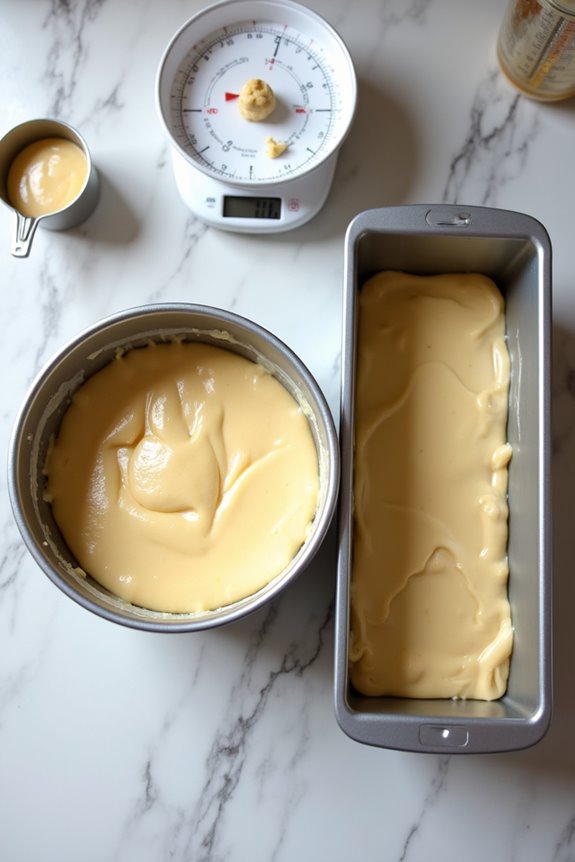
The pan you select makes a measurable difference in how your cake rises. Your tin size must match your batter quantity—this pairing controls heat distribution and determines your cake’s final height.
Here’s what happens when you skip this step:
- A pan that’s too small concentrates heat intensely, creating domed tops and potential cracking across the surface
- A pan that’s too large spreads batter too thin, resulting in a flat cake with minimal rise
- Filling your pan beyond 3/4 full leaves no room for the cake to expand upward without overflowing
Always grease and line your chosen tin with parchment or flour for even release. If you switch to a different tin size, adjust your bake time accordingly. Larger pans bake faster; smaller ones need extra time. Matching these elements prevents the frustration of dense, sunken results.
Line and Grease Your Tin Properly
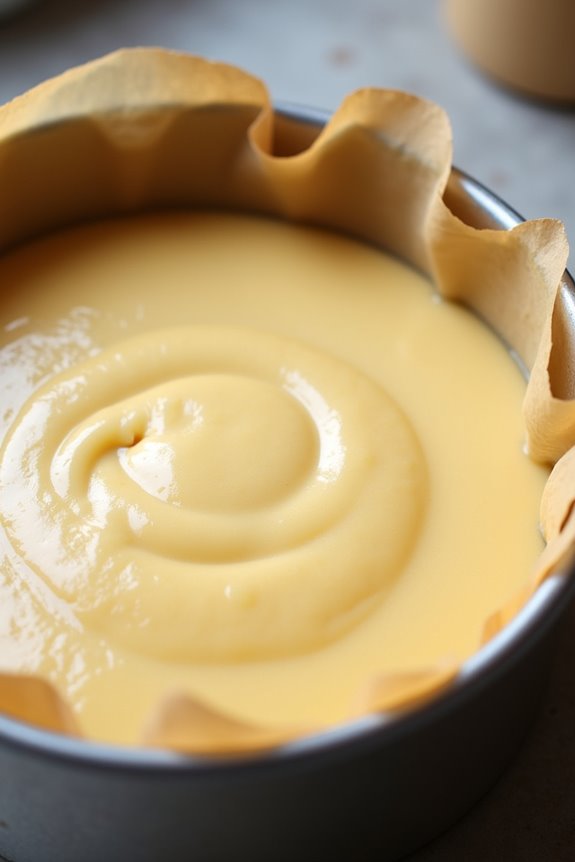
You’ve got to grease your tin thoroughly, then layer it with parchment paper or a light flour dusting to create a non-stick barrier that lets your cake release cleanly. Apply your butter in even strokes across all interior surfaces—the base, sides, and corners—so you don’t leave any gaps where batter can stick and tear when you unmold. This dual approach of butter plus parchment (or flour) prevents the cake edges from sticking prematurely, which can actually restrict your cake’s rise and create a dense, compressed structure.
Parchment Paper Placement
How you prepare your cake tin matters more than you might think. Proper parchment paper placement prevents sticking and ensures your cake releases cleanly, which directly supports even baking and better rise.
Here’s what you need to do:
- Cut parchment to fit your tin’s base and sides snugly, avoiding loose sheets that shift during baking
- Rub a thin fat layer on the tin first so parchment adheres smoothly without sagging
- Confirm adequate greasing and lining before pouring batter
When parchment stays secured, heat distributes evenly throughout your batter. This consistent temperature supports proper rising. Loose or poorly fitted parchment creates air pockets and uneven heat exposure, which compromises your cake’s structure. You’ll notice less tearing when inverting too. Taking these moments to line correctly sets your cake up for success from the start.
Butter Application Methods
Proper butter application is your foundation for a cake that rises evenly and releases cleanly from the tin. You’ll want to apply a thin, even coat of butter across all surfaces, ensuring no pooling in corners. This creates a smooth non-stick barrier that prevents sticking without encouraging excessive browning on your cake’s edges.
After buttering, dust with flour or line with parchment paper to form an additional protective layer between your batter and the metal. This dual approach works together—the grease prevents sticking while the flour or parchment guards against burning.
Timing matters too. Complete your butter application and lining before adding any batter. This preparation allows your cake to release cleanly after baking, protecting the structure you’ve worked to build throughout the rising process.
Fill Your Tin Three-Quarters Full
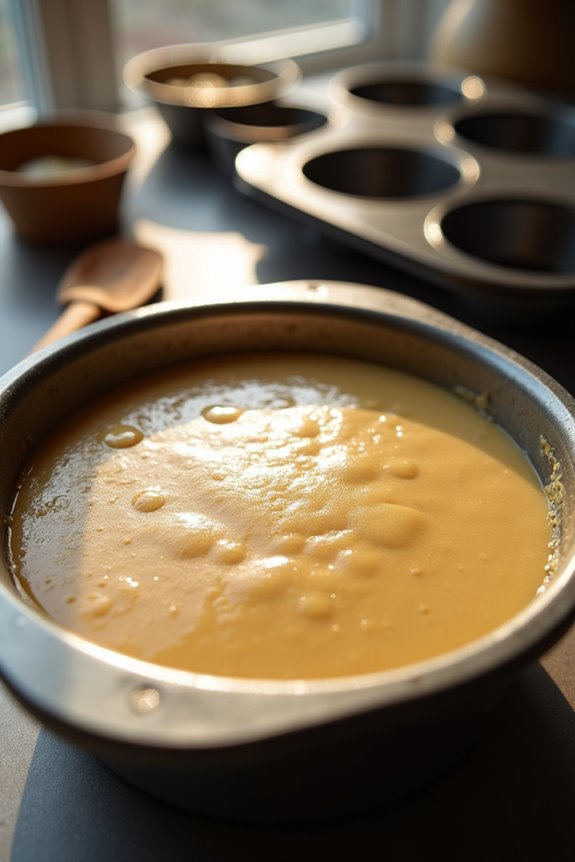
Getting the fill level right is one of the easiest ways to help your cake rise evenly. When you fill your cake tin three-quarters full, you’re creating the ideal environment for your batter to expand without problems.
Here’s what happens at different fill levels:
- Overfilling causes batter to spill over the edges and creates uneven rising as it bakes
- Underfilling wastes potential height, leaving you with a disappointingly flat cake
- Three-quarters full provides enough room for proper rise while ensuring even heat circulation
This sweet spot allows your cake to set properly and rise uniformly throughout. Always match your batter amount to the tin size your recipe specifies. Getting this detail right prevents wasted ingredients and disappointing results, helping you join the ranks of successful home bakers who understand these foundational techniques.
Start Baking Immediately After Mixing
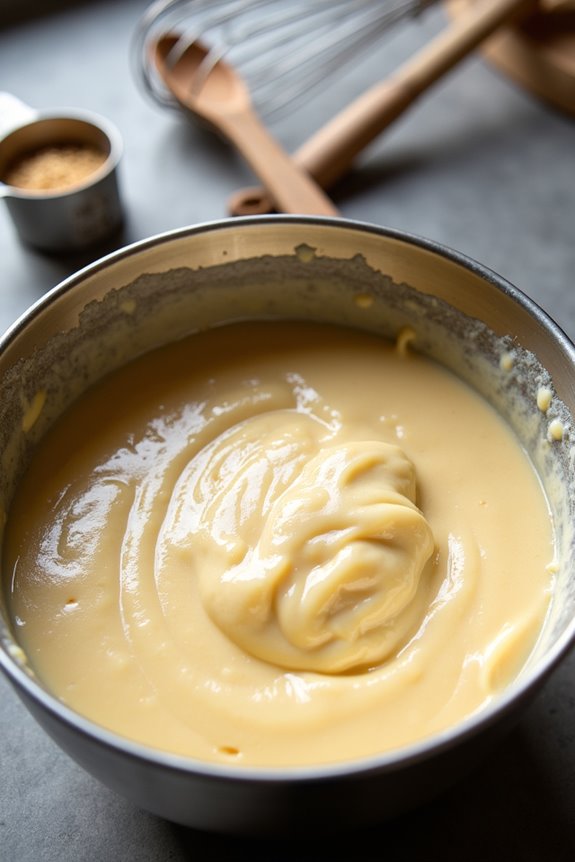
Why does timing matter so much once you’ve mixed your batter? Every minute you wait, your leavening agents lose their activity. Air bubbles escape. Your batter collapses.
You’ll want to get your batter into a preheated oven immediately after mixing. This is where oven temperature and timing work together. Your oven needs to reach the correct temperature before the batter goes in, since any temperature drop hinders rising.
| What Happens | Time Frame |
|---|---|
| Leavening agents activate | During mixing |
| Air bubbles begin escaping | Within minutes |
| Gluten overdevelops | Extended delay |
| Batter collapses | 10+ minutes waiting |
Mix gently to preserve captured air. Then bake without extended waiting in the mixing bowl. This straightforward approach prevents most rise problems. Your timing directly determines your cake’s success.
Keep the Oven Door Closed Until Set
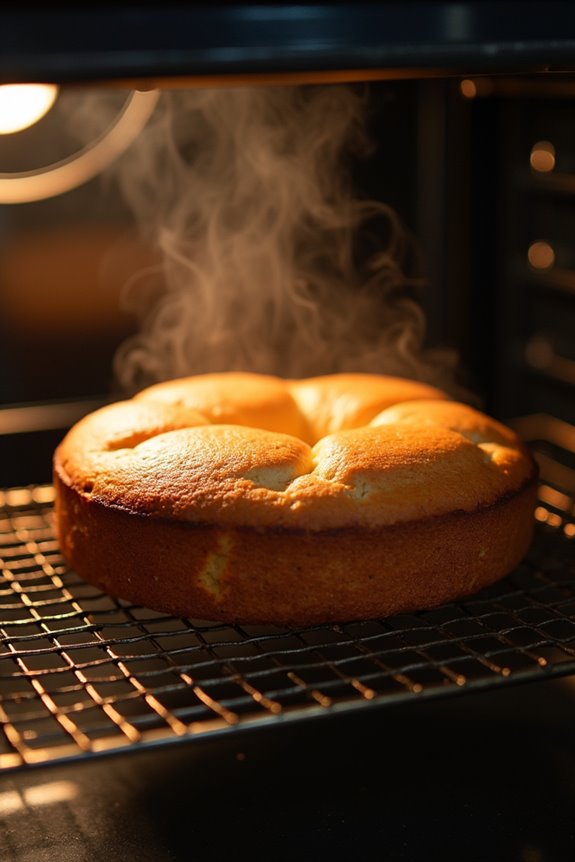
You’ve mixed your batter and gotten it into the oven at just the right moment—now comes another essential step. Keeping your oven door closed protects your cake’s rise during those pivotal early minutes when the structure sets.
Keeping your oven door closed during those pivotal early minutes protects your cake’s rise while the structure sets.
Opening the door causes problems you’ll want to avoid:
- Temperature drops suddenly, preventing your cake from setting properly and rising fully
- Heat and air escape, weakening the rise and increasing the risk of an early crust forming
- Collapse becomes more likely once the cake loses structural support
Instead of peeking constantly, use your oven light to check progress. If you must verify doneness, open the door quickly and minimally. Rely on your recipe’s tested bake time and verify your oven’s actual temperature with a thermometer beforehand. These steps keep your cake rising steadily and successfully.
Rotate Your Cake Pan and Position Racks for Even Heating
How does heat actually move through your oven? It rises from the bottom and concentrates near the top, creating temperature variations that directly affect how your cake rises. You’ll want to check your oven racks first, positioning them so your pan sits centered, away from both heating elements. This pan position matters because it exposes your batter to consistent, moderate heat.
Rotate your cake pan three-quarters through baking. This simple move counters hot spots that form naturally during cooking. When you rotate, you’re redirecting which part of your cake receives the most intense oven temperature exposure.
If you’re baking multiple cakes, stagger their placement on different racks. This arrangement ensures each pan gets adequate airflow and consistent heating. These deliberate steps transform uneven rising into predictable, reliable results.
Bake for the Full Time Specified in Your Recipe
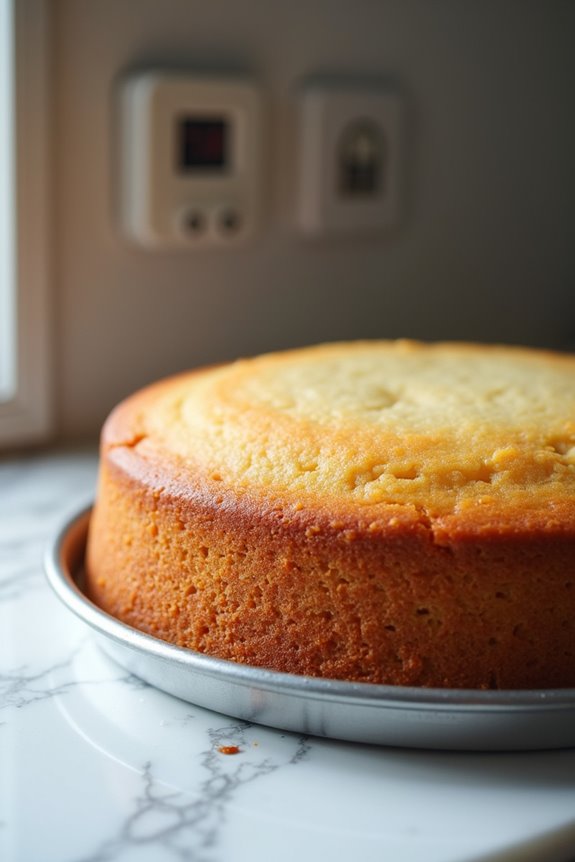
The timer on your oven is your cake’s best friend. Baking for the full time specified in your recipe ensures your cake rises properly and sets completely. Here’s what happens when you cut baking time short:
- Underbaking leaves the center too loose, causing a lower rise
- The crumb structure doesn’t fully set, resulting in a soggy middle
- Your cake won’t achieve the height you’re expecting
Start checking doneness with a clean skewer only at the end of the recommended time. If the cake browns too quickly on top, tent it with foil and continue baking until the timer finishes. Avoiding the temptation to open the oven door during the first half of baking protects your rise. Trust the recipe’s bake time—it’s calculated for your cake’s success.
Diagnose Your Cake: Peaked, Flat, Gooey, or Sunken
Even when you’ve followed the baking time perfectly, your cake’s final appearance tells you a lot about what went wrong.
Your cake’s final appearance reveals exactly what went wrong during baking, even with perfect timing.
A peaked, domed top usually means you used too much raising agent, chose a pan that’s too small, or set your oven temperature too high. The batter expanded too quickly and rose excessively.
A flat, collapsed center indicates you opened the oven door too early, didn’t maintain sufficient oven heat, or added excessive raising agent. The cake rose prematurely, then fell.
A gooey center signals underbaking. Your batter didn’t cook through because you either reduced bake time or spread it too thick in the pan.
A sunken middle typically results from opening the door before the cake set, starting with a cool oven, or using too much leavening agent. Each symptom points directly to its cause, helping you adjust next time.