

You can use steel cut oats in cookies, but they’ll create challenges. Their coarse, dense structure resists softening during baking, unlike rolled oats. You’ll need to pre-cook them first to soften their structure and help them absorb moisture evenly. Raw steel cut oats bake up gritty and dry. Pre-cooking takes just minutes via microwave or stovetop, then cool before mixing into your dough. This simple prep step transforms results dramatically.
Can Steel Cut Oats Work in Cookie Recipes?
Why would you want to use steel cut oats in cookies when they’re not the ideal choice? The truth is, you can use them, but you’ll face real challenges. Steel cut oats are denser and chewier than rolled oats, requiring more liquid and longer baking times to soften properly. This means your cookie dough won’t hold together as easily, and your cookies may end up dry or tough. Rolled oats integrate smoothly into dough and bake evenly, creating the texture you’re after. If you’re committed to steel cut oats, pulse them in a mini processor first to break them down. You’ll also need to reduce the amount you use and increase your liquid ingredients. These adjustments help the oats cook through and your cookies bake successfully.
Steel Cut vs. Rolled Oats: What’s the Real Difference?

What separates steel cut oats from rolled oats comes down to how they’re processed. You’ll find that each type offers distinct advantages depending on your baking goals.
| Characteristic | Steel Cut Oats | Rolled Oats |
|---|---|---|
| Processing | Least processed, coarsely chopped | Steamed and flattened |
| Texture | Coarser, chewier | Softer, more cohesive |
| Cook Time | Longer | Faster |
Steel cut oats, also called Irish oatmeal or pinhead oats, retain more nutrients because they undergo minimal processing. Rolled oats, known as old-fashioned oats, are steamed then flattened to cook quickly.
For cookies, this difference matters. Rolled oats create softer, more uniform textures that blend seamlessly into dough. Steel cut oats produce denser, chewier cookies with noticeable texture. You’re choosing between refined consistency and hearty bite.
Understanding Why Steel Cut Oats Resist Softening
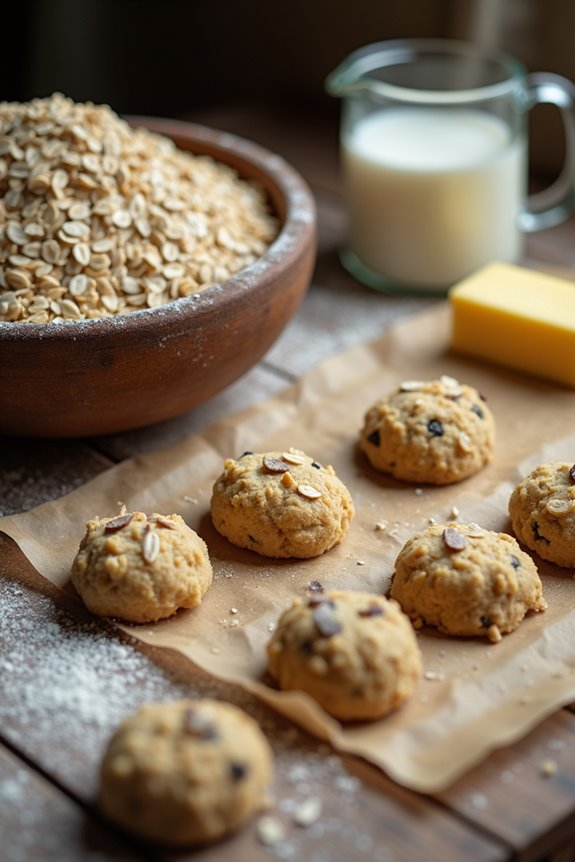
Steel cut oats stay firm and chewy because of their structure and how they absorb liquid. Unlike rolled oats, which are flattened and partially steamed, steel cut oats remain in dense, nugget-like pieces. This compact form resists quick hydration, meaning they can’t absorb moisture as rapidly as their processed counterparts.
When you add steel cut oats to cookie dough, they retain their firm texture because the limited baking time doesn’t provide enough heat and moisture for proper softening. The oats need sustained contact with liquid and extended cooking to break down their cellular walls. In a cookie’s brief baking window, they simply won’t soften adequately. This resistance to softening is why many bakers pre-cook or pulse steel cut oats before incorporating them into dough, ensuring better texture integration.
The Texture Problem: What Happens Without Pre-Cooking
When you skip the pre-cooking step and toss raw steel cut oats straight into your cookie dough, you’re setting yourself up for texture troubles. Without pre-cooking, steel-cut oats remain dense and resist softening during the brief baking time. Your cookies end up gritty and crumbly instead of holding together smoothly. The dough won’t bind properly because the oats haven’t broken down enough to integrate with other ingredients. You’ll also notice excessive dryness, since uncooked steel-cut oats absorb moisture without yielding their structure. The result? Cookies that feel sandy and fail to achieve that satisfying chew. Pre-cooking softens the oats beforehand, allowing them to distribute evenly throughout your dough and create cohesive, tender cookies. Without this essential step, you compromise both texture and palatability.
Do You Need to Cook Steel Cut Oats Before Baking?
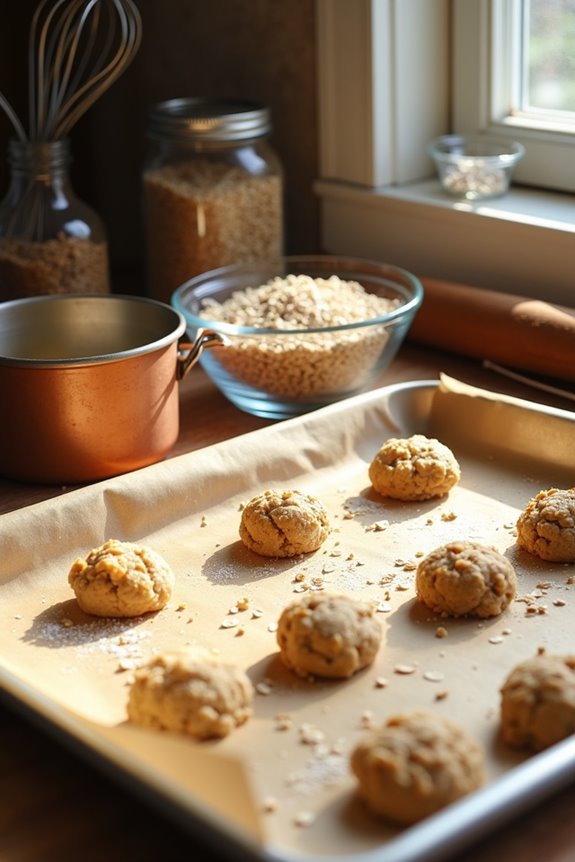
The short answer is yes—you’ll get better results if you cook your steel cut oats first, though it’s not absolutely required. When you pre-cook them through microwaving or simmering, you soften their firm structure so they blend smoothly into your dough instead of staying hard and gritty throughout baking. Skip this step and you’re likely to end up with cookies that feel dry, dense, or unevenly textured because the raw oats won’t absorb moisture or break down the way rolled oats naturally do.
Pre-Cooking Requirements And Methods
How do you get steel cut oats tender enough for cookies? You’ll need to pre-cook them. Steel cut oats are minimally processed, making them too firm for cookie dough without softening first.
You have three main pre-cooking methods. Microwave your oats with water for 5-10 minutes, simmer them on the stove for 20-30 minutes, or use an Instant Pot for faster results. Each method hydrates and softens the oats, improving their texture in your final cookies.
Pre-cooking prevents several baking problems. Without this step, your cookies become denser and drier, and the oats won’t fully soften during baking. Pre-cooked oats integrate smoothly into dough, delivering consistent texture throughout.
Some recipes use quick-cooking steel cut oats to reduce prep time, though traditional steel cut oats deliver superior results when properly softened beforehand.
Raw Versus Cooked Outcomes
Should you bake steel cut oats raw into your cookie dough, or must you cook them first? Raw steel cut oats won’t soften properly during baking, leaving you with dense, chewy cookies that lack the texture you’re after. Here’s why: steel cut oats are whole grain pieces that need extended heat and moisture to break down. Standard baking time isn’t enough.
Pre-cooking changes everything. When you soften steel cut oats beforehand, they absorb liquid and become tender before hitting the oven. This creates better cookie texture and more even results throughout your batch.
You’ve got options: boil them briefly, soak them overnight, or use quick-cooking steel cut varieties. Each method delivers softer oats that bake into satisfying cookies. Skip the raw approach—your cookies will thank you.
Quick-Cooking Steel Cut Oats for Cookies
Why stick with traditional steel cut oats when you can speed up the process? Quick-cooking steel cut oats offer you a practical middle ground for cookies. These oats maintain that dense, chewy bite you’d expect from steel cut oats, but they hydrate faster when mixed into your dough.
You’ll notice they deliver slightly less punchy texture than classic rolled oats, though the oat flavor remains present. This makes them ideal if you want depth without excessive chewiness. When you incorporate them, you may still need extra liquid in your recipe. A longer bake time also helps ensure the oats fully soften and integrate properly.
This balanced approach lets you achieve your desired texture while reducing overall preparation time. You’re getting the best of both worlds with steel cut oats in cookies.
How to Prepare Steel Cut Oats for Cookie Dough
Getting your steel cut oats ready for cookie dough requires one critical step: cooking them beforehand. You’ll prevent overly crunchy cookies and ensure even texture throughout your batch by preparing them properly.
Here’s your preparation process:
- Cook steel cut oats using a microwave-ready method (under 10 minutes) or an Instant Pot for convenience
- Simmer the oats until they’re tender and fully softened
- Cool the cooked oats completely before incorporating them into your dough
- Measure exactly 1 cup of prepared oats for your recipe
Skipping this preparation step causes problems. Your cookies will have uneven texture and insufficient sweetness distribution. The steel cut oats need that cooking time to absorb moisture and soften properly. Once cooled, they’ll blend seamlessly into your dough, delivering consistent results and the texture you’re aiming for in every bite.
Steel Cut Oat Cookie Recipes That Work
You’ve got options regarding baking with steel cut oats, though they require intentional recipe choices to deliver results you’ll actually enjoy. The key is selecting recipes designed specifically for steel cut oats or adapting standard ones thoughtfully.
| Recipe Type | Preparation Method | Best Results |
|---|---|---|
| Oatmeal cookies | Pre-cook steel cut oats, then cool | Chewy texture, softer crumb |
| Breakfast cookies | Mix raw with extra liquid | Dense, hearty bites |
| No-bake cookies | Pulse into smaller pieces | Uniform texture throughout |
Recipes featuring molasses, brown sugar, or extra moisture work well with steel cut oats. These ingredients compensate for the oats’ density. You’ll find success when you either pre-cook your steel cut oats before folding them into dough or pulse them smaller. Either approach prevents overly crunchy, dry cookies while maintaining the texture you’re seeking in your baking.
Avoid Crunchy or Dry Cookies: Common Steel Cut Oat Mistakes
The most common mistake you’ll make is skipping the pre-cooking step, which leaves your steel cut oats too firm and creates cookies that stay frustratingly crunchy or crumbly instead of soft and cohesive. You’ll need to balance your dough’s moisture carefully since steel cut oats absorb more liquid than rolled oats do, so adding extra milk, eggs, or butter helps prevent the dry, dense texture that often results. Pre-cooking or pulsing your steel cut oats to soften them before mixing into your dough is the most effective fix, though if you choose to use them raw, you’ll need to adjust both your liquid content and baking time to account for their slower hydration.
Pre-Cooking Steel Cut Oats
Since steel cut oats are denser and chewier than their rolled counterparts, they won’t soften properly during the typical cookie-baking timeframe. Pre-cooking steel cut oats solves this problem by hydrating them before they enter your dough.
When you pre-cook your oats, you’re accomplishing several important goals:
- Softening the oat kernels so they blend smoothly into dough
- Preventing dry, crumbly cookie texture from underprocessed oats
- Ensuring even moisture distribution throughout your batch
- Reducing excessive chewiness that can make cookies unpleasant
Quick-cook methods work well here. You can microwave steel cut oats or use an Instant Pot to get ready-to-use oats in under ten minutes. This small investment prevents the frustration of baking cookies that turn out crunchy or disappointing. Pre-cooking transforms steel cut oats into a reliable baking ingredient.
Moisture Balance in Dough
Pre-cooking gets your steel cut oats ready for the dough, but you’re not finished yet—now you’ll need to watch your moisture levels carefully. Steel cut oats absorb liquid differently than rolled oats, so your dough needs extra moisture to stay workable. You’ll want a dough that holds together when you scoop it, not one that crumbles apart in your hands.
Add moisture through bananas, applesauce, or extra butter if your mixture feels too dry. Conversely, reduce the oat-to-flour ratio if it becomes too sticky. The goal is finding that balance where your dough cooperates during scooping and baking. Test by squeezing a small portion—it should compress without falling apart. This attention to moisture prevents cookies that are overly firm or disappointingly crumbly after baking.
Fix Moisture Problems in Steel Cut Oat Dough
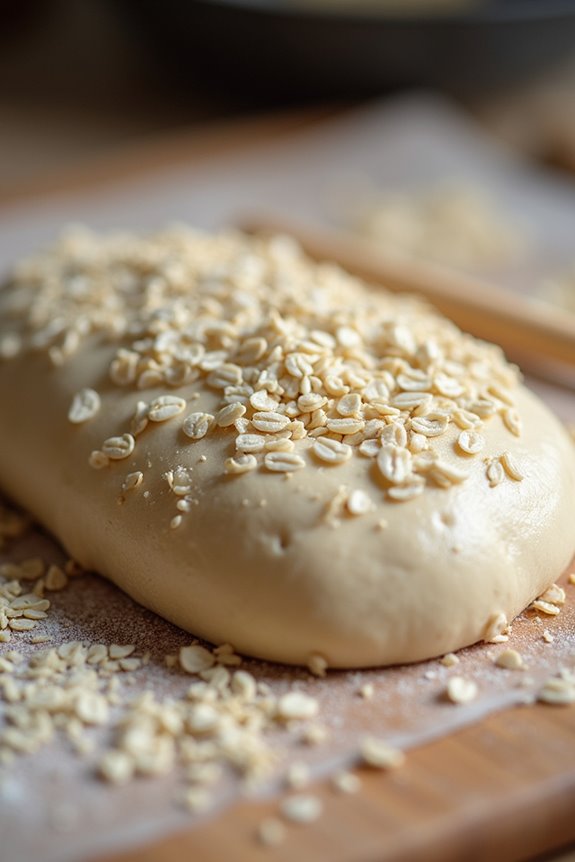
Because steel cut oats are denser and absorb liquid more slowly than rolled oats, your cookie dough can easily turn dry and crumbly. You’ll notice this especially if you’re baking without adjusting your recipe. Fortunately, fixing moisture problems is straightforward when you know what to add:
- Increase binding agents like mashed banana, applesauce, or egg to help hold the dough together
- Add oats gradually in small amounts until your dough holds its shape when scooped
- Pre-cook or pre-soften steel cut oats as directed, since uncooked ones retain toughness and crumbliness
- Consider switching to quick-cooking oats, which hydrate faster and distribute moisture more evenly
Start by boosting your binding ingredients first. This approach gives you better control over texture while maintaining the nutty flavor steel cut oats provide.
Best Mix-Ins and Flavors for Steel Cut Cookies
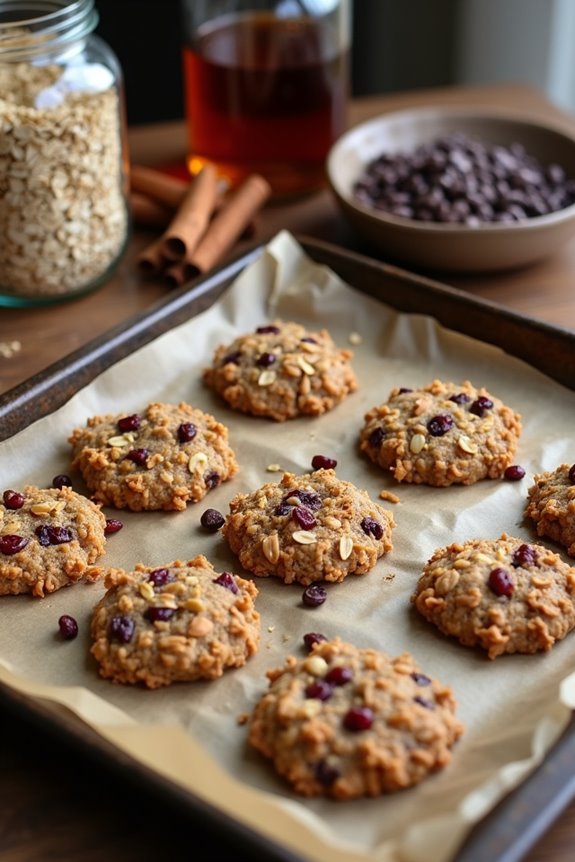
What transforms steel cut oat cookies from plain to exceptional? Strategic mix-ins and flavors create depth and texture that elevate your baking.
Chocolate chips deliver sweetness and richness that contrasts beautifully with oats’ chewy base. Nuts like walnuts or pecans add crucial crunch and satisfy that textural variety you’re seeking. Together, they build complexity in every bite.
Dried fruits—raisins, cranberries, or chopped apricots—contribute natural sweetness and chewiness that complements the hearty oat foundation. Spices such as cinnamon or nutmeg blend seamlessly into your dough, providing warm flavor notes that enhance the overall profile.
For moisture balance, banana or applesauce serve dual purposes: they boost hydration while strengthening your dough’s binding structure. This prevents the dense, dry cookies that sometimes result from steel cut oats’ absorbent nature. Layer these elements strategically for balanced, satisfying cookies.
Baking Temperatures and Times for Steel Cut Cookies
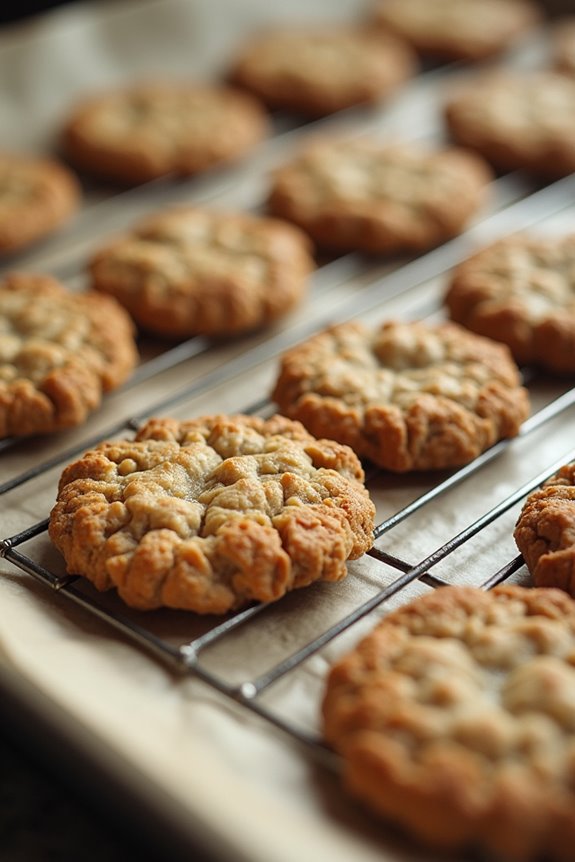
You’ll want to bake your steel cut oat cookies at 350°F for 12–14 minutes to achieve that ideal texture with golden-brown edges and chewy centers. If you’re working with variations like oat-flour blends or adding toppings such as M&Ms, bump the temperature up to 375°F and bake for 12–16 minutes, since these ingredients can affect how quickly your cookies cook through. The key is watching for that sweet spot where the edges set and darken slightly while the centers stay soft, which prevents them from becoming hard or overly dense.
Optimal Temperature Settings
Steel cut oat cookies bake best within a narrow temperature range, and getting this right makes the difference between underbaked centers and burnt edges. You’ll find success with these temperature settings:
- 350°F for traditional recipes—ideal for 12–14 minutes with pre-cooked steel cut oats
- 375°F for quicker baking—achieves chewy centers with firm exteriors in 12–16 minutes
- Lower temperatures prevent over-browning when using larger cookie portions
- Higher temperatures work well for 2-tablespoon dough portions on parchment-lined sheets
Most steel cut oat cookies thrive between 350°F and 375°F. Your bake time depends on cookie size and oat preparation. Smaller cookies need less time; larger ones need more. Watch for golden-brown edges as your visual cue. This precision ensures you’ll produce consistently excellent cookies every batch.
Timing for Perfect Doneness
How do you know when your steel cut oat cookies are truly done? The doneness timing for steel cut oats requires careful attention. You’ll want to bake at 350°F for 12–14 minutes if you’re making standard-size cookies with 2-tablespoon portions. Your cookies should develop golden brown edges while their centers remain slightly soft, creating that ideal chewy-crisp combination you’re after.
Watch for visual cues. Undercooked cookies won’t hold together properly, so don’t remove them too early. If your cookies spread excessively or still look wet in the middle, extend the baking time by 1–2 minute increments. You can also bump your oven temperature up slightly for better doneness. With steel cut oats, texture matters—aim for firm edges and set centers for the best results every time.
How to Store Steel Cut Oat Cookies for Freshness
Once your steel cut oat cookies cool completely, proper storage becomes your best tool for maintaining their quality and texture. You’ll want to follow these storing cookies strategies:
- Keep room temperature cookies in an airtight container for up to 2 days
- Refrigerate for extended freshness up to 5 days
- Freeze baked cookies in zip-top bags for two months
- Separate layers with parchment to prevent sticking
Steel cut oats create denser cookies that benefit from careful storage. Store them away from heat and humidity to prevent staling. If your cookies lose their crunch after storage, gently recrisp them in a 300°F oven for a few minutes. Airtight packaging keeps moisture locked in, maintaining that chewy texture you worked hard to achieve.
Creative Variations on Steel Cut Oat Cookies
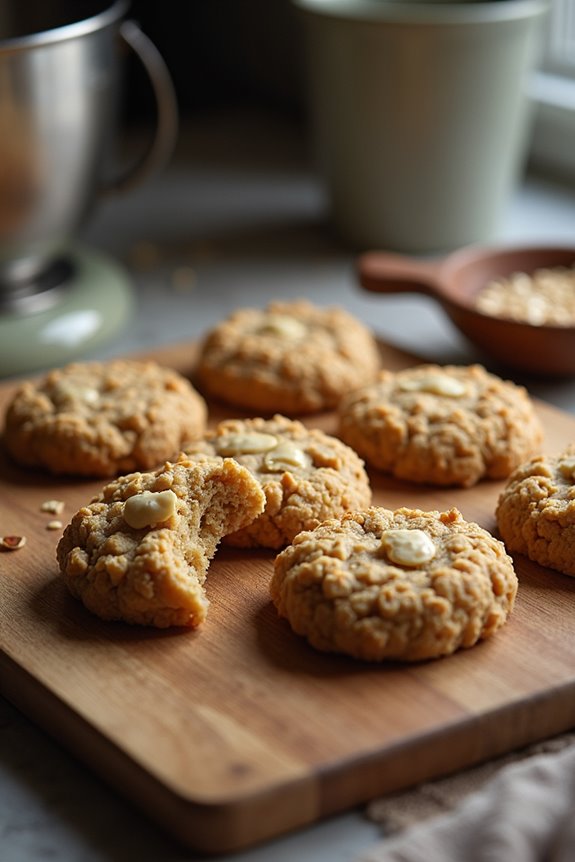
Now that you’ve mastered proper storage, you’re ready to experiment with flavors and textures that make steel cut oat cookies uniquely yours. You can customize your cookies in several meaningful ways that enhance both taste and appeal.
| Variation | Ingredient Swap | Result |
|---|---|---|
| Texture Enhancement | Pulse steel cut oats in mini processor | Finer texture mimicking rolled oats |
| Flavor Boost | Add cinnamon and salt | Deeper, more complex taste |
| Visual Appeal | Use M&M’s instead of plain chocolate chips | Colorful cookies with added sweetness |
| Moisture Adjustment | Substitute applesauce for mashed bananas | Lighter dough consistency |
These modifications help you adapt recipes to your preferences. You might also consider gluten-free certified oats if dietary concerns matter to your household. Each adjustment affects how your steel cut oat cookies develop during baking, so you’ll want to monitor results carefully.
Experimenting With Steel Cut Oats: Advanced Techniques
Why settle for standard cookies when you unlock the full potential of steel cut oats through deliberate technique?
You’ll discover that texture blending transforms how steel cut oats perform in your recipes. Here’s what separates success from disappointing results:
- Pulse steel cut oats in a mini food processor until they resemble rolled oats, creating better dough integration
- Pre-cook oats briefly to soften their structure and reduce moisture absorption during baking
- Combine texture blending with reduced oat quantities to prevent dense, overly crunchy cookies
- Experiment with quick-cooking steel cut oat varieties for faster preparation without sacrificing texture
These techniques address the core challenge: steel cut oats’ coarse structure naturally resists incorporation. By processing them finer and partially cooking beforehand, you sidestep dryness and density issues. You’re essentially meeting the oats halfway, making them work within your cookie’s structure rather than against it. This strategic approach yields balanced results that rival traditional recipes.