
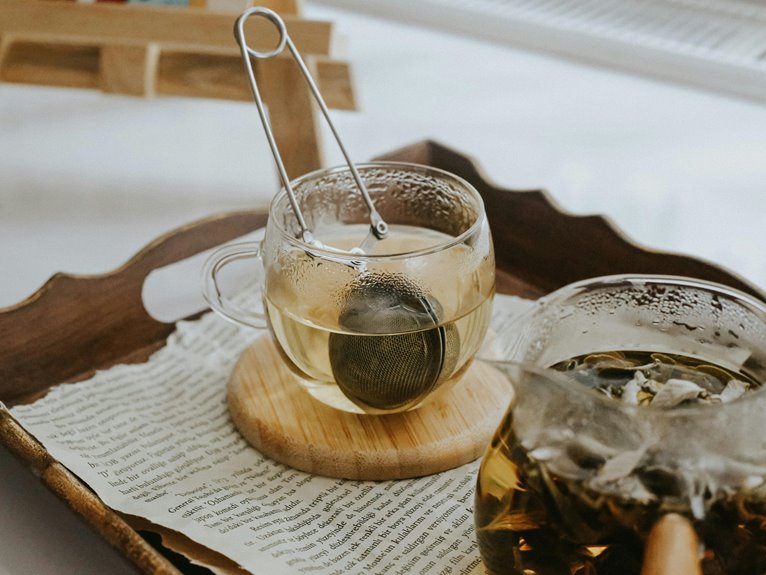
You can safely drink herbal tea while fasting by sticking to plain varieties without additives. Black coffee, unsweetened tea, and plain herbal blends like ginger, peppermint, and chamomile won’t break your fast since they contain zero calories. Avoid milk, honey, sugar, and sweeteners—they spike insulin and interrupt ketosis. Brew with water around 160–180°F and steep for 3–5 minutes. Limit yourself to three or four cups daily to maintain fasting integrity. The specific teas you choose can actually support your goals by reducing hunger and promoting digestion.
What Breaks Your Fast: And What Doesn’t
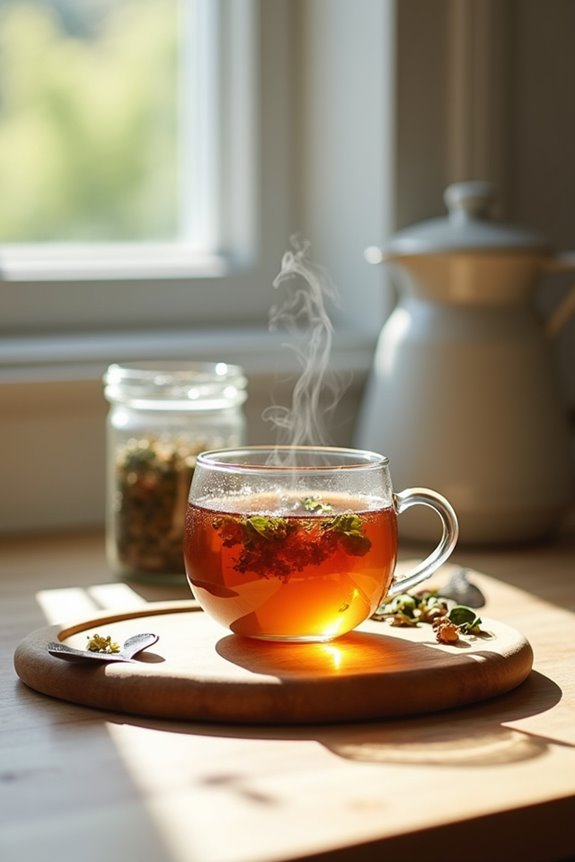
When you’re fasting, the core rule is simple: calories break your fast, and non-caloric beverages don’t. Plain herbal tea fits perfectly into your fasting window because it contains virtually no calories, allowing you to maintain ketosis preservation and autophagy. Black coffee and unsweetened tea work the same way.
However, what you add matters substantially. Added sugars, honey, or cream break your fast immediately, shifting your body to burn ingested calories instead of stored fat. Even a single oat milk latte at 120 calories interrupts tea fasting.
Zero-calorie beverages and sweeteners require caution too. They may trigger an insulin response and affect your gut microbiota, so most experts recommend avoiding them during fasting periods. Stick with pure herbal tea for the cleanest results.
Yes, Herbal Tea Is Totally Fine While Fasting
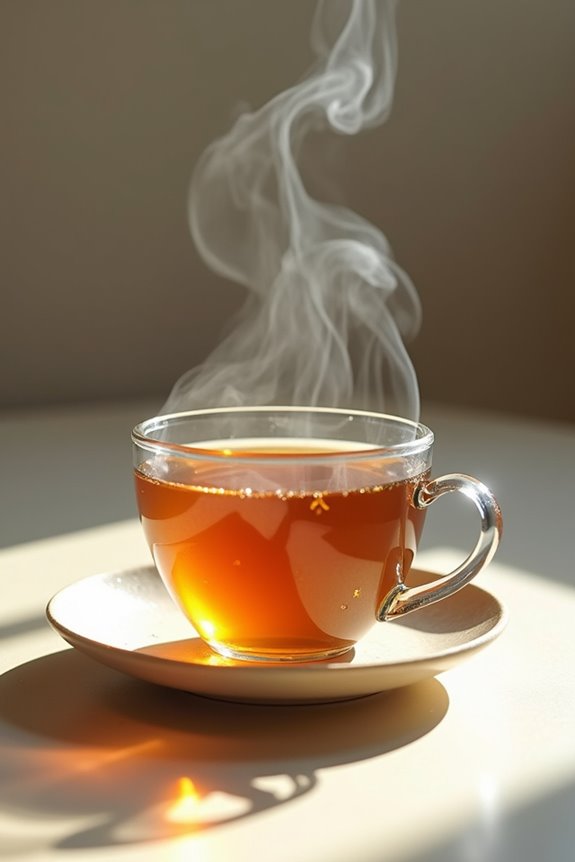
Plain herbal tea is one of your best allies during a fasting window. You’re joining countless others who’ve discovered that certain brews support your fasting goals without compromising results.
Plain herbal tea: your fasting ally that supports your goals without compromising results.
Here’s what makes herbal tea during fasting work for you:
- Calorie-free beverages – Plain herbal teas contain zero calories, preserving your fasting state completely
- Hydration and digestion support – Chamomile, ginger, and peppermint soothe your stomach while keeping you hydrated
- Caffeine-free options – These teas won’t spike your energy or trigger insulin responses, maintaining fasting integrity
- Single-ingredient teas – Choosing plain blends ensures no added sugars or hidden additives derail your fast
The key is selecting teas with no added sugars, artificial flavors, or calorie-containing ingredients. When you stick to pure, single-ingredient herbal teas, you’re protecting your fasting integrity while staying comfortable throughout your window.
Best Herbal Teas for Fasting: Ginger, Peppermint, Hibiscus & Chamomile
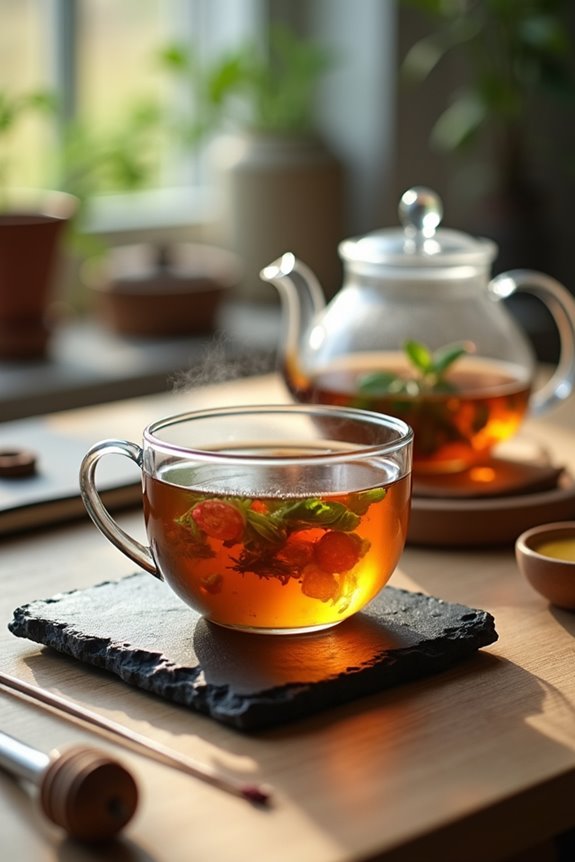
Which herbal teas truly support your fasting goals without breaking your fast? You’ll find several excellent options that align with your commitment to intermittent fasting.
Ginger tea addresses digestive challenges you might experience during fasting. It reduces bloating, gas, and heartburn while containing zero calories when served plain. Peppermint tea tackles nausea and headaches that sometimes emerge during fasting windows, keeping you comfortable without interrupting your fast.
Hibiscus tea offers electrolyte support, helping you stay hydrated throughout your fasting period. This herbal tea maintains your fast’s integrity when consumed unsweetened.
Chamomile tea promotes the relaxation and sleep you need during fasting. It calms your nervous system naturally and remains completely calorie-free.
When selecting herbal tea for fasting, you must avoid added sugars, artificial sweeteners, and any additives containing calories. These additions would compromise your fasting state and undermine your progress.
What Breaks Your Fast: Sugar, Milk, Honey & Hidden Additives
How do you know if something’s truly safe for your fast? You’ve got to understand what actually breaks your fasting state. Many common additions derail your progress by introducing calories and disrupting ketosis.
Understanding what breaks your fasting state is key—most common additions introduce unexpected calories that disrupt ketosis.
Here’s what you need to avoid:
- Sugar and honey – These carbohydrates spike insulin and shift your body away from burning stored fat
- Milk and creamers – Dairy introduces fats and proteins that end your fasting window
- Hidden additives – Flavorings, meal-replacement claims, and stimulants in some tea products contain calories you don’t expect
- Zero-calorie sweeteners – Even these may trigger insulin responses or alter your gut health
Stick with unsweetened tea and plain water. Your caloric additives rule is simple: zero calories means zero interruption. When you choose truly unsweetened options, you’re protecting your fast’s integrity and keeping your body’s metabolic state intact.
Brew Herbal Tea Correctly: Water Temperature, Steep Time & Tools
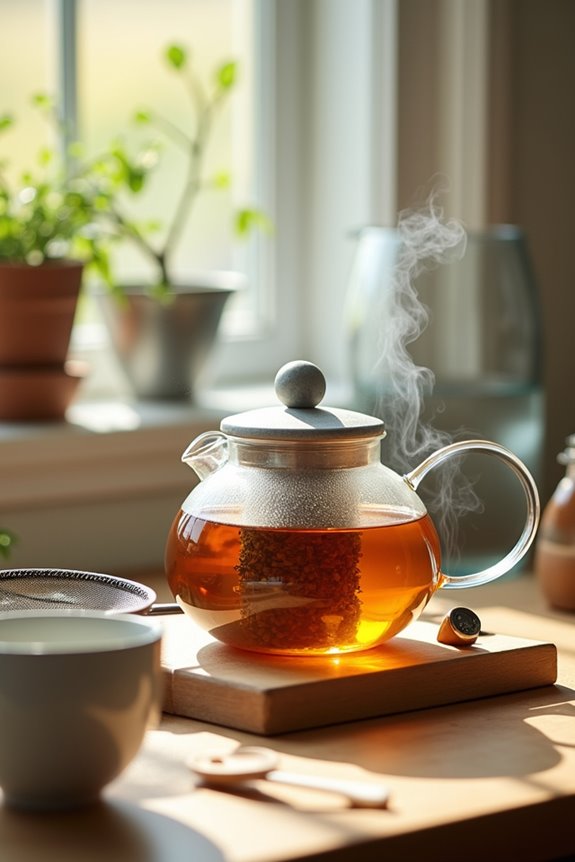
To brew herbal tea that won’t interrupt your fast, you’ll need to get three fundamentals right: water temperature, steep time, and the right equipment. Water heated to just under 200°F extracts maximum flavor without releasing excess compounds that might contain calories, while steeping for 3–5 minutes ensures you’re capturing the tea’s full benefits without over-extraction. Using a silicone infuser or proper tea infuser gives you control over leaf contact and delivers a clean pour, preventing concentrated residues that could introduce unwanted calories into your cup.
Water Temperature Guidelines
Getting your water temperature right makes all the difference when you’re brewing herbal tea during a fast. Water that’s too hot extracts excessive tannins, creating bitterness and potentially disrupting your fasting goals. Instead, you’ll want to approach simmering heat—around 160–180°F—rather than boiling water.
Here’s how to nail your brewing temperature:
- Use a temperature-controlled kettle to hit your target range precisely
- Let boiling water cool for 3–5 minutes before pouring
- Aim for steam rising gently, not vigorously rolling
- Check water temperature with a kitchen thermometer if needed
This measured approach preserves delicate herbal compounds while keeping your tea fasting-friendly. When you master this simple technique, you’ll notice cleaner flavors and better results. A temperature-controlled kettle removes guesswork entirely, helping you join countless others who’ve successfully incorporated herbal tea into their fasting routines.
Optimal Steeping Duration
Once you’ve mastered water temperature, steeping time becomes your next critical control point for brewing fasting-friendly herbal tea. Steep loose leaf tea for 5–7 minutes at near-boiling water (212°F/100°C) to maximize flavor without introducing calories. This optimal steeping duration extracts beneficial compounds while maintaining your fast’s integrity.
For cold brew steeping, you’ll use room-temperature or cold water and steep for 6–12 hours in the refrigerator. This non-caloric steeping method suits those who prefer gentler preparation. Cold brew steeping requires patience, but it delivers smooth, calorie-free results.
Regardless of your method, strain thoroughly before drinking. Avoid caloric additives like honey or milk. Whether you’re using hot water or practicing cold brew steeping, precision matters—it’s how you join the community of disciplined fasters who understand that herbal tea steeping time directly impacts both taste and fast success.
Essential Brewing Equipment
The right tools transform casual tea-making into precise fasting practice. You’ll brew better herbal tea when you invest in equipment that supports consistency and proper extraction during your fasting window.
- Quality infuser or tea bag – Allows loose leaves to expand fully, releasing flavors without adding calories
- Thermometer or temperature-accurate kettle – Ensures water stays hot but not boiling, protecting delicate herbal compounds
- Clean cup or teapot – Prevents flavor contamination from residual oils or previous beverages
- Airtight storage container – Keeps dried herbal tea in cool, dark conditions to prevent oxidation
These tools work together. Proper water temperature activates extraction during steeping time, while good storage preserves your unsweetened tea’s strength. Quality brewing equipment makes fasting sustainable because you’ll actually enjoy your herbal tea.
Add Lemon, Ginger & Stevia to Your Tea Without Breaking Your Fast
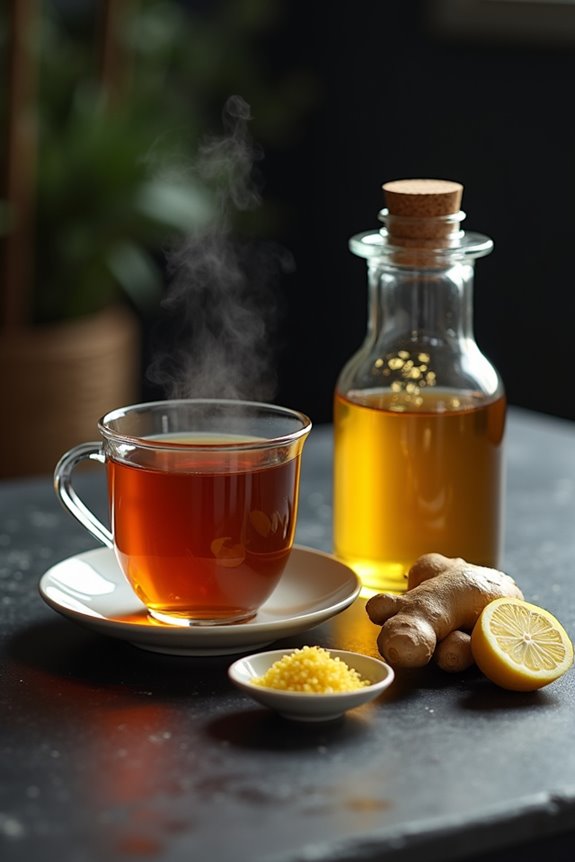
You can enhance your fasting tea with lemon juice, ginger, and stevia—three additions that won’t break your fast when used correctly. Lemon juice and fresh ginger contribute virtually no calories while adding flavor and digestive support, whereas stevia provides sweetness without triggering an insulin response if you keep portions minimal. Just avoid honey, milk, and regular sugar, which introduce calories and nutrients that interrupt fasting benefits.
Calorie-Free Flavor Additions
How can herbal tea taste better during a fast without disrupting your progress? You’ll maintain your fasting state by choosing zero-calorie additions that deliver flavor without triggering an insulin response.
- Lemon juice brightens your tea with negligible calories, enhancing taste while preserving fasting benefits
- Ginger pieces add warmth and depth, remaining calorie-light when used without added sugars or milk
- Stevia provides sweetness as a zero-calorie alternative that won’t spike your blood sugar
- Plain herbal tea base serves as your foundation, allowing these additions to shine
Combining these fasting-friendly flavor additions creates a satisfying beverage that keeps you engaged during your fast. Since each element contains virtually no calories, you’re free to experiment with ratios until you discover your perfect blend. You’re building a sustainable fasting routine when taste matches your commitment to health.
Safe Sweetener Options
Now that you’ve got your flavor foundation down, it’s time to address the sweetness factor—and this is where your choices really matter for maintaining your fast.
| Sweetener | Calories | Fasting Impact |
|---|---|---|
| Stevia | Zero | Maintains fast |
| Lemon juice | Near zero | Supports fast |
| Ginger | Minimal | Supports fast |
| Sugar | 16 per tsp | Breaks fast |
| Honey | 17 per tsp | Breaks fast |
You’ll want stevia as your primary sweetener. It contains zero calories and won’t trigger insulin spikes, keeping you in a fasting state. Combine stevia with lemon juice and fresh ginger slices in your herbal tea. This trio creates satisfying flavor complexity without disrupting ketosis or autophagy.
Avoid calorie-containing sweeteners like sugar, honey, and agave entirely. They interrupt your fast immediately and signal your body to break down nutrients. Stick with stevia-sweetened herbal tea, and you’ll maintain fasting benefits while enjoying genuine sweetness.
Balance Caffeine While Fasting?
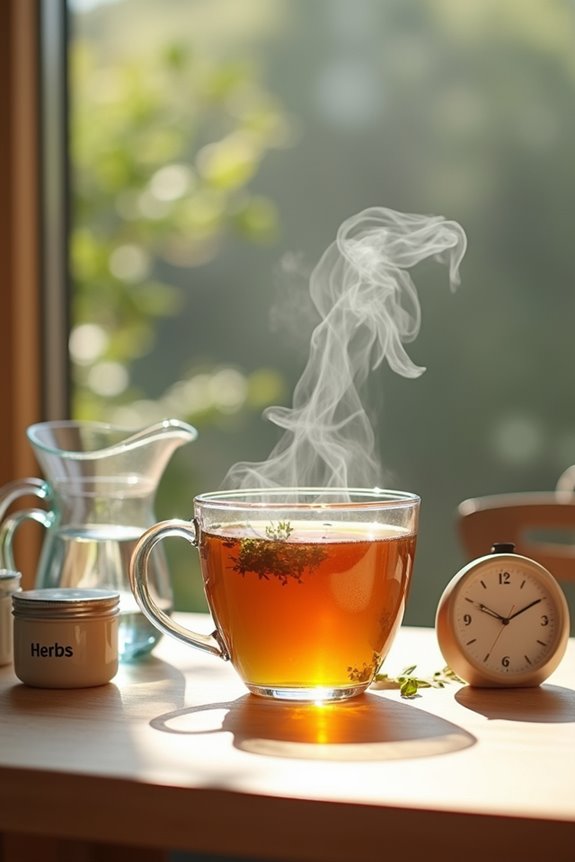
When caffeine enters your system during a fast, it doesn’t trigger an insulin response or add calories, so it won’t technically break your fast. However, you’ll want to manage your intake strategically to avoid unwanted side effects and maximize benefits.
- Limit total daily caffeine to about 140 mg to stay safe
- Test different fasting-friendly teas to find your tolerance level
- Monitor how caffeine sensitivity affects your hunger and energy
- Switch to herbal teas if you experience jitters or sleep issues
Black and green tea offer noticeable appetite suppression, making them excellent no-calorie beverages during your fasting window. Since individual responses vary, start with smaller amounts and adjust based on how you feel. Herbal teas provide a caffeine-free alternative if caffeine during fasting causes anxiety or heart rhythm concerns. This personalized approach helps you discover your optimal caffeine limits during fast periods.
Use Specific Teas for Hunger, Digestion & Sleep
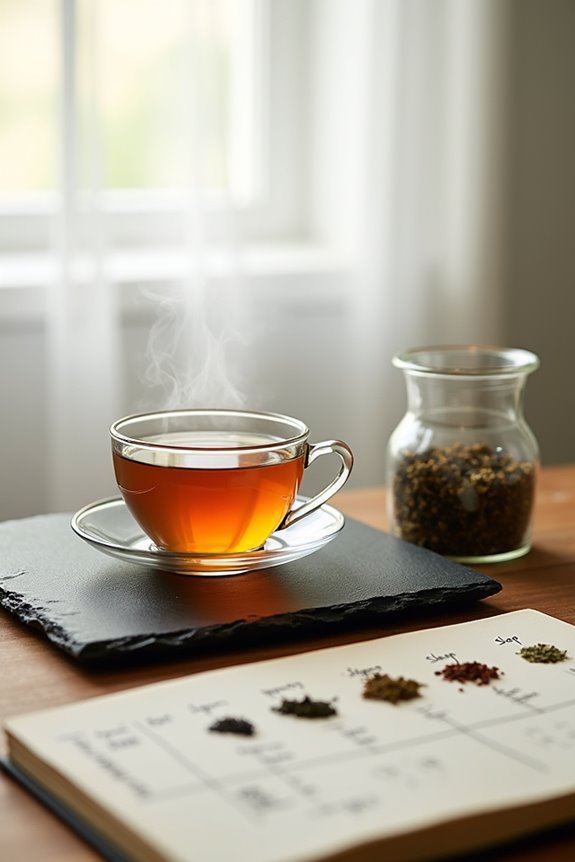
You can strategically select herbal teas to address three common fasting challenges: managing hunger pangs, supporting digestive comfort, and improving sleep quality. Ginger tea works on your stomach directly, reducing bloating and gas that often accompany fasting, while peppermint tea tackles nausea and headaches through its soothing properties. For nighttime fasting, chamomile and jasmine teas calm your nervous system, promoting the relaxation you need to sleep soundly without disrupting your fast.
Herbal Teas For Hunger
Why do certain herbal teas work better than others during a fast? You’ll find that caffeine-free options support your fasting goals while addressing hunger through specific mechanisms.
Consider these herbal teas for hunger management:
- Ginger tea stimulates digestive enzymes, creating fullness sensations that reduce cravings
- Peppermint tea activates stomach receptors that signal satiety to your brain
- Chamomile promotes relaxation, diminishing stress-driven hunger pangs
- Caffeine-free blends prevent blood sugar spikes that intensify appetite
You’re joining a community of fasters who’ve discovered that herbal teas provide genuine hunger relief without breaking your fast. The warmth and flavor satisfy your desire for taste stimulation while maintaining fasting integrity. Select pure, unsweetened varieties exclusively. These teas work because they engage your body’s natural satiety systems rather than introducing calories that disrupt your metabolic state.
Digestive Tea Benefits During
How do herbal teas support your digestion while you’re fasting? Specific calorie-free beverages work to ease common discomfort without disrupting your fast. Ginger tea reduces bloating, gas, and heartburn by supporting smoother digestion. Peppermint tea tackles nausea and headaches, promoting comfort during extended fasting periods. Chamomile tea and jasmine tea calm your nervous system, which indirectly strengthens digestion by reducing stress-related gut issues. Hibiscus tea maintains electrolyte balance, another key component of digestive wellness during fasting.
The secret to maximizing herbal tea during fasting lies in what you don’t add. Skip sweeteners, milk, and dairy entirely. These additions trigger caloric responses and hormonal shifts that break your fast and disrupt digestion balance. Stick with pure herbal tea to unlock full digestive benefits while honoring your fasting goals.
Sleep-Supporting Tea Options
When evening hunger pangs or racing thoughts interrupt your fasting window, the right herbal tea can settle both your stomach and your mind without breaking your fast.
Caffeine-free herbal teas offer sleep support while maintaining your fast’s integrity. You’ll find these options particularly effective:
- Chamomile tea promotes relaxation through autonomic nervous system effects, calming restlessness before bed
- Jasmine tea enhances sleep quality and reduces mental chatter that disrupts rest
- Ginger tea supports digestion-friendly benefits, easing bloating and discomfort that might wake you
- Caffeine-free blends with no calories keep your fasting window unbroken throughout the night
Choose herbal teas with clean labels—verify they contain no added fruit bits or artificial flavors that introduce hidden calories. These sleep-supporting options help you rest comfortably, knowing you’re protecting your fasting goals while addressing physical and mental needs simultaneously.
Loose Leaf vs. Tea Bags: Which Is Better?
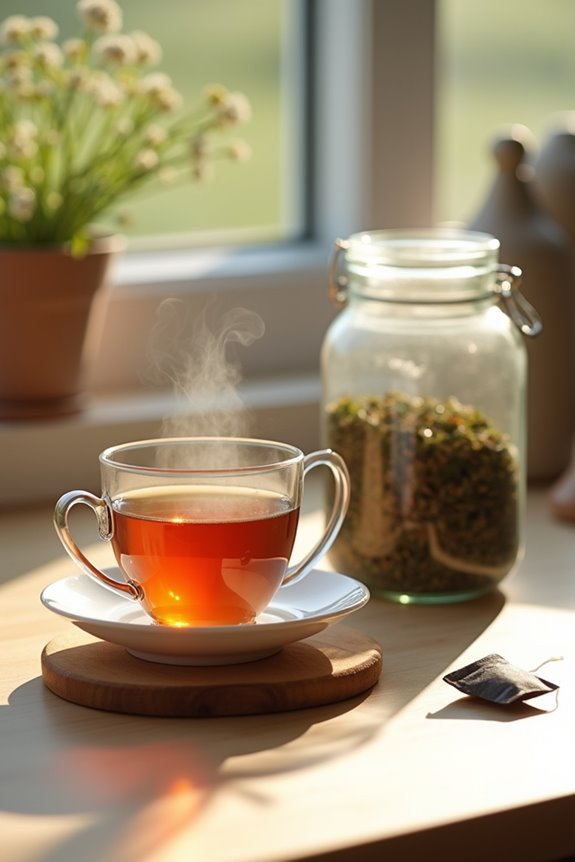
The choice between loose leaf and tea bags comes down to what you’re trying to protect during your fast: your calorie count and fasting integrity. Loose leaf tea typically wins for fasting compatibility because it contains fewer additives and no pre-packaged flavorings that might hide calories. Tea bags offer convenience, but they sometimes contain trace additives or sweeteners that could break your fast. To stay safe with either option, choose plain tea with no added ingredients. Single-ingredient herbal tea works best. Verify ingredient lists carefully, avoiding anything with laxatives or hidden sweeteners. Brew both forms with plain hot water and consume them without sweeteners or dairy. This straightforward approach keeps your fast unbroken while you enjoy your tea ritual.
Daily Herbal Tea Limits While Fasting
Why do you need to think about how much herbal tea you’re drinking during your fast? Monitoring your intake helps you stay on track and protects your fasting results. While herbal teas are generally safe non-caloric beverages, consuming them mindlessly can derail your goals.
Here’s what you should consider:
- Stick with caffeine-free herbal teas to avoid energy crashes and hunger spikes
- Drink water alongside your tea to maintain proper hydration without overdoing herbal varieties
- Limit yourself to three to four cups daily unless you’re sensitive to specific herbs
- Avoid additives like sweeteners that break your fast and compromise fasting benefits
You’re building sustainable habits by being intentional about what you consume. Non-caloric herbal teas support your fasting journey when you keep portions reasonable and skip any problematic additives.
Master 3 Simple Herbal Tea Recipes
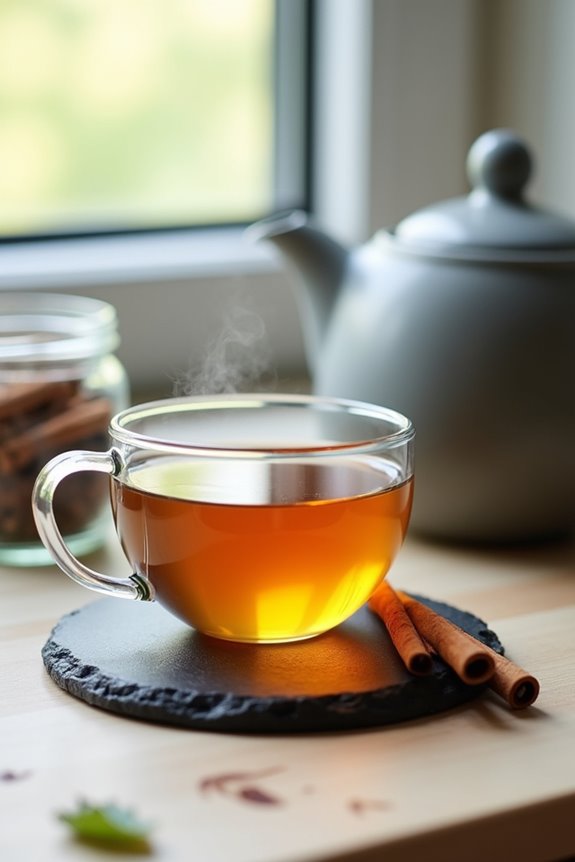
How’d you like to simplify your fasting routine with three straightforward herbal tea recipes you can make at home?
Chamomile Comfort Tea combines dried chamomile flowers with hot water. This caffeine-free blend supports relaxation and digestion without breaking your fast. Steep for five minutes, then drink plain.
Peppermint Refresh mixes fresh or dried peppermint leaves with water. This calorie-free option enhances hydration while managing hunger signals during fasting windows. The natural oils calm your digestive system.
Ginger-Hibiscus Blend pairs dried ginger root with hibiscus flowers. This combination boosts metabolism and provides pleasant flavor complexity. Steep both ingredients together for seven minutes.
You’ll prepare each recipe identically: add ingredients to hot water, steep, then strain. Avoid sweeteners, milk, or additives that introduce calories. These three herbal tea recipes keep you accountable to your fasting goals while maintaining comfort and hydration throughout your day.