
Yes, you can cold brew tea bags at home easily. Place tea bags in cold water, refrigerate, and steep for 6–12 hours depending on tea type. Black and oolong need 8–12 hours; green and white need 6–8 hours. Cold water extracts fewer tannins, giving you smoother, less bitter tea with lower caffeine per cup than hot brew. Remove bags once steeping finishes, then refrigerate your finished brew for up to five days. The specifics of timing, ratios, and flavor adjustments reveal why cold brewing delivers such superior results.
Yes, You Can Cold Brew Tea Bags in Cold Water
Why wait for hot water when you can steep tea in cold water instead? Cold brewing tea bags produces a smoother, less bitter tea than traditional hot methods. You’re essentially extracting flavors gradually through a longer steeping process. This gentle extraction pulls out the desirable taste compounds while leaving harsh, astringent notes behind.
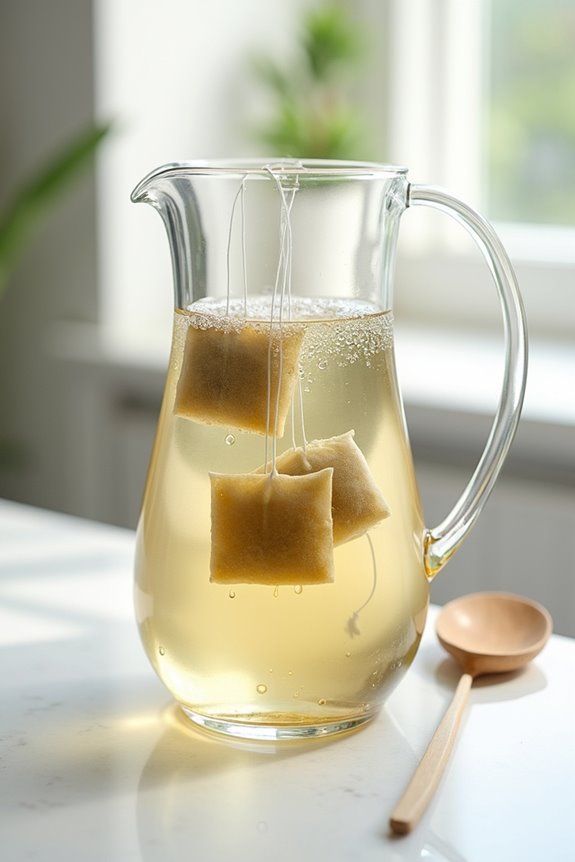
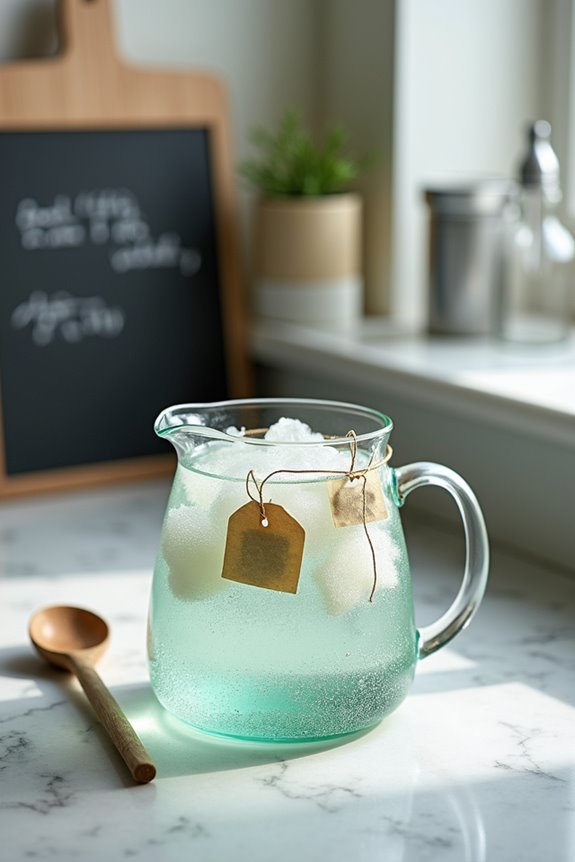
The basic approach is simple. You’ll use about one tea bag per 6 to 8 ounces of water, or roughly four bags for a 32-ounce pitcher. Place your tea bags in cold water and refrigerate them. Black and oolong teas need 8 to 12 hours to develop full flavor, while green and white teas require just 6 to 8 hours. After steeping, remove the bags and enjoy your cold brew tea for up to five days.
Which Tea Types Work Best for Cold Brewing
Not all teas perform equally when you skip the hot water. You’ll find that different tea types thrive in cold brew environments, and choosing the right one makes a significant difference in your results.
Consider these top performers for cold brew tea bags:
- Black and oolong teas—steep for 8–12 hours to develop full flavor without bitterness
- Green and white teas—require shorter steeping of 6–8 hours for optimal taste
- Herbal and rooibos blends—handle extended steeping up to 12–14 hours without turning tannic
- Loose leaf varieties—often produce cleaner flavor than tea bags, though both work well
The key difference lies in tannin extraction. Cold water pulls fewer tannins from leaves, creating smoother tea regardless of type. Herbal blends particularly benefit from this method, as they won’t become astringent even with longer steeping times.
Why Cold Water Reduces Bitterness and Tannins
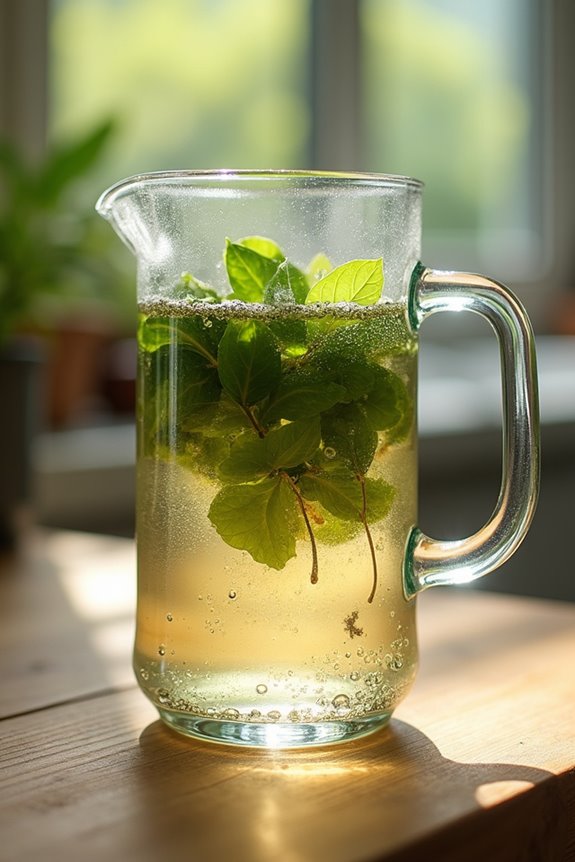
When you brew tea in cold water, you’re slowing down the extraction of tannins—the compounds responsible for that sharp, bitter taste you get with hot brewing. Because cold water doesn’t activate tannins as quickly as heat does, you’ll notice your tea develops a smoother, fresher flavor even with longer steep times. This means you can leave your tea bags in cold water for 6–12+ hours without worrying about it becoming unpleasantly bitter, giving you a cleaner cup with more antioxidants preserved.
Tannin Extraction Process
Cold water extracts tannins far more slowly than hot water, and this slower pace is what makes cold-brewed tea taste smoother and less bitter. You’re working with chemistry here: tannins simply don’t dissolve well in cold temperatures. This gives you several advantages:
- Reduced astringency from lower tannin solubility at cool temperatures
- Extended steeping times (6–12 hours) that compensate for slow extraction
- Preservation of antioxidants without the rapid tannin surge from boiling
- Easier flavor control with minimal monitoring needed
When you steep tea bags in cold water, you’re avoiding the harsh bitterness that hot water creates almost instantly. The gradual extraction means you can achieve rich flavor without that unpleasant astringent aftertaste. Your cold brew stays cleaner-tasting because tannins leach out gradually rather than flooding your cup all at once.
Temperature’s Role in Bitterness
Why does your cold brew taste so smooth compared to a cup of hot tea? Temperature controls how quickly tannins dissolve into your water. Hot water aggressively pulls out these compounds, creating that harsh, astringent bite. Cold water works differently—it extracts tannins slowly and incompletely, leaving you with considerably less bitterness.
| Brewing Method | Water Temperature | Bitterness Level |
|---|---|---|
| Hot Tea | 160–212°F | High |
| Cold Brew | 32–50°F | Low |
| Room Temperature | 70°F | Medium |
You’re not removing tannins entirely; you’re limiting how much dissolves. This gentler extraction preserves delicate flavors while protecting your tea from becoming overly bitter. Different teas respond uniquely to cold water, so green and white varieties benefit most from cooler steeps. Understanding this relationship helps you achieve smoother, more balanced tea consistently.
Smoother Flavor Profile Benefits
The magic of cold brew happens at the molecular level. When you steep tea bags in cold water, you’re extracting fewer tannins than hot water would pull out. This matters because tannins create that bitter, astringent taste you want to avoid.
Here’s what you gain with cold brew:
- Smoother, less bitter flavor that feels refined on your palate
- Longer steep times without harsh, grassy notes emerging
- Subtle flavor notes developing gradually as you wait
- Greater forgiveness if you accidentally over-steep your tea
Cold brew concentrates flavors gently, allowing complexity to unfold without the roughness of heated brewing. You’ll notice the difference immediately—that clean, refreshing taste sits perfectly on your tongue. This method works beautifully across black, green, white, oolong, and herbal blends, giving you consistently milder, more sophisticated results every time.
How Much Tea per Cup of Water
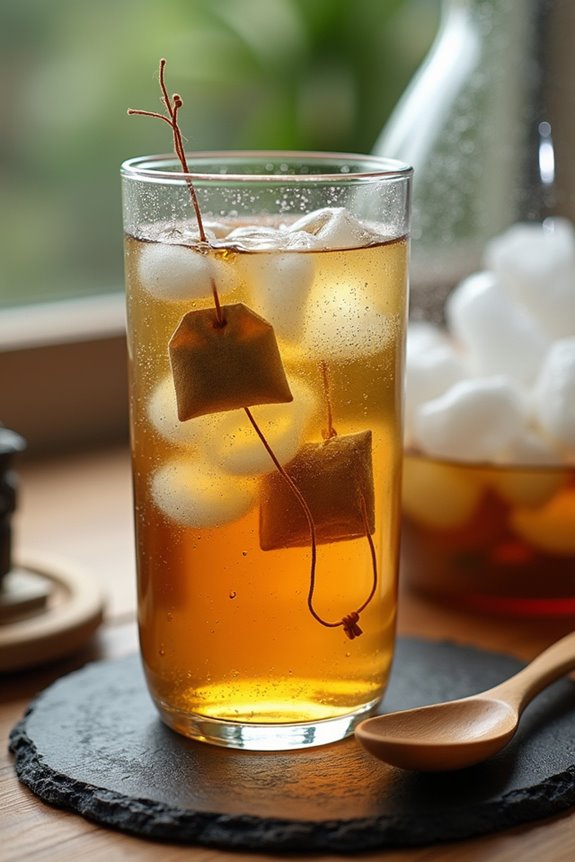
You’ll want to use about one tea bag per 6 to 8 ounces of water as your starting point, though you can adjust this ratio based on how strong you prefer your brew. For a standard 32-ounce batch, roughly four tea bags will give you a balanced result that you can then modify upward if you like a bolder taste or downward for something more subtle. If you’re using loose leaf tea instead, aim for 1.5 to 2 grams per 100 milliliters of water, and remember that different tea types may need slight adjustments to reach your ideal strength.
Tea-to-Water Ratios
Getting the ratio right makes all the difference between a perfectly balanced cold brew and one that’s either too weak or overly bitter. You’ll find that mastering tea-to-water ratios ensures consistent results every time you brew.
Follow these guidelines for your cold brew:
- Use 1 teaspoon of loose tea per 8 ounces of water
- For tea bags, apply 1 regular bag per cup of water
- Scale up to 4 teaspoons of loose tea for a 32-ounce jar
- Aim for 15–20 grams of tea per liter of water
These ratios work because they extract peak flavor during steeping. Your steep time—typically 3–12 hours—also affects strength, so you can adjust the tea amount based on how long you’ll refrigerate your brew. Starting with these measurements puts you on track for excellent cold brew.
Adjusting Brew Strength
How strong do you like your cold brew? You’ve got straightforward options to dial in your brewed strength after steeping.
If your tea tastes too intense, dilution is your friend. Simply add more cold water to achieve the strength you prefer. This method works perfectly when you’ve steeped longer than intended or want a milder cup.
Conversely, if your brew lacks punch, you can steep longer within the standard 6–12 hour window. Black and oolong teas handle extended steeping well, reaching their peak around 8–12 hours. White and green teas work best at 6–8 hours to avoid becoming bitter.
You’re essentially controlling extraction time and concentration. More steeping extracts more flavor compounds; adding water reduces intensity. This flexibility means you’ll find your ideal balance quickly.
Steep Times: How Long Does Cold Brew Tea Need?
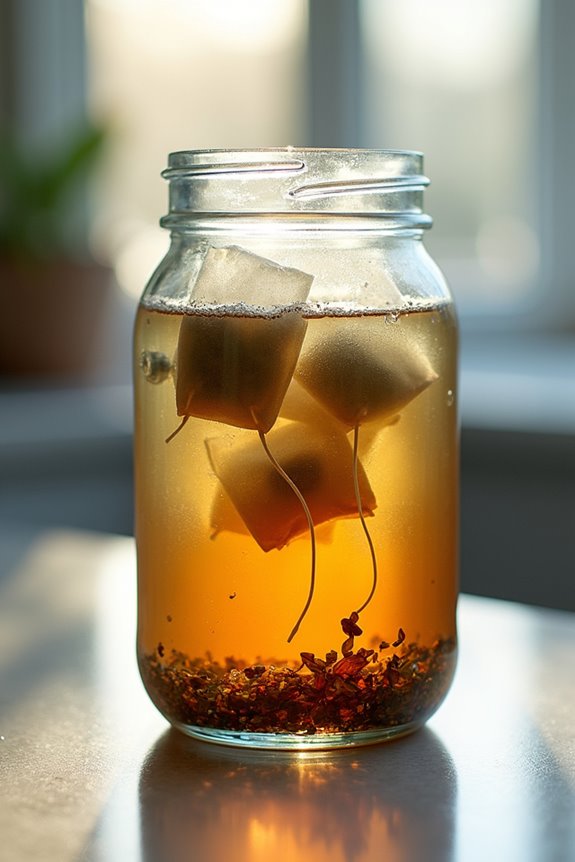
The steeping time for cold brew tea varies depending on what type you’re brewing. You’ll want to match your steep duration to your tea variety for optimal flavor extraction.
Here’s what you need to know:
- Black, oolong, and tea blends require 8–12 hours of refrigeration
- Green and white teas steep for 6–8 hours
- Loose-leaf tea and tea bags both work, though loose-leaf typically yields stronger flavor
- You can taste-test halfway through and adjust by diluting with water if needed
For a 32-ounce batch, use about 4 teaspoons of loose-leaf tea or 4 tea bags. After steeping completes, remove the tea bags if desired. Cold brew tea’s extended steeping time extracts flavors gradually without bitterness, creating a smooth, refreshing beverage you’ll enjoy.
Step-by-Step Instructions for Cold Brewing Tea Bags
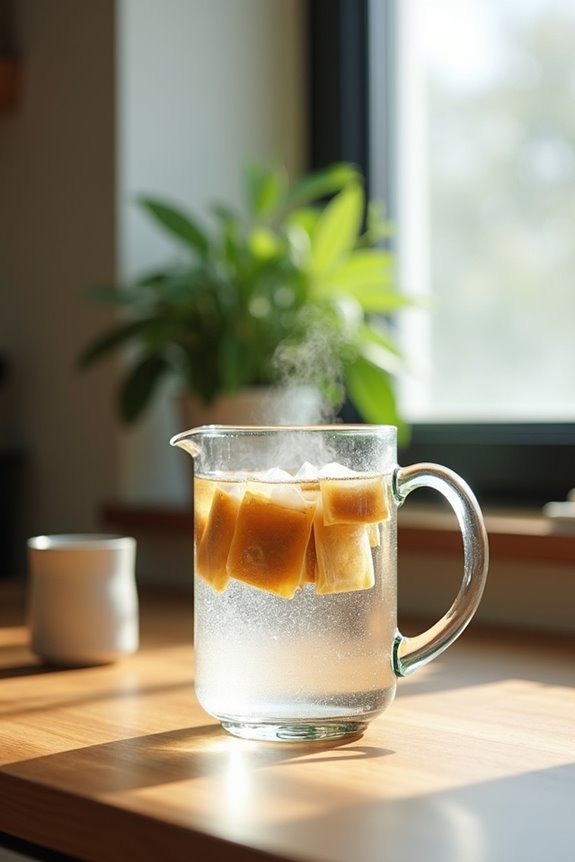
To cold brew tea bags successfully, you’ll need to gather a pitcher or bottle, your preferred tea bags, and cold or room-temperature water before you begin. Measure out your tea bags based on strength preference—use one bag per five cups of water for standard flavor, or increase to one bag per cup if you want a bolder taste. Once you’ve added your supplies to the container, you’ll refrigerate the mixture for 6 to 14 hours depending on tea type, then remove the bags to prevent over-steeping and bitterness.
Gathering Your Cold Brew Supplies
Before you start brewing, you’ll want to grab just a few basic items from your kitchen. You don’t need fancy equipment or special tools to make cold brew tea bags at home. Here’s what you’ll gather:
- A pitcher or bottle with a lid to hold your cold brew mixture
- Cold or room-temperature water to fill your container
- Tea bags in your preferred variety, whether regular or family-size
- Optional add-ins like lemon, mint, or syrup for serving
These simple supplies work together to create your cold brew setup. The pitcher or bottle keeps everything contained and sealed during steeping. Cold water starts the extraction process immediately, though it works more slowly than hot water. Having everything ready before you begin ensures a smooth, hassle-free brewing experience.
Measuring Tea Bags Correctly
Now that you’ve gathered your supplies, getting the proportions right makes all the difference in your cold brew. You’ll want to use approximately one tea bag per 6 to 8 ounces of water. For a 5-cup pitcher holding 40 ounces, plan on 5 to 6 regular tea bags or 4 to 5 family-size bags.
The size of your bags matters here. Larger family-size bags steep more efficiently than standard bags, so you’ll need fewer of them. Start with these measurements, then adjust based on your taste preferences. If your cold brew tastes too weak after steeping, simply add more bags next time rather than extending steep time. Getting your tea-to-water ratio correct from the start ensures consistent, satisfying results every batch.
Refrigeration And Steeping Duration
How long should you let your tea steep? Your steeping time depends on the tea type you’re using for your cold brew. Here’s what you need to know:
- Seal your pitcher and refrigerate immediately after adding tea bags to cold water
- Steep black or oolong tea for 8–12 hours to develop full flavor
- Steep green or white tea for 6–8 hours to prevent bitterness
- Remove tea bags after steeping completes to stop extraction
The longer steeping time allows cold water to gradually extract flavors and compounds from your tea bags. Black teas need extended time because they’re more densely packed. Green and white teas steep faster, so shorter duration prevents over-extraction that causes unpleasant tastes. Once you’ve finished steeping, store your cold brew refrigerated and consume it within 3–5 days for optimal flavor.
Storing Your Cold Brew Tea
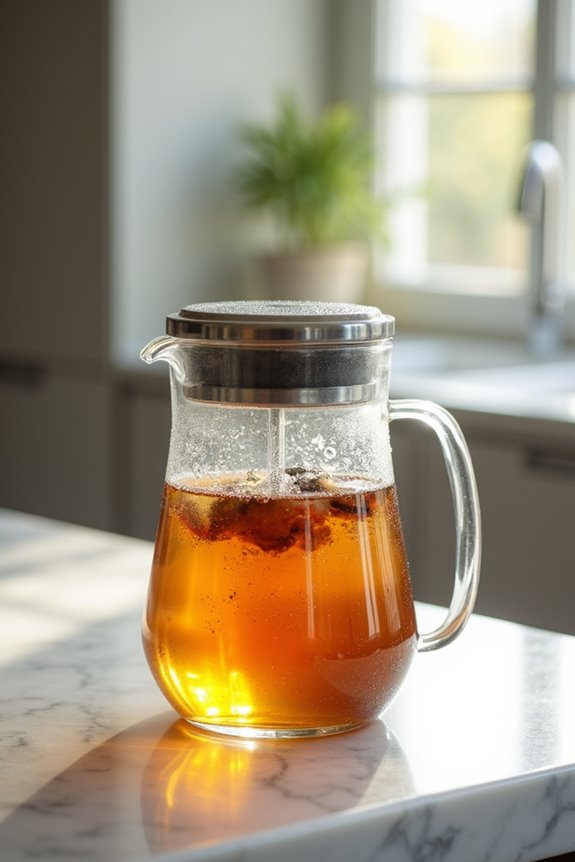
Once you’ve finished steeping, you’ll want to remove the tea bags or strain out loose-leaf tea right away—this step is essential because leaving the leaves in contact with water continues to extract flavor and can make your tea taste bitter or stale. Pour your cold brew tea into a clean, sealed pitcher or jar. This container protects your tea from contamination and prevents it from absorbing odors from your refrigerator. Your cold brew tea stays fresh for three to five days when properly stored and covered. You can observe how it develops as it sits. If you’d like a lighter flavor, add fresh cold water to the remaining leaves for a second brew. Save add-ins like lemon or mint for serving time rather than storing them with your base tea.
When Is Your Cold Brew Done?
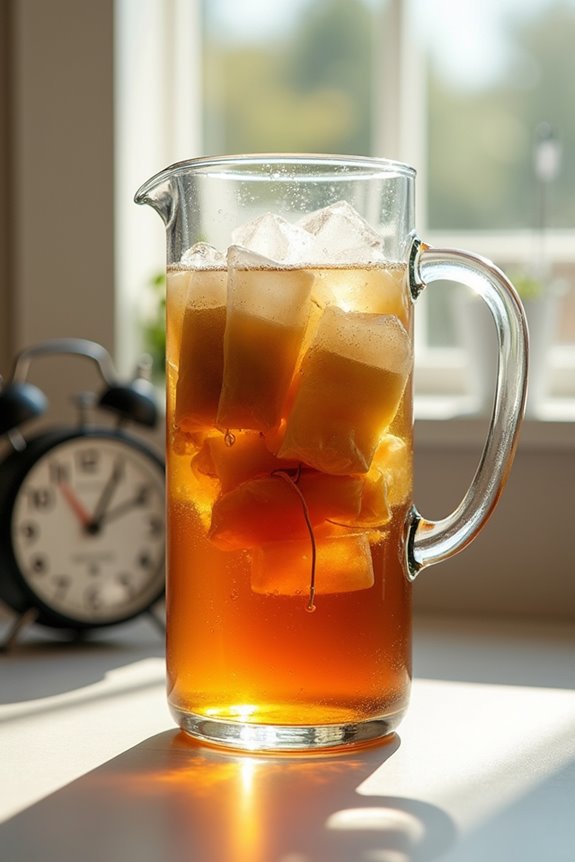
Knowing when your cold brew’s reached the right strength matters as much as getting the initial setup right. You’ll find that steeping time directly determines your tea’s final flavor profile and strength level.
Follow these guidelines for optimal results:
- Wait at least 4–6 hours minimum before tasting your cold brew
- Aim for overnight steeping, typically 6–12 hours, depending on your tea type
- Check flavor development at the 6-hour mark if you’re impatient
- Strain leaves once you’ve reached your desired strength
Don’t rush the process. Under-steeping produces weak, underwhelming tea. Your cold brew continues developing flavor as it sits, so patience pays off. Once you’ve achieved your preferred taste, strain the leaves immediately to prevent over-extraction and bitterness.
Common Cold Brewing Mistakes to Avoid
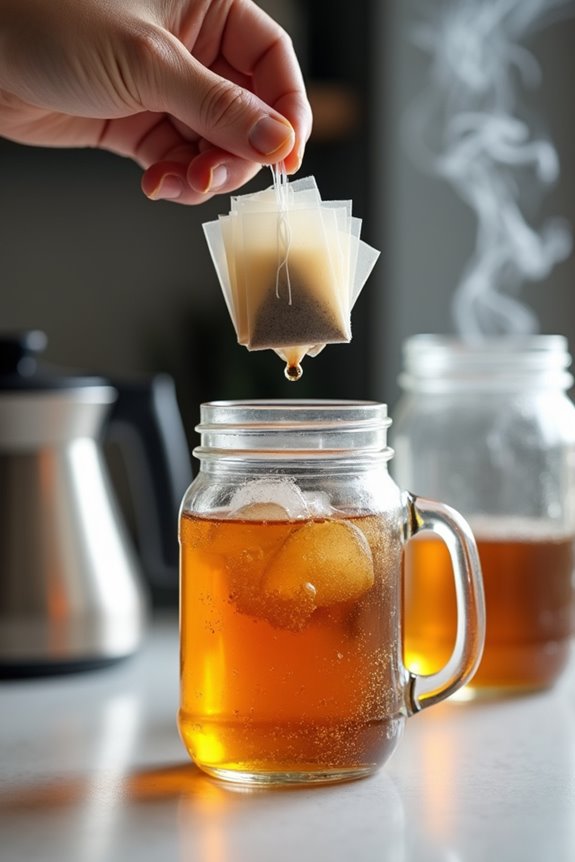
Even small missteps during cold brewing can derail your results and leave you with weak, bitter, or off-tasting tea. One common mistake is using the wrong number of tea bags for your water volume. Too few bags create under-toned flavor, while too many produce an overly strong brew. Another error is steeping beyond 12–14 hours. Extended cold brew times flatten flavors and create muddier notes that don’t taste fresh. You must also remove your tea bags promptly after steeping finishes. Leaving them in means continued extraction, which leads to bitterness and astringency. Finally, skip refrigerating during brewing, and you’ll invite off-flavors and potential safety issues. Always keep your cold brew in the refrigerator from start to finish.
Fixing Over-Steeped or Under-Steeped Cold Brew
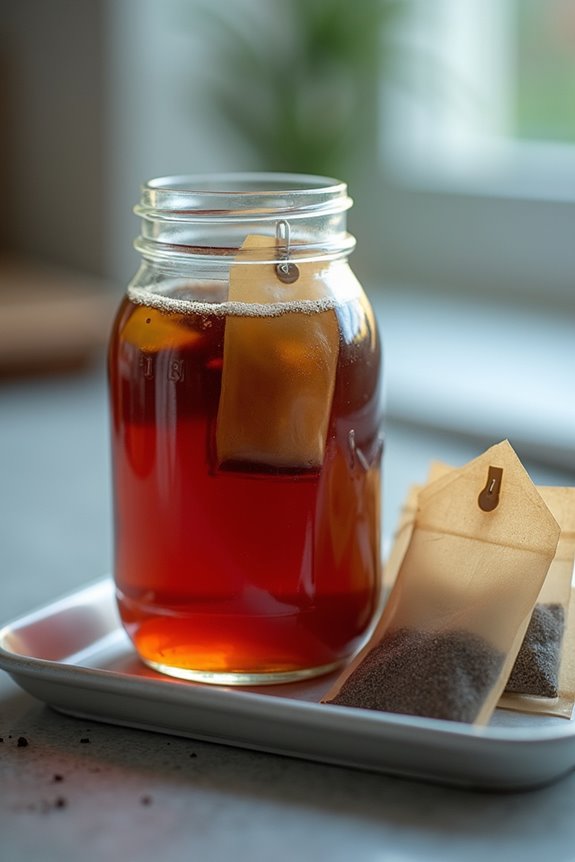
If your cold brew doesn’t taste quite right, the culprit’s usually either too much or too little steeping time. You’ve got straightforward fixes for both problems.
- For over-steeped brew: Dilute with fresh cold water to reduce strength immediately, or shorten your steep time for the next batch.
- For under-steeped brew: Extend refrigerator time toward recommended ranges—black/oolong needs 8–12 hours, green/white needs 6–8 hours, herbal needs 12–14 hours.
- For faster adjustment: Make a new batch at the correct tea-to-water ratio and steep time to bypass waiting.
- For a lighter result: Perform a “second brew” using the same leaves for gentler flavor.
Remove tea bags after minimum steep time, then taste and adjust. This hands-on approach helps you dial in your cold brew preferences quickly.
Can You Reuse Tea Bags for a Second Steep?
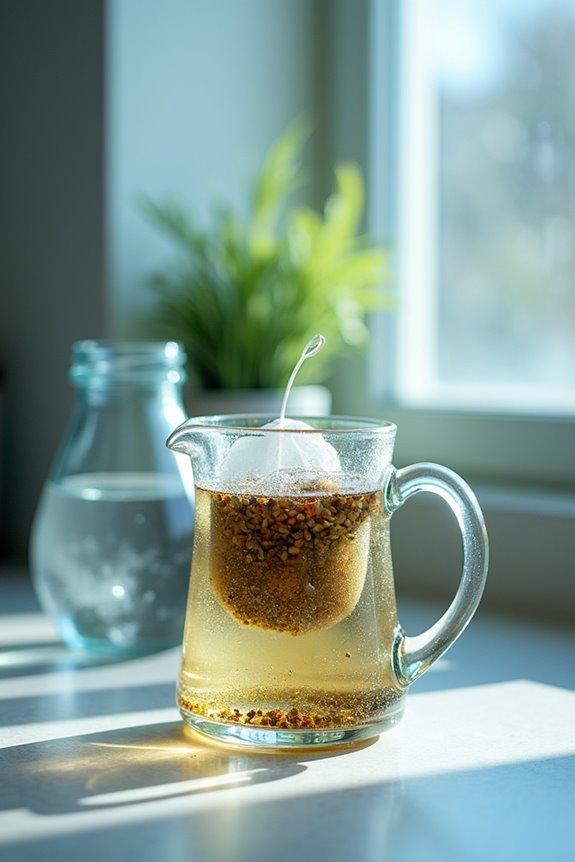
Yes, you can absolutely reuse your tea bags for a second steep in cold brew—just place them in fresh cold water and steep again with adjusted timing. However, expect a lighter flavor since most caffeine and aroma already transferred during the first brew. Your second steep will likely taste weaker, so consider extending the steeping time or adding extra tea bags to strengthen it. You can reuse bags directly in the same pitcher for convenience. After your second steep finishes, remove the bags promptly to prevent over-extraction, which causes unwanted bitterness in later portions. Loose-leaf tea generally handles multiple steeps better than individual bags, though bags offer quick reuse benefits. This approach helps you maximize your tea investment while enjoying multiple flavorful cups.
Peach, Lemon, Mint, and Other Flavor Combinations

Cold brew tea bags offer a natural foundation for creating fruit-and-herb infusions right in your pitcher. You can elevate your cold brew by layering complementary flavors that work together seamlessly.
Cold brew tea bags create the perfect canvas for layering complementary fruit-and-herb flavors into balanced, seamlessly blended infusions.
- Peach varieties pair beautifully with green tea, creating a naturally sweet base that requires minimal additions
- Lemon juice brightens peach notes, cutting through sweetness and adding refreshing tartness to your brew
- Mint leaves contribute coolness and herbal complexity, balancing fruity elements without overpowering them
- Peach syrup intensifies flavor if you prefer stronger sweetness without adjusting tea bag quantity
Start with peach-flavored tea bags as your foundation. Add fresh mint during steeping, then incorporate lemon and syrup after brewing finishes. This approach lets you control each flavor’s intensity, ensuring you create a balanced infusion that suits your taste preferences perfectly.
Cold Brew vs. Hot Brew: Which Tastes Better (and Has Less Caffeine)?
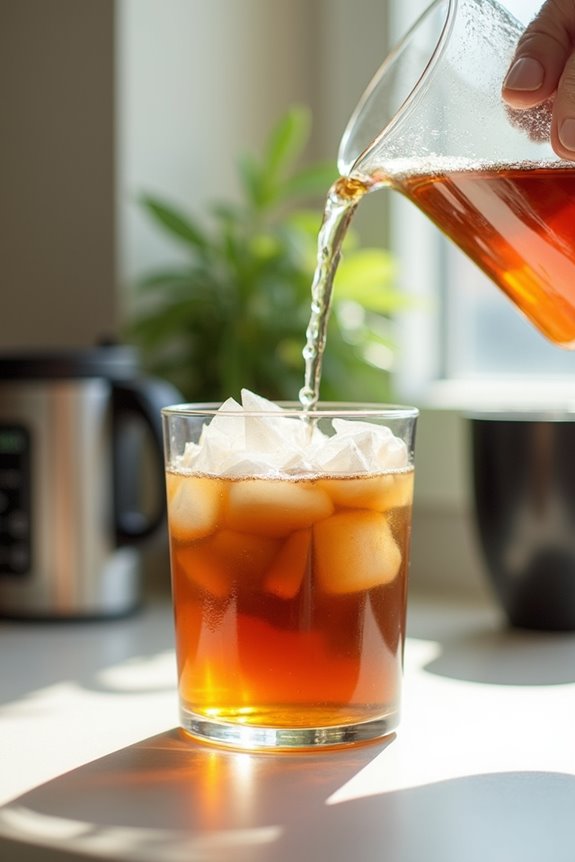
When you’re deciding between cold brew and hot brew, you’re really choosing between two different extraction processes that create noticeably different results. Cold brew steeping pulls fewer tannins from tea bags, delivering smoother flavor with minimal acidity. Hot brew extracts faster, which means you’ll get more bitterness if you steep too long.
| Brewing Method | Steep Time | Caffeine Level | Tannin Content | Flavor Profile |
|---|---|---|---|---|
| Cold Brew (Tea Bags) | 8–12 hours | Lower per cup | Minimal | Smooth, fresh |
| Hot Brew (Tea Bags) | 3–5 minutes | Higher per cup | High if over-steeped | Bold, can be bitter |
| Cold Brew (Loose Tea) | 6–8 hours | Lower per cup | Very minimal | Strongest, cleanest |
You’ll notice cold brew with loose tea leaves produces the smoothest taste. If you want less caffeine without sacrificing flavor, cold brewing’s your answer.