

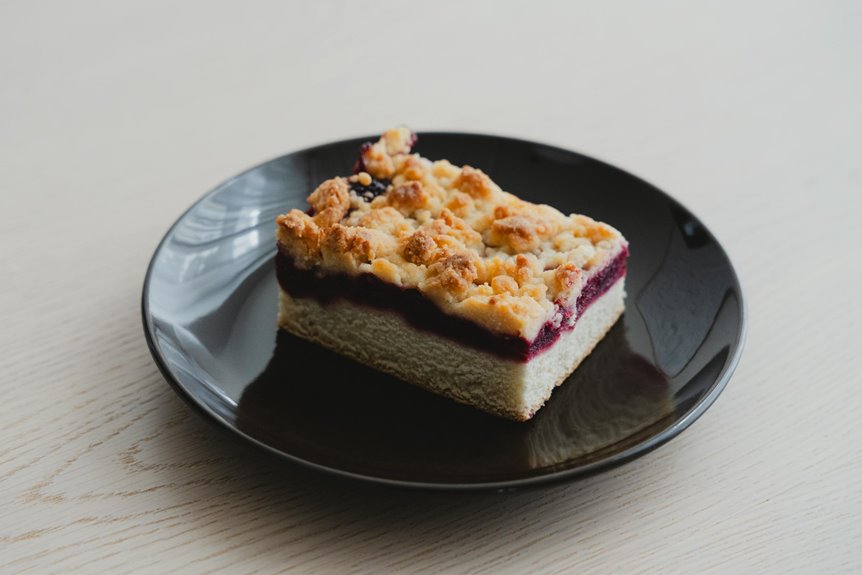
Streusel is a German crumb topping made from flour, butter, and sugar that you’ll find scattered across muffins, coffee cakes, and fruit crisps. Its name literally means “to scatter,” reflecting how bakers sprinkle this mixture for crispy, crumbly texture. The magic happens when cold butter creates small pockets within the flour-sugar blend, resisting breakdown during mixing and baking. This simple three-ingredient combination transforms ordinary baked goods into textured treats, though success depends on understanding butter temperature and batter compatibility.
What Is Streusel? The Crumbly Topping That Scatters Sweetness
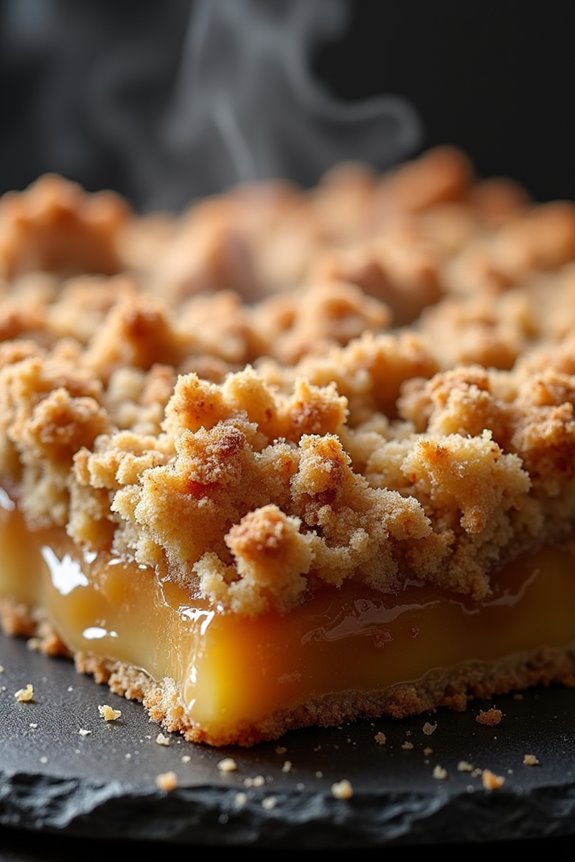
If you’ve ever noticed a sweet, crumbly layer on top of a muffin or coffee cake, you’ve encountered streusel. This crumb topping combines three simple ingredients: flour, butter, and sugar, creating a texture that’s both crispy and satisfying. The name itself comes from the German word streuen, which means to scatter or sprinkle, perfectly describing how you apply this topping.
What makes a streusel topping special is its versatility. You can enhance the basic mixture with nuts, oats, spices, or citrus zest to match your preferences. The magic happens during baking, when the butter and sugar create those signature crumbly pieces that add sweetness and texture to muffins, pies, coffee cakes, and fruit crisps. Proper technique—using room-temperature butter and avoiding over-mixing—ensures your crumb topping holds together beautifully while baking.
Streusel vs. Strudel: Stop Confusing These Two
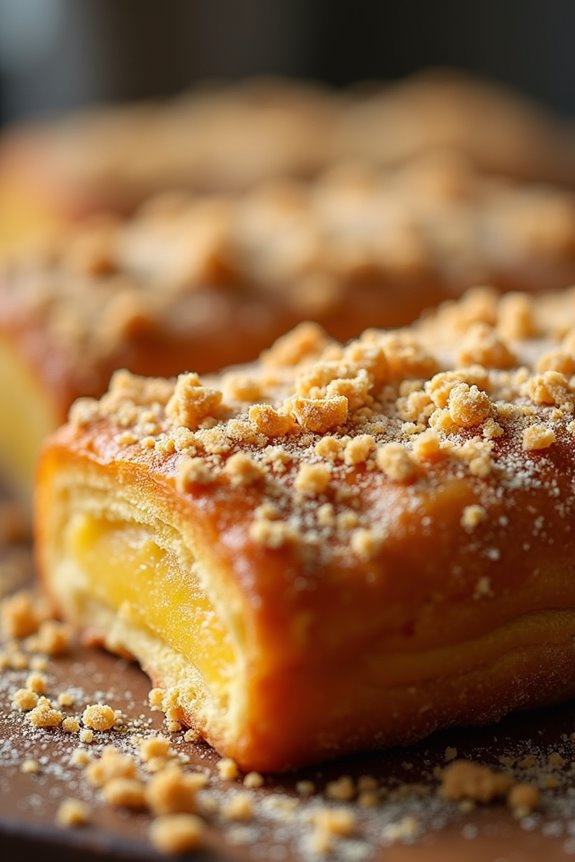
You’ve likely heard “streusel” and “strudel” used interchangeably, but they’re actually quite different—streusel is a loose, crumbly topping, while strudel is a filled pastry roll. The confusion makes sense because both come from German culinary traditions, yet their names reveal their distinct purposes: “streusel” means to scatter or sprinkle, describing how the topping disperses across baked goods, whereas “strudel” refers to an entirely different pastry structure designed to hold and contain fillings. Understanding this distinction helps you choose the right technique when you’re topping your muffins or planning a dessert, since streusel stays crisp on the surface while strudel’s pastry wrapper encases its filling completely.
Key Differences Explained
Why do streusel and strudel sound so similar yet work so differently in baking? The answer lies in their fundamental purpose and structure. You’re looking at two distinct pastry traditions that serve opposite roles in desserts.
Consider these key differences:
- Function: Streusel sits on top as a topping, while strudel contains filling inside layered dough
- Texture: A streusel topping creates crisp, crumbly results that enhance sweetness, whereas strudel offers a complete pastry experience with visible filling
- Origin: The German word “streuen” (scatter or sprinkle) defines streusel’s role, while strudel represents an entirely different traditional pastry
When you use a streusel topping, you’re sprinkling a mixture of butter, flour, and sugar across your muffins or cakes. This crumbly mixture won’t fully absorb into your batter, creating textural contrast. Strudel, conversely, demands rolled or layered construction with filling secured inside.
Etymology And Origins
The word “streusel” tells you everything you need to know about what it does. It comes from the German verb streuen, which means to sprinkle or scatter. This German origin perfectly captures streusel’s purpose—a crumbly topping you scatter across desserts rather than layer inside them.
| Aspect | Streusel | Strudel |
|---|---|---|
| Origin | German | German |
| Form | Topping | Filled pastry |
| Texture | Crumbly | Layered |
| Function | Scattered on surface | Enclosed filling |
| Pronunciation | STROO-sl | STREW-dul |
You might confuse streusel with strudel because both sound German and appear in similar desserts. However, they’re distinct. Strudel is a filled pastry with wrapped layers, while streusel remains a topping you sprinkle on muffins, pies, and coffee cakes. Understanding these origins helps you appreciate why streusel earned its reputation as the original scattered, sprinkled dessert topping.
The Quick 5-Minute Streusel Recipe
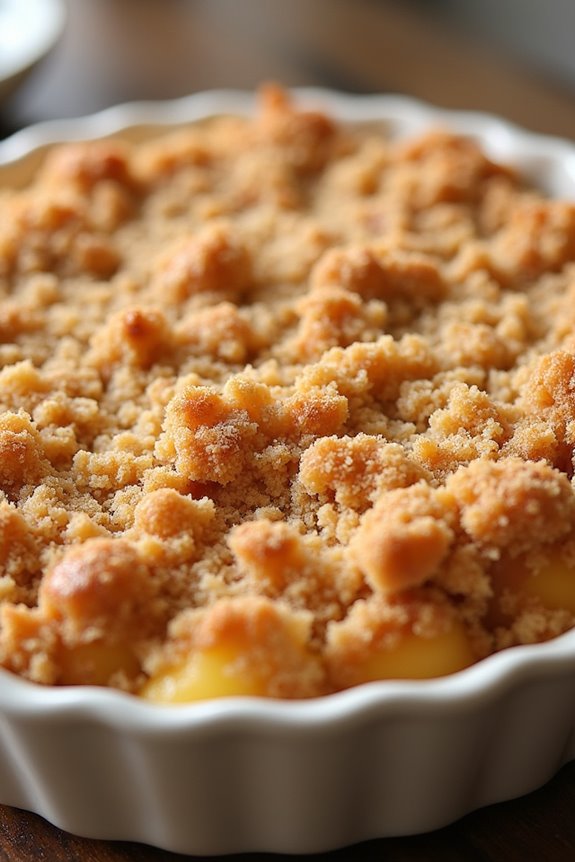
You’ll appreciate how streusel comes together with just three basic ingredients: flour, cold butter, and sugar, which you can combine in minutes without any special equipment. Mix your dry ingredients first, then add melted and cooled butter, kneading just enough to form those desirable crumbly pieces—overworking the mixture produces a denser texture you’ll want to avoid. This straightforward five-minute approach gives you a topping that’s ready to scatter over muffins, cakes, or pies before baking, ensuring it adheres properly and develops that signature crispy texture.
Simple Ingredient Combinations
Making streusel doesn’t require fancy techniques or hard-to-find ingredients—just five basic pantry staples mixed together in minutes. You’ll combine:
- Flour and both brown and granulated sugars for structure and sweetness
- Salt to enhance flavors, plus melted butter for binding richness
- Optional additions like cinnamon, vanilla, lemon zest, nuts, or oats for depth
Stir these together until you’ve broken up any clumps, then moisten with cooled melted butter until you’ve achieved that signature crumbly topping texture. The key’s using room-temperature butter and avoiding overmixing, which creates greasy or flat results instead of that desirable crispy finish. This simple ingredient combination transforms basic muffins, coffee cakes, and pies into something special. You’re joining generations of bakers who’ve relied on this straightforward formula for reliable, delicious outcomes.
No-Equipment Mixing Method
Once you’ve got your ingredient list down, you don’t need any special tools to pull streusel together. Your hands become your best asset for no-equipment mixing. Simply combine your dry ingredients, then work the cold butter into the flour and sugar using your fingers or kneading hooks. This manual approach breaks the butter into small pieces throughout the mixture, creating that signature crumbly texture.
Keep your butter cold—this’s crucial for achieving the ideal streusel topping consistency. Cold butter resists blending completely, leaving you with distinct, crumbly pieces rather than a smooth dough. Avoid over-kneading, which warms the mixture and produces softer, less desirable crumbs. Within five minutes, your no-equipment mixing yields a versatile topping ready for muffins or cakes, refrigerated until you’re ready to bake.
Five-Minute Preparation Time
How fast can streusel come together? You’ll be amazed at the five-minute preparation time for this streusel topping. The Quick 5-Minute Streusel Recipe combines simple ingredients into a crumbly masterpiece:
- Mix 2 1/3 cups all-purpose flour, 3/4 cup granulated sugar, and optional flavor boosters like cinnamon or vanilla
- Add 10 1/2 tablespoons cold butter to the dry mixture
- Stir until the texture turns crumbly and the butter fully absorbs
The key to success lies in keeping your butter cold. Cold butter creates crisper, taller crumbles that elevate your baked goods. Avoid over-kneading, which warms the mixture and softens those desirable texture qualities. This five-minute preparation produces a versatile streusel topping perfect for muffins, coffee cakes, and pies. You’ll join countless bakers who trust this reliable method for consistent, professional results every time.
Core Ingredients: Flour, Sugar, Butter-That’s It
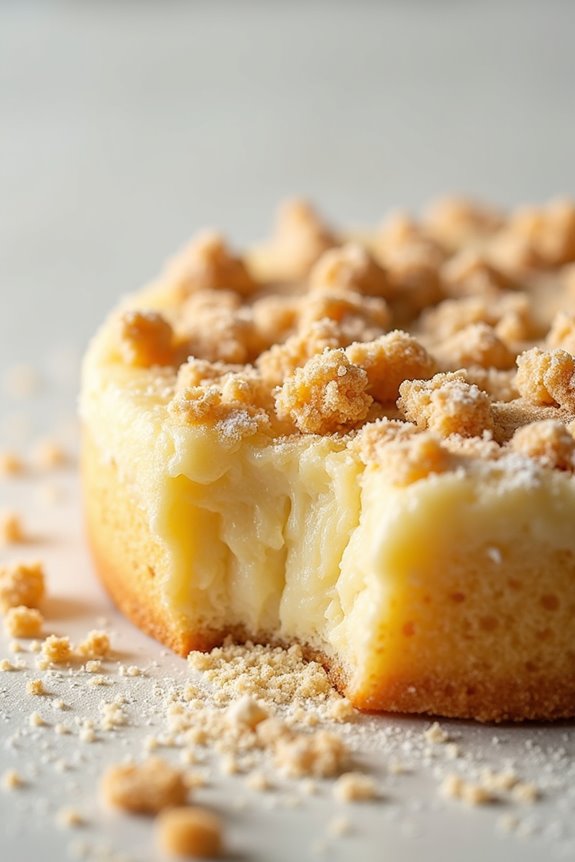
The foundation of streusel is beautifully simple: just three basic ingredients mixed together. You don’t need exotic components or complicated techniques. Flour provides structure, sugar adds sweetness and helps create that signature crumbly texture, and butter binds everything into cohesive pieces.
| Ingredient | Purpose | Ratio |
|---|---|---|
| Flour | Creates dry base structure | 1 cup |
| Sugar | Adds sweetness, aids texture | ½ cup |
| Butter | Binds ingredients, adds richness | ¼ cup |
When you combine these three elements properly, you’re creating something remarkable. The butter coats the flour and sugar particles, forming small clumps that hold together without becoming a paste. This balance matters—too little butter leaves you with powder, too much creates a sticky mess. You’ve got this straightforward formula down, and that’s genuinely all you need for authentic streusel.
Why Cold Butter Creates That Crumbly Bite
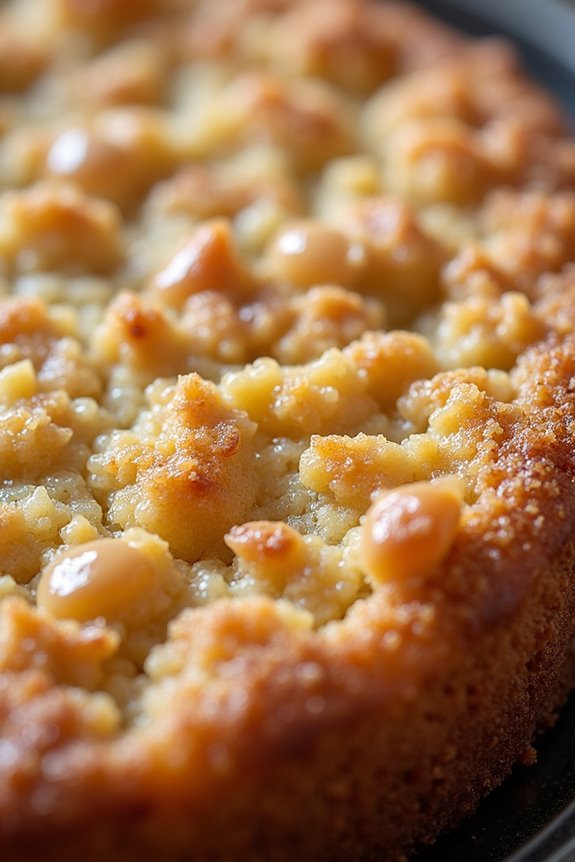
When you use cold butter in your streusel, it stays in small pockets throughout the mixture instead of fully blending into the flour, which creates those distinct, crumbly pieces you’re after. Room-temperature butter, by contrast, creams too smoothly into the dry ingredients and can produce greasy, flat clumps that spread during baking rather than holding their textured shape. The key difference comes down to how the fat distributes—cold butter stays separated and creates defined crumbs, while warmer butter spreads and flattens, losing that signature crispy bite.
Cold Butter’s Texture Impact
Cold butter’s role in streusel is foundational to achieving that signature crumbly texture you’re after. When you use cold butter, you’re working with fat that resists breaking down during mixing. This resistance creates distinct advantages:
- Larger clumps form as cold butter stays separate from dry ingredients, producing coarse pockets rather than uniform texture
- Minimal melting during handling preserves these clumps, keeping them intact through early baking stages
- Heat resistance strengthens your topping’s structure, preventing it from spreading into the batter below
As butter warms in your hands, clumps naturally break down and your topping becomes finer. By keeping butter cold, you slow this process considerably. The result? Properly chilled crumbles withstand oven heat far better, maintaining that crumbly bite and crisp texture throughout baking. This is why temperature control matters so much.
Greasiness And Flatness Issues
You’ve got the cold butter technique down, but here’s where things fall apart: warm butter creates greasy, flat streusel instead of those coveted crumbly pieces. When your butter’s too warm, it coats the dry ingredients evenly rather than forming distinct fat pockets. This even coating pools during baking, causing your topping to spread and flatten. Over-mixing compounds this problem by breaking down butter into smaller pieces that melt too quickly in the oven. Cold butter resists immediate melting and maintains structure, rendering into crispy clumps instead. The contrast matters: room-temperature butter yields mixed results—some chunky pieces alongside sandy pockets—while proper cold-butter technique creates cohesive crumbles that stay tall. Chill your finished topping before baking to prevent greasiness and preserve that satisfying texture you’re after.
Room Temperature Superior Results
Why does room-temperature butter deliver better streusel than the cold-butter method you’ve been relying on? The answer lies in how butter actually incorporates into your dry ingredients.
When you use room-temperature butter, you’re joining a community of bakers who understand the science:
- Larger, cohesive crumb clusters form that hold their shape throughout baking
- Thorough mixing creates taller, full crumble pieces with uniform texture
- The topping maintains its height instead of spreading flat during heat
Cold butter, by contrast, spreads and pools during baking. Room-temperature butter melds properly with flour and sugar, creating a sturdy structure. Extended mixing ensures dry ingredients bond completely with the butter, preventing greasy, runny results. This approach transforms your streusel from flat and disappointing into the crisp, structured topping that defines excellent baked goods.
Streusel vs. Crumbles: What’s the Difference?
Though the terms streusel and crumble often get tossed around interchangeably in American kitchens, they’re not quite the same thing. The key difference lies in texture and technique. Streusel uses butter at room temperature, creating smaller, finer crumbs that hold together better during baking. Crumbles typically employ cold butter, which produces larger, looser pieces with a more pronounced crunch.
You’ll notice streusel toppings stay compact on your baked goods, while crumbles scatter more freely. This distinction matters because streusel won’t slide off as easily or sink into filling. Both contain flour, sugar, and butter, but their mixing methods create different results. Understanding this difference helps you choose the right topping for your dessert and achieve the texture you’re aiming for in your baking projects.
Best Baked Goods for Streusel Toppings
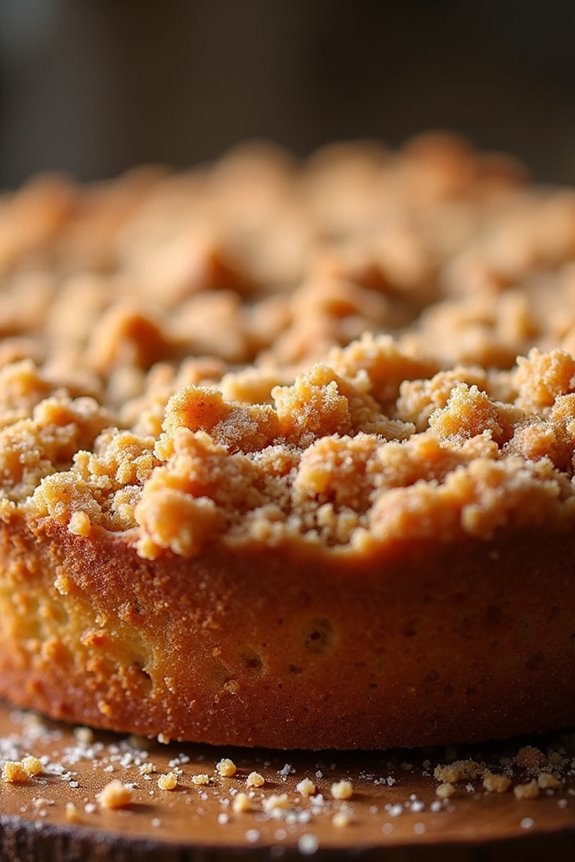
Streusel works best on thick, dense batters that can support its weight without collapsing. You’ll find that your streusel topping performs optimally on these baked goods:
Streusel works best on thick, dense batters that can support its weight without collapsing during baking.
- Muffins—their sturdy crumb structure holds streusel securely, creating appealing texture contrast
- Coffee cakes—their dense base supports generous topping amounts without sinking or becoming soggy
- Quick breads and fruit pies—their substantial batters prevent the streusel from disappearing during baking
Avoid using streusel on lighter, airier baked goods like angel food cakes or delicate pastries. These batters won’t provide adequate support, causing your topping to sink into the batter rather than stay scattered on top. When you match streusel to appropriately structured baked goods, you’ll achieve that signature crumbly texture and professional appearance that makes your desserts stand out.
Why Dense Batters Keep Streusel on Top
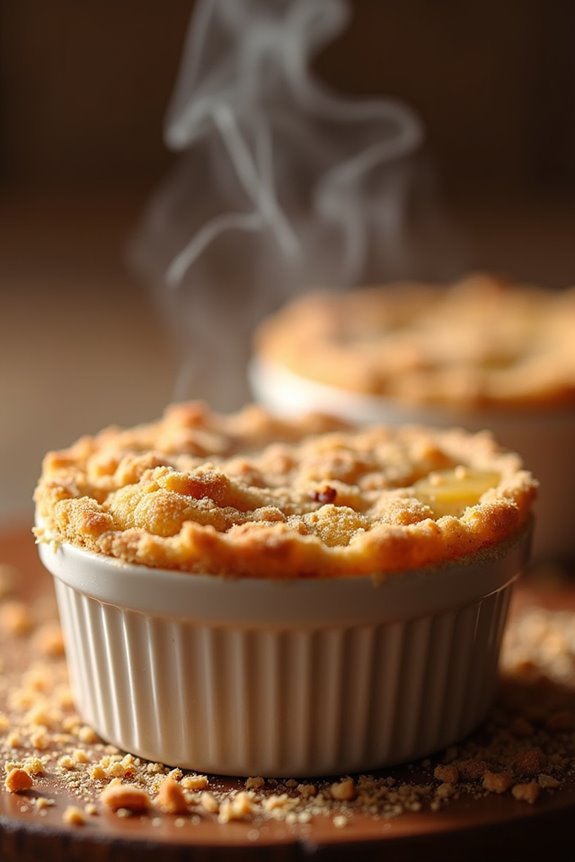
How does a thick batter manage to keep streusel perched on its surface while thinner batters let it sink? The answer lies in structural support. Dense batters provide a firm foundation that prevents your streusel from disappearing during baking. When you spread crumble topping on a thick batter, it rests securely rather than sinking into liquid.
This stability matters because moisture from thinner batters softens streusel, destroying the crunch you’re after. Dense batters shield the topping from excess moisture, keeping it crispy and textured throughout baking. The thicker your batter base, the taller your streusel remains.
You’ll notice the difference immediately. A layering technique enhances this effect further, helping your crumble stay put instead of sliding off. Avoid over-mixing your streusel topping to maintain its structure alongside that supportive, dense batter.
Flavor Variations: Spices, Nuts, and Citrus Add-Ins
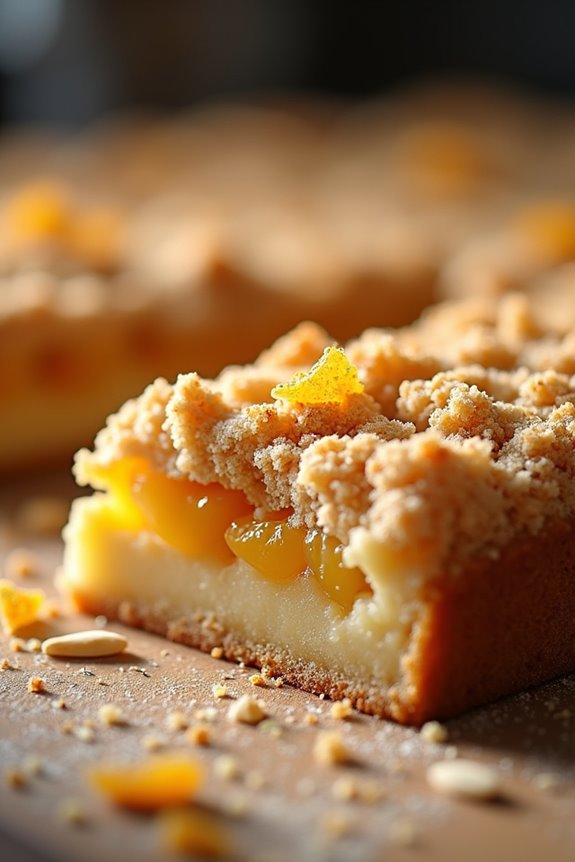
Once you’ve mastered the basic streusel formula, you can transform it from simple to spectacular by adding spices, nuts, and citrus. These additions enhance flavor without disrupting the crumbly, buttery texture you’ve already perfected.
Consider these popular combinations:
- Warm spice blend: Cinnamon, nutmeg, and cloves create cozy, aromatic depth perfect for fall baking.
- Nutty crunch: Chopped pecans or walnuts add texture and richness that complements the buttery base.
- Bright citrus: Lemon zest or vanilla splash cuts sweetness and elevates the overall aroma.
The key’s maintaining your flour-to-butter-to-sugar ratio while distributing add-ins evenly throughout. This ensures consistent texture across every bite. You’ll notice that different spice combinations yield distinct flavor profiles—some warm and grounding, others fresh and vibrant. The streusel remains crumbly because add-ins integrate into the mixture rather than replacing core ingredients, keeping your topping’s signature structure intact.
Why Your Streusel Gets Soggy (and How to Fix It)
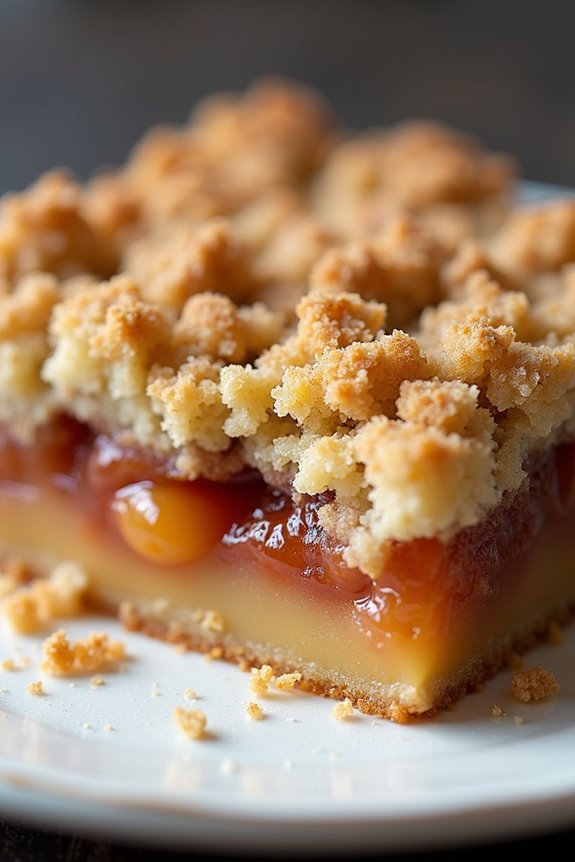
Despite your perfect ratio and careful technique, you’ve probably experienced that disappointing moment when your streusel topping turns soft and mushy instead of staying gloriously crumbly.
The culprit? A batter that’s too wet or thin. When your batter lacks proper density, it releases excessive moisture during baking. Your streusel absorbs this moisture and loses its signature crunch, sinking into the cake instead of forming a crisp crust.
Fix this by ensuring your batter has the right consistency—dense enough to support the topping. Use cold, stale-butter in your streusel and avoid over-mixing, which strengthens its structure against moisture absorption. Refrigerate your streusel briefly before baking to improve adhesion. Apply it in a thicker initial layer too. These adjustments work together, keeping your topping crunchy and exactly where you want it.
Make-Ahead Streusel: Storage and Freezing Tips
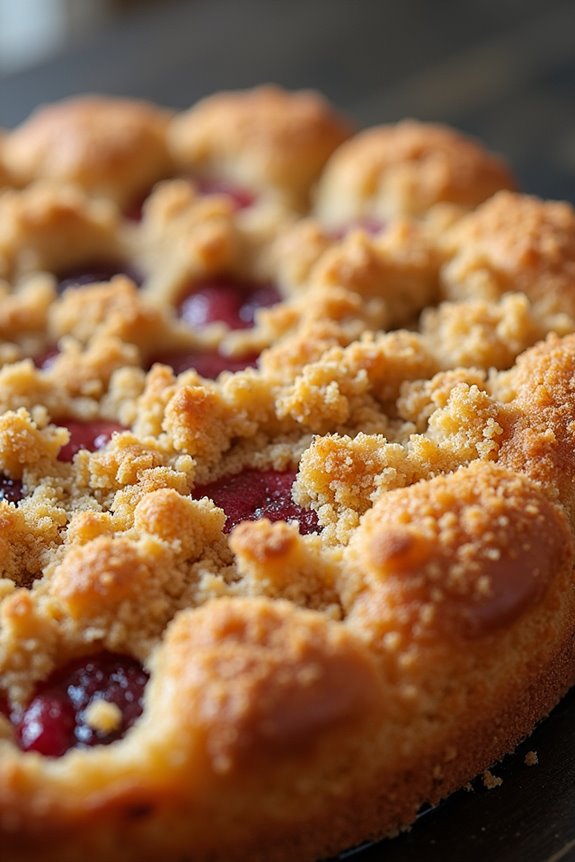
You can prepare streusel topping several days before you need it, which saves time on busy mornings or when you’re planning ahead for gatherings. Mix your crumble thoroughly with room-temperature melted butter to form cohesive pieces that hold their shape during baking.
Here’s how to store your make-ahead streusel topping:
- Room temperature storage for up to 3 days in an airtight container
- Refrigeration for extended freshness beyond the 3-day window
- Freezing on a sheet for 1 hour, then transferring to an airtight container or bag
Pre-chilled streusel maintains its texture better when baked, preventing greasy, flat results. Your streusel topping remains usable and crunchy for muffins, coffee cakes, pies, and quick breads when stored properly.
Where Streusel Shows Up Today
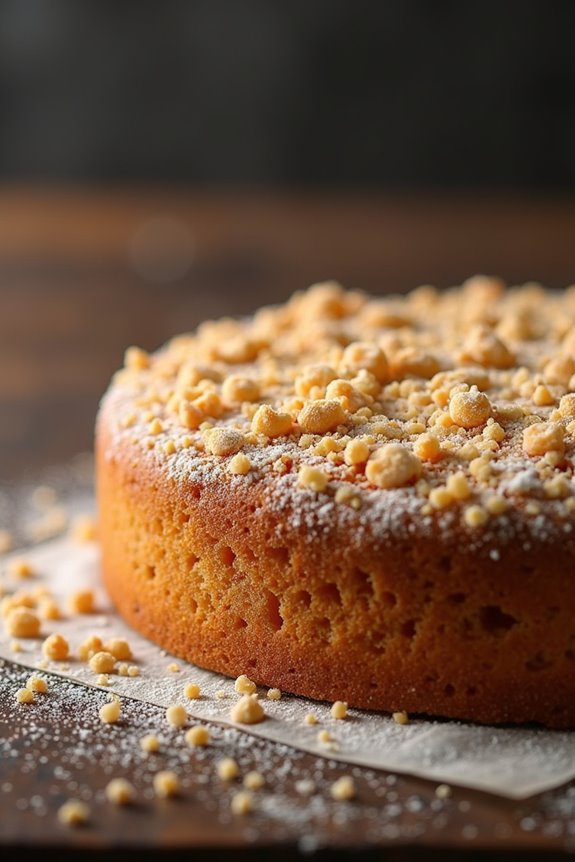
Where does streusel actually show up in modern baking? You’ll find this sprinkled dessert topping everywhere. Muffins benefit greatly from streusel, which adds a satisfying crunch that contrasts with tender crumb. Coffee cakes rely on the streusel topping for both texture and visual appeal. Pies gain extra interest when you scatter streusel across the filling instead of using a traditional crust. Fruit crisps depend on streusel as their primary topping, creating a golden, crispy layer over soft fruit. Quick breads like banana bread and zucchini bread often feature streusel to elevate their simple structures. You can also find streusel on pastries and sweet rolls. This versatility explains why bakers continue using streusel across dessert categories. Its combination of flour, butter, and sugar delivers reliable results that audiences enjoy.