
Sabayon is a silky Italian-French dessert sauce made from egg yolks, sugar, and wine whisked together over gentle heat. You’ll whisk these three ingredients over a double boiler until they reach 150–160°F, creating a light, ribbony texture that coats your whisk. The continuous whisking incorporates air and emulsifies the mixture into luxurious thickness. Serve it warm over berries, cake, or ice cream for an elegant finish. Understanding the technique’s nuances transforms this classic into your culinary signature.
What Is Sabayon?
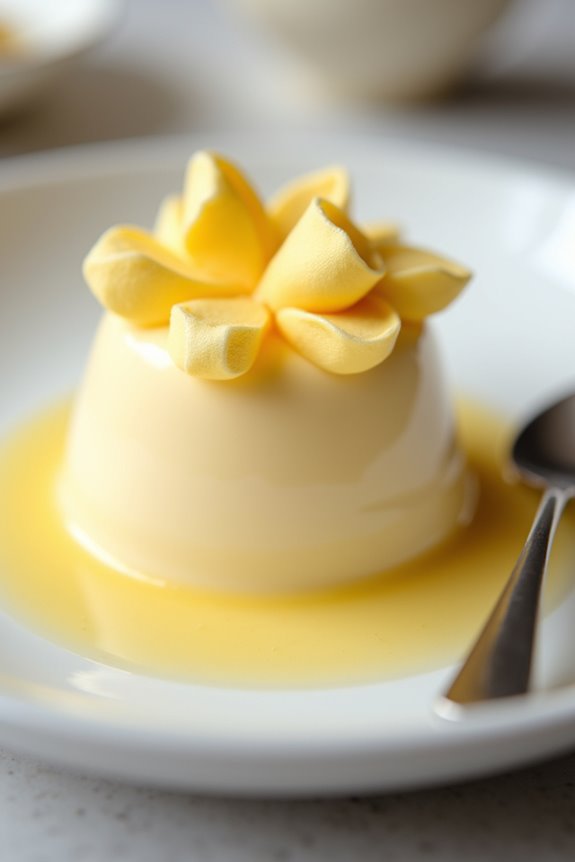
Ever wondered what makes sabayon so silky and luxurious? This Italian-French dessert sauce, also called zabaglione, combines egg yolks, sugar, and wine into something truly special. You whisk these ingredients together over a double boiler, creating heat that transforms them into a light, ribbony sauce.
The magic happens through continuous whisking. As you work the mixture, air incorporates into it, creating that signature silky texture. The temperature reaches around 150–160°F, which both thickens the sauce and safely cooks the eggs.
Traditionally, you’d use Marsala wine, though any dry or sweet wine works beautifully. You can even skip alcohol entirely and use sparkling cider or juice instead. The result? A versatile sauce you serve warm, chilled, or at room temperature alongside fruit, bread pudding, or pie.
Sabayon vs. Zabaglione: Understanding the Difference
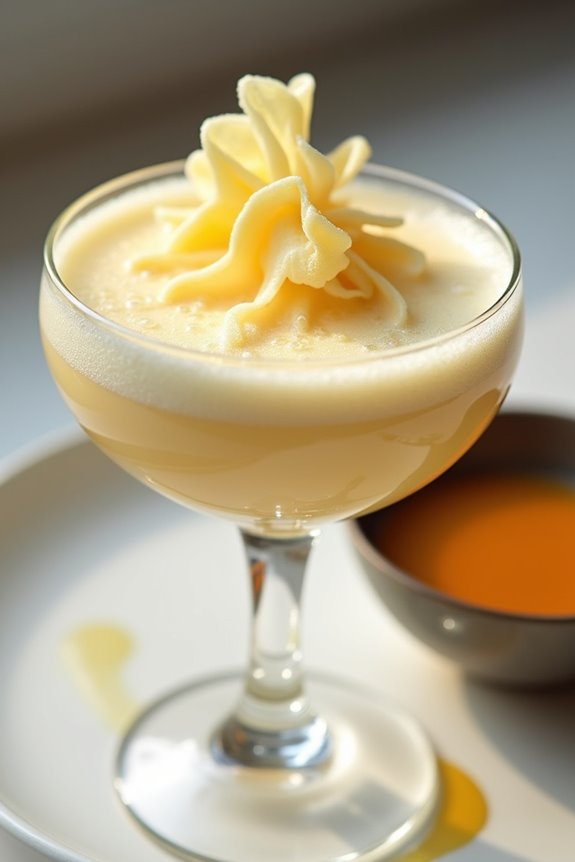
You’ve probably noticed that sabayon and zabaglione sound similar, and there’s a good reason for that—they’re basically the same dessert, just with different names depending on where you’re cooking. Sabayon is the French version, while zabaglione is Italian. Both use the same base ingredients: egg yolks, sugar, and wine whisked together over a double boiler until thick and ribbony.
The main difference lies in the wine choice. Zabaglione traditionally calls for Marsala wine, giving it a specific flavor profile. Sabayon, however, offers flexibility—you can use dry white wine, Champagne, or Moscato-based variants instead.
Texture-wise, sabayon tends toward a lighter, airier consistency. Both serve beautifully warm or at room temperature over berries, bread pudding, or fresh fruit. Ultimately, you’re learning one technique with regional variations.
Essential Ingredients for Homemade Sabayon
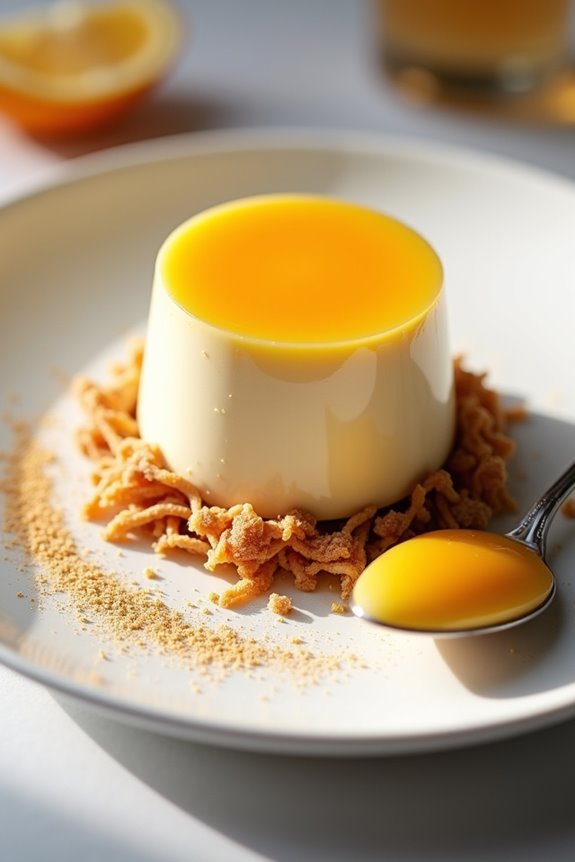
You’ll need just three core ingredients to make sabayon: egg yolks, sugar, and wine, which combine through whisking over gentle heat to create that signature light, thick sauce. Your wine choice—whether dry, sweet, or sparkling—directly shapes the flavor profile, so you can adjust based on what dessert you’re serving or your personal preference. Beyond these essentials, you can garnish with berries or fresh herbs and explore substitutions if dietary needs require it, though the basic formula remains consistent.
Eggs, Sugar, And Wine
What makes sabayon so distinctly luxurious comes down to three simple ingredients: egg yolks, granulated sugar, and wine.
You’ll need to understand how each component works together. Here’s what you’re working with:
- Egg yolks – They create the creamy base and emulsify when whisked, giving sabayon its signature silky texture
- Granulated sugar – It sweetens the sauce while helping egg yolks reach the proper consistency through whisking
- Wine – This adds flavor and prevents the mixture from becoming too thick; dry or sparkling varieties work best
The magic happens when you combine these over a double boiler. You’ll whisk egg yolks and sugar together first until they turn light yellow. Then you slowly incorporate wine while continuing to whisk over simmering water. The heat causes the mixture to thicken into ribbons that briefly hold their shape, creating the luxurious sauce you’re after.
Optional Garnishes And Flexibility
Once you’ve mastered the basic sabayon, there’s room to personalize it. Your egg yolks, granulated sugar, and dry white wine foundation remains constant, but you can adapt what comes next. Consider adding optional garnishes that enhance both taste and presentation. Crushed gingersnaps provide crunch and spice, while pomegranate arils offer tartness and visual appeal. Fresh berries add color and natural sweetness. You’re not limited to these choices either. The flexibility of sabayon extends beyond garnishes. You can serve it warm, at room temperature, or chilled, depending on your preference and occasion. This adaptability makes sabayon accessible to different tastes and dietary needs. Whether you adjust wine types, substitute ingredients, or experiment with toppings, you control your dessert’s final outcome.
Substitutions And Wine Variations
While Marsala wine forms the traditional base, the beauty of sabayon lies in its adaptability to whatever wines or liquids you have on hand. You can swap Marsala for any fortified or dry wine that suits your taste preferences and desired flavor profile.
Consider these popular substitutions:
- Fortified wines like Port, Sherry, Madeira, or sweet vermouth create richer, more concentrated flavors
- Sparkling wines including Champagne or Moscatel add brightness and elegance to your sabayon
- Non-alcoholic options such as sparkling cider or citrus juices maintain the same egg yolks and sugar ratio
The fundamental 1:1:1 measurement of yolk:sugar:liquid remains constant across all variations. When you adjust wine amounts, you control thickness—less wine yields firmer sabayon. This flexibility lets you customize your sabayon to complement any dessert while mastering the essential technique.
Wine Selection for Sabayon: Best Choices & Substitutions
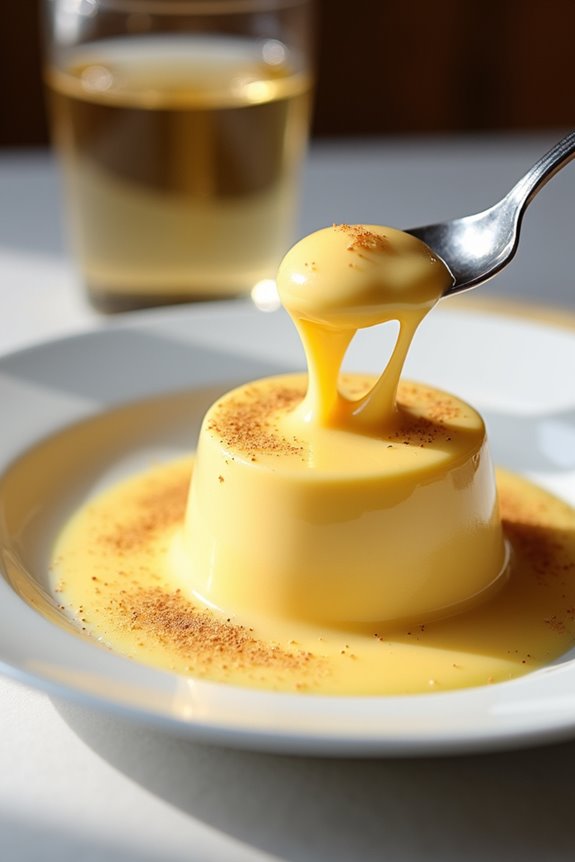
How you choose your wine fundamentally shapes your sabayon’s flavor and texture. Marsala remains the traditional choice for zabaglione, delivering rich, complex notes that define this classic dessert. You’re not limited to Marsala, though. Dry whites like Chardonnay work beautifully, offering crisp, clean profiles that keep your sabayon light. Sauvignon Blanc and Pinot Grigio provide similar brightness with subtle variations in character.
Sweet options expand your possibilities further. Moscato d’Asti and Riesling bring fruity sweetness that complements berries and delicate cakes. For sophisticated depth, consider fortified wines or sparkling Champagne variants.
The key principle: select wine you genuinely enjoy drinking. Your palate drives the sabayon’s final taste. California sustainable wines offer reliable quality if you’re uncertain. Remember, reducing wine to one-half cup creates thicker, ribbon-like textures while intensifying flavor concentration.
Step-by-Step Instructions for Making Sabayon
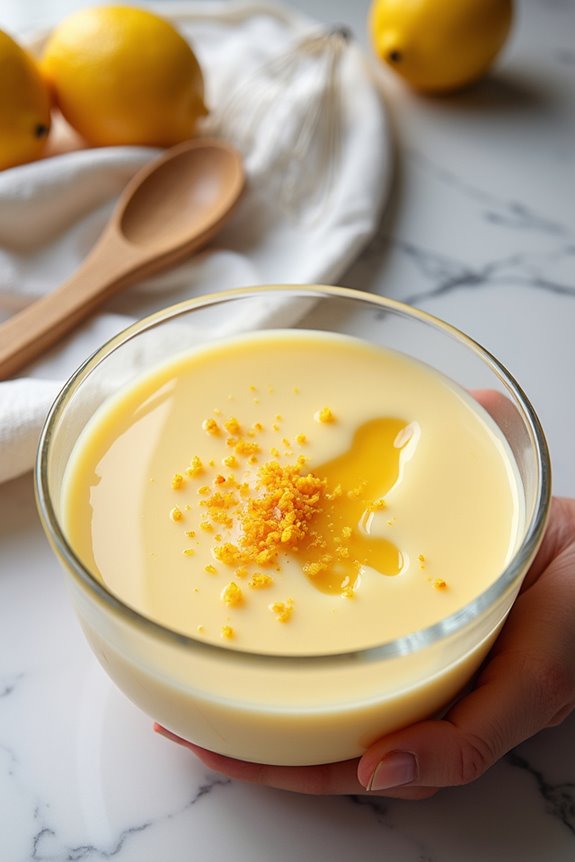
Now that you’ve selected your wine, you’re ready to build the sabayon itself. You’ll combine three key components in a double boiler setup:
- Whisk egg yolks and sugar over gentle heat until the mixture becomes pale and thick
- Add your chosen wine slowly while continuing to whisk constantly to incorporate it smoothly
- Monitor the temperature until you reach 150–160°F, when the sabayon holds its shape briefly on the whisk
Keep the water simmering gently beneath your bowl—never boiling. The constant whisking prevents the egg yolks from scrambling while creating that signature silky, ribbony texture. This process typically takes 8–10 minutes. You’ll know you’ve succeeded when the sabayon coats the back of a spoon and falls in ribbons from your whisk. This careful attention to temperature and technique ensures a safe, perfectly textured sauce.
How to Know When Your Sabayon Is Done
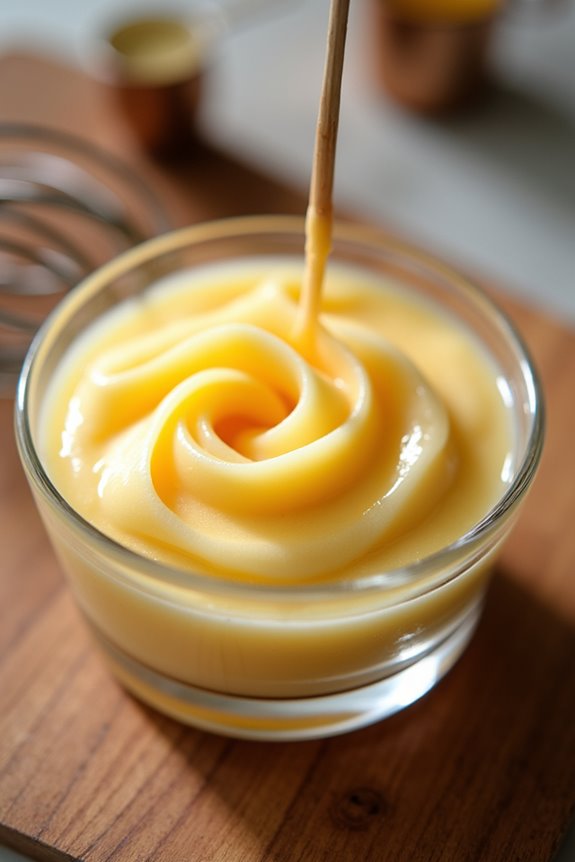
You’ll recognize that your sabayon’s reached its perfect stage through several clear, observable signs. The mixture should reach about 150°F (65°C), and your continuous whisking technique over a double boiler creates the ideal environment for this transformation. Lift your whisk and watch the sabayon thickness hold its shape briefly for approximately 15 seconds before ribbons form and dissolve back into the sauce. This held shape briefly indicates you’ve achieved the right consistency. Try the figure-8 test: draw a figure-8 motion, and the mixture should briefly hold that shape before smoothing out. These doneness indicators confirm you’ve developed a silky, ribbony texture. Stop whisking immediately once you reach this stage, as overcooking causes separation. You’ve successfully created sabayon when these signs align perfectly.
Serving Sabayon: Warm, Chilled, or at Room Temperature
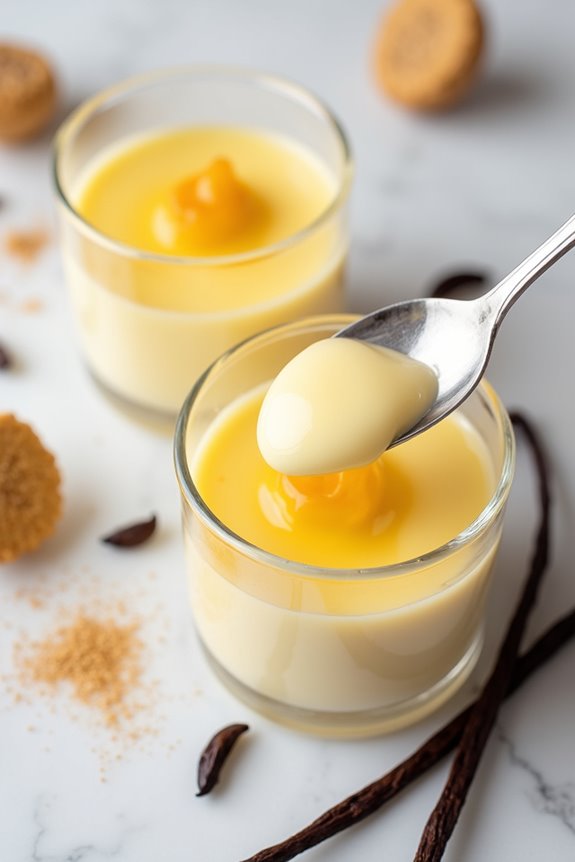
You’ve got three main ways to serve sabayon, and your choice depends on when you’re making it and what you’re pairing it with. Warm sabayon creates that classic cozy experience, while room temperature works well if you’re prepping ahead, and chilled versions work for certain fruit desserts when you’ve got extra time. Getting the timing and storage right means you’ll nail the texture every time, whether you’re serving it fresh from the double boiler or pulling it from the fridge hours later.
Temperature and Timing
Because sabayon’s silky, ribbon-like texture depends on how it’s served, temperature matters just as much as technique. You’ll achieve the best results by understanding how timing and heat work together.
- Serve warm or at room temperature for that velvety mouthfeel you’re after
- Use a double boiler with simmering water kept around 150–160°F while you whisk vigorously
- If chilling ahead, let the egg yolks mixture return to room temperature before serving to restore its ribbony consistency
When reheating, never apply direct heat. Instead, return your sabayon to the double boiler and whisk continuously. The gentle, consistent temperature prevents curdling and separation. Timing matters here too—reheat slowly rather than rushing the process. This approach preserves the delicate emulsion you’ve worked to create, ensuring each spoonful delivers that signature silky experience.
Storage and Preparation
Now that you’ve mastered the cooking technique, knowing how to store and serve your sabayon determines whether it’ll maintain that luxurious texture or fall flat. You can refrigerate sabayon covered for up to two days, but it’s best served immediately or at room temperature. If you’re serving warm, use your double boiler setup and reheat gently while whisking continuously to prevent breaking. For cold service, some variations use gelatin dissolved in wine to help it set properly. Always cover the surface with plastic wrap during storage to prevent a skin from forming. Keep your temperature consistent—avoid rapid heating, which causes separation. Serve within 24 hours for optimal texture preservation and that signature silky consistency.
Store Your Sabayon: Make-Ahead Prep & Timeline
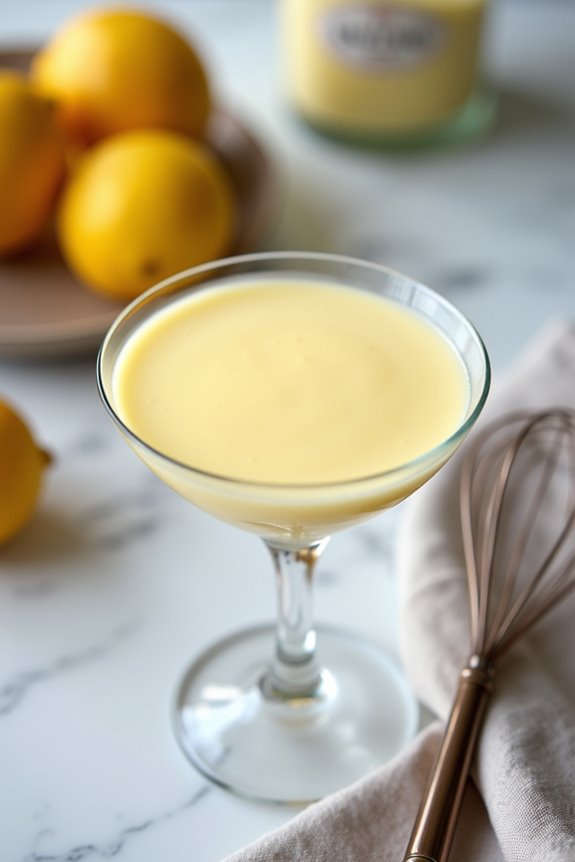
Can you make sabayon ahead of time? Yes, you can prepare this elegant sauce a couple of days before serving, making it perfect for entertaining.
Here’s your make-ahead timeline:
- Refrigerate covered for up to two days, keeping plastic wrap directly on the surface to prevent skin formation and preserve texture
- Use a double boiler during cooking to maintain gentle heat and prevent the sauce from breaking
- Bring to room temperature before serving for the best flavor and consistency
Plan your prep strategically. Have all ingredients ready before you start cooking. This preparation method keeps your sabayon smooth and luxurious. Skip freezing—it doesn’t work well. Reheating can damage the delicate sauce structure. For cold service, dissolve gelatin in the wine first, then refrigerate until set and ready to enjoy.
Why Your Sabayon Might Break (and How to Fix It)
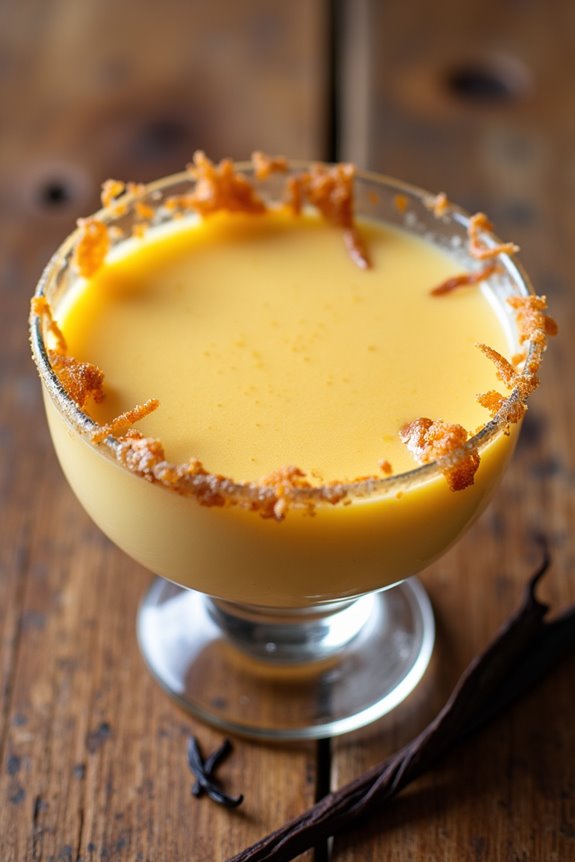
While proper storage keeps your sabayon silky for days, the real challenge happens during preparation. Breaking occurs when you apply excessive heat or skip the double boiler method. Your egg yolks curdle if water boils directly beneath them, so maintain a gentle simmer instead. Continuous whisking prevents curdling by keeping the emulsion stable and uniform. You’ll know you’ve reached the right temperature when the mixture hits 150–160°F and holds a ribbon shape briefly. Stop whisking once it passes this point. If your sabayon breaks anyway, cool it immediately. You can sometimes rescue it by whisking in a fresh egg yolk or adding warm melted butter slowly, which may re-emulsify the separated mixture and restore its smooth consistency.
Whipped Sabayon: A Lighter Variation Using a Siphon
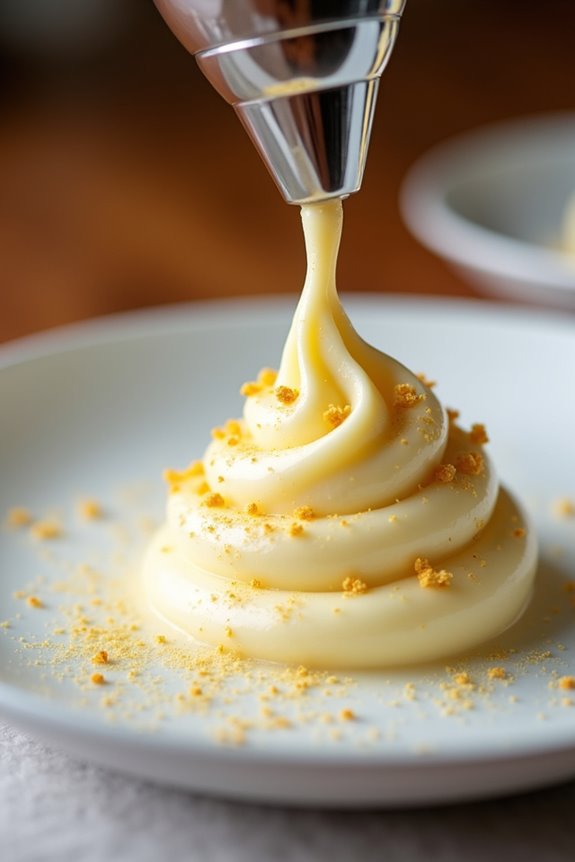
Ever wonder how restaurants serve sabayon as an airy foam instead of a thick sauce? You can create whipped sabayon at home using a siphon and simple techniques.
Start by preparing your sabayon in a double boiler, heating the yolk-sugar-wine mixture to around 160°F until it holds its shape briefly. Once cooled slightly, transfer it to a 1-pint whipped cream dispenser and charge it with one iSi cartridge. The aeration process happens when you:
- Shake the siphon thoroughly to distribute gas evenly
- Refrigerate until serving time
- Hold the siphon upside down and press the lever to dispense
This method transforms traditional sabayon into a lighter, more elegant presentation. If you don’t have a siphon, refrigerate the sabayon with plastic wrap on the surface to prevent skin formation.
Flavor Variations and Creative Twists
Once you’ve mastered the basic sabayon technique, you’re ready to explore flavor variations that build on that foundational 1:1:1 ratio of egg yolks, sugar, and liquid.
You can transform your sabayon by swapping wines. Instead of traditional Marsala, try Chardonnay, Riesling, or Moscato d’Asti for different aromatic profiles. You’re not changing the whisking method or temperature—just the liquid component—so the sauce maintains its thick, ribbony texture.
Sweet variations work beautifully too. Add maple or honey alongside nutmeg to your egg yolks and sugar base, creating warmth and depth. For savory twists, incorporate champagne with lemon zest or rosemary while whisking, pivoting your sabayon toward savory desserts or fruit pairings.
Non-alcoholic options use sparkling cider or fruit juice instead of wine, keeping measurements identical. These flavor variations preserve the classic technique while inviting creativity into your kitchen.
Desserts That Shine With Sabayon: Best Pairings & Presentation Ideas
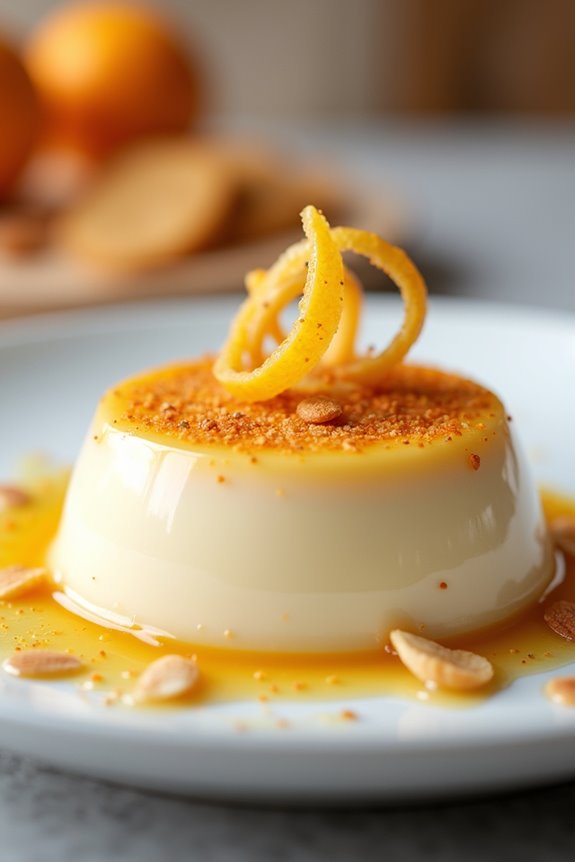
You’ll discover that sabayon transforms simple desserts into elegant presentations, especially when you pair it with fresh berries, macerated fruit, or delicate cakes that benefit from its silky, ribbon-like texture. The sauce’s versatility means you can spoon it warm over panettone bread pudding, orange sorbet, or almond cake, where its creamy richness complements rather than overwhelms the base dessert. Wine choices—whether a dry Chardonnay, sweet Moscato d’Asti, or fortified Marsala—shift the sabayon’s flavor profile and determine which dessert pairing will shine brightest on your plate.
Classic Fruit Pairings
What makes sabayon truly shine? You’ll discover it’s the fresh berries that truly elevate this glossy sauce. The silky texture of warm sauce pairs beautifully with fruit, creating a dessert experience that feels both elegant and approachable.
Consider these classic fruit pairings:
- Strawberries—particularly Gariguette varieties—enhance the sauce’s natural aroma and sweetness
- Raspberries and blackberries—their tartness balances the rich, creamy warmth
- Blueberries—their subtle flavor lets the sabayon take center stage
You’ll want to serve these combinations warm or at room temperature to mirror the sauce’s silky consistency. The pairing works because the fruit’s brightness cuts through richness while the whipped cream-like texture adds luxurious mouthfeel. This combination creates that sense of belonging—you’re serving something refined yet genuinely delicious.
Elegant Dessert Presentations
Now that you’ve mastered the fruit pairings, it’s time to focus on how you present sabayon to create a truly polished dessert. Your presentation directly impacts how guests perceive the elegance of your creation.
Serve sabayon immediately after cooking for optimal silky texture. Spoon the warm sauce over fresh berries in clear glasses or bowls, allowing the sauce to pool beautifully around the fruit. This simple approach showcases both the berries and the sabayon’s ribbony quality.
Consider adding textural contrast with brûléed sugar tops or crushed gingersnaps. Your wine choice influences the final presentation too—dry white wines like Chardonnay create a classic look, while sparkling options add celebratory appeal.
Keep the presentation light and uncluttered. Your goal is a refined dessert that feels both accessible and special, inviting guests into a shared moment of culinary appreciation.
Wine-Enhanced Flavor Combinations
The wine you select becomes the foundation of your sabayon’s personality, fundamentally shaping how it tastes and how it complements your dessert. You’re not limited to traditional zabaglione’s Marsala—your whipped sabayon accepts diverse options that elevate different flavor profiles.
Consider these wine pairings for your dessert sauce:
- Moscato d’Asti delivers milder sweetness, letting berries shine without overpowering delicate fruit flavors
- Sauternes or late-harvest Riesling creates richer notes, pairing beautifully with heavier desserts and caramelized elements
- Champagne or sparkling wines accent brightness and bubbles, adding sophistication to simple berry presentations
You can also explore fortified wines or even sparkling cider for non-alcoholic options. The wine’s acidity and sweetness directly influence how your sabayon clings to fruit, cake, or ice cream. This flexibility means you’ll craft a sauce that truly matches your dessert vision.
8 Mistakes That Ruin Sabayon (and How to Avoid Them)
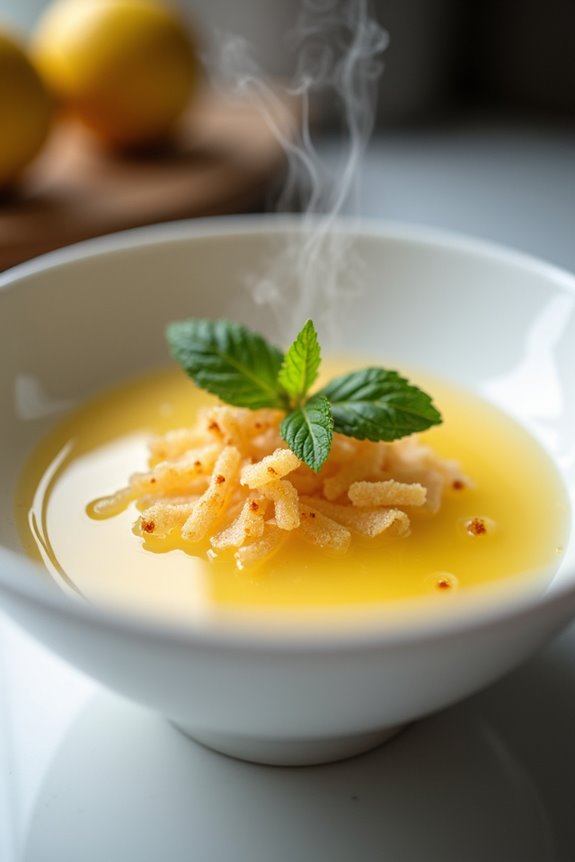
Making sabayon might seem straightforward, but it’s surprisingly easy to end up with a broken, grainy, or thin sauce if you’re not careful. The most common pitfalls stem from temperature control and technique mistakes. Understanding what goes wrong helps you join the ranks of confident sauce makers who consistently nail this classic.
| Mistake | Why It Happens | Solution |
|---|---|---|
| Cooking at high heat | Eggs scramble instead of emulsify | Use a double boiler, maintain gentle heat |
| Neglecting constant whisking | Mixture separates and curdles | Whisk continuously throughout cooking |
| Overcooking past 160°F | Texture becomes grainy, loses silkiness | Stop at ribbon stage immediately |
| Letting boiler water boil | Steam cooks eggs unevenly | Keep water at gentle simmer only |
Proper egg yolk handling and consistent whisking prevent most failures. Your attention to gentle heat and texture development determines success.
What’s in a Serving? Calories, Macros & Dietary Notes
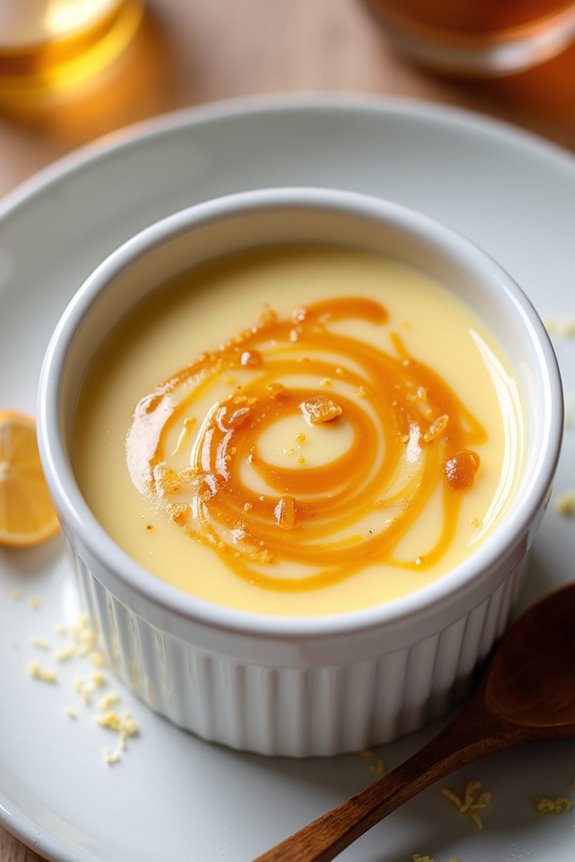
Ever wonder what you’re actually consuming when you indulge in a serving of sabayon? This rich dessert delivers significant nutrition that warrants mindful portions. A standard serving contains:
Ever wonder what you’re actually consuming when you indulge in a serving of sabayon? This rich dessert delivers significant nutrition that warrants mindful portions.
- 239 calories with 39g carbohydrates and 4g fat
- 2g protein and 195mg cholesterol per serving
- Approximately 11mg sodium in each portion
You’re looking at a decadent egg-based sauce designed for moderation. The high cholesterol content reflects sabayon’s traditional preparation, which relies on egg yolks whisked with sugar and wine. Nutritional values vary based on your specific recipe and wine choices, so they’re guidelines rather than absolutes. When you serve sabayon warm over fruit or as a topping, you’re treating it as a dessert course complement, not a standalone dish. This approach keeps portions reasonable while letting you enjoy this classic dessert.