

Your sugar cookie dough crumbles because you’ve likely added too much flour, which absorbs moisture needed for binding. Measuring errors—like scooping directly into the bag—pack flour and throw off your ratio. Insufficient liquid, cold ingredients, or uneven fat distribution also cause dryness. The quickest fix? Add liquid one teaspoon at a time, mixing thoroughly after each addition until your dough becomes cohesive. You can also rest it in the fridge for fifteen to thirty minutes to let dry ingredients fully absorb moisture and improve texture, then reassess.
Quick Fix: Add Liquid Gradually to Rescue Crumbly Dough
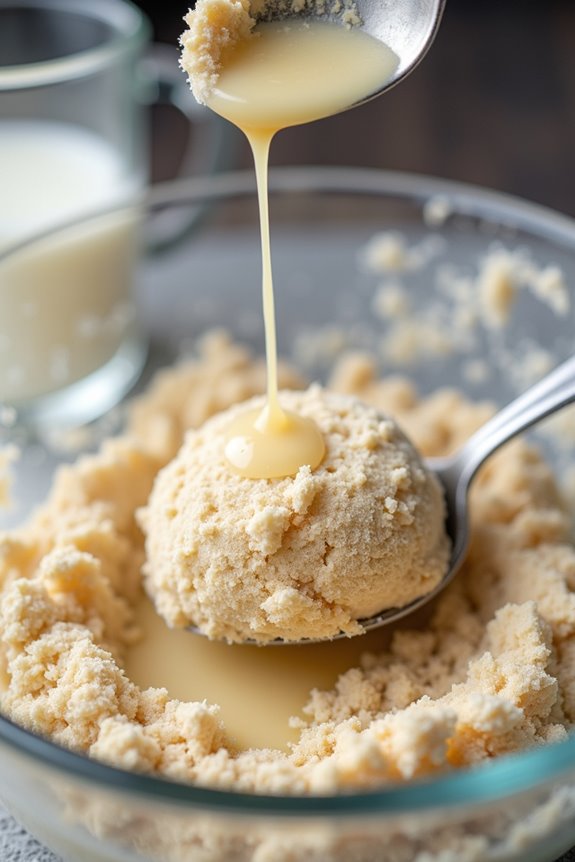
Why’s your dough falling apart? Add liquid gradually, one teaspoon at a time. Mix thoroughly after each addition to let the crumbly dough absorb the moisture evenly.
Choose a liquid that’s already in your recipe, or use milk, water, or melted butter. These options rebind the dough without introducing new flavors.
Knead briefly with your hands after each teaspoon. This helps the ingredients bond together more effectively. Stop adding liquid as soon as your dough becomes cohesive and scoop-able—over-wetting creates sticky, difficult-to-work dough.
If your crumbly dough still won’t come together after several additions, rest it in the fridge for fifteen to thirty minutes. This allows dry ingredients to fully absorb moisture. Afterward, reassess the texture and add more liquid only if needed.
Test Your Fix With One Cookie Before Baking the Full Batch
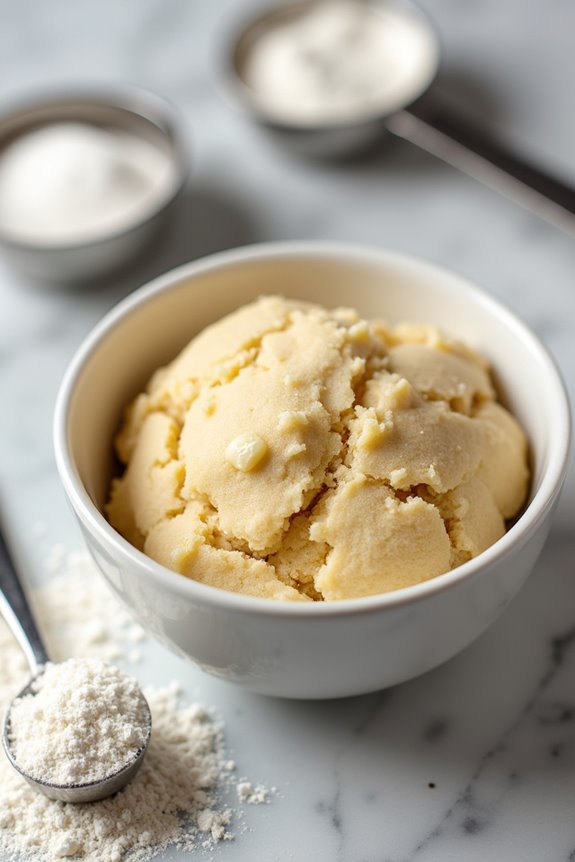
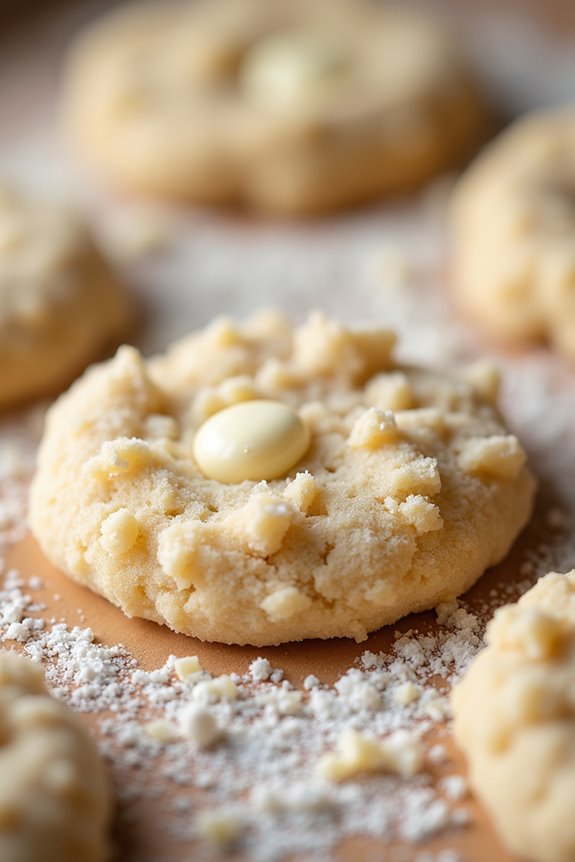
Before you bake an entire batch, grab one portion of your fixed dough and bake it as a test-cookie. This single cookie reveals whether your liquid adjustment actually worked. Watch how it bakes. A properly fixed dough should produce a cookie that holds together without crumbling apart when you touch it.
If your test-cookie still crumbles, you’ll know the dough needs more liquid. Add water, milk, or melted butter in one-teaspoon increments to the remaining dough. Mix thoroughly, then bake another test-cookie to check the results.
Once your test-cookie reaches the right texture—cohesive and scoop-able without feeling wet—you’ve found your solution. Record exactly what adjustment worked. This information guides you when tweaking the rest of your dough before committing to the full batch.
Why Your Sugar Cookie Dough Becomes Crumbly
Several factors work together to create that frustrating crumbly texture you’re experiencing. Your sugar cookie dough needs proper moisture balance to hold together, and when you’re short on liquid, the dry ingredients can’t bind effectively. Flour measurement matters tremendously—loose scoops or the scoop-and-sweep method often pack too much flour into your dough, drying it out instantly. You might also have insufficient fat, since butter and other fats provide essential cohesion that keeps everything unified. Mixing technique plays a role too. Overmixing or undermixing distributes moisture unevenly throughout your sugar cookie dough, creating texture problems. Understanding these causes helps you identify exactly what went wrong, so you’ll know which adjustment to make next time you bake.
Too Much Flour: The Most Common Cause of Crumbly Dough
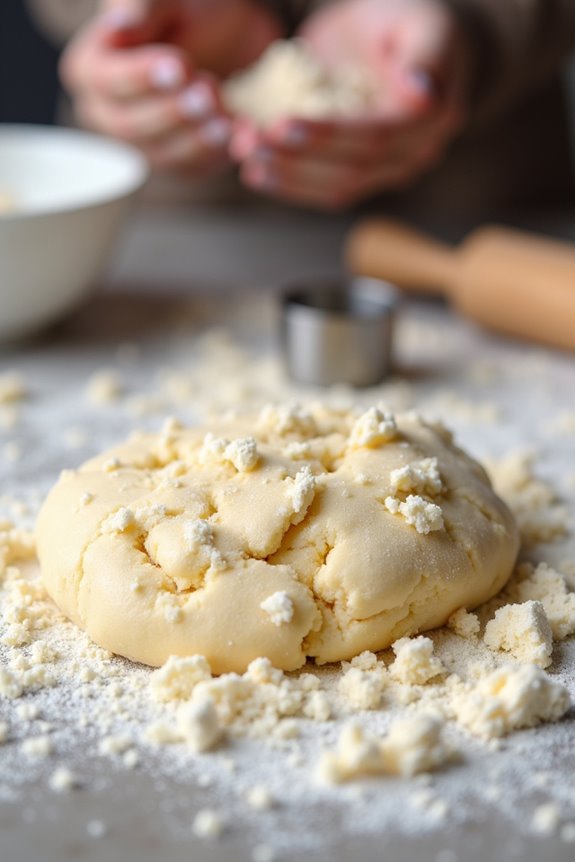
The culprit behind your crumbly sugar cookie dough is most likely too much flour. Excess flour absorbs moisture that would otherwise binding your ingredients together, creating that frustrating sandy texture that won’t hold.
Here’s how too much flour causes problems:
- Measuring errors – Using the scoop-and-sweep method accidentally packs extra flour into your cup, adding more than recipes intend.
- Moisture absorption – Surplus flour soaks up liquids, leaving insufficient wet ingredients to bind the dough properly.
- Flour density variations – Different flour types have different densities, so substituting brands without adjusting quantities throws off your ratio.
- Compounding during mixing – Adding flour while mixing compounds the problem, making your dough crumble further.
Precise measuring and avoiding extra flour during preparation ensure your dough stays cohesive and ready for baking.
Insufficient Liquid Leads to Crumbly Cookie Dough
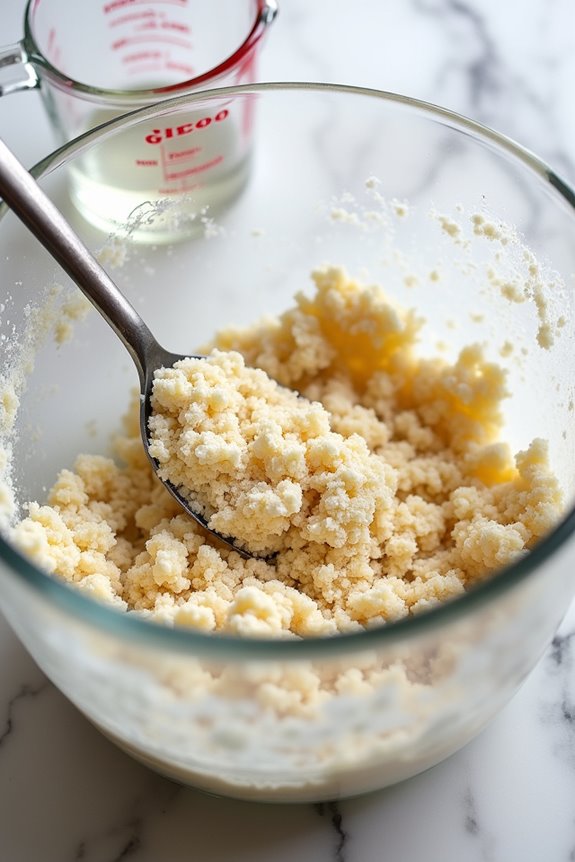
Why does your dough fall apart even when you’ve measured carefully? The culprit is often insufficient liquid. Your crumbly dough lacks enough egg, milk, or water to bind the dry ingredients together properly. This happens because the flour-to-liquid ratio is off, or measuring errors have inflated your dry ingredient amounts.
To fix this, add liquid gradually in small increments. Mix thoroughly after each addition, testing for a cohesive, scoopable texture before continuing. You’re aiming for dough that holds together without being sticky.
Resting or chilling the dough helps distribute existing moisture, but won’t fully solve crumbliness without extra liquid. By adjusting your liquid content methodically, you’ll transform that sandy, falling-apart dough into the smooth, workable consistency you need for perfect sugar cookies.
How Eggs Prevent Crumbly Dough and Improve Binding
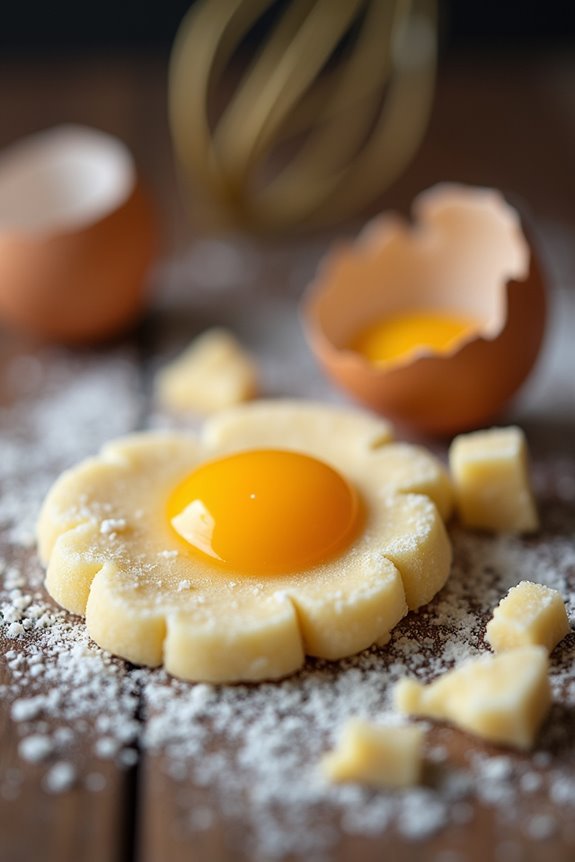
Eggs play a vital role in transforming crumbly dough into something you can actually work with. They provide moisture and fat that bind flour and sugar together, reducing those frustrating crumbles. When you beat eggs, you incorporate air that strengthens your dough’s structure. Here’s how eggs improve your baking:
- Add moisture that hydrates dry ingredients and creates cohesion
- Boost protein content for better binding between flour particles
- Enable emulsification so fat and liquid mix properly throughout
- Incorporate air during beating, which sets with fat for stability
Egg size matters too—large eggs contribute more binding power than smaller ones. If your dough’s still crumbly, try increasing eggs slightly in small increments. You’ll notice the dough holds together better during shaping and baking, without becoming overly cakey.
Why Fat Content Affects Crumbly Dough Texture
You’ll find that fat acts as a vital binder in your dough, coating flour particles and trapping moisture to create a cohesive mixture instead of crumbly bits. The type and quality of butter you’re using matters greatly—solid butter blends differently than melted fat, and using lower-quality butter or substitutes like shortening can change how much moisture your dough retains. Getting your fat ratio right is essential, since too little leaves your dough dry and crumbly, while the correct amount keeps everything holding together properly.
Fat’s Role In Binding
Fat isn’t just an ingredient—it’s the glue that holds your sugar cookie dough together. When you use enough fat, it coats flour particles and slows gluten development, preventing that dry, crumbly texture you’re trying to avoid.
Here’s how fat creates binding power:
- Coats flour particles – Fat wraps around flour, reducing water absorption and keeping moisture locked in your dough
- Slows gluten formation – Less gluten development means a tender crumb instead of a tough, crumbly mess
- Improves moisture retention – Adequate fat holds onto water, preventing your dough from drying out
- Enables even distribution – Chilling allows fats to spread uniformly throughout, strengthening dough structure
Using melted butter or higher-fat dairy instead of low-fat alternatives makes a real difference. Insufficient or overly cool fat strips moisture from your dough, creating that frustrating crumbly consistency you’re working to fix.
Butter Quality And Consistency
Does your butter choice actually matter when you’re mixing sugar cookie dough? Absolutely. Higher butter fat content directly strengthens your dough’s structure. When you use premium butter with more milkfat—like Irish butter or quality creamery brands—you’re giving your dough better binding power. This higher fat content improves moisture retention, which keeps your dough cohesive instead of crumbly.
Here’s why: fat creates a crucial fat–flour emulsion that holds everything together. Lower-fat butter weakens this bond, leaving you with dry, crumbly texture. You’ll also notice that premium butters spread less during baking, helping cookies maintain their shape.
To maximize results, soften or melt your butter before mixing. This ensures even distribution throughout your dough, preventing dry pockets that lead to crumbling. Your butter choice isn’t just nice—it’s essential.
Adjusting Fat Ratios Correctly
Getting your fat-to-flour ratio right is what separates a cohesive dough from a crumbly mess. You’re aiming for balance, not extremes.
Here’s what you need to know about adjusting fat ratios:
- Too little fat causes crumbly texture because fat coats flour particles and prevents them from drying out
- Fat quantity matters more than type—measure precisely; even small variations affect moisture retention and cohesion
- Pair fat with adequate liquids or eggs—they work together to bind ingredients and create workable dough
- Melted butter distributes more evenly than solid fat, yielding softer dough when balanced with your other wet ingredients
If your dough crumbles, you’re likely underfat. Add a tablespoon of fat at a time until your mixture holds together. Don’t overcorrect though—excess fat creates greasy dough that spreads too much during baking.
Overmixing and Undermixing: How They Create Crumbly Dough
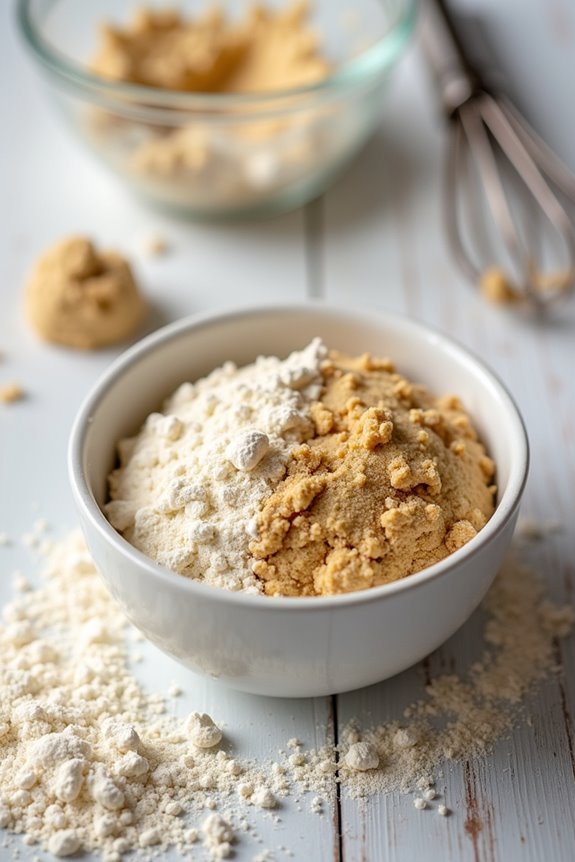
You’re probably creating crumbly dough by mixing either too much or too little, both of which throw off your dough’s moisture balance. Overmixing whips in excess air and overworks your gluten, drying out the dough, while undermixing leaves fats and liquids scattered unevenly throughout, creating dry pockets that make the texture crumbly. The solution sits between these extremes: mix just until your ingredients combine, then stop.
The Overmixing Problem
When you’re mixing sugar cookie dough, it’s easy to keep going after the ingredients combine—but that’s actually where crumbly texture starts to develop. Overmixing traps excess air in your dough while overworking the gluten and starch. This combination removes moisture and creates a dry, crumbly final product.
Here’s what happens when you overmix:
- Gluten strands become overworked and break down, losing their ability to hold moisture
- Excess air pockets form, causing the dough to dry out during mixing and baking
- Starch granules rupture, releasing their moisture into the surrounding dough unevenly
- The overall moisture balance shifts toward dryness, creating a fragile texture that crumbles easily
Stop mixing the moment your ingredients combine. This protects your moisture balance and ensures a cohesive dough that bakes properly.
Undermixing and Uneven Distribution
How does undermixing create crumbly dough? When you don’t mix enough, fats and liquids fail to distribute evenly throughout your ingredients. Pockets of dry flour remain scattered in your dough, creating weak spots that crumble easily.
You’re likely skipping essential steps that bind everything together. Eggs, fat, and sugar need thorough blending to coat flour particles and create structure. Without proper uneven distribution of these key ingredients, your dough lacks the cohesion it needs.
To maintain moisture balance, use short, gentle mixing bursts instead. Scrape the bowl sides frequently to catch unmixed flour hiding there. Mix just until combined—you’ll feel when everything comes together smoothly. This approach prevents both undermixing and the crumbly texture you’re trying to avoid.
Measure Flour Correctly to Prevent Crumbly Cookie Dough
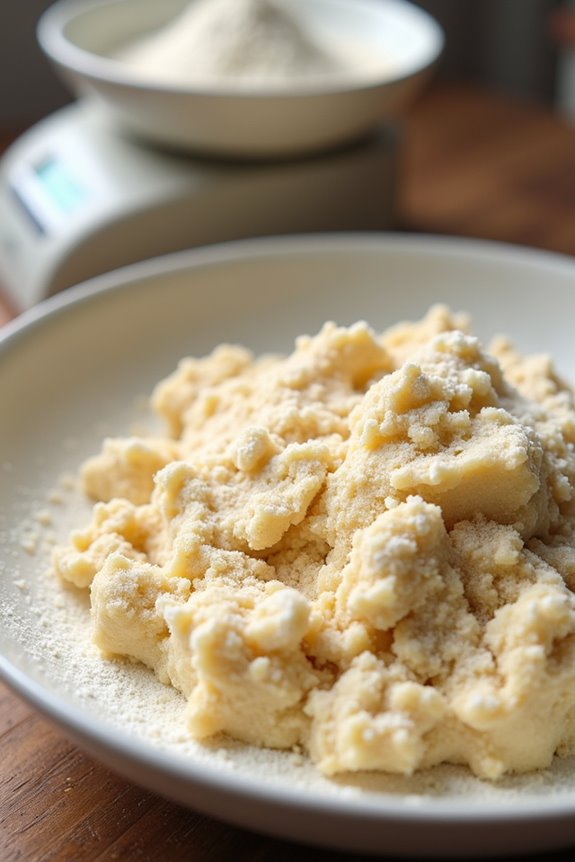
Flour measurement is one of the most overlooked reasons your sugar cookie dough turns out dry and crumbly. When you scoop flour directly into your measuring cup, you pack it down without realizing it. This excess flour absorbs too much moisture, creating that frustrating crumbly texture. You’ll want to use the correct technique every time:
- Spoon flour lightly into your measuring cup without scooping
- Fill the cup slightly higher than the rim
- Level off with a straight edge for precision
- Use all-purpose flour exclusively, avoiding whole wheat or bread flour substitutes
A kitchen scale provides the most accurate flour measurement if you have one. These methods ensure consistent weight rather than guesswork. When you measure correctly, your dough maintains proper moisture balance and holds together beautifully, giving you cookies that bake evenly and taste perfect.
Why Room Temperature Ingredients Stop Crumbly Dough
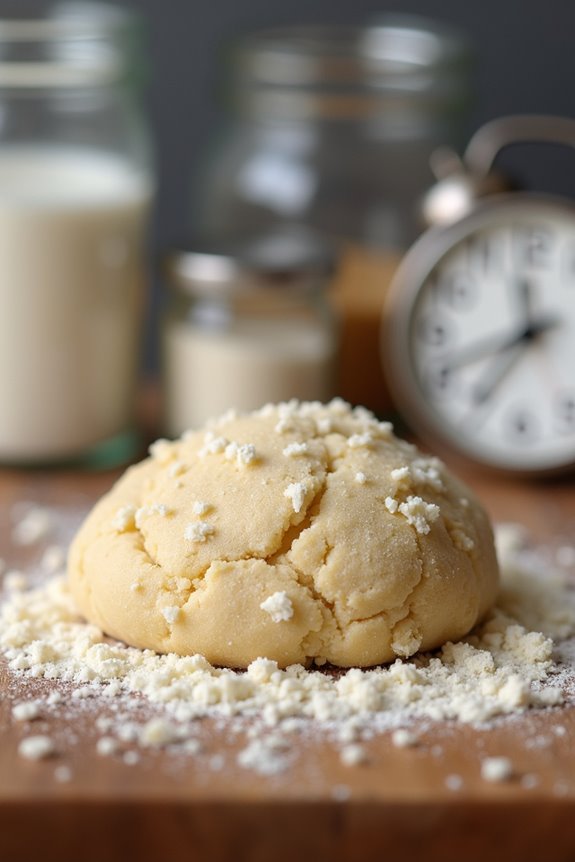
When you bring your butter to room temperature, it softens enough to cream properly with sugar, trapping air and moisture that keep your dough tender instead of dry and crumbly. Your eggs also blend more smoothly into this warm fat base, creating a stable emulsion that binds all your ingredients together rather than sitting separate and causing pockets of dryness. Room temperature ingredients work together more efficiently, so you’ll need less extra liquid to fix texture problems later in your mixing process.
Butter Consistency Matters Most
Why does your dough fall apart when you haven’t warmed your ingredients? Butter temperature is the single most important factor in preventing crumbly dough. Here’s why room-temperature ingredients matter:
- Room-temperature butter blends smoothly with sugar, creating an emulsion that traps air for tender cookies
- Cold butter clumps and won’t coat flour adequately, leaving dry pockets throughout your dough
- Warming butter to 65–70°F ensures even hydration and better dough cohesion without extra liquid
- Melted butter increases moisture and causes excessive spreading, potentially yielding oily results if mismeasured
When you use room-temperature butter, it incorporates evenly with eggs and sugar, providing stronger structure. This consistency supports uniform mixing, reducing those frustrating crumbly spots. The difference between cold and properly warmed butter determines whether your dough holds together or falls apart.
Egg Binding and Moisture
Eggs are your dough’s hidden edge against crumbliness, and room temperature is when they work best. Room-temperature eggs emulsify more effectively, meaning they blend smoothly with your other ingredients rather than resisting the mixture. This emulsification increases moisture retention throughout your dough, which directly combats crumbling.
When eggs are cold, they don’t mix evenly with butter and sugar. This uneven distribution weakens binding, leaving you with a dry, crumbly texture. Warm eggs, however, incorporate seamlessly and help distribute moisture more uniformly.
The moisture that eggs provide works alongside binding to create dough cohesion. Your dough needs adequate moisture to hold together properly. By using room-temperature eggs, you’re ensuring maximum moisture distribution and stronger ingredient binding, which transforms crumbly dough into smooth, workable consistency.
How Resting Dough Improves Texture and Reduces Crumbliness
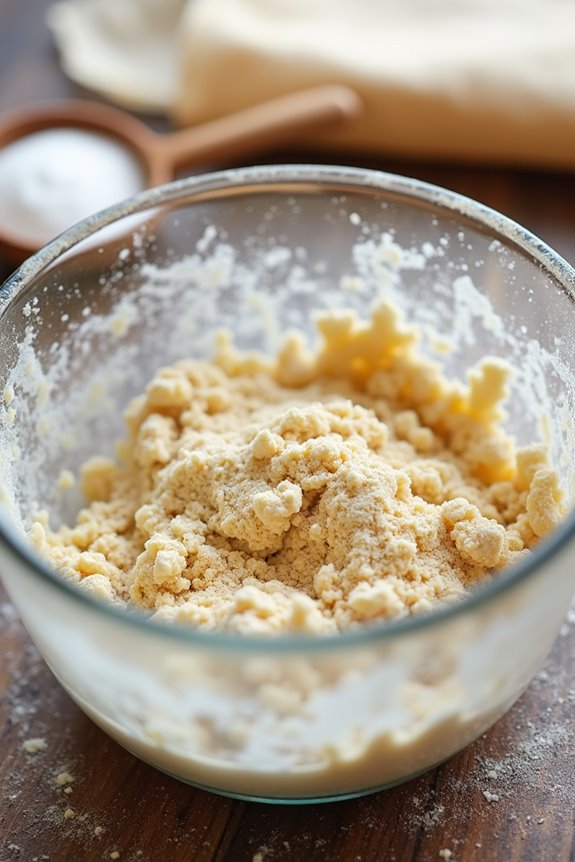
One of the simplest fixes for crumbly sugar cookie dough is patience—specifically, letting your dough rest in the refrigerator for about 30 minutes. During this time, several important changes occur that transform your dough’s texture.
Resting dough allows your ingredients to work together more effectively:
- Flour hydration improves as liquids fully absorb into dry ingredients, creating better binding
- Fats relax and distribute evenly, reducing the crumbly texture you’re experiencing
- Moisture spreads uniformly throughout, helping ingredients cohere before shaping
- Flavor develops as components meld during refrigeration
Chilled dough also becomes easier to handle and resists spreading during baking. If your dough remains crumbly after resting, add liquid gradually—just a teaspoon at a time—after a second chill. This measured approach prevents over-wetting while achieving the cohesion you need.
Rescue Crumbly Dough by Hand: A Gentle Kneading Technique
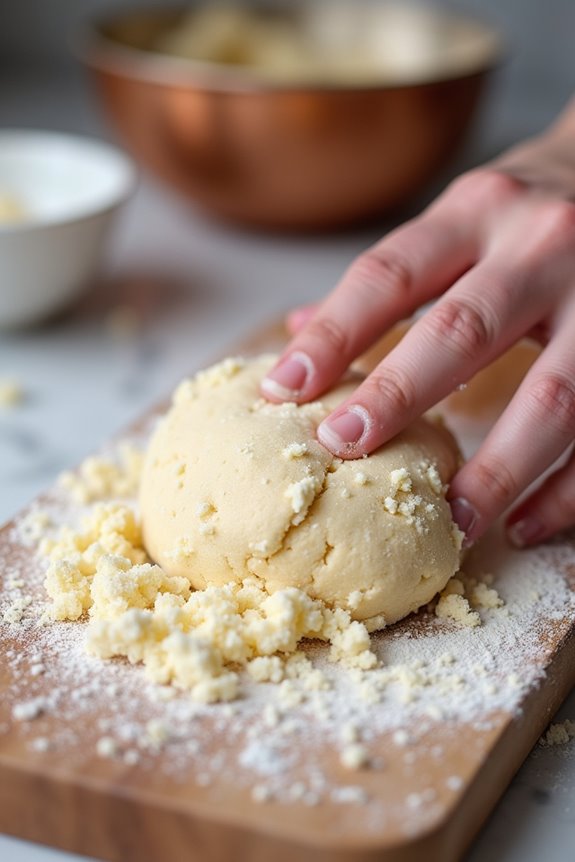
If your dough’s still crumbly after chilling, you don’t need to start over—gentle hand-kneading can bring it back to life. Use a light touch and fold the dough repeatedly, working it with your palms. This dough kneading restores moisture balance by redistributing fats and liquids evenly throughout.
Add liquid sparingly, using just a teaspoon at a time. Work it in gradually, checking after each brief session for a cohesive, scoopable texture. You’re aiming for dough that holds together without crumbling apart. The gentle pressure helps restore elasticity while keeping the crumbly texture from returning.
Stop kneading immediately once your dough becomes workable. Overworking makes it tough and dense. This hands-on approach lets you feel exactly when your dough reaches the right consistency, transforming a problem batch into something you can confidently bake.
Prevent Future Batches With Precision and Proper Measurements
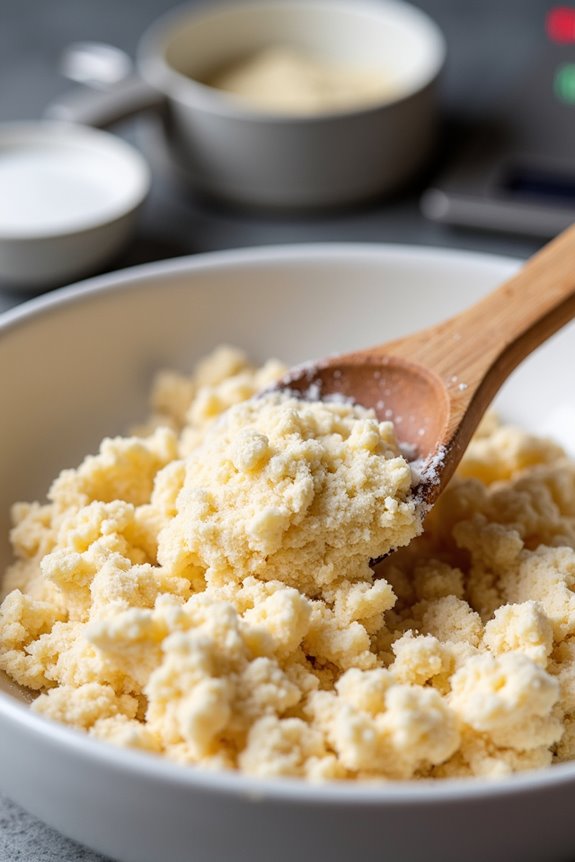
How you measure your ingredients makes all the difference between crumbly dough and perfect cookies. Precision prevents the frustration you’ve already experienced, and you’ll find success by following these essential steps:
- Use a kitchen scale or the scoop-and-level method for accurate flour measurement
- Spoon flour lightly into your cup, then level it with a straight edge
- Verify all liquid ingredients—water, milk, egg, and melted butter—match your recipe exactly
- Rest or chill dough briefly to improve moisture balance and handling
You’re not just following instructions; you’re joining bakers who’ve mastered consistency. Double-check quantities before mixing. Add liquids gradually rather than all at once, adjusting as needed. This approach ensures your dough stays cohesive, not crumbly, so every batch turns out as intended.