
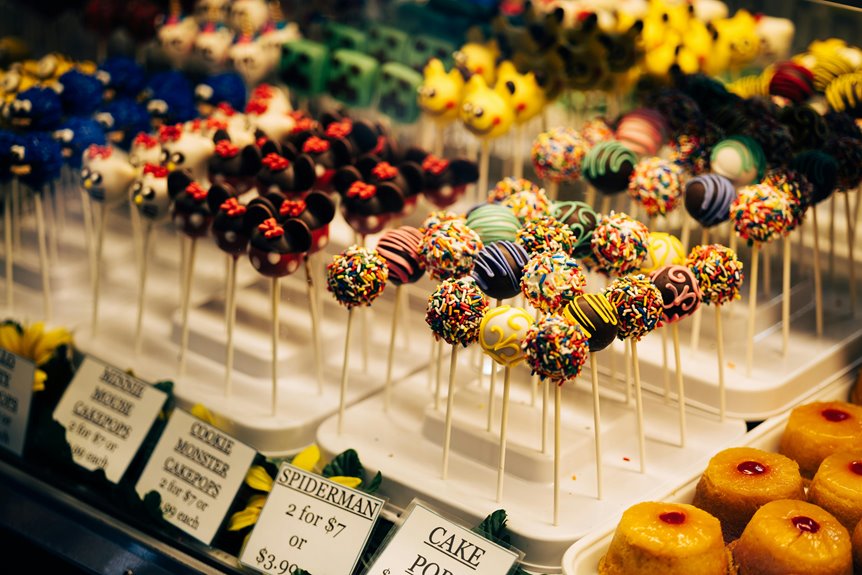
As a buyer, you’ll pay $3 to $8 per cake pop depending on design complexity. Simple rounds run $3 to $3.50, while custom shapes and hand-painted designs cost $5 to $8 each. Sellers often underprice at $2 to $3 without calculating true costs—ingredients, labor (7–10 hours per dozen), overhead, and failure rates. This miscalculation erodes profits significantly. Understanding both perspectives reveals why minimum orders ($70–$100 for two dozen) and bundling strategies protect margins while keeping pricing fair and sustainable.
Cake Pop Pricing for Buyers: What You’ll Pay?
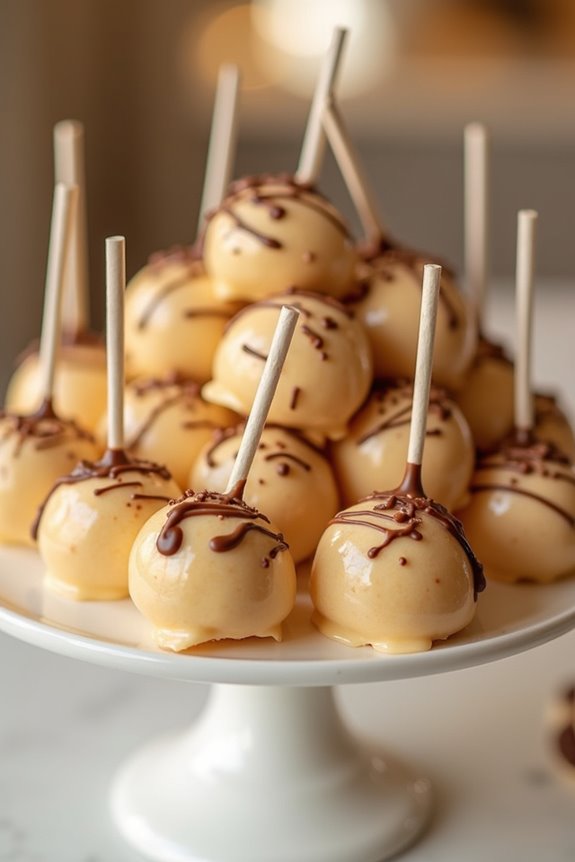
How much should you actually spend on cake pops? You’re looking at individual pieces ranging from $3 to $7, depending on design complexity. Simple, one-color rounds cost around $3 each, while intricate custom shapes push toward $5 to $8 per pop.
When you’re budgeting cake pops pricing for larger orders, per-pop cost typically drops. A dozen basic pops runs $30 to $45 total. Premium designs for weddings or events increase that range significantly.
Bulk orders work in your favor. Sellers adjust per-pop cost based on quantity and intricacy. Four dozen simple designs might total $168, whereas premium wedding designs reach $504. Understanding this pricing structure helps you plan accurately and get better value when ordering larger quantities for your events.
The True Cost Behind Every Cake Pop
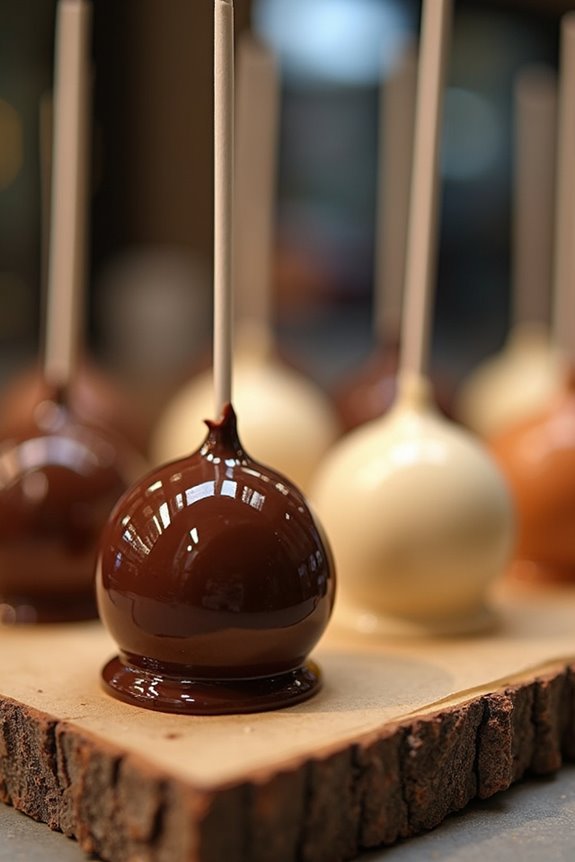
Ever wonder why that $5 cake pop isn’t pure profit? You’re covering multiple cost layers that aren’t immediately visible. Ingredients form your foundation, but you’ll also account for labor—baking, rolling, dipping, and decorating takes roughly 7–10 hours per dozen cake pops. Overhead costs, typically 15–20%, cover your kitchen space, equipment, and utilities. Here’s the reality: you’ll lose 10–15% of every batch to broken or cracked pops, cutting into your margin. A simple cake demands a 1.2× multiplier on base costs, while a custom cake design jumps to 1.6–1.8×. When you calculate total expenses for a dozen, that $5 price tag suddenly makes sense. You’re not just selling cake—you’re selling time, skill, and materials combined.
Why Sellers Underprice and Lose Money
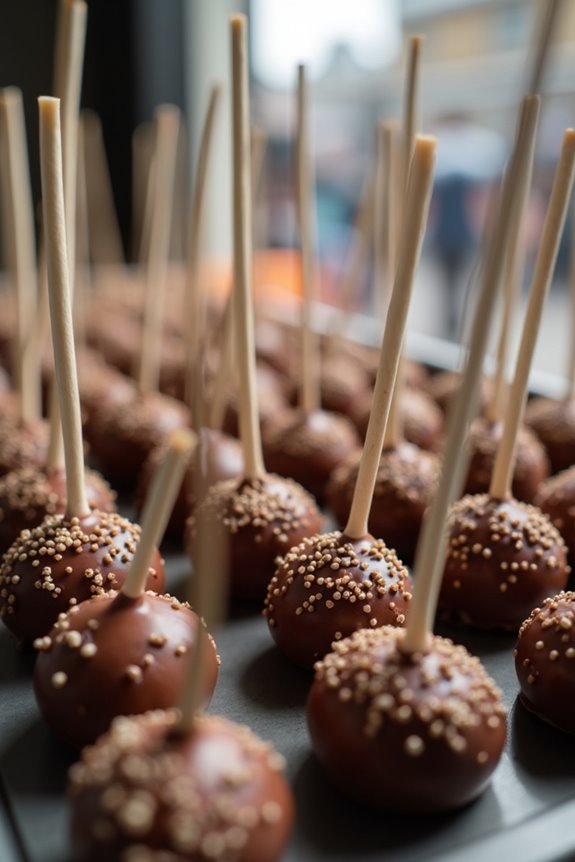
You underprice cake pops when you don’t calculate your true cost per pop—ingredients, labor, overhead, and that 10–15% failure rate—which means you might charge $2 for a pop that actually costs $4.80 to make, like Jessica did on her 48-pop wedding order, resulting in a $134 loss. Hidden costs like overhead (typically 15–20% of materials and labor) and time-intensive steps you underestimate—baking, cooling, crumbling, rolling, dipping, decorating, and drying—quietly eat into profits when you rely on competitor pricing or rough benchmarks instead of your own numbers. The fix is straightforward: use a cost-based pricing formula that includes your base costs, a complexity multiplier (1.2 for simple designs up to 1.6–1.8 for intricate ones), your desired profit margin, and an adjustment for waste, so you’re charging $5–$8+ for custom pops rather than racing competitors to the bottom.
The Jessica Case Study
Jessica’s wedding cake pop order seemed like a win—48 custom pops at $2 each, totaling $96 in revenue. However, that math ignored reality. Her actual costs ran $4.80 per pop: $0.80 for ingredients, $3.50 for labor, overhead, and the 10–15% failure rate she couldn’t avoid. This meant she lost $2.80 on every single pop.
The final tally? A $134 loss on one order.
Jessica’s mistake wasn’t unusual. You charge what feels reasonable without accounting for the hidden work: baking time, crumbling, rolling, and failed batches that never reach your customer. These costs don’t disappear just because you ignore them. Accurate pricing protects your business. Simple pops need $2.50–$3.50, standard designs $3.50–$5, and premium work $5–$8 or more. Know your numbers. Confidence follows when you charge what your work’s actually worth.
Hidden Costs Destroy Profits
When you price cake pops without accounting for what they actually cost to make, you’re not just leaving money on the table—you’re actively losing it. Hidden costs silently drain your profits. You’ve got ingredients, labor, and overhead expenses that aren’t obvious at first glance. Then there’s the failure rate. You’ll crack some pops, damage others during decoration, and occasionally create designs that don’t meet your standards. That’s typically 10–15% of your production that won’t sell. Overhead costs—your workspace, tools, and utilities—add another 15–20% on top of materials and labor. When you ignore these layers, you underprice. Jessica charged $2 per pop while her true cost was $4.80, losing $134 on just one 48-pop order. That’s the consequence of invisible expenses.
Labor Underestimation And Overhead
How much time does it actually take to make 48 cake pops from start to finish? You’re likely underestimating it. A typical order demands 7–10 hours of work, yet many sellers charge prices that reflect only 2–3 hours of effort. This gap destroys your profit margin.
You forget to factor overhead costs—the electricity, kitchen supplies, packaging, and delivery expenses that accumulate quietly. Industry standards recommend adding 15–20% overhead to your material and labor costs. Then multiply by a complexity factor (1.2 for simple designs, 1.6–1.8 for intricate ones).
Here’s the real problem: you charge $4–5 per pop, but your actual costs—ingredients, labor, overhead—reach $4.80 per pop. That leaves you with losses, not profits. Account for waste too. A realistic 10–15% failure rate means some pops never reach customers, yet you’ve already paid for them.
Step-by-Step: Calculate Your Cake Pop Cost
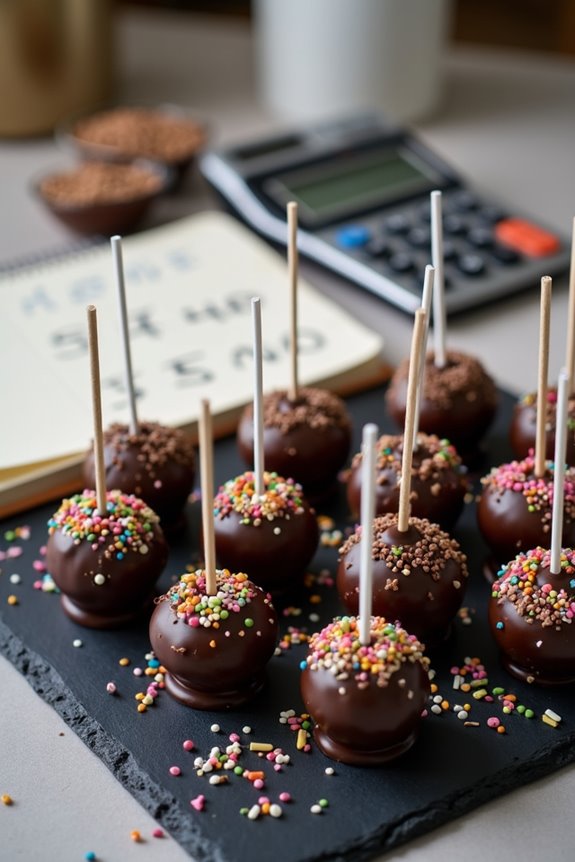
To find your actual per-pop cost, you’ll start by adding up three components: your ingredients, the labor hours you spend making them, and overhead expenses like your kitchen utilities and equipment (typically 15–20% of your base costs). Once you’ve got that foundation number, you’ll apply a complexity multiplier—simple pops get a 1.2x boost, while intricate designs with multiple colors or details jump to 1.6–1.8x—because more complicated work requires more time and skill. This multiplier accounts for the reality that a basic vanilla pop takes less effort than a hand-painted masterpiece, so your pricing should reflect that difference.
Base Cost Calculation Method
Why do cake pops from different makers cost so differently? It comes down to how you calculate your base costs. Start by adding three essential components: ingredients, labor, and overhead. Your ingredients include cake, frosting, chocolate coating, and decorative elements. Labor covers the time you spend mixing, baking, coating, and decorating each pop. Then you’ll add overhead—set this at 15–20% of your combined ingredients and labor costs. This overhead accounts for utilities, equipment wear, and miscellaneous expenses you’ll encounter. Once you’ve totaled these three elements, you’ve got your base cost. This foundation lets you compare fairly with other makers and ensures you’re not leaving money on the table before you even consider complexity adjustments or profit margins.
Complexity Multiplier Application
Once you’ve calculated your base cost—ingredients, labor, and overhead combined—you’re ready to adjust for design difficulty. This adjustment uses a complexity multiplier, which reflects how much extra time and skill your design demands.
Simple round pops use a 1.2 multiplier. You multiply your base cost by 1.2 to account for minimal design work. Intricate designs—custom shapes, detailed decorations, or multi-colored patterns—require a 1.6 to 1.8 multiplier instead.
Here’s why this matters: complexity directly increases your labor hours and material waste. A detailed pop takes longer to decorate and has higher failure rates. Multiplying your base cost captures these hidden expenses.
Apply your chosen multiplier to your base cost. This gives you your complexity-adjusted cost, which becomes your foundation for adding profit margin next.
Pricing Examples: From Basic to Premium Designs
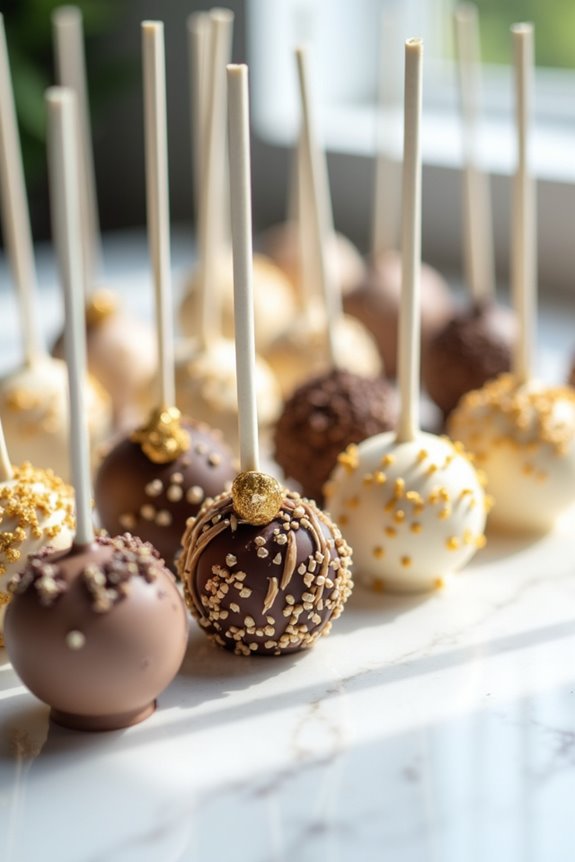
Understanding how complexity drives pricing becomes clearer when you look at real numbers across the tier system. Simple designs, like single-color pops with basic sprinkles, run $2.50–$3.50 each. You’re covering your ingredient costs and basic labor here. Standard designs—think two-tone coatings or simple fondant details—land at $3.50–$5 per pop. You’re adding 10–15 extra minutes per pop for decoration. Premium pops with intricate hand-painted designs, custom toppers, or airbrushed effects command $5–$8 or higher. Your time investment doubles or triples. A real-world example: 48 pops costing $105 to produce but selling for $168 shows how complexity justifies markup. When you factor in skill, materials, and failure rates, these tiers make financial sense for your business.
How Design Complexity Changes Your Price?
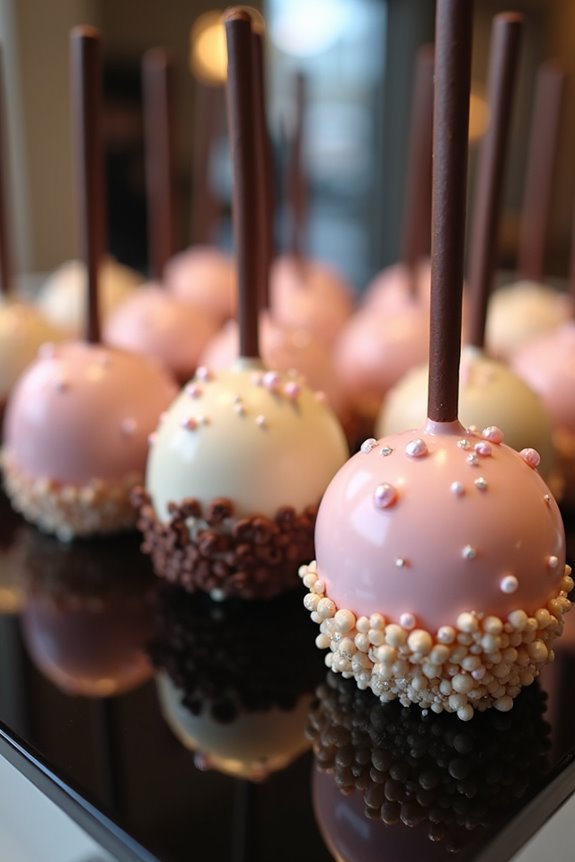
How much extra time does a hand-painted detail actually cost you? Design complexity directly multiplies your base price through increased labor and skill demands.
- Simple round pops cost around $3.50 because they require minimal shaping and decoration work.
- Custom shapes and hand-painted designs jump to $5–$6 or higher due to additional molding time and artistic skill needed.
- Premium intricate designs reach $5–$8+ per pop, reflecting substantial time investment and specialized techniques.
- Complexity multipliers of 1.2–1.8 adjust your base costs upward, accounting for difficulty increases and higher failure rates.
More elaborate pops demand greater precision. You’ll spend additional time perfecting details, which increases material waste. A 10–15% failure rate on complex designs means you’re pricing in those losses. Understanding this relationship helps you charge fairly for your expertise.
Cake Pop Minimum Orders: Protecting Your Profit
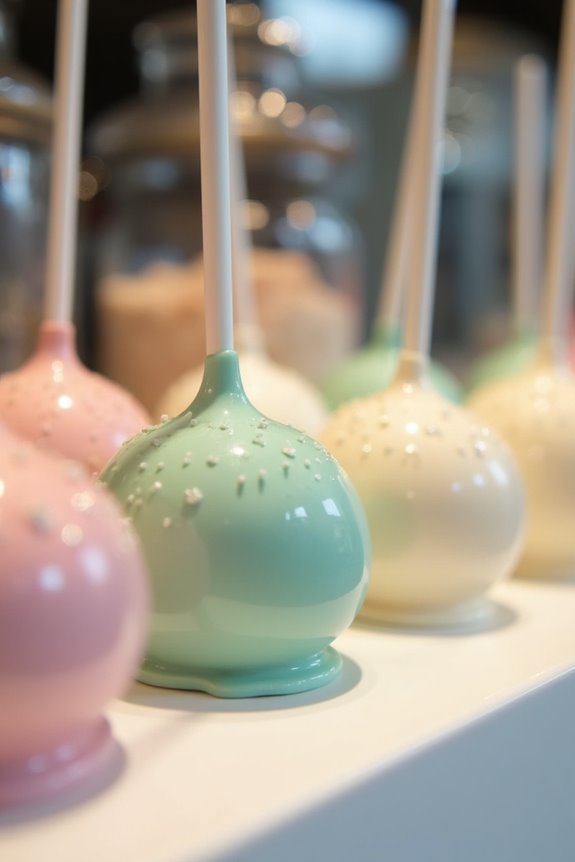
Why do so many cake pop makers struggle with profitability on small orders? The answer lies in fixed costs. You’ve got ingredients, labor, and overhead expenses that don’t disappear when someone orders just a handful of pops.
That’s why you’ll want to set a minimum of 2 dozen per order. This volume protects your bottom line and keeps production efficient. A typical minimum order runs $70–$100, depending on flavor and complexity. That price range covers your base costs and reduces per-unit waste.
For smaller custom projects, bundle multiple dozen or add complementary items. This strategy raises the order value without sacrificing quality. Setting clear minimums isn’t restrictive—it’s smart business. You’re aligning client expectations with your actual production capacity and maintaining consistent pricing discipline across every order.
Boost Profit Margins: Bundling and Add-On Strategies
You’ve already set your minimum order and locked in base pricing—now it’s time to push those profit margins higher through strategic bundling and add-ons.
Bundling works because customers see value in variety. A 24-count assortment priced around $125 feels like a better deal than buying individual pops, even though your margin improves. Box options starting near $48 per dozen establish tiered pricing that encourages upselling.
- Offer “You Choose Flavors” mixed boxes to justify premium pricing
- Add custom toppers and sprinkles at $3–$7 per pop based on complexity
- Create tiered bundles pairing standard dozens ($30–$45) with hand-decorated premium options
- Factor in 10–15% failure rates when calculating bundle costs to protect margins
Customization add-ons boost perceived value without requiring significant cost increases, directly improving your bottom line across all order volumes.