

Financiers are delicate French almond cakes baked in small rectangular molds with a melt-in-your-mouth texture and rich nutty flavor. You create that signature taste by browning butter until it develops deep, toasty notes, then folding it into a simple batter of almond flour, powdered sugar, and egg whites. Bake at 350°F for 12–15 minutes until the edges turn golden while centers stay pale. The magic happens when you understand why proper technique—sifting ingredients, avoiding overmixing, and chilling batter—transforms basic components into something extraordinary.
What Is a Financier?
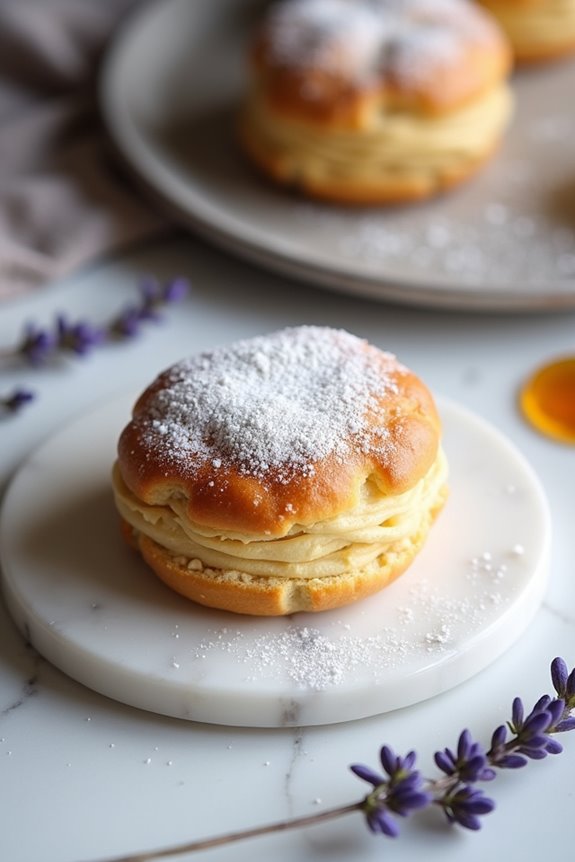
Ever wonder why some French desserts look like tiny gold bars? You’re looking at financiers, elegant French pastries that deliver sophisticated flavor in a compact package. These small rectangular molds produce cakes renowned for their melt-in-your-mouth texture and rich nutty flavor from browned butter.
Financiers skip traditional leavening agents, relying instead on egg whites for their light, tender crumb. You’ll combine almond flour with powdered sugar, a touch of all-purpose flour, and salt. The browned butter creates that distinctive depth you can’t replicate with regular butter.
What makes financiers special? They’re naturally dairy-free options when you use quality ingredients. Consider using pasteurized egg whites if you prefer extra safety. The result: delicate French pastry that showcases how simple ingredients, properly balanced, create something truly memorable.
Brown Butter: Why It’s Essential for Financiers
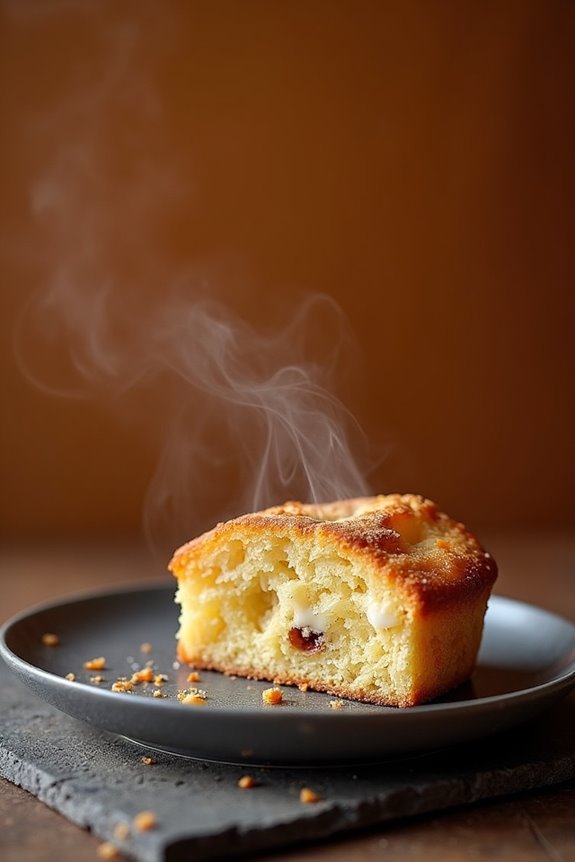
What transforms ordinary butter into the secret ingredient that makes financiers truly special? Brown butter, or beurre noisette, creates the deep, nutty aroma that distinguishes these delicate cakes. You’ll brown the butter on medium heat for 5–7 minutes, watching for small brown specks to form. This browning process develops rich flavor notes that plain melted butter simply can’t achieve. Once you see the nutty fragrance emerge, remove it from heat immediately—another minute risks bitterness. Let your brown butter cool slightly before folding it into the batter. This prevents cooking the almond flour mixture while preserving those essential nutty notes. Here’s a pro tip: use the browned butter bits to grease your molds, adding extra toasty flavor to your finished financiers. This flavor base transforms your cakes from ordinary to exceptional.
Ingredients and Equipment You’ll Need
Before you start mixing, you’ll want to gather everything in one place—this setup prevents scrambling mid-bake. For your batter, you’ll need almond flour, powdered sugar, egg whites, and a small amount of all-purpose flour. The browned butter is your star ingredient, delivering that signature nutty depth. You can enhance flavor by adding vanilla or citrus zest if desired.
Equipment matters equally. A mini muffin pan accommodates traditional financier shapes perfectly. Line each cup with parchment liners or grease them well to prevent sticking during baking. You’ll also need basic tools: mixing bowls, a whisk, and a small saucepan for browning butter.
Your baking temperature should reach 350°F (175–180°C). Having everything prepped and measured ensures smooth, confident baking.
How to Bake Perfect Financiers at Home
Now you’re ready to transform your prepped ingredients into golden financiers. Preheat your oven to 350°F and grease your mini loaf pan or molds with care. Pour your batter into each cup, filling them about 80% full—this prevents overflow and guarantees even baking. Bake for 12–15 minutes until the edges turn golden brown while centers stay pale.
The browned butter is your top-secret asset for authentic flavor, so don’t skip that step. Proper texture depends on sifting your almond meal and flour together, which eliminates lumps and creates smoothness. Avoid overmixing once you’ve combined ingredients—this keeps your financiers tender rather than dense.
Consider adding citrus zest or other variations once you’ve mastered the basic technique. Your batter should look glossy and flow easily into the molds.
Why Your Financiers Aren’t Moist (and How to Fix It)
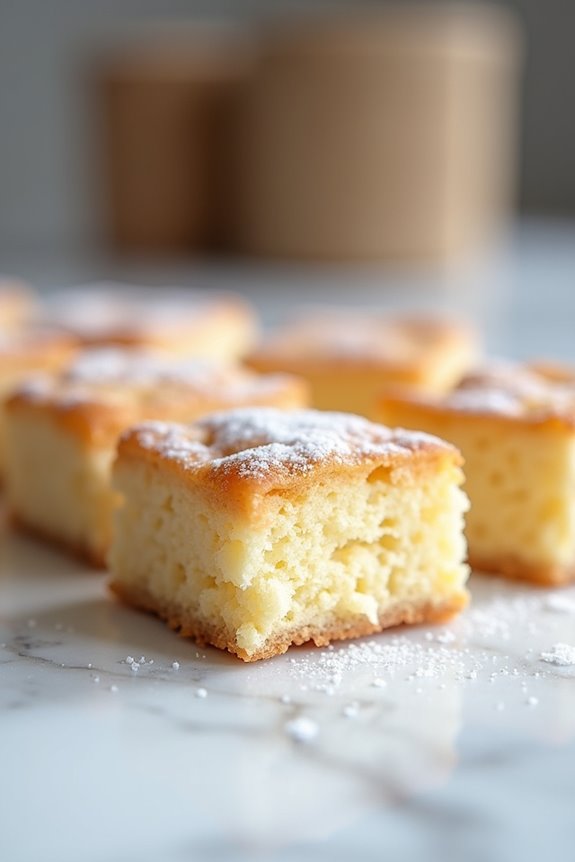
Disappointment often strikes when you bite into a financier and find it dry or crumbly instead of tender and moist. Your batter likely needs adjustments. The key culprits are insufficient almond flour, missing browned butter, or overmixing your egg whites. Here’s what works:
| Problem | Cause | Solution |
|---|---|---|
| Dry texture | Too much gluten development | Use almond flour; avoid overmixing |
| Loss of moisture | Improper cooling | Cool properly after baking |
| Dense crumb | Whisked egg whites | Loosen with a fork instead |
Ensure your batter chills for 30 minutes to develop flavors and improve moisture distribution. When you bake until edges turn golden while centers stay pale, you’re locking in tenderness. Silicone molds or parchment-lined cups prevent sticking, which preserves your crumb’s delicate structure. These steps guarantee moisture retention and that coveted tender bite.
Baking Pans for Financiers: Molds, Muffin Tins, and Alternatives

Once you’ve perfected your batter’s moisture content, the pan you choose becomes your next consideration—it’ll directly affect how your financiers bake and whether they release cleanly. You don’t need a dedicated financier pan; silicone molds work excellently with minimal greasing, while metal rectangular molds and muffin tins require buttered cups dusted with flour. Parchment liners offer the most reliable release protection across all baking molds, preventing sticking despite batter texture. Fill each cup about 80% full to allow proper rise and maintain crisp edges during bake time. For flexibility, you can adapt between traditional rectangular molds yielding 12 pieces and silicone round molds producing 15 mini rounds, adjusting your greasing method accordingly to match your preferred portion size.
Make-Ahead and Storage Tips for Financiers
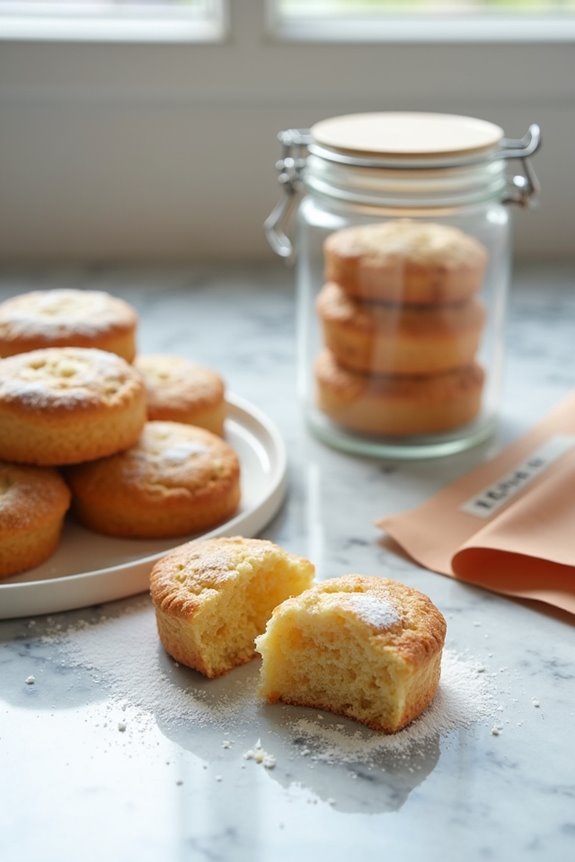
The beauty of financier batter lies in its flexibility—you can prepare it well ahead of baking day, giving you control over when you actually bake. Your almond flour and butter mixture can chill in an airtight container for up to one week, letting you bake fresh batches whenever you want. For the best texture, bake within 48 hours of mixing; the batter becomes uniformly tender after 24 hours of refrigeration.
Once baked, financiers keep for 1–2 days at room temperature, or refrigerate them in an airtight container for 5–7 days. You can also freeze cooled financiers in heavy-duty freezer bags for up to one month, then reheat at 325°F for 6–8 minutes. This flexibility lets you enjoy fresh financier treats on your schedule.
5 Financier Flavor Variations: Hazelnut, Fruit, Chocolate, and Citrus

While the classic almond financier is delicious on its own, you can easily customize these little cakes to suit your taste preferences without compromising their signature tender crumb. You’ll maintain that melt-in-your-mouth texture by keeping browning butter and almond flour as your base ingredients.
Try a hazelnut variation by swapping hazelnut powder for traditional almond flour. For fruit additions, press raspberries or strawberries into each mold before baking—the juicy contrast brightens every bite. Add citrus zest by incorporating finely grated lemon or orange into your batter for fresh, aromatic notes.
These financier variations extend the classic recipe while preserving its delicate character. When you bake at home with these simple modifications, you’re creating personalized financiers that taste restaurant-quality. Each variation keeps the recipe straightforward and rewarding.
6 Common Financier Mistakes (and How to Prevent Them)
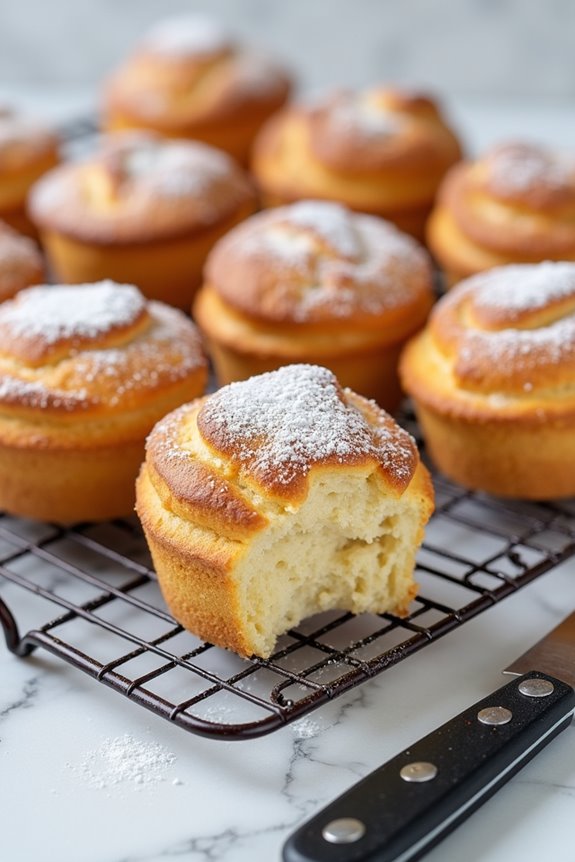
Even small missteps can transform your delicate financiers into dense, dry, or unevenly baked cakes that miss the mark entirely. Overmixing your financier batter incorporates excess air, creating a cake-like crumb instead of that signature light texture. Avoid this by folding gently rather than stirring vigorously. Similarly, using whipped egg whites instead of loosened ones adds too much air to your batter. Underbaking seems risky, but it’s actually your goal—aim for a pale interior that stays tender. Sifting dry ingredients like almond flour and powdered sugar prevents lumps and graininess. Don’t skip brown butter; its nutty depth defines financiers, though you’ll want it slightly cooled before folding. Finally, choose proper pans and fill them only 80% full for even baking and uniform shapes.
Freezing and Thawing Financiers: Storage Guidelines and Best Practices
You can freeze baked financiers in heavy-duty freezer bags for up to one month, which extends their shelf life well beyond the prime 48-hour window for fresh storage. When you’re ready to enjoy them, you’ll thaw your financiers either overnight in the fridge or at room temperature in about 30 minutes, though this process may soften their texture slightly. To restore that freshly baked quality, reheating your thawed financiers at 325°F for 6–8 minutes before serving brings back the texture and flavor you’re after.
Freezing Storage Methods
Because financiers are delicate almond cakes that benefit from proper storage techniques, freezing is an excellent option for extending their shelf life beyond a few days. You’ll want to freeze baked financiers whole or in portions using heavy-duty freezer bags, which protects them from freezer burn and odor absorption.
| Storage Method | Duration | Best For |
|---|---|---|
| Whole financiers | Up to 1 month | Batch baking |
| Portioned financiers | Up to 1 month | Individual servings |
| Airtight container | Up to 1 week | Refrigerated storage |
| Batter storage | Up to 1 week | Make-ahead prep |
| Peak freshness | Within 48 hours | Optimal taste |
Thawing takes about 30 minutes at room temperature or overnight in your refrigerator. Reheating in a 325°F oven for 6–8 minutes restores texture and crispness that freezing slightly softens.
Thawing and Reheating Techniques
Once you’ve pulled frozen financiers from storage, proper thawing sets you up for the best results. You have two options: move them to your fridge overnight, or let them sit at room temperature for about 30 minutes. The refrigerator method works best if you’re planning ahead, while room temperature thawing suits your schedule when you want them sooner.
After thawing, you can reheat your financiers to restore their original texture and freshness. Pop them into a 325°F oven for 6–8 minutes. This gentle reheating revives the delicate crumb without drying them out. Once reheated, enjoy them immediately for peak quality. Keep any leftovers in an airtight container to maintain flavor between servings.