
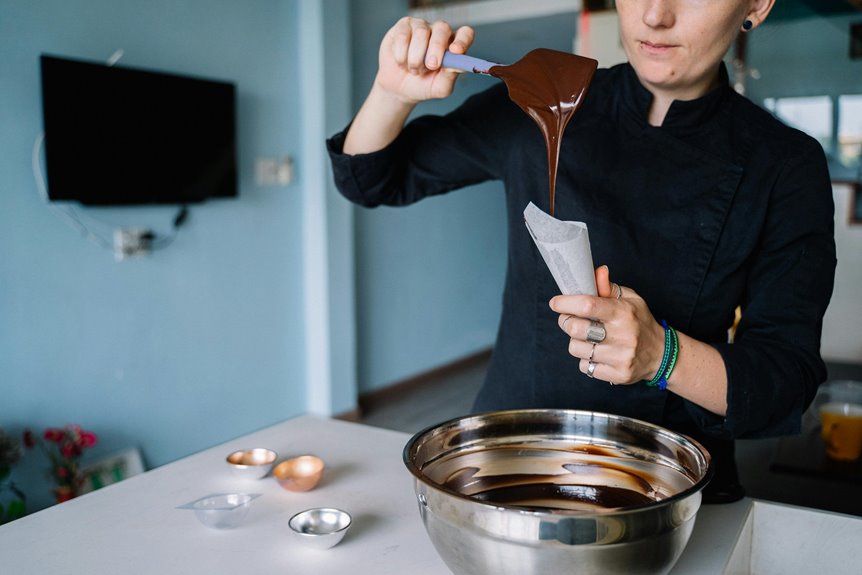
Macarons, chocolate soufflés, and opera cakes demand precision that separates casual bakers from skilled ones. Macarons require perfectly whipped meringue and exact folding timing—undermix creates graininess, overmix deflates the batter. Chocolate soufflés need whipped egg whites at their sweet spot; under-whipped means no rise, over-whipped causes collapse within a narrow bake window. Opera cakes challenge you with six delicate layers, exact portioning, and moisture control to prevent texture blur. Each dessert punishes small mistakes with large failures. Understanding what makes them difficult reveals how to master them.
Macarons: Why Getting the Meringue and Fold Just Right Is So Critical
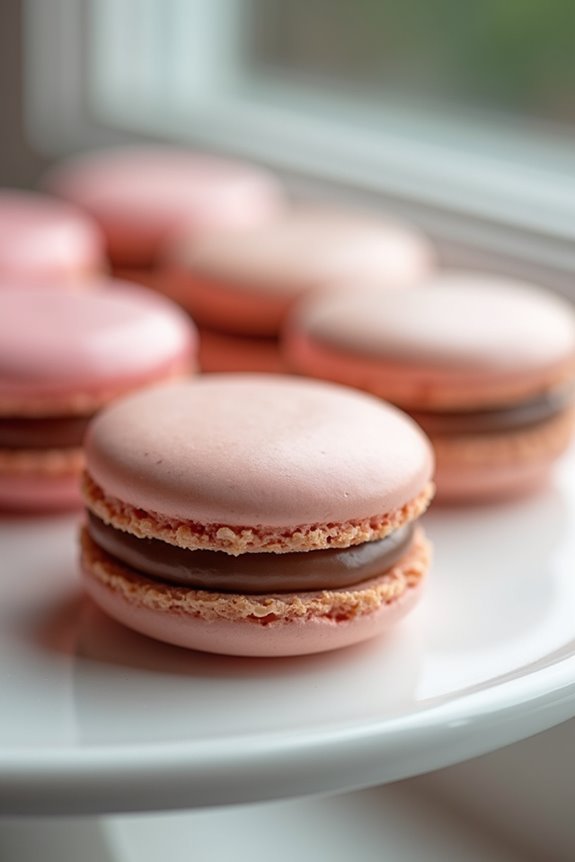
Why do macarons intimidate so many bakers? The answer lies in one critical challenge: mastering the meringue and fold. You’re working with a delicate meringue that must hold air perfectly. When you fold in almond flour, you’re walking a tightrope. Undermix, and you’ll get grainy shells. Overmix, and you’ll deflate all that precious air, losing the lift you need. The batter should feel lava-like—thick and smooth—but achieving this consistency requires precise timing. Poor folding also sabotages aging and oven spring, preventing proper spreading and rise in the oven. Shell surfaces become cracked or domed unevenly. These aren’t minor flaws; they’re the difference between beautiful macarons and failed batches. That’s why getting this step exactly right matters so much.
Chocolate Soufflé: The Narrow Window Between Perfect and Ruined
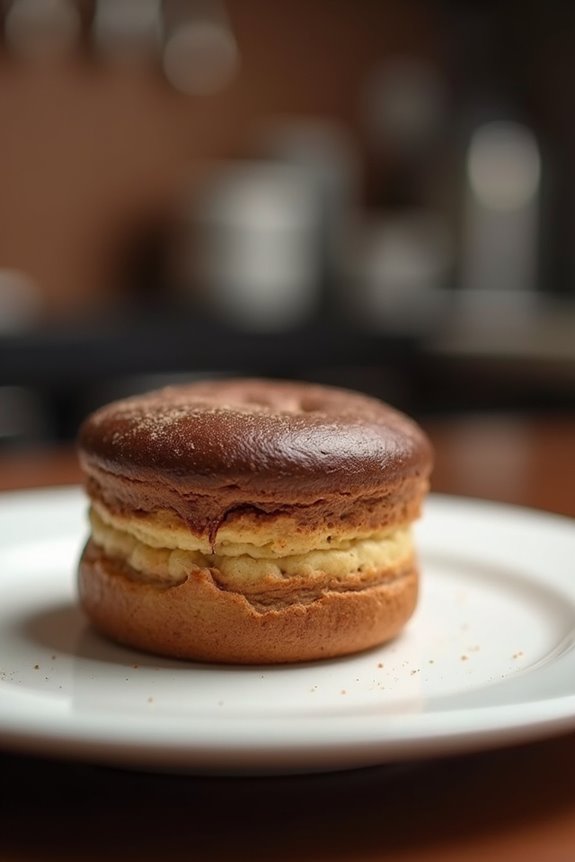
A chocolate soufflé looks simple on paper—butter, eggs, chocolate, and sugar—but the execution demands absolute precision at every single step. You’re managing three critical variables simultaneously: egg whites, meringue stability, and bake timing.
Whipping egg whites requires exactness. Under-whip them, and you won’t capture enough air for proper rise. Over-whip them, and the meringue structure stalls, collapsing before it sets. You need that sweet spot where peaks form but remain glossy.
Your oven window is brutally narrow. A few extra minutes transforms your chocolate soufflé from perfectly risen to collapsed or dried out. Temperature control determines everything—improper heat causes uneven expansion, soggy centers, and crusts that won’t set properly.
These constraints mean you’re constantly adjusting, monitoring, and trusting your technique rather than simple timing.
Opera Cake: Managing Six Layers Without a Single Mistake
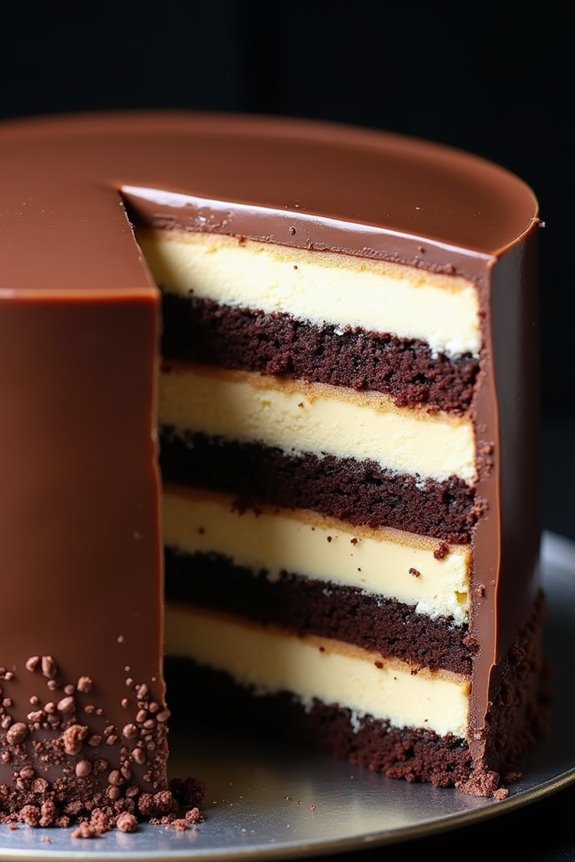
If the soufflé tests your nerve with timing, the opera cake demands something harder—flawless assembly across six distinct layers that must work together without a single mistake. You’ll alternate almond sponge, espresso syrup, buttercream, and ganache, each requiring exact portioning and uniform thickness. Moisture control separates success from failure; too much liquid and layers blur together, destroying the distinct textures you’ve worked to build. Your buttercream must hit precise sugar ratios for the right consistency, while your ganache needs to set glossy without cracking. After assembly, you’ll freeze the entire cake before applying the mirror glaze. This step demands impeccable temperature control—one misstep causes sweating or cracks that ruin the elegant finish. You’re not just baking; you’re orchestrating precision across multiple components simultaneously.