

Balance fat and moisture in your dough so it stays cohesive without spreading excessively. Chill for 30 minutes to firm the fat and stabilize structure. Bake at 350–375°F until edges turn golden, which signals a soft center underneath. Decide whether you’ll add jam before or after the final bake—pre-bake creates a blended center, while post-bake keeps layers distinct. Finally, let cookies rest on a wire rack so jam sets properly and interior moisture redistributes evenly for maximum softness. Each step compounds the others to achieve that perfect thick, sticky result, and understanding how they work together reveals why precision matters.
Balance Fat, Sugar, and Moisture in Thumbprint Cookie Dough

The foundation of a sticky, thick jam cookie starts with getting your dough’s fat-to-moisture ratio just right. Butter provides the richness and tenderness you need, while sugar does double duty—it helps control spread and promotes even browning without drying out your thick center. You’ll want adequate amounts of both, working together to create that perfect balance.
Getting the proportions correct ensures your thumbprint cookie dough holds together properly before baking. Too much moisture makes spreading uncontrollable; too little creates a dry, crumbly texture. This balance also helps your indentation stay defined so jam fills it evenly.
After mixing, chill dough for thirty minutes to an hour. This resting period firms everything up, preventing excessive spreading during baking and keeping those indentations sturdy. Bake at 350–375°F for optimal results with that coveted soft center.
Chill Your Dough 30 Minutes to Prevent Spreading
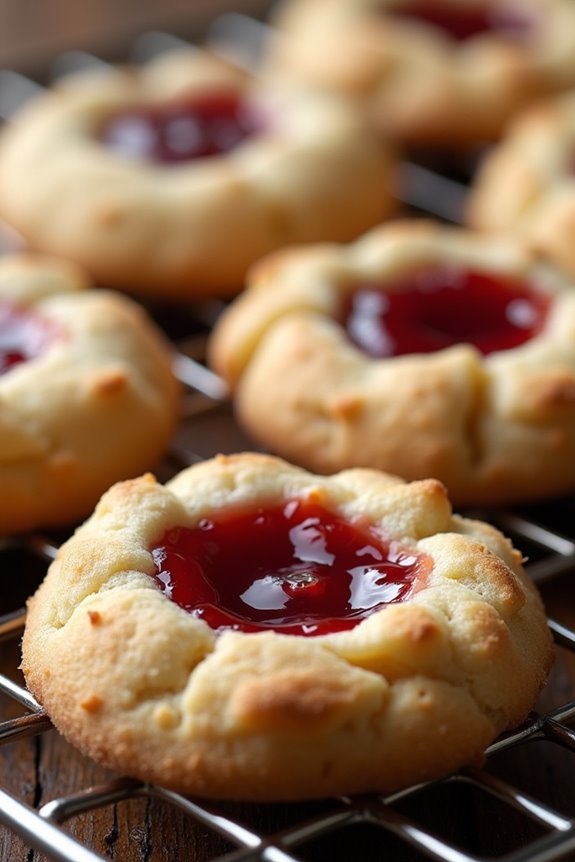
Once you’ve balanced your dough’s fat and moisture, you’ll need to chill it before shaping—and this step is where you’ll lock in that thick, soft texture you’re after. Pop your sugar cookie dough into the refrigerator for a 30-minute chill. During this time, the fat firms up and stabilizes, which directly prevents excessive cookie spreading when your thumbprint cookies hit the hot oven. This controlled chilling creates thick centers and preserves distinct jam filling indentations that define authentic thumbprint cookies. The cold dough also becomes easier to handle and shape into uniform balls, ensuring even jam-filled centers across your batch. Without this dough chilling period, your cookies flatten too much on parchment paper, losing that signature soft texture and defined jam well you’re working toward.
Bake Low and Slow Until Edges Turn Golden

Why rush your cookies into a scorching oven when patience delivers superior results? Bake low and slow to encourage even expansion and prevent spreading. This approach lets your thumbprint cookies develop thick, soft centers while edges turn golden gradually.
Here’s your baking strategy:
- Set your oven temperature accurately—misread heat causes uneven browning and thinner edges
- Monitor cookies until golden edges appear, signaling the soft center remains underbaked
- Use a short initial bake, then rest your dough before filling with jam
- Complete baking after you indent press and add jam filling to preserve stickiness
Once edges reach that perfect golden hue, remove your shortbread from the oven. Place cooling sheets between batches to avoid unintended spreading. This dough rest period maintains your desired texture, ensuring each batch of jam cookies stays thick and sticky throughout.
Pre-Bake or Post-Bake Jam: Which Method Works Best?
Now that you’ve mastered the low-and-slow baking technique, you’ll face another decision: when should you add your jam filling?
The timing dramatically affects your final cookie texture and jam-to-cookie integration. Pre-bake jam creates a softer, blended center as the filling melts into your shortbread base during baking. Post-bake jam yields firmer, more defined layers with distinct jam presence.
| Method | Best For |
|---|---|
| Pre-bake jam | Soft, integrated texture |
| Post-bake jam | Defined jam layers |
| Gentle heat application | Loosening jam without scorching |
| Slight cooling period | Preventing runny filling |
| Finishing bake after filling | Setting jam properly |
Choose pre-bake when you want seamless filling consistency throughout. Select post-bake if you prefer visible jam definition. Either way, your jam indentation must be precise—it controls how much filling you hold and shapes your final appearance. Cool cookies slightly before post-bake filling to prevent leakage.
Let Cookies Rest Before Serving for Optimal Softness
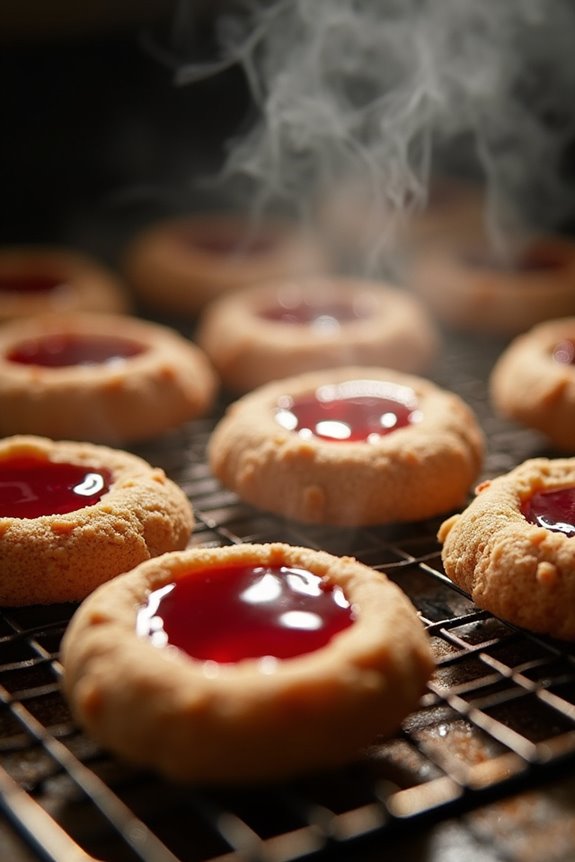
After your final bake, don’t rush to eat your jam cookies straight from the oven. Instead, let your thumbprint cookies rest before serving to achieve that perfect soft texture you’re after. A brief cooling period on a wire rack cooling stabilizes the cookie surface while keeping the interior tender. During resting time, your jam-filled cookies benefit significantly:
Let your thumbprint cookies rest on a wire rack before serving to achieve that perfect soft texture and juicier jam center.
- Jam setting occurs fully without oozing from the indentation technique you’ve created
- Cookie softness maximizes as the structure firms slightly without hardening
- Baking cooldown allows carryover cooking to finish naturally
- Interior moisture redistributes evenly throughout
This resting phase at room temperature prevents your cookies from hardening too quickly, preserving their pliancy. When you serve after this interval, you’ll notice a juicier jam center and more cohesive mouthfeel compared to immediate consumption. That brief wait transforms your jam-filled cookies into something genuinely special.