

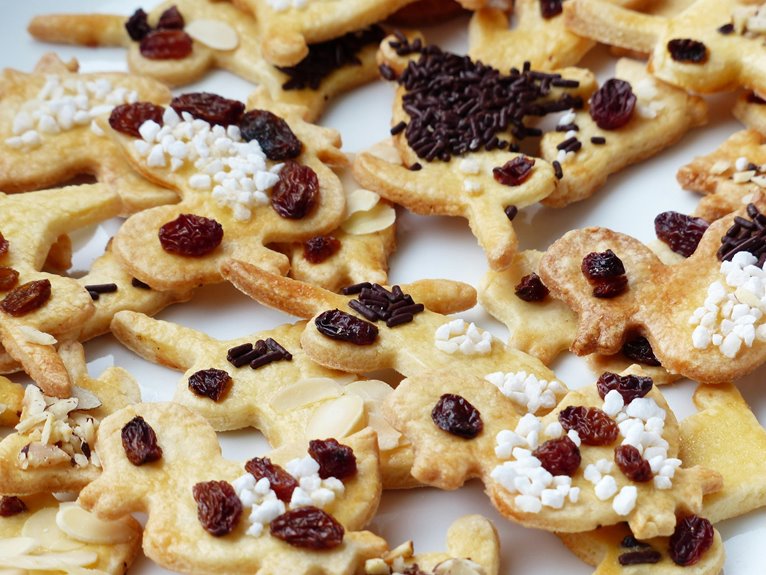
No, you shouldn’t give your cat sugar cookies—they’re genuinely unsafe. Cats lack the enzymes to digest sugar properly, so it passes through their system largely undigested, causing digestive upset. Sugar cookies also contain hidden dangers: chocolate damages organs, xylitol triggers liver failure, and raisins harm kidneys. Even “safe” cookies spike blood sugar and contribute to obesity and diabetes over time. Your cat gets zero nutrition from them. Stick with cat-specific treats instead, and you’ll discover why that matters for their long-term health.
Are Sugar Cookies Safe for Cats?

Why would you want to give your cat a sugar cookie? The short answer is you shouldn’t. Sugar cookies aren’t safe for cats, and they pose real risks to your pet’s health. Your cat’s digestion can’t handle the high sugar content found in these treats. Sugar contributes to obesity, diabetes, and dental problems over time. Many sugar cookies contain dairy and fats that trigger lactose intolerance, causing stomach upset and digestive distress.
Beyond sugar itself, some cookies contain dangerous toxins like chocolate, xylitol, or raisins that threaten your cat immediately. Even one cookie can start problems. If your cat eats a sugar cookie, watch for vomiting, diarrhea, or appetite changes within 24–48 hours. Contact your veterinarian monitoring if symptoms appear. Your vet can assess toxicity and recommend treatment if needed.
Why Can’t Cats Digest Sugar Like Humans Do?
The key difference comes down to what cats are built to eat. Your cat’s digestive system evolved for meat, not carbohydrates. Cats lack the enzymes necessary to break down sugar effectively, so their bodies can’t process it like yours does. When cats consume sugar, their digestion struggles to convert it into usable metabolites for energy.
Here’s what happens: sugar passes through their system largely undigested, causing gastrointestinal upset. You’ll notice vomiting, diarrhea, and abdominal discomfort as their bodies reject what they can’t metabolize. Over time, repeated sugar intake increases toxicity risk through obesity and diabetes development.
Additionally, cats have no taste receptors for sweetness, so they don’t crave sugar for satisfaction like humans do. This means sugar offers zero biological benefit while creating real digestive problems.
Toxic Cookie Ingredients: Chocolate, Xylitol, Raisins, and More
Beyond sugar itself, many cookie ingredients pose serious dangers to cats—and some can be life-threatening. You need to know which components create real hazards for your feline friend.
Several common cookie ingredients threaten your cat’s health:
- Chocolate contains theobromine and caffeine, triggering vomiting, diarrhea, tremors, and seizures, with dark chocolate being especially dangerous
- Xylitol causes rapid insulin release, leading to dangerously low blood sugar and potential liver failure
- Raisins damage kidney function severely, even in tiny amounts, making them acutely toxic
- Dairy fats and butter cause lactose intolerance and digestive upset in most adult cats
These ingredients work differently but share one outcome: they harm your cat. Chocolate’s theobromine accumulates in your cat’s system. Xylitol triggers immediate metabolic collapse. Raisins attack kidneys directly. Dairy fats simply overwhelm your cat’s digestive capacity.
You’re protecting your cat by avoiding all cookies entirely.
How Do Sugar Cookies Disrupt Your Cat’s Nutrition?
Even a few sugar cookies create nutritional chaos in your cat’s body. Your cat’s digestive system evolved to process meat, not sugar and carbohydrates. When you feed sugar cookies, you’re introducing empty calories that displace nutrient-dense foods your cat actually needs.
| What Happens | Why It Matters | Long-Term Result |
|---|---|---|
| Sugar replaces protein intake | Cats require meat-based amino acids | Weakened muscles and immunity |
| High carbs spike blood sugar | Feline bodies can’t regulate glucose well | Increased diabetes risk |
| Poor digestion from sugar | Gut bacteria struggle with processed foods | Digestive upset and discomfort |
Your cat’s nutrition suffers because sugar cookies offer zero taurine, zero essential vitamins, and zero minerals. This nutritional imbalance also contributes to obesity when fed regularly. Your cat needs whole prey nutrition—not empty calories that compromise their health and well-being.
Immediate Risks: What Happens When Cats Eat Cookies
While nutritional imbalance develops over time, the immediate dangers of sugar cookies can hit your cat much faster. When your cat eats sugar cookies, several urgent problems can emerge within hours or days.
Here’s what you need to watch for:
- Gastrointestinal distress: Vomiting and diarrhea typically appear within 24–48 hours as your cat’s digestive system struggles with the sugar and ingredients
- Choking hazards: Hard or chunky cookies can block your cat’s airway, creating a life-threatening emergency
- Toxic ingredient exposure: Chocolate and xylitol in some sugar cookies cause tremors, kidney failure, and liver damage
- Acute symptoms: Loss of appetite, lethargy, and changes in hydration signal your cat needs immediate attention
Contact your veterinarian if your cat shows any of these signs. Swift action prevents minor incidents from becoming serious health crises.
Signs Your Cat Is Having a Bad Reaction
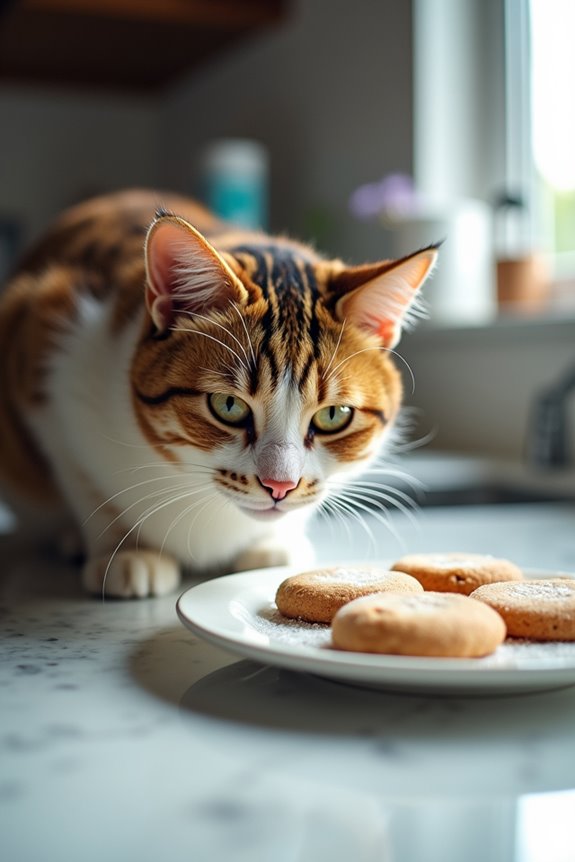
You’ll want to watch for immediate digestive symptoms like vomiting, diarrhea, and appetite changes, which signal your cat’s stomach is struggling with the sugar and ingredients. Beyond digestion, monitor behavioral shifts—hyperactivity, panting, restlessness, or unusual actions within 24–48 hours often indicate your cat’s body is reacting to the sugar and additives. Both types of signs matter equally, so don’t dismiss behavioral changes as minor while focusing only on stomach issues.
Immediate Digestive Symptoms
How quickly might your cat show signs of distress after eating a sugar cookie? You may notice digestive symptoms within 24–48 hours. Your cat’s digestive system isn’t designed to process refined sugar, so reactions can develop relatively fast.
Watch for these immediate digestive symptoms:
- Vomiting – Your cat may regurgitate food or bile as the stomach reacts to the sugar
- Diarrhea – Loose stools indicate your cat’s intestines are struggling to digest the cookie
- Abdominal discomfort – You might notice restlessness, hunching, or reluctance to move normally
- Dehydration signs – Dry gums, lethargy, or reduced water intake can follow digestive upset
These symptoms signal that sugar cookies don’t agree with your cat’s system. Monitor your pet closely during this window, and contact your veterinarian if symptoms persist or worsen. Early intervention prevents complications.
Behavioral Changes To Monitor
Beyond the digestive upset we covered, your cat’s behavior itself becomes an important warning sign that something’s wrong. When your cat consumes sugary treats, behavioral changes often signal stomach discomfort or irritation. You’ll want to monitor hydration levels closely and watch for shifts in appetite, energy, or vocalizations.
| Sign | What It Means | Action |
|---|---|---|
| Decreased appetite | Stomach discomfort | Monitor feeding |
| Lethargy | Pain or nausea | Observe activity |
| Unusual vocalizations | Distress response | Note frequency |
| Restlessness | Digestive upset | Track duration |
| Behavioral withdrawal | Illness indicator | Contact vet |
These changes often appear within hours of eating sugar cookies. If your cat displays any combination of these behavioral shifts alongside vomiting or digestive upset, document what you’re seeing. Contact your vet if symptoms persist beyond 24–48 hours or worsen. Your cat depends on you recognizing these warning signs early.
What to Do If Your Cat Ate a Cookie
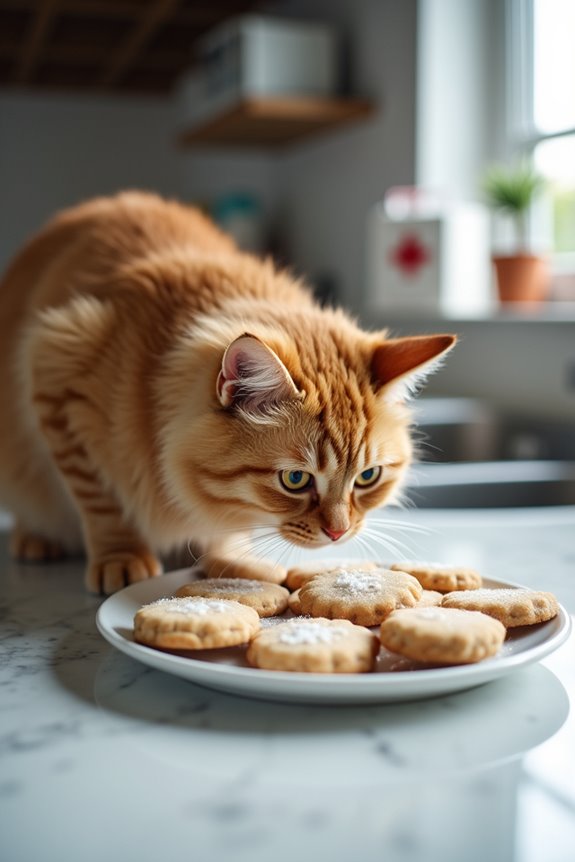
The first thing to do after your cat eats a sugar cookie is stay calm and observe what happens next. Your response matters, and taking the right steps protects your pet’s health.
Here’s what you should do:
- Monitor for warning signs within 24–48 hours, including vomiting, diarrhea, appetite changes, or lethargy
- Keep fresh water available to prevent dehydration, which can develop quickly if symptoms appear
- Gather information about the cookie’s ingredients, especially checking for xylitol, a dangerous sweetener
- Contact your veterinarian if concerning symptoms emerge or if your cat is under one year old, overweight, or has existing health conditions
Don’t induce vomiting or give home remedies without veterinary guidance. Bring the cookie’s packaging to your appointment so your veterinarian can assess potential risks accurately.
How Often Can You Safely Give Treats to Cats?
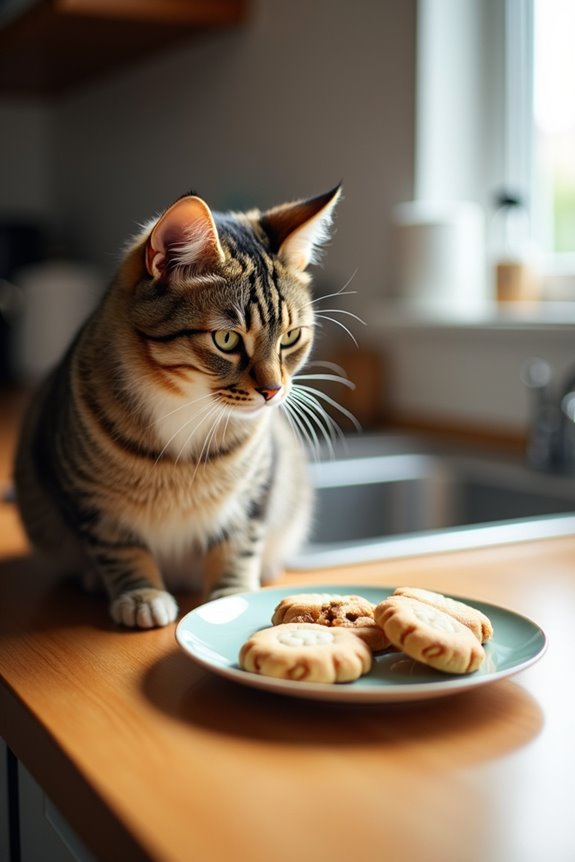
You’ll want to limit treats to no more than 10% of your cat’s daily calories, which means just a small portion a few times per week at most. This approach preserves room for nutritionally complete meals that provide the protein and nutrients your cat needs to maintain muscle and overall health. Instead of sugar cookies, you can safely offer cat-specific treats or plain cooked chicken in controlled portions, always checking with your vet to confirm what works best for your individual cat.
Daily Treat Portion Guidelines
How often should you give your cat treats? You’ll want to follow established daily treat portion guidelines to keep your cat healthy and prevent serious problems down the road.
Treats should make up only a small slice of your cat’s daily calories:
- Limit treats to 5-10% of daily caloric intake
- For an 8-pound cat, this means roughly 20-40 calories per day
- Sugar cookies far exceed safe portions for most cats
- One bite-sized piece is an appropriate serving size
Sugar cookies offer zero feline nutrition while increasing obesity risk markedly. When you exceed daily treat portion guidelines, you’re basically stealing calories from nutritionally complete meals. This imbalance disrupts cat nutrition and triggers weight gain.
Monitor your cat’s weight regularly. If you notice increases or health changes, reduce or eliminate treats immediately. Staying consistent with treat guidelines protects your cat’s long-term wellness.
Nutritional Balance and Frequency
When deciding how often to give your cat treats, you’ve got to contemplate what your cat actually needs to thrive. Your cat requires at least 70% animal protein daily to maintain muscle and energy, so sugar cookies displace essential nutrition when given frequently. Treats shouldn’t exceed 10% of your cat’s daily calories, meaning occasional offerings work best. Regular sugar cookies disrupt this balance, introducing unnecessary carbohydrates that contribute to obesity and diabetes over time. Instead of frequent treats, you’ll want to offer cat-specific, high-protein options sparingly. Monitor your cat’s weight, appetite, and digestion for 24–48 hours after introducing any treat. This approach keeps nutritional balance intact while letting you safely include occasional treats without compromising your cat’s health.
Recommended Cat-Safe Alternatives
Instead of sugar cookies, what should you actually offer your cat?
You’ll find that commercial cat-safe treats designed for feline nutrition serve your cat far better than human snacks. These products contain high protein levels and minimal sugar or fat, protecting your cat’s metabolic health. If you prefer making homemade cat treats, you can control every ingredient yourself.
Consider these cat-safe alternatives:
- Lean cooked chicken or turkey pieces
- Commercial treats formulated specifically for cats
- Homemade treats using cat-appropriate bases without xylitol or dairy
- Freeze-dried meat snacks with no added ingredients
When selecting ingredients for homemade cat treats, avoid chocolate, xylitol, and raisins entirely—these cause serious harm. Keep portions small and limit treats to 5-10% of your cat’s daily calories. This approach prevents weight gain and dental problems while maintaining nutritional balance.
How to Prevent Future Cookie Accidents at Home
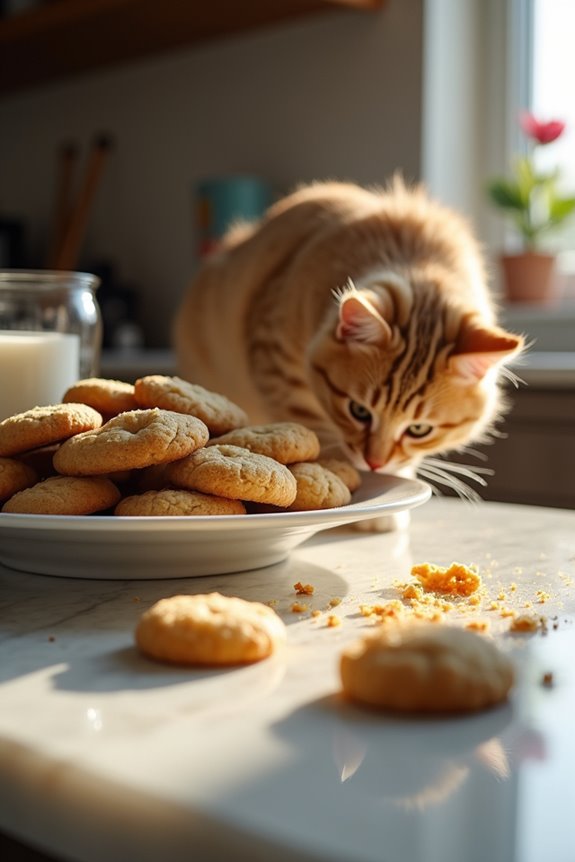
The best way to protect your cat from cookie-related dangers is creating a secure environment where sugary treats simply aren’t accessible. Install child-proof latches on cabinets and use higher storage shelves that your cat can’t reach, especially during baking sessions when you’re busy and distracted.
Clean countertops and floors immediately after baking to remove sugar residues that attract curious cats. Store cookies in sealed, opaque containers placed in designated closed areas away from your pet’s typical spaces.
Educate everyone in your household about why sugar cookies pose real risks: high sugar content, potential chocolate toxins, and choking hazards from frosting. Keep cat treats readily available as convenient alternatives when your cat shows interest in your snacks. Having your vet’s contact information handy provides peace of mind and quick access to emergency guidance if an accident happens.
Cat-Specific Treats: Why They’re Better Than Human Cookies
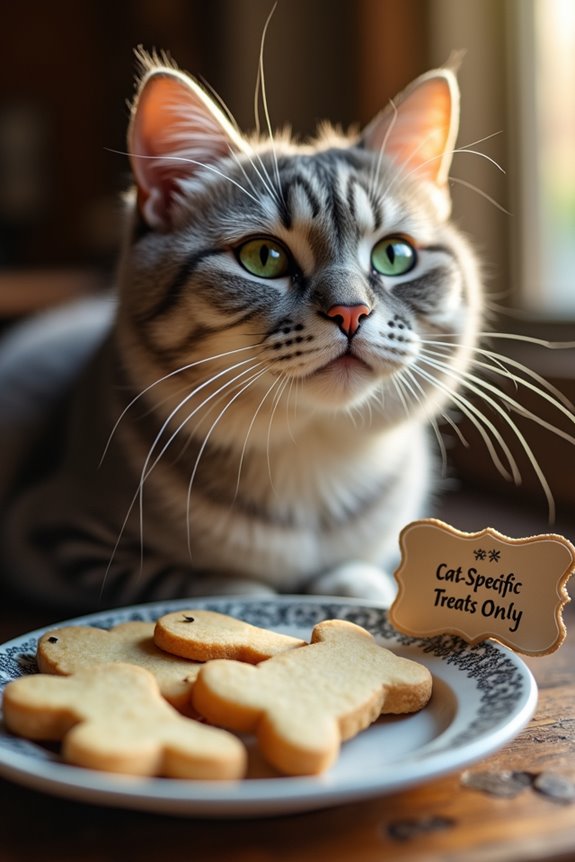
Why do cats thrive on specially formulated treats while struggling with human cookies? Your cat’s body needs nutrients that sugar cookies simply don’t provide.
Cat-specific treats outperform human cookies in essential ways:
- Protein content: Feline treats contain animal-based protein that supports muscle maintenance, whereas cookies offer minimal protein and excessive carbs
- Taurine inclusion: Essential amino acid present in cat treats supports heart and vision health; cookies contain none
- Safe ingredients: Cat treats use tuna, chicken, or turkey while avoiding toxins like xylitol, chocolate, and raisins found in cookies
- Controlled portions: Specially designed treats reduce obesity risk and prevent overfeeding; cookie sizes vary unpredictably
Choosing cat-specific treats means you’re actively protecting your cat’s metabolic health. These formulations lower diabetes risk and improve satiety compared to sugar-laden alternatives. You’re making the informed choice that aligns with feline nutritional needs.
Simple Homemade Cookie Recipes for Cats
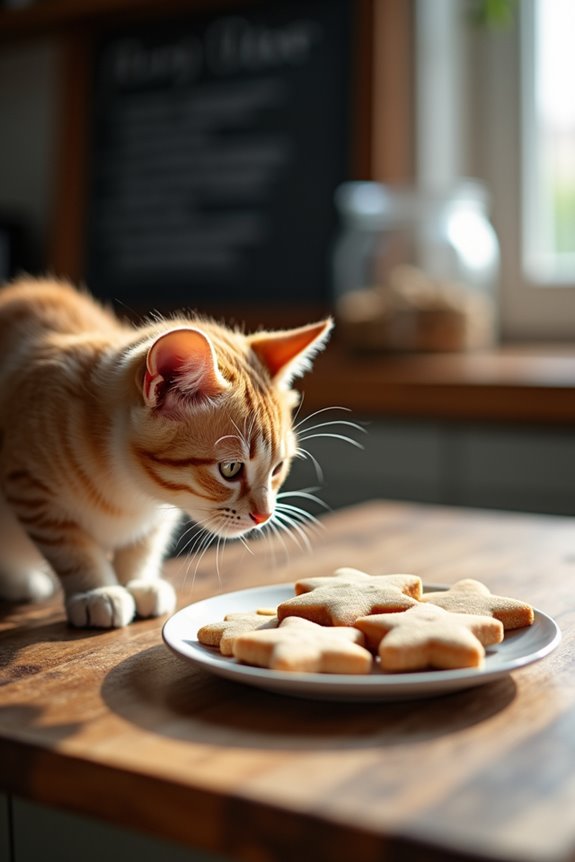
You can create safe cat cookies at home by selecting protein-rich ingredients like tuna and oat flour, which provide actual nutrition instead of empty calories from sugar. Your preparation method matters too—you’ll want to bake these soft biscuits briefly so they stay tender and easier for your cat to chew and digest. Start with a basic two-cup oat flour base, add small amounts of tuna for flavor, bind it with a touch of vanilla yogurt, and you’ll have treats that align with your cat’s carnivorous needs.
Safe Ingredient Selection Guide
How do you create cat cookies that truly serve your pet’s nutritional needs rather than yours? You’ll start by selecting cat-safe ingredients that support feline nutrition instead of human preferences.
Your ingredient foundation matters significantly. Consider these essential choices:
- Protein sources: Use cooked chicken or tuna, which provide amino acids cats require for muscle health
- Flour alternatives: Choose oat flour or chickpea flour instead of wheat, reducing unnecessary carbohydrates
- Moisture additions: Add small amounts of water or low-sodium broth to maintain hydration
- Binders: Use eggs sparingly to hold ingredients together without excess fat
You’ll want to avoid harmful additives completely. Skip sugar cookies’ typical ingredients like chocolate, xylitol, and garlic. These substances damage cat health. Instead, focus on protein-forward homemade cat treats that align with their obligate carnivore biology. This approach ensures your treats nourish rather than harm.
Easy Preparation Methods
Making cat-safe cookies at home doesn’t require complicated techniques or special equipment. You’ll combine two cups of oat flour with small amounts of tuna for flavor and binding. Add just a splash of vanilla yogurt to hold ingredients together, keeping dairy limit minimal since cats digest it poorly. Mix thoroughly until you reach a dough-like consistency.
Portion your mixture into small balls, then flatten slightly on a baking sheet. The baking time matters significantly—aim for 10-12 minutes at 180°C. This short duration maintains softness, reducing choking risk for your cat. Overbaking hardens cookies, making them unsafe.
Once cooled completely, store treats in the refrigerator. The cold environment preserves your cat-safe creation and prevents bacterial growth. You’ve now created nutritious homemade cookies your cat can enjoy safely.
Cookie Ingredients to Always Avoid When Treating Your Cat
What’s really in that cookie you’re about to share with your cat?
You’ll want to avoid several dangerous ingredients that can seriously harm your feline friend:
- Chocolate – Contains theobromine and caffeine, which trigger vomiting, tremors, seizures, or even death in cats
- Raisins or grapes – Can cause sudden kidney failure, making them a critical toxin to eliminate
- Xylitol – This artificial sweetener causes severe insulin release and liver damage
- Sugar and fat – High amounts lead to obesity, diabetes, dental problems, and digestive upset
Even “safe” cookies loaded with sugar pose real risks. Your cat’s body isn’t designed to process these ingredients. They lack the ability to metabolize certain compounds the way humans do. When you skip problematic ingredients, you protect your cat from preventable health emergencies. Choose cat-appropriate treats instead—your pet’s wellbeing depends on informed choices.
When to Call Your Vet About Cookie Ingestion
Your cat’s health depends on knowing when cookie ingestion requires veterinary attention. Contact your vet immediately if the cookie contained chocolate, xylitol, raisins, or macadamia nuts—these ingredients are toxic to cats. Don’t wait to see if symptoms develop.
Monitor your cat closely for ingestion signs like vomiting, diarrhea, appetite loss, or lethargy. Call your vet if these appear within hours of eating the cookie. Young cats under one year old need prompt vet guidance, as they’re more vulnerable to cookie-related complications. Watch for rapid breathing, tremors, or seizures—these require emergency care.
If vomiting or loss of appetite continues beyond 24–48 hours, arrange an urgent exam. Bring the cookie packaging or ingredient list when you visit. This information helps your vet assess risk and determine appropriate treatment quickly.