

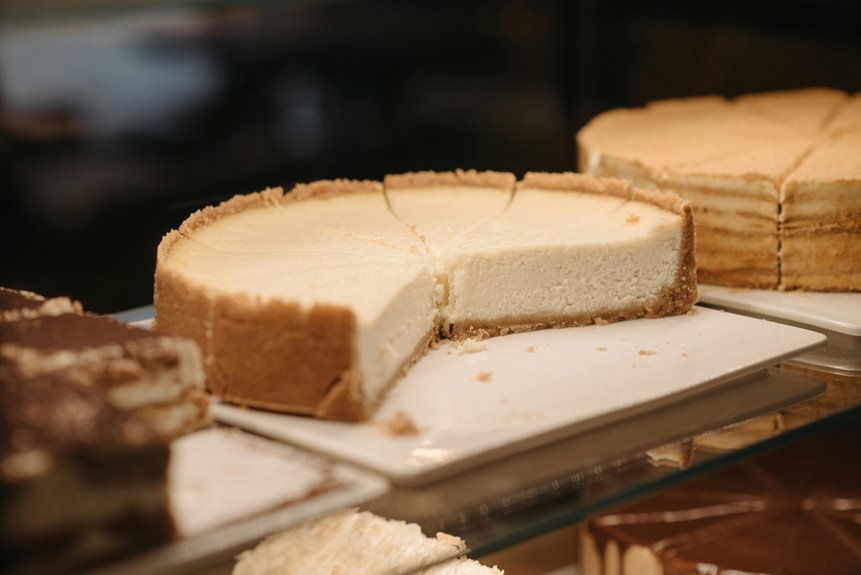
You shouldn’t put a warm cake directly in the fridge. When warm cake meets cold air, condensation forms on the surface, which softens frosting, dulls decorations, and makes layers soggy. Instead, let your cake cool at room temperature for 30 minutes to two hours, depending on size. Once cooled, you can refrigerate it for 20–30 minutes to firm up frosting. Tight wrapping prevents moisture loss during brief chilling. Understanding the right cooling sequence protects your cake’s texture and flavor throughout storage.
Can You Put a Warm Cake Directly in the Fridge?
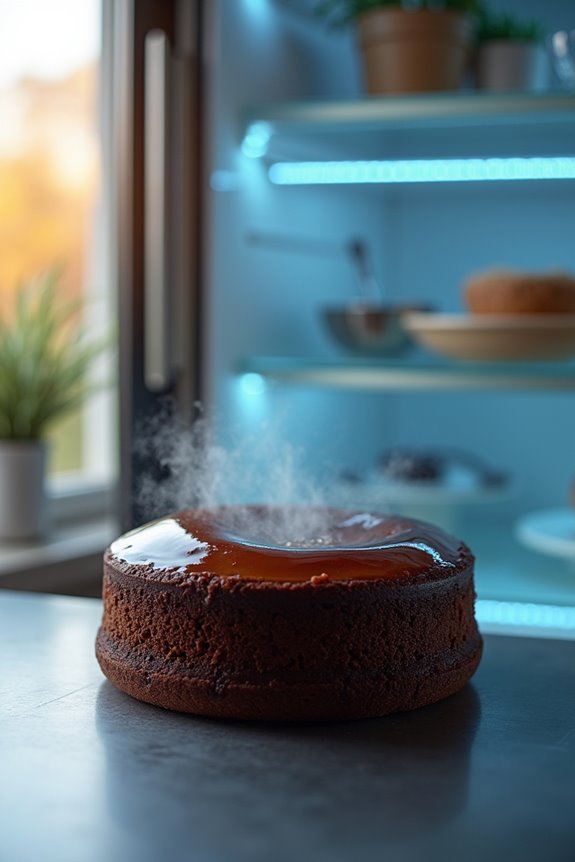
Why would you want to skip the cooling rack? You’re keen to refrigerate your cake quickly, but placing it warm directly in the fridge isn’t ideal. Condensation forms on the surface when warm cake meets cold air, potentially compromising texture and moisture balance. If you must use the fridge, wrap it loosely to limit moisture loss, but avoid airtight sealing that traps steam and creates soggy surfaces. Unwrapped warm cakes risk rapid moisture movement, leading to dryness or texture changes. Instead, let your cake cool in the pan for about ten minutes on a rack first. Then transfer it to a wire rack or lightly wrapped container to finish cooling before refrigeration. This approach protects your cake’s quality and ensures better results.
Why Room Temperature Cooling Comes First
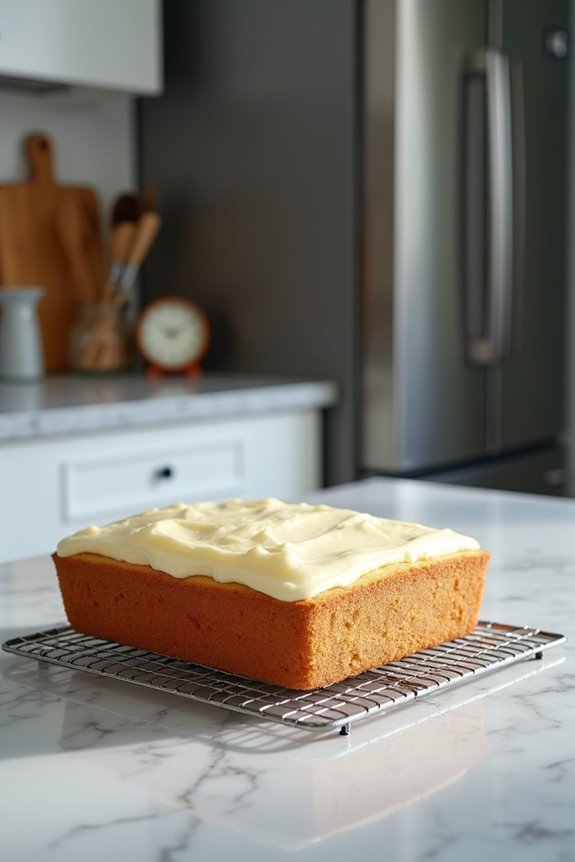
Have you ever wondered what happens inside your cake when it shifts from oven to fridge? Cooling at room temperature first protects your cake’s texture and moisture. When you skip this step and refrigerate immediately, the dramatic temperature change causes condensation. This moisture then gets reabsorbed unevenly, creating a dense, soggy crumb structure you’ll want to avoid.
Room temperature cooling allows your cake to exhaust heat gradually and evenly. This controlled process stabilizes the crumb matrix, locks in moisture properly, and prevents texture degradation. After an initial 10-minute rest in the pan, transfer your cake to a wire rack. Airflow underneath accelerates cooling without shock. Smaller cakes typically need 30 minutes; larger ones require up to two hours.
Always follow your specific recipe’s cooling guidance, as ingredient combinations and cake density affect cooling requirements.
How Condensation Forms and Damages Your Cake
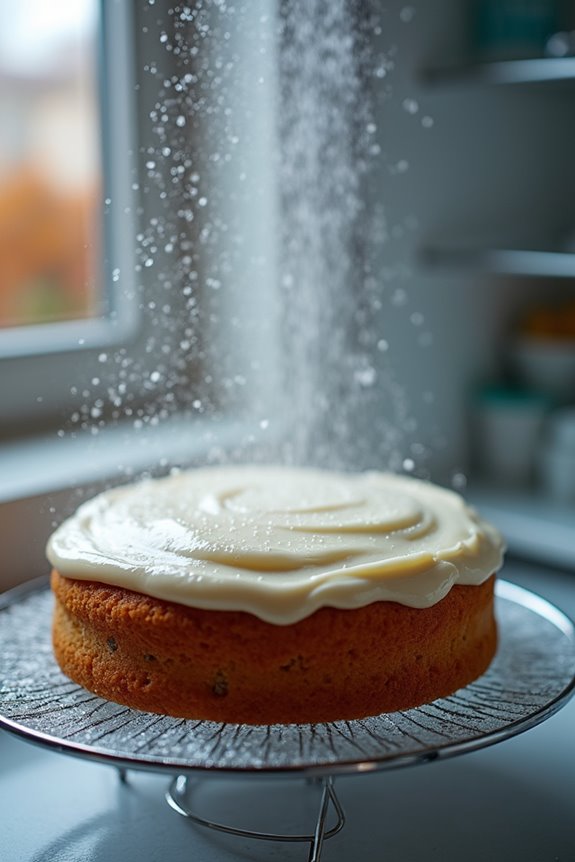
When you place a warm cake directly into your cold fridge, something invisible but destructive happens inside the appliance. Warm, moist air from the cake meets the cold surfaces around it. This temperature clash causes condensation—water droplets that form on your cake’s surface or inside its container.
Warm cake meets cold fridge surfaces, triggering condensation that damages frosting and creates unwanted moisture.
These droplets create real problems. They soften frosting, dull fondant decorations, and make cake layers soggy. Iced cakes suffer most, as moisture compromises their carefully crafted appearance and texture.
Wrapping a warm cake before refrigeration makes condensation worse. The wrap traps steam, which then condenses directly onto your cake. You’re essentially creating a moisture trap that damages what you’ve worked to create.
That’s why cooling your cake to room temperature first matters. It eliminates the temperature difference that triggers condensation, protecting your cake’s quality.
The 10-Minute Pan Rule Before Refrigerating
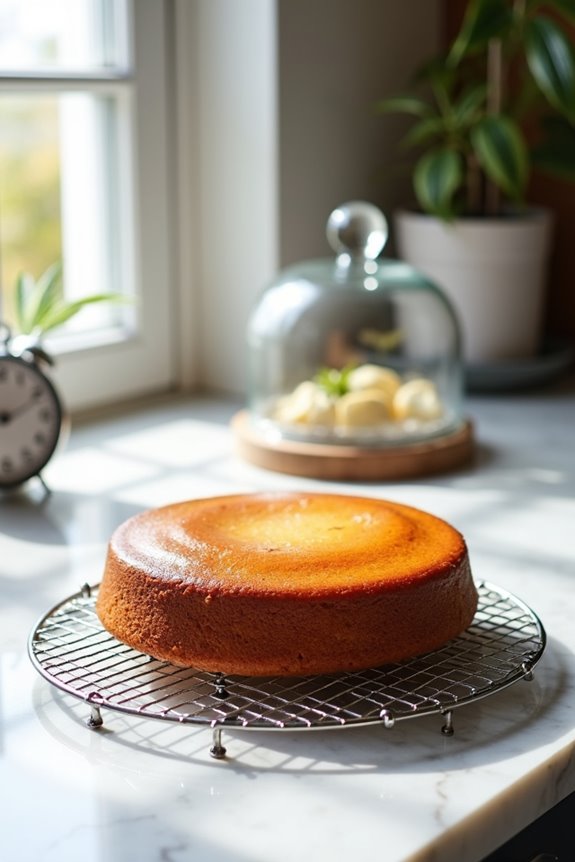
The pan your cake baked in is still radiating heat, and that’s actually working in your favor—for exactly ten minutes. During this brief window, you’re letting residual warmth gently firm up the cake’s structure without cooking it further. Don’t skip this step or rush it.
After those ten minutes, transfer your cake from the pan to a wire rack. This cooling setup exposes air beneath the cake, preventing heat from getting trapped underneath. That trapped heat causes condensation, which makes your cake soggy and dense.
If you’re in a hurry, you can move your cake to a level surface instead. Either way, getting it out of that hot pan matters. Extended time in the pan beyond ten minutes risks moisture buildup, compromising your cake’s texture and quality.
Quick Fridge Cooling: 20–30 Minutes for Buttercream and Ganache
When you’re working with buttercream or ganache, you’ll want to time your fridge cooling carefully—aim for 20 to 30 minutes to achieve the perfect firm set without drying out your cake layers. This window gives your frosting enough time to stabilize and hold its shape, while your cake retains moisture and doesn’t become dense or hard. You’re striking a balance here, since extending the cooling time beyond 30 minutes risks texture changes that’ll affect both taste and crumb structure.
Optimal Fridge Timing Strategies
How quickly can you actually firm up frosting without damaging your cake?
You’ll find that strategic fridge cooling timing makes all the difference. Here’s what works best:
- 20–30 minutes firms buttercream and ganache without over-chilling
- Allow counter rest first if your cake’s still warm to prevent condensation
- Use cake carriers or boxes to control moisture while chilling
- Wrap tightly or seal containers to retain moisture during brief cooling
- Avoid extended refrigeration that causes texture changes and drying
The key is matching your cooling window to your specific icing type. Buttercream and ganache respond well to quick fridge cooling, reaching the right firmness without the cake becoming cold and dense. You’re protecting both texture and taste by keeping refrigeration brief and intentional.
Temperature Readiness For Frosting
Why does timing matter so much when you’re chilling frosting? You need your buttercream or ganache at just the right temperature to spread smoothly without sliding off your cake. Fridge cooling for about 20 to 30 minutes brings frosting to its ideal state—firm to the touch but not rock-hard. This sweet spot lets you apply your crumb coat evenly, then set it before final decoration. After 20–30 minutes in the fridge, touch your frosting. It should feel solid without being impossible to work with. If it’s too soft, you’ll get messy layers. If it’s too hard, you’ll struggle to spread it smoothly. Getting this temperature right makes your entire frosting process faster and cleaner.
Wrapping Techniques to Prevent Drying and Odor Absorption
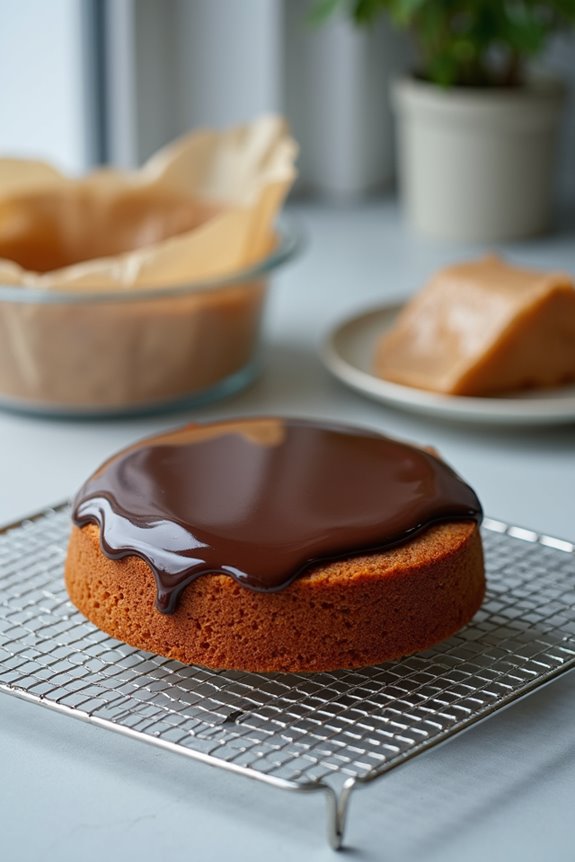
The right wrapping method makes all the difference when you’re refrigerating cake. You need to balance moisture retention with airflow to keep your cake fresh without drying it out or absorbing fridge odors.
Here’s what works best:
- Wrap after cooling: Let your cake reach room temperature first to prevent condensation buildup
- Use plastic wrap directly: Press it against the cake with minimal air gaps to seal in moisture
- Loosen wraps for short storage: Leave slight gaps if you’re only refrigerating for a day or two
- Wrap tightly for longer storage: Seal completely for multi-day refrigeration to prevent surface drying
- Add foil when freezing: Layer aluminum foil over plastic wrap to block freezer burn and odor transfer
Proper wrapping keeps your cake moist, protected, and ready to frost when you need it.
When Refrigeration Backfires: Texture Loss and Flavor Dulling
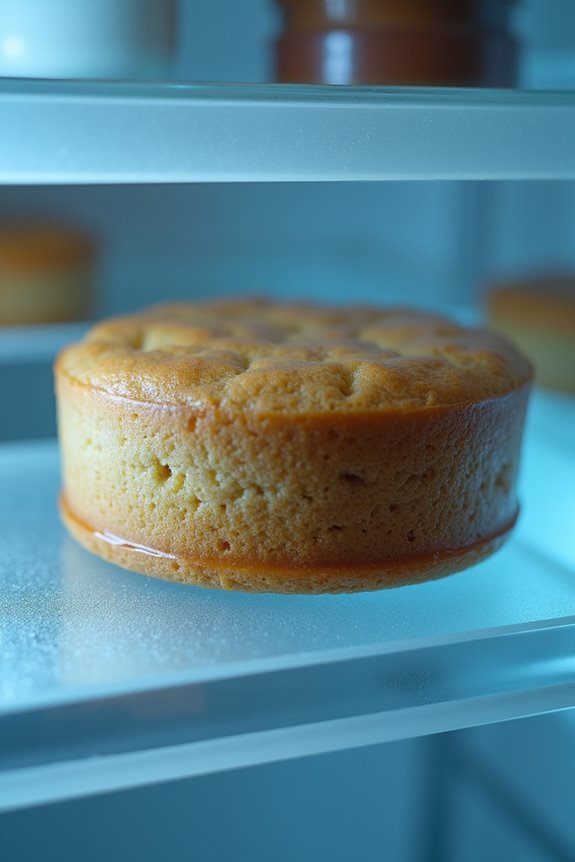
While refrigeration seems like the obvious shortcut to cooling your cake quickly, it can actually work against you in several ways. Extended fridge time alters your cake’s crumb structure, making it feel firmer or unexpectedly gummy when you serve it. Condensation forms on iced or fondant surfaces, creating a dull, wet appearance that undermines your decorating efforts. That moisture also interacts with your toppings, dulling flavors you’ve worked hard to perfect. Additionally, your cake absorbs surrounding odors in the fridge, creating an off taste that masks the vanilla, chocolate, or fruit notes you intended. The combination of moisture loss and structural changes creates a disappointing eating experience. Rather than risking these problems, you’ll want to cool your cake at room temperature first, then refrigerate only when necessary using proper airtight wrapping.
Freezing vs. Refrigerating: Which Method Preserves Quality Longer?
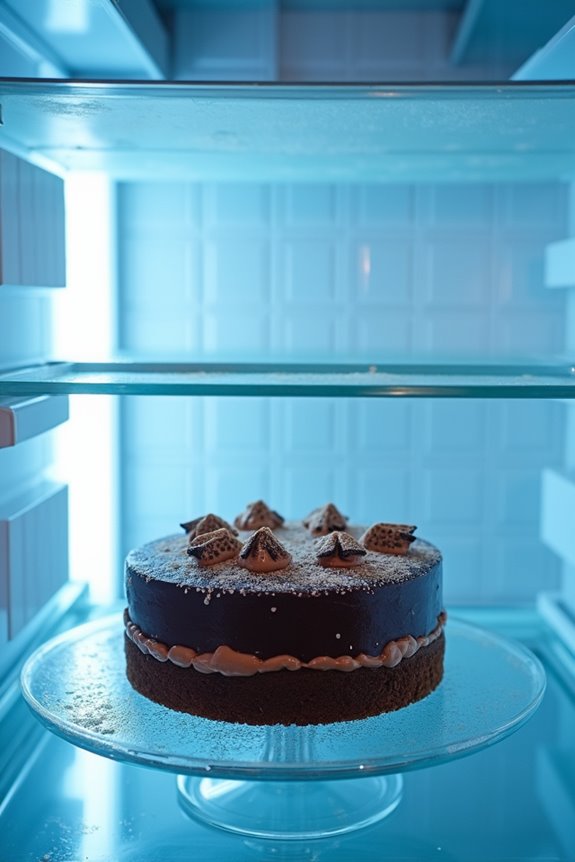
How you store your cooled cake determines whether it’ll taste fresh or dry when you serve it days later.
Storage Method Comparison:
- Refrigerating preserves moisture better for short-term storage (up to one week)
- Freezing extends shelf life up to three months when wrapped properly
- Fridge cooling takes 20–30 minutes but risks dryness with extended storage
- Unwrapped cakes dry faster in both environments due to moisture loss
- Tight wrapping prevents condensation and texture damage during temperature changes
Fridge cooling works best for immediate use, while freezing suits long-term preservation. When you refrigerate, moisture gradually escapes, affecting texture and flavor. Freezing halts this process entirely, maintaining quality longer. However, you’ll need to thaw frozen cake in the fridge overnight to prevent condensation. Choose refrigeration for cakes you’ll serve within days, and freezing for those you’re saving for later occasions.
Bringing Chilled Cake Back to Room Temperature Safely
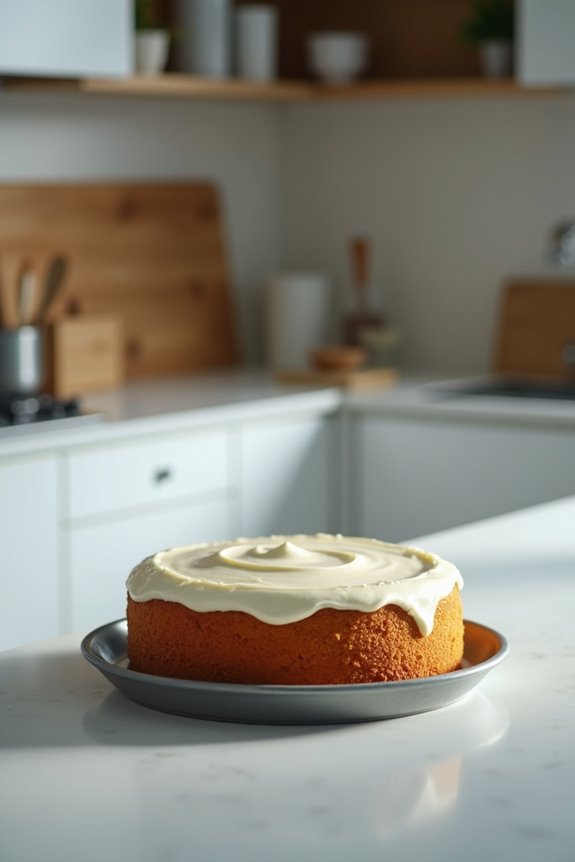
When you remove your chilled cake from the fridge, you’ll need to let it warm gradually to room temperature—typically 30 minutes to an hour depending on how thick it is—so the structure doesn’t experience shock and the texture stays consistent. You can speed up this process by placing it in a warm spot away from direct heat, but you’ll want to keep it covered if there’s frosting to prevent the surface from drying out or developing condensation. Before you cut or decorate, check that the cake feels evenly warm throughout and that no moisture has collected on top, which ensures your frosting will set properly and your crumb will have that perfect tender bite.
Temperature Equilibrium Process
Why does a chilled cake need gradual warming? When you remove a refrigerated cake to room temperature, condensation forms on its surface if the transition happens too quickly. This moisture damages frosting and compromises texture. Gradual equilibrium prevents these problems and lets your cakes stabilize properly.
Here’s what you need to do:
- Keep the cake wrapped or covered while it warms to minimize moisture loss
- Allow 1 to 2 hours for temperature equilibrium, depending on cake size
- Position it away from direct heat or sunlight on your counter
- Maintain your kitchen between 68–72°F for consistent results
- Check the cake’s texture and aroma before decorating to ensure it’s ready
This measured approach ensures you cool a cake safely and preserve its quality throughout the warming process.
Timing And Planning Strategies
Bringing your chilled cake back to room temperature’s a essential step that most bakers overlook. You’ll want to plan ahead, as the cool down process takes 15–30 minutes for small cakes and 1–2 hours for larger ones. This gradual warming prevents condensation and unwanted texture changes.
If your cake has icing or fondant, keep it wrapped or boxed during this transition. This minimizes moisture exposure that causes surface sweating. Set a timer and monitor for heat transfer signs.
Remove your cake from the fridge only when it’s nearing your serving temperature. Give it a short 5–10 minute counter rest before unwrapping for slicing. Never leave iced cakes unattended beyond 2 hours at room temperature, as this softens decorations and compromises structure.
Preventing Condensation During Warming
Now that you’ve got your timing locked in, protecting your cake from condensation damage becomes the next priority.
When you remove your chilled cake from the fridge, moisture will form on its surface as cold air meets warm room air. You’ll prevent this by keeping your cake in its box or carrier during the warming process. This containment limits rapid temperature shifts that trigger condensation buildup.
Here’s your condensation-prevention strategy:
- Keep the cake boxed while it gradually warms to room temperature
- Position it away from direct heat sources and warm surfaces
- Wipe any visible moisture gently with a dry microfiber cloth
- Allow 1–2 hours for iced or fondant cakes to acclimate
- Check that the cake feels warm to the touch before unwrapping
You’ll know your cake’s ready when it no longer feels cold and shows no visible steam.
Signs Your Cake Cooled Too Fast or Too Long in Cold Storage
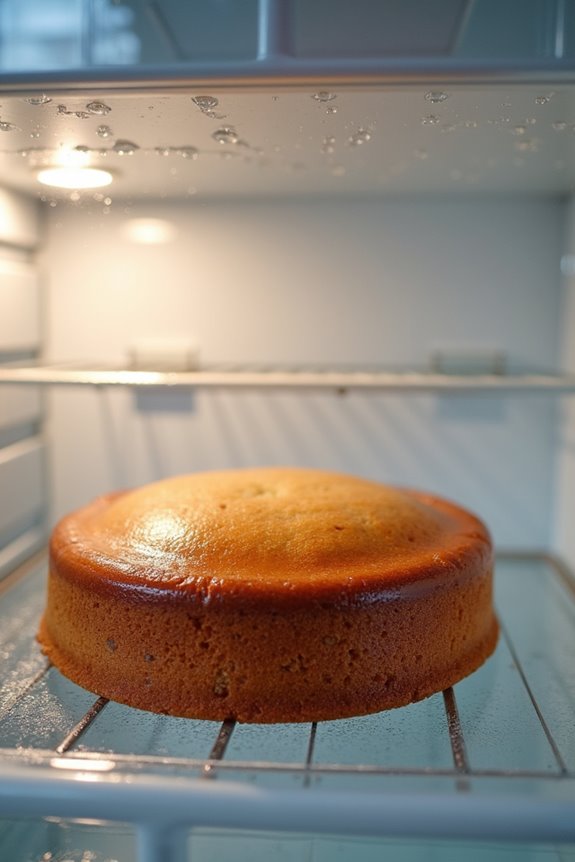
How can you tell if your refrigeration process went wrong? Several telltale signs reveal cooling problems. If your cake feels crumbly or displays surface cracks after refrigeration, you’ve likely cooled it too fast. Unwrapped cakes in cold storage lose moisture rapidly, creating this dry, fragile texture.
Condensation pooling on iced or fondant cakes signals uneven temperature changes. This moisture creates texture issues and compromises your decorative work. Conversely, if your cake still feels soft with residual warmth after refrigeration, it cooled too slowly or unevenly for proper trimming and icing.
Optimal cooling shows clear indicators: your cake feels firm to the touch, displays no visible condensation, and has no noticeable surface moisture. These signs mean you’re ready for the next step.